Special

Bangladesh should pursue ‘no-exclusive-alignment’ policy with major powers: Expert
Executive Director of Bangladesh Center for Indo-Pacific Affairs Prof Shahab Enam Khan has said Bangladesh should pursue a ‘no-exclusive-alignment’ policy, engaging constructively with India, China and the United States, the three major global powers reshaping the geopolitical and economic landscapes.
“But it should avoid any security arrangement that looks like basing, bloc politics, or single-partner dependence,” he told UNB when asked how should the new government recalibrate its foreign policy to maintain strategic balance among India, China and the United States.
“Bangladesh First will be the core philosophy of our foreign policy,” said Foreign Minister Dr Khalilur Rahman, adding, “We aim to maintain good relations with all countries, especially our neighbors, based on respect and mutual benefit.”
In his first reaction to the media, the Foreign Minister said they want to get back to the foreign policy of Shaheed President Ziaur Rahman which was very positive and expansive, stressing that the government wants to maintain a good relationship with each country while at the same time protecting the country’s interests.
Dhaka’s Relations with Delhi
Following the formation of the new government, the relations between Dhaka and Delhi have entered a cautiously optimistic phase, marked by renewed goodwill from both sides, foreign affairs experts say.
A significant gesture underscoring this positive momentum was Indian Prime Minister Narendra Modi extending an invitation to Tarique Rahman, signaling openness to constructive political engagement, a diplomat told UNB.
“Reciprocity, transactionality and pragmatism should be the key approach in Bangladesh-India relations, with red lines on sovereignty and security,” Prof Shahab, a global policy expert, told UNB.
He said both should create a rules-based framework that includes regular leader-level dialogue, a prudent mechanism to prevent border incidents, transparent agreements on trade, transit, water and faster dispute resolution.
The foreign affairs expert also highlighted the importance of deeper energy-grid and connectivity cooperation in place that benefits both sides, while keeping politics out of operational coordination.
“Both sides should focus on countering misinformation and disinformation campaigns,” said Prof Shahab, flagging the issue that hurts any relationship.
Inviting Prime Minister Tarique Rahman and his family to visit India, Indian Prime Minister Modi has said Bangladesh and India can truly become catalysts for each other's sustainable growth, work for each other's security and enable mutual prosperity as two fast-growing economies and aspiring societies.
“I look forward to working closely with you to strengthen our multifaceted bilateral relations, enhance regional cooperation, and advance our common goals in wide-ranging areas of connectivity, trade, technology, education, skill development, energy, healthcare, as well as cultural and people-to-people exchanges,” he said in a letter that was handed over to Prime Minister Tarique on Tuesday.
Trump Outlines Bilateral Roadmap
In his message to PM Tarique, US President Donald Trump said he expects the new Prime Minister to take decisive action to complete the routine defence agreements that would enable Bangladesh’s military to access high-end American-made equipment, which he described as the best in the world.
“President Donald Trump's congratulatory letter to Prime Minister Tarique Rahman outlines a bilateral roadmap that reflects the era in which partnerships are defined by mutual deliverables,” said Prof Shahab.
He said the emphasis on ‘decisive action’ signals that Washington expects meaningful governance reforms as preconditions for deeper engagement.
The foreign affairs expert said President Trump's expressed confidence in US Ambassador to Bangladesh Brent Christensen underscores a ‘sustained institutional commitment’ to the relationship.
On first day, new foreign minister harks back to late President Zia’s foreign policy
“Bangladesh must now respond with strategic clarity, converting this multidimensional diplomatic opening into concrete outcomes that serve mutual and national interests within an increasingly transactional global order,” he said.
Regionalised Approach
Asked what realistic diplomatic pathway should Bangladesh pursue to ensure safe, voluntary, and dignified repatriation of the Rohingya to Myanmar, given prolonged stalemate and shifting regional geopolitics, Prof Shahab said Bangladesh must pursue a regionalised approach by building a coalition with ASEAN, China, India, Pakistan, and key Western partners.
He highlighted the importance of stabilising Rakhine through trade and investment to create an environment for returns based on economic opportunities.
“We need to shift from a fully humanitarian-driven to a trade-and-investment-driven approach, with international monitoring and verified conditions in Rakhine,” Prof Shahab said.
Despite the passage of eight years, the plight of the Rohingyas remains largely unchanged and the prolonged crisis has deepened despair within the camps and placed an increasing burden on host communities, while global attention and funding continue to wane.
Market-Access Diplomacy
Responding to a question on economic diplomacy, Prof Shahab said Bangladesh should move away from symbolism to market-access diplomacy.
“It should make EU GSP+/EPA the top priority, lock in UK preference continuity, and build a pragmatic US pathway which should include investment, standards, sectoral arrangements,” he said.
Foreign debt top challenge for new govt, steps must be cautious: Debapriya
At the same time, Prof Shahab said it should link foreign policy directly to labour, compliance, green production, and export diversification to protect competitiveness.
State Minister for Foreign Affairs Shama Obaed said Bangladesh has issues and challenges with all countries, which will be addressed through discussions at bilateral and multilateral forums.
“We want to look forward, keeping our backbone strong and straight. That backbone has now become stronger after a long time as the government came through people’s mandate. All now need to look at Bangladesh from a different perspective,” she told reporters at the Ministry of Foreign Affairs, sharing how the foreign policy of a democratic government should be.
1 day ago
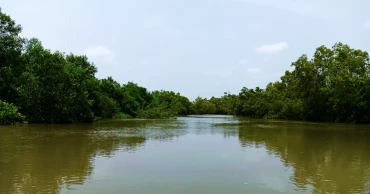
Caught between tigers and pirates; Sundarbans fishing community in fear
Over 10,000 fishermen in the Sundarbans have suspended their fishing activities amid growing fears of attacks by forest pirates, highlighting renewed security concerns in the region.
Fishermen from Dubla Char, a key hub for dry-fish processing, stopped venturing into the sea and rivers from Wednesday evening after the reported abduction of 20 colleagues on Monday night.
Their whereabouts remain unknown, causing widespread alarm among local communities.
Md Kamal Uddin Ahmed, president of the Dubla Fishermen Group and a freedom fighter, told UNB from Alorkol that inadequate security in the Sundarbans and surrounding waters has left fishermen terrified of further kidnappings.
“Over 10,000 fishermen engaged in dry-fish processing stopped fishing in the sea and rivers from Wednesday evening and are now staying idle on the char,” he said.
With the fishing season nearing its end, many fear returning home empty-handed. Kamal Uddin alleged that four pirate gangs, identified as Jahangir, Suman, Sharif and Karim Bahini, are currently active, abducting fishermen and demanding ransom. Those unable to pay, he added, are often severely beaten.
The resurgence of piracy follows years of relative calm. The Sundarbans were declared pirate-free in 2018, but attacks have reportedly increased under the interim administration. At least four fishermen were admitted to Rampal Hospital last week with serious injuries from pirate assaults.
Kurigram looks to new government for solutions to river erosion, jobs crisis
Motasim Forazi, president of the Rampal Fishermen’s Association in Alorkol, described the situation, “Earlier we used to say, ‘Crocodiles in water, tigers on land.’ Now it’s ‘pirates at sea.”
He said over 100 fishermen are currently being held captive, with multiple abductions recorded in the past two weeks. The 20 men taken on Monday have yet to be traced, though the pirates reportedly left a mobile number for ransom negotiations.
Officials from the Forest Department expressed concern over the economic impact.
Milton Roy, officer-in-charge of the Dubla Patrol Outpost under the Sundarbans East Forest Division, warned that the fishing halt could cause significant revenue losses.
Sharankhola Forest Station Officer Md Khalilur Rahman noted that no fishermen are currently collecting permits, a situation likely to affect the division’s monthly revenue targets. Local traders, including grocers Jalal Molla, Anwar Saudagar, and Ripon Hawlader, reported a sharp decline in business due to the fishing suspension.
Assistant Conservator of Forests Md Shariful Islam said authorities have been alerted to the rise in piracy, and forest guards are working to safeguard fishermen.
As the community waits anxiously for news of the missing fishermen, the fragile balance between livelihoods and security in the Sundarbans remains under severe threat.
1 day ago
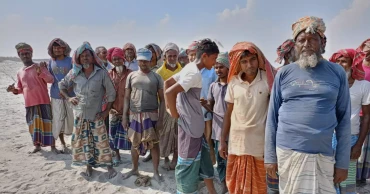
Kurigram looks to new government for solutions to river erosion, jobs crisis
Expectations are running unusually high in the northern district of Kurigram, as residents look to the newly formed government for visible and sustainable solutions to the chronic problems of river erosion and unemployment that have shaped life in the area for decades.
Bordering India and crisscrossed by rivers, Kurigram has long struggled with poverty, unemployment and underdevelopment in education, health care and communications. Locals say repeated promises and short-term projects have failed to deliver lasting change, leaving thousands trapped in a cycle of displacement and economic insecurity.
At least 16 rivers, including the Brahmaputra River, Dharla River, Teesta River and Dudhkumar River, flow through the district. Every year, monsoon floods and erosion eat away homesteads, farmland, schools and roads, forcing hundreds of families to lose their land and relocate, often repeatedly.
Residents say temporary embankments and piecemeal projects have done little to stem the damage. What they want now, they say, is a comprehensive and long-term river management plan involving permanent embankments, regular dredging and science-based river training.
“River erosion destroys our lives every year. Every year we have to battle erosion to survive,” said Shajahan Ali of Baldi Para in Kurigram Sadar upazila, recalling how his family has been displaced multiple times by erosion. “We want a permanent solution.”
Alongside erosion, the lack of employment opportunities has emerged as Kurigram’s most pressing social challenge. With few industries in the district, large numbers of educated and semi-educated youths migrate to Dhaka, Gazipur and Chattogram in search of work, often leaving families behind.
“There is no work here,” said Raju Mia from Char Baraibari village under Bhogdanga union. “We don’t want to leave our families and go to big cities. We want jobs in our own district.”
Sahinur Rahman, a young resident of Jhunkar Char in Jatrapur union, echoed the frustration. “I finished my studies, but there are no jobs. If there were factories here, we could work locally. Instead, we are forced to move to Dhaka.”
Local development advocates argue that the situation can change if the government prioritises Kurigram in its development agenda. They are calling for the establishment of agro-based industries, food processing plants, cold storage facilities, and stronger support for small and medium enterprises, alongside skills development programmes for youths.
PM Tarique urges market restraint ahead of Ramadan
According to Khaja Sharif Uddin Ali Ahmed Rintu, senior vice-president of the Kurigram District Development and Implementation Council, around 1.65 million of the district’s nearly 2.3 million people live in poverty.
“River erosion and decades of mismanagement have repeatedly stripped people of their homes and livelihoods,” he said. “Many NGOs have worked here in the name of poverty reduction, but the lives of ordinary people have not changed much. Proper implementation of development allocations is crucial if poverty is to be reduced.”
Professor Shafiqul Islam Bebu, president of a local char development organisation, said balanced development is key to Kurigram’s future.
“To bring neglected Kurigram forward, we must stop river erosion, improve living standards in char areas and create employment through industrialisation,” he said. “Only fair and equitable distribution of national development resources can ensure sustainable progress here.”
For residents, the message to the new government is clear: move beyond paper plans and political promises to deliver real action on the ground.
“If river erosion is controlled and jobs are created, Kurigram will change,” said one local elder. “People will finally be able to live with dignity, hope and stability.”
As the new administration settles into office, the people of Kurigram wait to see whether this time their long-standing demands will finally translate into lasting change.
2 days ago
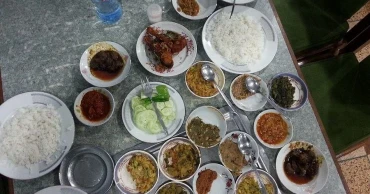
Tk 10,000-cr food industry expands in Bangladesh; are our meals safe?
Bangladesh’s booming food industry, now estimated to be worth over Tk 10,000 crore, is expanding at an unprecedented pace across urban and semi-urban areas but experts warn that this growth is outpacing quality control and regulatory oversight, posing a serious public health risk.
From roadside carts to high-end restaurants, food businesses are mushrooming nationwide with minimal monitoring.
The absence of strict regulation, coupled with unsafe raw materials, is fueling concern among consumers and health specialists alike.
The Bangladesh Safe Food Authority (BFSA) found adulteration in 33.3 percent of food samples tested in the last fiscal year, highlighting a sharp rise in food contamination.
Data from BFSA shows that between January 1 and December 31, 2025, a total of 11,220 food samples were tested, with 4,653 samples, or 41.47 percent, deemed unsafe.
The rate of adulteration has climbed steadily over the past three years.
In 2022–23, 8.5 percent of samples were adulterated. This rose to 15.4 percent in 2023–24, before surging to 33.3 percent in 2024–25.
A 2021 BFSA survey revealed that around 40 percent of food items in Bangladesh were adulterated, with 60 percent of vegetables containing excessive pesticide residues and 67 percent of bottled soybean oil containing trans fats.
Food safety experts emphasise the urgent need for stronger enforcement, upgraded laboratory capacity and coordinated efforts to curb adulteration and protect public health.
Food Carts Everywhere, Oversight Nowhere
Street food and mobile eateries are now a ubiquitous feature in cities like Dhaka, Chattogram, and Gazipur, serving millions of daily consumers.
Most, however, operate without licences, hygiene certificates, or regular inspections.
“There is virtually no monitoring of how food is prepared, stored, or served in these carts,” said Sumon Dutta, a resident in Dhaka’s Baily Road area. “Consumers are exposed to unsafe cooking practices, contaminated water, and unhygienic handling.”
According to a recent Bangladesh Bureau of Statistics (BBS) survey, the number of food service establishments nearly doubled over the last decade, reaching 436,274 in 2021.
Of these, 344,687 are roadside tea stalls, 67,991 fast-food outlets, and 19,637 restaurants and mobile food vendors, employing over 2 million workers.
Professor Dr. Mohammad Shoeb, a BFSA member, stressed that food safety must be ensured at every stage—from production and supply to storage, distribution, and serving—as each step requires specific regulations to keep food safe.
BFSA has been working under the Safe Food Act, 2013, formulating regulations in line with international standards such as those of the Codex Alimentarius Commission, he said.
Draft Packaged Food Labelling Regulations, notified to the World Trade Organization (WTO) in August 2023, are being modernised, with front-of-pack labelling considered a tool to reduce non-communicable diseases.
Restaurants Operating Without Regulation
Many small and mid-sized restaurants operate without proper registration or compliance with safety standards.
Enforcement by BFSA is hampered by manpower shortages and overlapping responsibilities.
“A restaurant can open overnight without any prior inspection,” said a consumer rights activist.
“The system focuses more on occasional raids than continuous regulation.”
Outside Dhaka, only 65,000 establishments are registered with the Bangladesh Hotel Restaurant Owners Association, leaving the majority unmonitored.
Food prices push January inflation up to 8.58%: BBS
A 2018 BFSA survey found that only 4 out of every 100 restaurants met quality standards, with over half receiving poor ratings.
Chemical-Laced Raw Materials
Chemically treated raw materials—fruits ripened with harmful chemicals, vegetables grown with excessive pesticides, and adulterated spices—are widespread, making it nearly impossible to guarantee safe food.
Shahanuare Shaid Shahin, President of Bangladesh Agricultural Journalists Forum, described the overuse of pesticides, exceeding one billion kilograms over four decades, as a “public health disaster.”
Regulatory Challenges and Long-Term Planning
BFSA Chairman Zakaria said that of 1,713 food samples tested last year, 571 were adulterated or substandard.
He added that the authority cannot impose strong legal penalties without its own advanced laboratory, but once established, strict action against adulterators will be possible.
Food Secretary Md Firoz Sarkar emphasised that food safety is as critical as availability. Citing global data, he said one in ten people worldwide suffers from foodborne diseases, stressing that “everyone—from farmers to consumers—must be more aware.”
4 days ago

Gas crisis, soaring prices cast shadow over Ramadan preparations in Dhaka
With Ramadan only a couple of days away, a sudden pipeline gas crisis has left many households in Dhaka anxious, compounding worries over the rising prices of essential commodities ahead of the holy month.
For Rahela Begum, a resident of Old Dhaka, the trouble began in her kitchen.
“I was preparing lunch for my son. After processing fish and vegetables, I found there was no gas in the stove. Gas did not come the whole day and I had to buy food from a hotel. I have no idea when gas will be available. I am worried if this continues during Ramadan,” she said.
As Ramadan approaches, a time when kitchens remain busy from pre-dawn sehri to evening iftar, uncertainty over gas supply has deepened her concern.
Kohinur Begum from Shantinagar faced a similar situation on Sunday.
She said she struggled to cook meals due to extremely low gas pressure and is unsure whether the supply will stabilise before the fasting month begins.
The crisis has coincided with a fresh spike in the prices of several essentials further straining low- and middle-income households.
Ansiur Rahman, a resident of Kalabagan, said the dual pressure of gas shortages and price hikes has made life more difficult for people in some areas. “It is not only the gas crisis, but also the rising prices of essential goods that are causing concern ahead of Ramadan.”
Consumers said the prices of key Ramadan items such as chickpeas, broiler chicken, lemons and other iftar ingredients have surged despite what traders claim is adequate import and local production.
In the past two days alone, chickpeas have risen by Tk 10 per kilogram and broiler chicken by Tk 20 per kilogram, adding to the financial burden on families preparing for the fasting month.
Many consumers allege that Ramadan has become a season of profit for some traders, who raise prices under various pretexts, including claims of supply disruptions or artificial shortages.
They also point out that, amid the recent national election, market monitoring by district administrations and the Directorate of National Consumer Rights Protection has not been as visible as usual.
Taking advantage of the situation, some traders are allegedly hoarding commodities and creating artificial scarcity, further squeezing household budgets.
Ironically, just a week ago, traders had assured that markets were well-stocked with essential food items ahead of Ramadan.
At a stakeholders’ meeting in Motijheel reviewing import, stock, supply and pricing of Ramadan essentials, traders told the Federation of Bangladesh Chambers of Commerce and Industry (FBCCI) that there was little risk of abnormal price hikes during the holy month.
To cushion off the impact on consumers, the government has announced plans to sell milk, eggs, beef and dressed broiler meat at subsidised rates during Ramadan.
Under the scheme, dressed broiler meat will be sold at Tk 245 per kilogram, pasteurised milk at Tk 80 per litre, eggs at Tk 8 each and beef at Tk 650 per kilogram.
Besides, the Trading Corporation of Bangladesh (TCB) has initiated nationwide truck sales of essential items ahead of Ramadan.
Meanwhile, Titas Gas Transmission and Distribution PLC has attributed the acute low gas pressure to a temporary shutdown of one of the floating terminals supplying liquefied natural gas (LNG).
In a statement on Sunday, Titas said supply in areas under its jurisdiction, including Dhaka and adjoining districts, has experienced a severe pressure drop that may continue for more than 24 hours.
Low gas pressure in Titas areas to last over 24 hours
The maintenance work at one LNG terminal has significantly reduced the volume of regasified LNG being fed into the national grid, resulting in a sharp decline in supply pressure.
Residential, commercial and industrial consumers are likely to experience low gas pressure at the end-user level until midnight on February 16, the company said, expressing regret for the inconvenience.
For thousands of families in the capital, however, the uncertainty lingers.
5 days ago
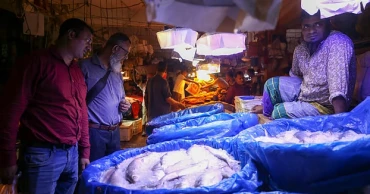
Climate change cuts Bangladesh’s hilsa haul, raising long-term supply risks
Bangladesh’s hilsa catch is shrinking at an alarming pace as rising temperatures, erratic rainfall and shifting river flows disrupt breeding cycles, threatening supplies of the country’s national fish and a key source of income for thousands of fishermen.
Researchers warn that without urgent climate adaptation and river management measures, the decline could deepen, posing long-term risks to food security and rural livelihoods.
Even during the peak season, rivers across the country are yielding far fewer hilsa, a geographical indication (GI) product and Bangladesh’s national fish, compared to previous years, fishermen say.
In Chandpur’s Haimchar upazila, widely known as the hilsa capital, veteran fisherman Asad Hossain, who has been casting nets in the Meghna basin for nearly four decades, said the current season has been disappointing.
“During the September-October and March-April peak seasons, my boat would return brimming with silver hilsa. This year, even at the height of the season, the catch has been far from satisfactory,” he said.
Subhas Paik from Shahrasti upazila echoed similar concerns, saying that despite fishing throughout the night, catches remain poor. Hilsa supply in Shahrasti and Chandpur Sadar markets has nearly halved compared to previous peak seasons, he added.
The same frustration is heard in the southern district of Barishal, particularly along the Gajaria River flowing through Mehendiganj and Hizla upazilas, once considered a prime hilsa zone.
Moslem Hawlader, a fisherman from Hizla, said the large-sized hilsa has almost disappeared from the river. “We comply with the government’s fishing bans, but after the restriction period ends, we still fail to get expected catches. Mostly small-sized hilsa are being caught now. Fishermen are getting lower prices while consumers are paying more.”
Another fisherman, Abdul Karim, blamed increasing siltation and formation of shoals in the erosion-prone Gajaria River for shrinking fish stocks.
According to the latest report of the Department of Fisheries, hilsa production in fiscal year 2024-25 stood at 512,000 metric tonnes, down from 529,000 tonnes in 2023-24 and 571,000 tonnes a year earlier.
Although production remained above 550,000 tonnes for three consecutive years since FY2020-21, output has declined by more than 10 percent in recent years.
Acknowledging the concern, Fisheries and Livestock Adviser Farida Akhter said hilsa catch during July-August 2025 dropped by around 45 percent compared to the same period in 2024. “Both natural and man-made factors are responsible for the decline of hilsa in Bangladesh’s rivers.”
Farida identified climate change as a major factor, noting that rising sea temperatures have increased salinity, creating an adverse environment for hilsa survival. Hilsa breeding is closely linked to rainfall patterns, she said.
“If rainfall does not occur at the right time, hilsa do not migrate upstream to spawn. Due to climate change, reduced and erratic rainfall is negatively affecting reproduction,” she added.
Every October, the government enforces a 22-day nationwide ban on fishing in rivers to protect breeding hilsa, aligning the schedule with Ashwini Purnima and new moon phases based on rainfall patterns. However, shifting rainfall timing due to climate change may be undermining the effectiveness of the existing schedule.
“We need further research. The traditional ban period may no longer be producing the desired results. Climate change may have altered the breeding cycle of hilsa,” the adviser said.
Professor Harunur Rashid of Fisheries Management at Bangladesh Agricultural University said the current extraction rate is unsustainable. “In the present situation, annual hilsa harvest should not exceed 250,000 to 300,000 tonnes. But more than 500,000 tonnes are being caught every year. Monitoring exists in rivers, but there is almost no effective monitoring in the sea. Many hilsa are caught before they can migrate upstream to spawn.”
He also warned that excessive catching of immature hilsa is accelerating biological changes, causing the fish to mature and reproduce at smaller sizes.
According to the National River Conservation Commission, 308 out of Bangladesh’s 1,008 flowing rivers have already lost navigability, while around 90 percent face navigability stress.
The situation is particularly severe in rivers surrounding Dhaka and adjacent districts, where industrial encroachment and untreated effluents are polluting waterways that eventually connect to the Meghna.
“Industrial waste flows into rivers and eventually mixes with the Meghna. At the same time, transboundary river issues are reducing timely freshwater flow. These factors directly impact hilsa production,” Harunur Rashid said.
Siltation and newly formed shoals are also obstructing hilsa migration routes from the sea into rivers for spawning, experts noted.
Molla Imdadulla, Project Director of the Hilsa Development and Management Project under the Department of Fisheries, said rapid siltation has made river navigation increasingly difficult. “In places where there were no shoals a few months ago, new shoals have formed. If speedboats struggle to move, how will hilsa breed?”
He also pointed to illegal nets and inadequate manpower for monitoring, particularly in marine areas. Many fishermen, burdened by informal loans, continue excessive harvesting despite regulations.
Kazi Ahsan Habib, Chairman of Fisheries Biology and Genetics at Sher-e-Bangla Agricultural University, warned that prolonged ecological degradation could eventually alter hilsa migration patterns. “Hilsa traditionally return to the same rivers to spawn. But if they repeatedly fail to access suitable breeding grounds, future generations may not consider these rivers suitable.”
Besides Bangladesh’s Padma-Meghna system, he said, hilsa are also found in Myanmar’s Irrawaddy, Pakistan’s Indus, India’s Hooghly and parts of the Persian Gulf.
Bangladesh currently receives the lion’s share due to its favorable ecological conditions.
No approval yet for indoor, artificial hilsa farming: Ministry
“If this environment continues to deteriorate, hilsa that once migrated to Bangladesh may eventually shift towards other river systems,” Habib warned.
Muhammad Kamruzzaman, Deputy Chief of the Hilsa Management Section at the Department of Fisheries, said authorities are working continuously to protect hilsa resources despite existing challenges, expressing hope for improvement in the coming years.
Experts, however, caution that without coordinated action addressing climate change impacts, overfishing, pollution, siltation, river encroachment and altered rainfall patterns, Bangladesh’s once-abundant hilsa may gradually become scarce.
5 days ago

From fortress to fallout; Jatiya Party routed in Rangpur
In a dramatic political reversal, the Jatiya Party (JP-Ershad) failed to win a single seat in any of the 33 constituencies across Rangpur Division in the 13th national election, an unprecedented defeat in a region long seen as its electoral stronghold.
The division, long associated with the party’s late chairman Hussain Muhammad Ershad, delivered a complete rejection of the JP, with several candidates even forfeiting their deposits.
Political observers say the result signals a deep organisational crisis and shrinking electoral base for the party in its traditional stronghold.
Former Jatiya Party presidium member and Rangpur-5 candidate SM Fakhar-Uz-Zaman said the party’s defeat stemmed from multiple factors.
“We lost for several reasons. One of them is that we have no organisational base at all. Besides, although we were part of the government, we could not bring visible development to Rangpur,” he said.
Following the announcement of the results, a satirical image depicting a ‘funeral’ of the Jatiya Party, with its electoral symbol — the plough — placed in front, went viral on social media.
Local political analysts and voters attributed the defeat to a leadership crisis at the grassroots level, internal divisions, weak organisational activities, and a lack of clear political direction.
They also pointed to the party’s long-standing proximity to the Awami League and its failure to establish itself as a credible third force outside the BNP-Jamaat political divide.
According to analysts, the election outcome serves as a serious warning for the party’s political future in Rangpur.
They suggest that the Jatiya Party must reorganise its grassroots structure, bring forward new leadership and clarify its political stance if it hopes to regain lost ground.
Election results across the division reflected the party’s serious decline.
In Rangpur-2, JP candidate Anisul Islam Mondal secured 33,930 votes, while Jamaat candidate ATM Azharul Islam won with 135,556 votes and BNP’s Mohammad Ali Sarkar received 80,538 votes.
In Rangpur-3, party chairman GM Quader obtained 43,790 votes, while Jamaat candidate Mahbubur Rahman Belal won with 178,064 votes. BNP candidate Shamsuzzaman Samu received 85,498 votes.
In Rangpur-4, JP candidate Abu Naser Shah Md Mahbubar Rahman polled 33,664 votes. NCP leader Akhtar Hossain won the seat with 149,966 votes, while BNP candidate Emdadul Haque Bhorosa received 140,564 votes.
In Rangpur-5, JP candidate SM Fakhar Uz-Zaman Jahangir secured 16,490 votes, while Jamaat candidate Golam Rabbani won with 176,411 votes. BNP candidate Prof Md Golam Rabbani received 115,116 votes.
In Rangpur-6, JP’s Nur Alam Mia polled only 1,287 votes. Jamaat candidate Maulana Md Nurul Amin won with 120,128 votes, while BNP candidate Saiful Islam secured 117,703 votes.
A similar trend was observed in other districts of the division, including Kurigram, Gaibandha, Lalmonirhat, Nilphamari, Panchagarh, Thakurgaon and Dinajpur.
Historically, the JP dominated the Rangpur region, winning 17 seats in 1991, 21 in 1996, 14 in 2001 and 12 in 2008.
The party secured seven seats in the division in 2018 and three in the 2024 election. However, its influence has steadily declined amid shifting alliances and political realignments.
Analysts say that after Ershad’s death, the party failed to produce a unified and widely accepted leadership. Internal divisions, including factional disputes at the central level, have weakened grassroots structures.
Many local committees remain inactive and the party has struggled to attract younger voters or present a clear political message.
Voters also expressed frustration. Rasheda Begum, a resident of Rangpur City Corporation area, said the party had failed to deliver visible development despite holding parliamentary seats for years. “People now want change,” she said.
Another young voter, Sohel Rana, said the party had not been able to position itself as a strong alternative force in national politics.
In Rangpur division, candidates contesting with the scale symbol won 17 of the 33 seats, while alliance-backed candidates secured two seats, indicating a shift in the region’s political landscape.
JP candidate alleges harassment by NCP in Rangpur
Political analyst Fakhrul Anam Benju said the main contest in the election centred on two major political camps, leaving little space for the JP as a third force. “Voters cast strategic ballots amid growing political polarisation,” he said.
Rangpur district JP president Ajmal Haque Lebu, however, alleged that the party was defeated due to “election engineering” and misuse of state machinery.
He also acknowledged that the party had internal weaknesses that contributed to the poor result.
5 days ago
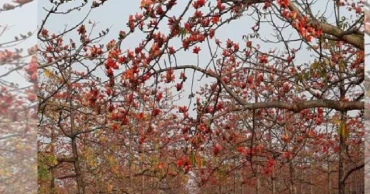
Shimul bloom draws thousands to Sunamganj; exposes infrastructure strain
Every spring, a remote riverbank in northeast Bangladesh, Sunamganj, turns bright red, sparking a short-lived but major economic boost.
Along the banks of the Jadukata River in Tahirpur upazila, some 300 kilometres from Dhaka, thousands of shimul (silk cotton) trees have erupted into bloom, transforming the famed Shimul Garden into a vivid red canopy against the rolling blue hills of Meghalaya across the border.
This year’s display coincided with Pahela Falgun and Valentine’s Day falling on the same date, amplifying the draw. Visitors poured in from early morning, many dressed in yellow, orange and red to mark the first day of spring, turning the riverside into what locals described as a carnival of colour.
The garden’s origins trace back to 2000, when then chairman of Badaghat Union, Joynal Abedin, planted around 3,000 shimul trees across 100 bighas of land at Manigaon. Over time, the site gained national recognition and has been described by local sources as one of the largest shimul gardens in Asia.
Two decades later, the seasonal bloom has become central to the economy of Tahirpur’s remote communities.
Small eateries, roadside tea stalls, hotels and boat operators reported brisk business as thousands arrived to photograph the fiery blossoms, ride horses through the grounds and sit along the riverbank. For many residents, the few weeks of peak bloom now represent a vital source of annual income.
“It felt like walking into a dream,” said a female visitor from Dhaka who travelled with her husband to see the blossoms. “We had seen photos before, but the real experience is beyond imagination. The only drawback was the crowd, making it difficult to find a quiet corner.”
The surge has also exposed infrastructure constraints. Long queues formed at boat terminals, while narrow approach roads struggled to handle the influx of vehicles. Traffic congestion and overcrowding were common complaints.
Ali Haider, another tourist, described the location as extraordinary but said improved road connectivity and the swift completion of a bridge over the Jadukata River would ease travel hassles and likely attract even more visitors.
Authorities deployed tourist police and members of law enforcement agencies, including plainclothes personnel, to maintain order and ensure safety during the peak period.
Funding delays stall haor embankments, putting Sunamganj’s Boro harvest at risk
Rakib Uddin, owner of the garden, said thousands of tourists began arriving from the first day of spring. Communication facilities have improved compared with previous years, he added, though visitors and locals alike believe further upgrades -- better roads, transport management and facilities -- could elevate the site into a premier tourist destination.
For now, however, the attraction’s power lies in its transience. Within weeks, the crimson petals will fall, the crowds will thin and the garden will return to quietude — waiting for another spring to set the riverbank ablaze once more, Rakib added.
5 days ago

Bangladesh’s incoming govt takes office with economy at crossroads
As Bangladesh prepares for the formation of a new government following the 13th national election, expectations are running high among depositors, investors and job seekers seeking relief from prolonged financial strain.
The BNP-led alliance is set to assume office amid mounting economic pressures, with questions swirling over who will take charge of the finance ministry and what policy direction the new administration will adopt to tackle banking fragility, stubborn inflation and sluggish job creation.
For Abdul Hamid, a retired government employee, said the stakes are deeply personal.
He has been unable to recover Tk 24 lakh that he placed as a fixed deposit in a private bank.
“I expected the new government that they will return my Tk 24 lakh, which was fixed and deposited in a private bank. But the bank fails to pay me the principal amount and benefits,” Hamid told UNB.
He said many depositors in several private sector banks face similar hardship, with institutions unable to repay funds, leaving families struggling due to a lack of liquidity.
Stock market investors are also looking for signs of a turnaround. Golam Azad, 45, invested around Tk 35 lakh in 2007 after being encouraged by a friend to seek higher returns.
He suffered losses during the stock market scams of 2010 and 2011 and has since waited for a sustained recovery.
Azad said he hopes the incoming democratic government will take meaningful steps to support market stability and protect investors.
Young graduates represent another anxious constituency.
Washim Habib, who completed his degree at a public university in 2021, has sat for the Bangladesh Civil Service (BCS) and other government recruitment examinations but remains unemployed.
Habib said he is seeking employment in either the public or private sector, noting that his elderly parents can no longer continue to support his expenses.
He expressed hope that the new democratic government will create opportunities to help him secure suitable work.
Finance Adviser Flags Structural Challenges
Against this backdrop, Dr. Salehuddin Ahmed, Finance Adviser to the interim administration, has issued a pointed warning about the scale of the economic challenges awaiting the next leadership.
New MPs, cabinet members to be sworn in Tuesday
Speaking to reporters at the Bangladesh Secretariat, he said the primary mission of the incoming government must be revitalising trade and industry while strengthening financial institutions to ensure long-term stability.
Job creation, he stressed, is central to restoring economic momentum.
“If business does not expand, employment will not be generated. And without employment, the purchasing power of the people will remain weak. This is one of the biggest challenges,” he said.
He urged policymakers to foster a vibrant private sector, arguing that the country’s industrial base remains relatively small and overly dependent on exports.
Inflation and Banking Sector Strains
Inflation, he said, remains a “multidimensional problem” that cannot be resolved through monetary policy alone.
While the interim administration has introduced several measures, broader and more comprehensive steps will be required to provide relief.
On banking sector reform, the adviser acknowledged that reorganisation efforts are under way but cautioned that “difficult decisions” lie ahead.
He praised recent initiatives by the central bank governor but noted that credit flow remains constrained and full public confidence in the banking system has yet to return, despite a recent uptick in deposits.
Capital Market and Energy Reform
To reduce overreliance on banks, Dr Salehuddin called for deeper capital market development.
“If we cannot develop the capital market, trade and commerce will not grow by relying solely on banks. Equity participation through the stock market and a strong bond market, especially for the private sector, are essential,” he said.
He said regulatory reform efforts are being slowed by legal complexities and ongoing court challenges.
The energy sector, he warned, poses a 'major long-term challenge'.
He called for intensified domestic exploration, including offshore drilling, and expressed disappointment at the slower-than-expected progress in solar energy development.
The insurance sector, he said, remains another 'sensitive area' where reform momentum has been limited despite various initiatives.
As the new administration prepares to take the oath of office, its first 100 days are likely to be defined by how effectively it can stabilise markets, restore investor confidence and translate high public expectations into tangible economic gains, economists said.
6 days ago
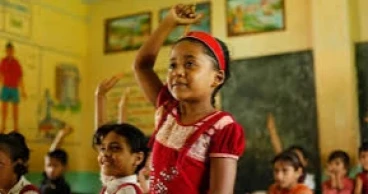
Bangladesh plans skills-based education for thousands of out-of-school children
For thousands of children left behind by poverty, migration, disability or family hardship, the classroom has long been out of reach in Bangladesh. Now, a new government move seeks to reopen that door—this time with skills at its core.
The Ministry of Primary and Mass Education has taken a fresh move to bring out-of-school children with learning through a skills-oriented alternative education programme, aiming not only to restore their right to education but also to prepare them as productive members of the future workforce.
A Development Project Proposal (DPP) titled “Alternative Learning Opportunities for Out-of-School Children” has been sent to the Planning Commission for approval.
Govt rolls out e-learning in 12 CHT schools
If cleared, the project will be implemented by the Bureau of Non-Formal Education (BNFE) from January 2026 to December 2028 in selected upazilas of all 64 districts.
With an estimated cost of Tk 158.73 crore, the project will be largely government-funded, with Tk 147.03 crore coming from the national exchequer and Tk 11.70 crore provided by UNICEF as project assistance.
Learning beyond the classroom
The initiative is designed to offer quality, non-formal primary education to children who have either dropped out of school or never enrolled at all.
But unlike traditional catch-up programmes, this one places strong emphasis on practical, livelihood-oriented skills alongside basic literacy and numeracy.
Officials involved in the project say the goal is twofold: to help children re-enter mainstream education and to gradually equip them with competencies suited to the demands of a changing, skills-driven economy.
Under the programme, children will receive flexible, non-formal primary education combined with basic skills training.
Life under threat: Feni schools continue classes in unsafe buildings
Key activities include mapping surveys to identify target children, delivery of education and skills modules, monitoring and evaluation, and the provision of learning and training materials.
Progress—and persistent gaps
Bangladesh has made significant strides in expanding access to primary education over the past decades.
The country achieved the Millennium Development Goal of universal primary enrolment, reduced dropout rates and steadily improved completion levels.
Free and compulsory primary education remains a constitutional commitment, and literacy rates have risen accordingly.
According to the Planning Commission, about 22.10 percent of people aged 15 and above are still illiterate.
Data from the Bangladesh Bureau of Statistics’ Labour Force Survey 2022 shows that 28.7 percent of working individuals have no formal education, while another 24.5 percent completed only some or all of primary schooling.
Only around one-third reached the secondary level.
These figures point to a persistent deficit in human resource development particularly among those who missed out on education early in life.
A second chance with dignity
Policymakers see the proposed project as a way to prevent children from falling permanently behind.
By offering flexible learning pathways and linking education with practical skills, the programme aims to make learning relevant, dignified and economically meaningful.
A senior Planning Commission official said the initiative could play a critical role in reintegrating excluded children into the education system.
“Once implemented, the project will provide skill-based, quality non-formal primary education to out-of-school children, helping them return to mainstream education and preparing them for the modern world,” the official said.
Education experts said investment in out-of-school children is as much a humanitarian obligation as it is a development priority.
Without such support, they warn, vulnerable children remain at high risk of child labour, chronic poverty and social marginalisation.
By nurturing their potential early through learning that blends education with skills, the initiative aims to turn a lost opportunity into a second chance, and to help build a more skilled, inclusive workforce for Bangladesh’s future.
7 days ago