Others

Ukraine to boycott Paralympics opening over Russian, Belarusian participation
Ukraine will boycott the opening ceremony of the Milano Cortina 2026 Paralympics on March 6 due to the participation of Russian and Belarusian athletes under their national flags, the country’s Paralympic Committee said.
The International Paralympic Committee (IPC) allocated 10 slots for Russian and Belarusian athletes, sparking protests from Ukraine over the ongoing war. Ukraine called the move “disappointing and outrageous” and demanded that its flag not be used at the ceremony.
Ukrainian Sports Minister Matvii Bidnyi confirmed officials will boycott the event, though Ukrainian athletes will still compete. The country’s skeleton racer Vladyslav Heraskevych criticized the IPC for allowing athletes supporting the war to carry their flags.
Russia has two slots each in Para alpine skiing, cross-country skiing, and snowboarding, while Belarus received four places in cross-country skiing. Ukraine said neither country went through the qualification process and condemned their inclusion amid the “horrific military aggression” in Ukraine.
The IPC said it is in contact with Ukraine’s committee and will discuss the matter internally.
With inputs from ALJAZEERA
20 hours ago
Trump-Iran tensions expose US policy dilemma
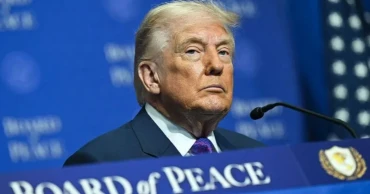
Rising tensions between the United States and Iran have highlighted deep contradictions in President Donald Trump’s foreign policy, as he calls for peace while simultaneously threatening military action against Tehran.
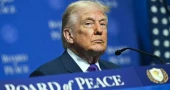
Speaking at a meeting of the Board of Peace, a Middle East coalition he helped form, Trump issued his latest warning to Iran, underscoring the clash between diplomacy and force that has defined much of his second term. While he has said he prefers a negotiated deal to halt Iran’s nuclear weapons programme, the White House has also sharply increased pressure, both rhetorically and militarily.
US officials say Iran would be “very wise” to reach an agreement, but at the same time Washington has overseen what analysts describe as the largest US military buildup in the Middle East since the 2003 Iraq War. Warships, fighter jets and other assets have been deployed near Iran, fuelling fears of a major escalation.
Trump’s threats are being taken seriously, particularly after the US followed through on military action against Venezuela earlier this year, an operation that ended with the capture of former President Nicolás Maduro. Unlike that strike, however, Washington’s objectives in Iran remain unclear.
The US president insists that last year’s strike on Iran “obliterated” its nuclear facilities, but has not explained why further military action may now be necessary, what new targets would be hit, or what the broader political goal would be.
Iran, weakened by sanctions and internal protests against its leadership under Supreme Leader Ayatollah Ali Khamenei, has signalled openness to talks on uranium enrichment. But negotiations have stalled, largely over US demands that Tehran also limit its ballistic missile programme and support for regional proxy groups.
Key questions remain unanswered, including whether Washington seeks regime change in Iran, how it would respond to Iranian retaliation against US bases in the region, and how a prolonged conflict could affect other Middle East priorities, such as efforts to rebuild Gaza under the Board of Peace framework.
Israel’s role is also uncertain. Israel previously joined US strikes on Iran and is widely expected to be involved again if a new campaign begins. Israeli Prime Minister Benjamin Netanyahu discussed the situation with Trump during a recent White House meeting.
Domestically, Trump faces growing political pressure. He returned to office promising to pull the US out of foreign conflicts, a message popular with his support base. Yet since taking office, he has authorised military actions in Syria, Venezuela, Iran and the Caribbean.
A large-scale air campaign against Iran could alienate some supporters ahead of the US midterm elections, particularly as voters express frustration over issues such as immigration and the economy. It could also clash with Trump’s repeated claims that he deserves the Nobel Peace Prize for ending multiple wars, a claim widely disputed.
Despite the uncertainty, Trump appears comfortable keeping allies and adversaries guessing. He has embraced the image of a global dealmaker, hosting high-profile summits and presiding over negotiations on trade, security and diplomacy.
On Iran, however, he has offered only a warning.
“We have to make a meaningful deal,” Trump said. “Otherwise, bad things happen.”
With inputs from BBC
20 hours ago
US boosts military presence as Iran fortifies key site
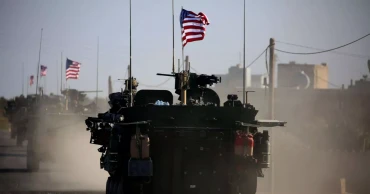
The United States has stepped up the movement of military aircraft and naval assets across Europe and towards the Middle East amid reports that President Donald Trump is weighing possible military action against Iran, while new satellite images indicate Tehran is reinforcing a sensitive military facility.
Flight-tracking data reviewed by BBC Verify show a surge in US military aircraft activity, including refuelling tankers, surveillance planes and transport aircraft operating from bases in Spain, Greece and Italy and heading towards the eastern Mediterranean and Gulf region. Analysts say the scale and pace of these movements are unusually high and suggest preparations for large-scale air operations.
Among the aircraft observed were KC-135 aerial refuelling tankers, E-3 surveillance jets and C-17 transport planes operated by the US Air Force. Data from Flightradar24 also indicated that HC-130J aircraft were flying from Europe to Al Udeid Air Base in Qatar, a key hub for US operations in the region.
At the same time, satellite imagery analysed by the Institute for Science and International Security shows Iran has added new layers of protection to a facility at the Parchin military site near Tehran. Images reveal that a concrete shell covering a newly built structure has been sealed with earth, with nearby soil piles suggesting the site could be further buried and transformed into a hardened bunker.
The Washington-based think tank assessed that the arched building may house a high-explosives test chamber and said the additional fortifications point to strategic importance. Parchin has previously been linked by Western analysts to explosives manufacturing and, historically, to nuclear-related testing.
Separately, Iranian state television broadcast footage of naval drills conducted jointly with Russia, including a simulated ship rescue operation. Satellite images showed a Russian navy warship docked at the Bandar Abbas military port. However, experts said the exercises were likely scheduled well in advance and were not necessarily connected to current tensions with Washington.
US military movements have also included the reported presence of the aircraft carrier USS Gerald R Ford near Morocco, reinforcing assessments that Washington is positioning forces across multiple theatres.
Defence analysts cautioned that the highly visible nature of the deployments means the US has lost the element of surprise, potentially requiring a broader or more sustained campaign if military action were to be launched.
Meanwhile, Trump has again criticised the United Kingdom’s plan to transfer the Chagos Islands to Mauritius while leasing back the Diego Garcia military base, marking his third change of position on the deal within a year.
US officials have not confirmed any imminent strike, but the combination of intensified military movements and Iran’s fortification work has heightened regional and international concern over a possible escalation.
With inputs from BBC
1 day ago

Former South Korean President Yoon given life term over martial law decree
Former South Korean President Yoon Suk Yeol was sentenced to life imprisonment on Thursday for imposing martial law during what became the country’s most severe political turmoil in decades.
Yoon was removed from office after attempting to bypass an opposition-dominated National Assembly by declaring martial law and deploying troops around the legislature on Dec. 3, 2024.
Judge Jee Kui-youn of the Seoul Central District Court found Yoon guilty of rebellion, ruling that he unlawfully mobilized military and police forces in a bid to take control of the liberal-led Assembly, detain political leaders and consolidate sweeping authority for a prolonged period.
Martial Law Move Revived Memories of Authoritarian Era
The declaration — South Korea’s first in more than 40 years — evoked memories of past military-backed governments, when emergency decrees enabled the deployment of armed forces and armored vehicles to suppress dissent.
As lawmakers rushed to the Assembly, Yoon’s martial law command announced broad powers, including suspending political activities, restricting media operations and permitting arrests without warrants.
The order remained in effect for about six hours before lawmakers broke through a military blockade, secured a quorum and unanimously voted to revoke it.
Yoon was impeached on Dec. 14, 2024, suspended immediately and formally removed by the Constitutional Court in April 2025. He has been detained since July while facing multiple criminal cases, with the rebellion charge carrying the harshest penalty.
Defense Rejects Verdict
One of Yoon’s attorneys, Yoon Kap-keun, criticized the ruling as a “foregone conclusion” based solely on the prosecution’s arguments and claimed the country’s rule of law had collapsed. He said the legal team would consult on whether to appeal.
Yoon told the court that his declaration of martial law was intended only to alert the public to what he described as legislative obstruction by liberals and that he would have accepted lawmakers’ decision had they voted against the measure.
Prosecutors argued that Yoon sought to cripple the Assembly and block lawmakers from overturning the decree — actions that exceeded his constitutional authority even under martial law.
Judge Jee said the deployment of troops to the legislature was central to the rebellion conviction, noting that Yoon aimed to prevent lawmakers from assembling, deliberating or voting, thereby paralyzing the Assembly’s constitutional functions.
Supporters and Critics Gather
Heavy police presence surrounded the court as Yoon supporters rallied outside, chanting as the bus carrying him arrived. Critics also gathered nearby, calling for capital punishment. No major violence was reported after the ruling.
Although prosecutors had sought the death penalty, analysts widely anticipated a life sentence because the failed power grab did not result in fatalities. South Korea has effectively maintained a moratorium on executions since 1997.
Other Officials Also Punished
The court also sentenced several former officials involved in implementing the martial law decree. Former Defense Minister Kim Yong Hyun received 30 years in prison for his key role in orchestrating the move and mobilizing troops.
Last month, Yoon was handed a separate five-year sentence for resisting arrest, falsifying the martial law proclamation and bypassing a required full Cabinet meeting.
The Seoul Central District Court also convicted other Cabinet members, including Prime Minister Han Duck-soo, who was sentenced to 23 years for attempting to legitimize the decree and falsifying official records. Han has appealed.
Yoon is the first former South Korean leader to receive a life sentence since ex-military ruler Chun Doo-hwan, who was sentenced to death in 1996 over his 1979 coup, the deadly 1980 crackdown in Gwangju and corruption. His sentence was later commuted to life imprisonment, and he was pardoned in 1997. Chun died in 2021.
2 days ago
Iran, US step up military posturing as nuclear talks remain uncertain
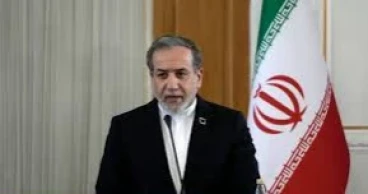
Iran and the United States intensified shows of military strength on Thursday as fragile nuclear negotiations between the two sides remained uncertain, with Tehran conducting joint drills with Russia and Washington moving another aircraft carrier closer to the Middle East.
The maneuvers highlight rising tensions. Iran this week carried out live-fire exercises in the Strait of Hormuz, the strategic waterway at the entrance to the Persian Gulf that handles about one-fifth of globally traded oil. At the same time, the USS Gerald R. Ford aircraft carrier moved nearer to the region, positioning close to the Mediterranean.
While the deployment of additional U.S. warships and aircraft does not necessarily signal an imminent strike on Iran, it provides President Donald Trump with that option if he chooses. Trump has so far refrained from military action after warning Tehran over its crackdown on peaceful protesters and mass executions, even as Washington resumed nuclear discussions that had been derailed by the Iran-Israel conflict in June.
In a post on Truth Social, Trump suggested the United States could use bases such as Diego Garcia and the airfield at Fairford if Iran fails to reach an agreement, as he also pressed the United Kingdom over plans concerning the Chagos Islands.
Domestically, Iran continues to face unrest following its suppression of protests. Memorial ceremonies marking 40 days since the deaths of demonstrators have drawn mourners, with some gatherings echoing anti-government slogans despite official warnings.
Joint Drill with Russia
Iranian forces and Russian naval personnel conducted exercises in the Gulf of Oman and the Indian Ocean, according to Iran’s state news agency IRNA. The drills were aimed at enhancing operational coordination and sharing military expertise.
China, which participated in previous “Security Belt” drills, was not mentioned as taking part this time. Recent sightings indicated the presence of a Russian Steregushchiy-class corvette at the Iranian port of Bandar Abbas.
Iran also issued warnings to pilots in the region about planned rocket launches, signaling potential anti-ship missile tests during the exercise.
Meanwhile, ship-tracking data showed the USS Gerald R. Ford off Morocco’s Atlantic coast on Wednesday, suggesting it could soon pass through the Strait of Gibraltar and head toward the eastern Mediterranean alongside its guided-missile destroyers.
Positioning the carrier there would enhance U.S. air and missile defense capabilities, potentially bolstering protection for regional allies such as Israel and Jordan in the event of conflict. Similar deployments were made during the Israel-Hamas war in Gaza amid fears of Iranian retaliation.
Protests and Rising Death Toll
Mourning ceremonies for those killed during last month’s protests have gained momentum. In keeping with tradition, Iranians often hold memorials 40 days after a death. Large gatherings were reported at Tehran’s Behesht-e Zahra cemetery, where some participants chanted against the ruling clerical establishment while singing patriotic songs.
The protests initially erupted on Dec. 28 at Tehran’s Grand Bazaar over the sharp depreciation of the rial before spreading nationwide. Tensions escalated further on Jan. 8 following calls for demonstrations by exiled crown prince Reza Pahlavi.
The Iranian government has reported 3,117 deaths linked to the unrest. However, the U.S.-based Human Rights Activists News Agency estimates that more than 7,000 people have been killed, with additional casualties feared.
2 days ago
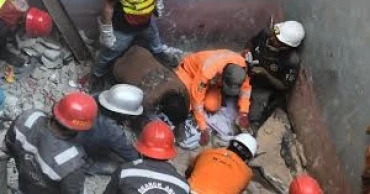
Gas blast kills 16 as apartment building partially vollapses in Southern Pakistan
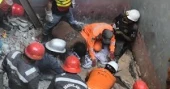
A powerful gas explosion tore through a residential apartment building in Karachi on Thursday, leaving at least 16 people dead, including women and children, and injuring several others after part of the structure caved in, officials said.
The blast occurred in a residential neighborhood of Karachi, the capital of Sindh province, as residents were preparing their pre-dawn meal to mark the first day of the holy month of Ramadan, said local police chief Rizwan Patel. Rescue teams continued clearing debris in search of possible survivors trapped beneath the rubble.
Authorities had earlier confirmed 13 deaths, but the toll climbed to 16 after three more bodies were recovered from the wreckage, Patel added.
President Asif Ali Zardari conveyed his condolences to the bereaved families and instructed officials to provide the best possible medical care to the injured. He also urged a swift completion of rescue efforts and called on the Sindh provincial government to strictly enforce building regulations, ensure the safety of gas cylinders and conduct a comprehensive investigation to prevent such tragedies in the future.
Like much of Pakistan, most homes and apartment buildings in Karachi use natural gas for cooking. Due to low gas pressure, however, many households also depend on liquefied petroleum gas (LPG) cylinders.
In a similar incident in July, a gas explosion at a house in Islamabad following a wedding reception killed eight people, including the newlywed couple, according to authorities.
2 days ago

37 dead, 26 hospitalized after toxic gas leak at Nigeria mine
At least 37 people died and 26 others were hospitalized after a toxic gas leak at a mine in north-central Nigeria, police said.
The incident took place early Tuesday in Kampani Zurak community in the Wase area of Plateau state, according to police spokesperson Alfred Alabo.
Preliminary findings indicate that the miners were exposed to a sudden release of lead oxide along with other harmful gases, including sulphur and carbon monoxide, which are highly toxic, especially in enclosed or poorly ventilated spaces, he said. The bodies of the victims have been handed over to their families for burial in line with their religious customs.
Authorities have shut down the mining site, and an investigation into the cause of the leak is ongoing.
Nigeria’s Minister of Solid Minerals Development Dele Alake said the miners were unaware of the dangerous nature of the emissions and continued working despite the exposure.
It remains unclear what mineral was being extracted at the site or whether the operation was legal. Nigeria has been grappling with illegal gold mining activities for years, with hundreds of fatalities reported in related incidents.
2 days ago
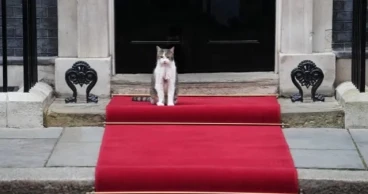
Larry the cat celebrates 15 years as No 10’s iconic chief mouser
Larry the Cat has completed 15 years as the resident mouse catcher at 10 Downing Street, becoming one of the most recognisable and enduring figures in British public life.
The 19-year-old tabby, whose official title is chief mouser to the Cabinet Office, has served under six prime ministers and grown into a familiar sight outside the famous black door in central London.
Frequently seen lounging on the doorstep, chasing pigeons or attracting media attention, Larry has become as much a part of Downing Street’s identity as the building itself.
Larry was adopted in February 2011 from the Battersea Dogs and Cats Home by then prime minister David Cameron and his wife Samantha. Cameron had said at the time that he was delighted to welcome Larry and believed the cat would charm visitors to No 10, reports BBC.
As chief mouser, Larry’s role is to keep the rodent population under control, although his effectiveness has often been a subject of public debate.
The position has a long tradition, with cats serving in government buildings since at least the 1920s, and records of feline residents dating back to the time of King Henry VIII.
Larry was the first official chief mouser since Humphrey, a stray adopted in 1989 during the premiership of Margaret Thatcher, who retired in 1997.
Now the feline equivalent of over 90 human years, Larry reportedly made his first successful catch in April 2011 and has since provided moments of light relief during some of the UK’s most turbulent political periods.
2 days ago
UN Security Council to hold high-level meeting on Gaza before Trump's Board of Peace convenes
The U.N. Security Council will hold a high-level session on Wednesday to discuss the Gaza ceasefire agreement and Israel’s moves to tighten control in the West Bank, ahead of world leaders traveling to Washington for the first meeting of President Donald Trump’s proposed Board of Peace on the future of the Palestinian territories.
The council meeting in New York had initially been set for Thursday but was brought forward after Trump scheduled the board’s gathering for the same day, which would have complicated travel for diplomats wishing to attend both events. The change highlights concerns about possible overlapping and competing agendas between the United Nations’ most powerful body and Trump’s new initiative, which aims to mediate global conflicts and has drawn unease in some countries.
Palestinian U.N. Ambassador Riyad Mansour said he hopes the international community will “stop Israel and end their illegal effort against annexation,” whether discussions occur in Washington or New York.
Foreign ministers from the United Kingdom, Israel, Jordan, Egypt and Indonesia, among others, are expected to join the monthly Middle East meeting of the 15-member council. Many Arab and Islamic nations had requested that Gaza and Israel’s controversial settlement expansion in the West Bank be discussed before some of them travel to Washington.
Trump’s Board of Peace was originally envisioned as a small group overseeing his 20-point plan for Gaza’s future. However, his broader ambition to use the body as a mediator for conflicts worldwide has prompted skepticism among key allies. More than 20 countries have accepted invitations so far, but close U.S. partners including France and Germany have yet to join and have instead reaffirmed their support for the United Nations, which is undergoing reforms and facing funding cuts.
U.S. ambassador to the U.N. Mike Waltz rejected concerns about the board’s makeup, telling conservative radio host Hugh Hewitt that relevant countries such as Qatar and Egypt — both in contact with Hamas leadership — have accepted invitations and are aligned with Washington.
The council session comes a day after nearly all its 15 members, except the United States, along with dozens of diplomats, joined Mansour in issuing a statement on behalf of 80 countries and several organizations condemning Israel’s recent steps in the West Bank. The statement called for an immediate reversal and stressed strong opposition to any form of annexation.
Israel is moving ahead with a controversial land regulation process that would deepen its authority in the occupied territory. Israeli Energy Minister Eli Cohen described the policy as amounting to “de facto sovereignty” that would block the creation of a Palestinian state. Palestinians, Arab states and human rights groups say the moves amount to illegal annexation of land where about 3.4 million Palestinians live and hope to form a future state.
The meeting will also review the U.S.-brokered ceasefire that began on Oct. 10 after more than two years of war between Israel and Hamas. The United Kingdom, which holds the council presidency, said briefings will be delivered by U.N. political chief Rosemary DiCarlo, along with Israeli and Palestinian civil society representatives — the first such participation since the Oct. 7 attacks.
Some parts of the ceasefire have progressed, including Hamas freeing all hostages it held and an increase in humanitarian aid entering Gaza, though the United Nations says assistance levels remain inadequate. A new technocratic committee has also been formed to manage Gaza’s daily governance.
However, major challenges remain, including deploying an international security force, disarming Hamas and rebuilding Gaza. Trump said Board of Peace members have pledged $5 billion for reconstruction and will contribute thousands of personnel for stabilization and policing forces, though he provided no specifics. Indonesia’s military has indicated up to 8,000 troops could be ready by late June for a possible humanitarian and peace mission deployment to Gaza.
2 days ago
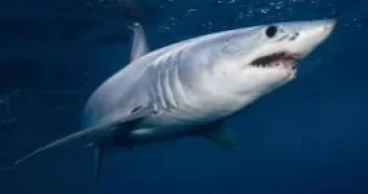
Shark filmed for first time in Antarctica’s near-freezing depths
Scientists have captured the first-ever footage of a shark swimming in the icy waters of the Antarctic Ocean, challenging long-held assumptions that sharks do not inhabit the region.
The shark — identified as a sleeper shark — was recorded in January 2025 by a camera operated by the Minderoo-UWA Deep-Sea Research Centre. The device had been deployed off the South Shetland Islands near the Antarctic Peninsula. Researchers had not expected to encounter sharks at such southern latitudes.
Alan Jamieson, founding director of the research centre at the University of Western Australia, said many experts believed sharks were absent from Antarctic waters. “There’s a general assumption that you don’t find sharks in Antarctica,” he said, noting that the specimen was sizeable — estimated at 3 to 4 meters (10 to 13 feet) long. “It’s not small. These animals are like tanks,” he added.
The shark was filmed at a depth of 490 meters (1,608 feet), where the water temperature was just 1.27 degrees Celsius (34.29 degrees Fahrenheit). A skate — a close relative of sharks — was also visible resting on the seabed, though its presence was not unusual as skates are known to inhabit such southern waters.
Jamieson said he could find no prior record of a shark documented within the Antarctic Ocean, also known as the Southern Ocean, which lies south of the 60-degree latitude line. Conservation biologist Peter Kyne of Charles Darwin University, who was not involved in the research, agreed that sharks had never before been recorded so far south.
While climate change and rising ocean temperatures could potentially influence shark distribution, Kyne noted that limited data from the remote Antarctic region makes it difficult to confirm shifts in range. He suggested sleeper sharks may have long existed there undetected.
Researchers believe the shark maintained a depth of around 500 meters because it represented the warmest layer within a stratified water column. Antarctic waters are heavily layered to depths of roughly 1,000 meters due to differences in temperature and density, with colder, denser water below mixing poorly with fresher meltwater near the surface.
Jamieson said the Antarctic sleeper shark population is likely sparse and hard to observe. He suspects others may inhabit similar depths, feeding on the carcasses of whales, giant squid and other marine animals that sink to the ocean floor.
Research cameras at such depths are rare in Antarctic waters and can only operate during the Southern Hemisphere’s summer months from December to February. For the rest of the year, little observation occurs.
“That’s why we still encounter surprises like this,” Jamieson said, describing the footage as a significant discovery.
3 days ago