Business

Tk 1,000 discount & cashback on bKash payment at superstores this Ramadan
Like previous years, customers can enjoy up to Tk 1,000 in discounts and cashbacks this Ramadan on shopping with bKash payment at top superstores across the country. This offer has been introduced to make grocery and daily essential shopping more affordable, hassle‑free, and safe during the holy month of Ramadan and Eid. Additionally, exciting discounts and cashbacks of various amounts are also available on bKash payment at renowned fashion brands, bakeries, iftar markets, home appliances, restaurants, hotels, e‑ticketing, and many other products and services.
Tk 500 Discount at Superstores
Customers can get discount by applying ‘D2’ coupon code in bKash app and making minimum bKash payment of Tk 1,500 at selected superstores. During Ramadan, customers can avail Tk 100 once per day, and up to Tk 500 in 5 transactions during the campaign period.
This offer is available at different outlets of Agora, Unimart, Meena Bazar, Prince Bazar, Amana Big Bazar, Apon Family Mart, Big Bazar, Lavender, Mostafa Mart, Wholesale Club, Halishahar Mart, Khulshi Mart, Utsab Super Market, Bengal Meat, and several other superstores.
Tk 300 Discount at Shwapno & Daily Shopping
Meanwhile, customers can enjoy up to Tk 300 discount at ‘Shwapno’ and ‘Daily Shopping’ located nationwide by applying the ‘D3’ coupon code. The offer is applicable for minimum bKash payment of Tk 800. Customers can get Tk 100 discount once per day and up to Tk 300 in 3 transactions during the campaign.
Tk 200 Cashback on Online Groceries
For any order from online grocery platforms Chaldal, Daily Shopping, Meena Bazar, and Paragon, customers can get up to Tk 200 cashback by making a minimum bKash payment of Tk 1,200. Customers can receive 5% cashback up to Tk 100 once per day, and up to Tk 200 in 2 transactions during the campaign period.
It is to be noted that the bKash payment offers on grocery shopping will remain valid till March 21, 2026.
1 day ago

Remittance inflow crosses $2 billion in just 18 days of February
Expatriate Bangladeshis have sent over $2 billion in remittances during the first 18 days of February, as money transfers surged ahead of Ramadan and Eid.
According to data released by Bangladesh Bank on Thursday (Feb 19), if this upward trend continues, total remittances for the month are expected to cross the $3 billion milestone.
Central bank statistics show that January 2026 saw an inflow of $3.17 billion, marking it as the third-highest monthly total in the country's history. The current fiscal year (FY 2025–26) has shown robust growth, with total remittances reaching $21.56 billion between July 1 and February 18.
This represents a significant 22.3 percent increase compared to the $17.63 billion received during the same period of last fiscal year 2024-25.
The historical peaks for monthly remittances remain:
$3.29 billion (March 2025 – fueled by Eid-ul-Fitr)
$3.22 billion (December 2025)
$3.17 billion (January 2026)
Bangladesh’s forex reserves surge past $34 billion driven by remittance boom
Impact on Reserves
Economists believe the surge in formal channel transfers is a result of a stabilized exchange rate and a decrease in illegal hundi activities following the political transition in August 2024. This influx is providing a much-needed boost to the nation's foreign exchange reserves.
As of February 17, the country's gross reserves stood at $34.54 billion. However, according to the IMF’s BPM-6 calculation method, the net reserves are currently valued at $29.86 billion.
Banking officials and experts point to two primary drivers:
Ramadan Preparation: Families in Bangladesh face higher expenses during Ramadan, prompting expatriates to send more money home.
Increased confidence in the banking sector and a stable dollar rate have encouraged migrants to shun illegal channels in favor of official ones.
1 day ago

CAB demands action over obstruction of drive, unjustified price hike
Consumers Association of Bangladesh urged authorities to take strict legal measures against parties blocking a government-led market initiative and imposing unjustified price increases on essential goods, highlighting growing concerns over consumer protection and market regulation.
In a statement issued on Thursday, the consumer rights body strongly protested the incident that took place during a monitoring drive at Moulvibazar in the capital.
Date prices jump on first day of Ramadan despite ample supply, tariff cuts
According to the statement, a team led by Abdul Jabbar Mondal, Assistant Director of the National Consumer Rights Protection Department’s Dhaka Divisional Office, conducted the drive on Wednesday.
During the drive, inspectors found that the price of lentils had been increased by Tk 5 per kg within just 10 days at a trading establishment.
When asked to explain the price hike, the traders claimed higher procurement costs but failed to produce any valid cash memos in support of their claim.
They reportedly admitted that goods were purchased on credit and cash memos were collected only after payment was made following sales — a practice that violates existing laws and undermines market transparency.
In this connection, the authorities fined the establishment Tk 5,000 under Section 45 of the Consumer Rights Protection Act, 2009.
CAB alleged that Mohammad Ali Bhuiyan, president of the Moulvibazar Traders’ Association, publicly refused to pay the fine and mobilised traders, announcing a shutdown of shops.
He was also accused of inciting others and creating obstruction to the government operation.
CAB said unjustified price hikes of essentials, failure to maintain proper cash memo documentation and resistance to official monitoring drives reflect disorder in market management and anti-consumer practices.
The organisation called for exemplary punishment for those involved in price manipulation and obstruction of official duties, strict enforcement of mandatory cash memo issuance and stronger, regular market monitoring to ensure transparency and accountability.
It also urged the authorities concerned to take swift and effective steps to safeguard consumers’ rights and uphold good governance in the market system.
1 day ago
Date prices jump on first day of Ramadan despite ample supply, tariff cuts
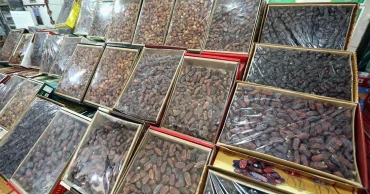
The prices of dates surged by as much as Tk 50 per kilogram in Dhaka on the first day of Ramadan, even as traders and officials say supplies remain adequate and import duties were recently reduced to stabilise the market.
Zahidi dates, a popular choice among middle, and lower-income consumers, were selling for Tk 350 per kg on Thursday, up from Tk 280-300 earlier this week.
Compared with the first day of Ramadan last year, the variety is nearly Tk 100 per kg more expensive.
Lower-priced loose or ‘bosta’ dates were trading at Tk 250–280 per kg, up from Tk 220–250 two days ago, according to visits to several retail markets in the capital.
Premium varieties saw even steeper price points. ‘Ajwa’ dates were selling for up to Tk 1,000 per kg, while Medjool reached Tk 1,650-1,800 per kg. Mid-range varieties such as Mabroom and Kalmi Maryam were priced between Tk 850 and Tk 950 per kg.
The increase comes despite a recent decision by the National Board of Revenue to cut import duties on dates to 15 percent from 25 percent ahead of Ramadan, a move aimed at keeping prices in check during peak demand.
According to official data, Bangladesh’s annual demand for dates ranges between 90,000 and 100,000 tonnes, with Ramadan accounting for 60,000 to 80,000 tonnes. Current reserves are about 25 percent higher than total demand, suggesting no immediate supply shortfall.
Some traders attributed the spike to market speculation.
A rumour about 150 containers of dates sinking near Thailand has circulated in recent days, prompting concerns among retailers. However, wholesalers in Dhaka said prices at the wholesale level have not risen.
“There has been no increase in wholesale prices,” said Abdur Rahim, a fruit trader with 27 years of experience at Badamtoli, one of the capital’s main wholesale markets, in a phone interview.
Consumers expressed frustration over the sudden increase. Mohammad Azizul, a buyer in the Motijheel area, said he paid Tk 350 per kg for Zahidi dates on Thursday after purchasing the same variety for Tk 280 last week.
10 lakh families to get affordable protein-rich food during Ramadan
“If prices change this quickly, many of us will have to reconsider buying dates,” he said, urging authorities to monitor the market.
Retailers, meanwhile, maintained that supply remains sufficient across markets in Dhaka, even as prices climbed at the consumer level on the first day of the fasting month.
1 day ago

Stocks end week sharply lower as DSE, CSE indices tumble
Stocks closed the week on a sharp downturn on Thursday as key indices at both the Dhaka Stock Exchange (DSE) and the Chittagong Stock Exchange (CSE) fell significantly, with most listed companies witnessing price erosion and overall turnover declining.
The market failed to rebound on the last trading day despite three consecutive sessions of losses. The benchmark DSEX index of the Dhaka bourse shed 53 points at the close after remaining in the red throughout the session.
The Shariah-based DSES index lost 10 points, while the blue-chip DS30 index declined by 12 points.
Losers dominated the DSE trading floor, as prices of 313 companies declined against 46 gainers, while 33 issues remained unchanged.
The turnover at the DSE dropped by Tk 376 crore to Tk 559 crore, down from Tk 935 crore in the previous session.
In the block market, shares worth Tk 29 crore from 24 companies were traded, with National Bank PLC posting the highest block turnover of Tk 6 crore.
Rahima Food Corporation Limited topped the DSE gainers’ chart with a 6 percent rise, while First Finance Limited plunged 10 percent to become the worst loser.
Meanwhile, the CSE also witnessed a notable decline, with its benchmark CASPI index falling by 79 points.
Stocks slide at DSE, CSE in early trading
Of the traded issues at the port city bourse, 113 declined, 46 advanced and 23 remained unchanged.
The turnover at the CSE fell by nearly Tk 8 crore to Tk 13 crore, compared to Tk 21 crore in the previous session.
Premier Leasing & Finance Limited emerged as the top gainer at the CSE with an almost 8 percent increase, while NRB Bank PLC declined 10 percent to end as the worst performer.
1 day ago

Stocks slide at DSE, CSE in early trading
Trading at the country’s two bourses witnessed a downward trend in the first half on Thursday, the last working day of the week, with key indices slipping amid a majority of issues closing lower.
At the Dhaka Stock Exchange (DSE), the benchmark DSEX lost 8 points during the first half of trading.
The Shariah-based DSES index shed 2 points, while the blue-chip DS30 index edged up by 1 point.
Most of the traded issues declined in price. Of the total scrips traded, 195 advanced declined, 126 gained and 69 remained unchanged.
The turnover at the DSE stood at Tk 320 crore in the first half of the session.
Meanwhile, the Chittagong Stock Exchange (CSE) also experienced a fall in its key index.
The CSE All Share Price Index (CASPI) dropped by 4 points in early trading.
Of the issues traded at the CSE, 66 declined, 37 advanced and 13 remained unchanged.
The port city bourse recorded a turnover of Tk 4 crore in the first half of the day’s trading.
2 days ago
Chicken, chickpeas, fruit prices jump in Dhaka before Ramadan
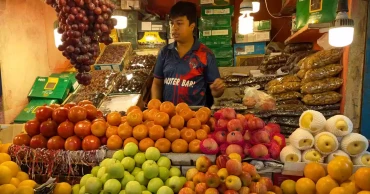
The prices of chicken, chickpeas and fruits have surged in Dhaka’s kitchen markets ahead of Ramadan, driven by rising demand and tighter supplies, adding fresh strain on household budgets.
A visit to several markets in the capital on Wednesday found that the prices of chickpeas, lentils, poultry and fruits have increased sharply over the past week, with traders blaming a sudden spike in demand while consumers alleged syndication.
At Karwan Bazar wholesale market, good quality chickpeas were selling at Tk 90-100 per kg. The same item was retailing at Tk 110-115 per kg in Shantinagar, Rampura and Badda, up from Tk 80-85 a week ago.
The prices of lentils also climbed. Anchor daal, which was selling at Tk 50 per kg earlier, is now priced at Tk 80. Coarse lentils used for preparing popular Ramadan snacks like onion fritters (piyaju) rose to Tk 120 per kg from Tk 90-100.
Chickpea traders said supply remains adequate but prices increased due to higher demand ahead of Ramadan.
Poultry prices witnessed a steep rise within days. Broiler chicken was selling at Tk 200-220 per kg, up from Tk 190-200 two days ago and Tk 160-170 a week earlier. Sonali chicken was retailing at Tk 340-360 per kg, compared to Tk 320-340 two days ago and Tk 280-300 last week.
“Wholesale prices of chicken increased from Tuesday evening, forcing us to adjust retail rates,” said Latif, a poultry trader in North Badda.
Local (deshi) chicken prices also rose by Tk 50-60 per kg to Tk 700-720 from Tk 650.
Beef prices increased to Tk 800 per kg in markets where it was previously sold at Tk 750. Mutton was selling at Tk 1,000-1,200 per kg depending on the market.
Consumers expressed frustration over the price spiral.
“Like every Ramadan, prices of almost all items have been raised before the fasting month begins. We have to spend an extra Tk 2,000-3,000 for monthly groceries,” said Afsana Akter at Rampura market.
Another buyer, Ehsanur Rahman, alleged manipulation. “If there were supply shortages, prices would have increased weeks ago. The sudden hike just before Ramadan indicates syndication.”
In the fruit market, prices of most fruits increased except dates, which dropped by Tk 50-100 per kg depending on variety.
Malta rose to Tk 300-350 per kg from Tk 250-260. Apples climbed to Tk 350-380 from Tk 280-320. Jujube increased to Tk 200-250 from Tk 120-180, while pomegranate prices jumped to Tk 520-580 per kg from Tk 450-480. Pineapple prices rose to Tk 80-100 per piece from Tk 60.
Fruit trader Suman in Motijheel alleged that a syndicate at the Badamtoli wholesale market influences prices every Ramadan.
Sirajul Islam, president of the Badamtoli Fruit Importers’ Association, said limited import permits given to a few traders create scope for syndication. Expanding import opportunities could help stabilise the fruit market.
Vegetable prices remained largely stable for beans, bottle gourd, turnip, radish and bitter gourd. However, cucumber, carrot and tomato prices increased to Tk 80-100 per kg from Tk 50-60 last week.
Lemon prices also climbed, with retail rates reaching Tk 120 per four pieces, while wholesale prices ranged between Tk 90-100 per four depending on variety.
Market insiders said monitoring has been relatively weak due to administrative focus on the 13th parliamentary elections, giving room to certain trader groups to raise prices of Ramadan essentials.
Vice-President of the Consumers Association of Bangladesh SM Nazer Hossain said stabilising the market during Ramadan is the first expectation from the new government. “The government must rein in prices at any cost.”
Meanwhile, Commerce Minister Khandaker Abdul Muktadir assured that the market would return to normal soon. “There is adequate stock of essential commodities for Ramadan and beyond. Supplies are normal and there is no reason to panic.”
Muktadir attributed the initial price hike to a one-off surge in demand, as many consumers purchase groceries for the entire month at once, creating temporary pressure on the retail market.
Describing Ramadan market management as a major test for the government, the minister said there is no alternative to ensuring stability in essential commodity prices during the holy month.
2 days ago

Stocks extend losing streak as DSE indices fall for third straight day
Stocks extended their downward trend for the third consecutive session at the Dhaka Stock Exchange (DSE) on Wednesday, with all major indices closing lower amid a decline in turnover and majority share prices.
On the fourth trading day of the week, the benchmark DSEX shed 51 points. The Shariah-based DSES dropped 11 points, while the blue-chip DS30 index lost 16 points.
Most listed companies ended in the red as 286 issues declined against 82 gainers, while 25 remained unchanged.
Stocks extend losing streak for second day as DSE slips, turnover eases
The turnover also fell, snapping a three-day streak of transactions exceeding Tk 1,200 crore. Total turnover at the DSE declined to Tk 935 crore on the day.
In the block market, shares worth Tk 13 crore from 40 companies were traded. GQ Ball Pen Industries Ltd topped the block trade list with shares worth Tk 2.5 crore changing hands.
Nearly 10 percent price appreciation placed Nahee Aluminium Composite Panel PLC at the top of the gainers’ chart, while Union Capital Limited plunged nearly 9 percent to become the day’s worst performer.
Meanwhile, the Chittagong Stock Exchange (CSE) also ended lower. Its benchmark CASPI index declined by 84 points.
At the CSE, 122 issues declined against 79 gainers, while 27 remained unchanged.
The turnover at the port city bourse, however, edged up slightly to around Tk 22 crore, compared to Tk 21 crore in the previous session.
Stocks edge up at DSE, CSE in early trading
Hami Industries PLC emerged as the top gainer at the CSE with nearly 10 percent price growth, while Union Capital Limited lost 10 percent to bottom the losers’ list.
2 days ago

Bangladesh to seek delay in LDC graduation, says Commerce Minister
The newly elected BNP government will take necessary steps to defer Bangladesh’s graduation from the Least Developed Country (LDC) status, Commerce Minister Khandaker Abdul Muktadir said on Wednesday.
“We will take all required measures to defer the LDC graduation. Work on the matter has already begun,” Muktadir told reporters at the Secretariat on his first day in office.
Muktadir said the government is keen to defer the graduation timeline and will do whatever is necessary to that end.
The initiative has started from the Ministry of Commerce and will be pursued in coordination with the Economic Relations Division (ERD) to expedite required communications and procedures.
Referring to long-standing demands from business leaders, he said the issue is being treated with utmost priority. “There is no obligation to send a letter within the first week, but we have started working on it from today.”
On the recent slowdown in exports, the Commerce Minister said Bangladesh’s export basket remains highly concentrated, with nearly 85 percent of total exports dependent on a single product.
To overcome the vulnerability, Muktadir stressed the need for diversification by adding new products and expanding into new markets. The private sector, particularly investment-oriented entrepreneurs, will receive necessary support, he said.
Responding to concerns over the Ramadan market, Muktadir said stable supply would ensure market stability. “The government has adequate stocks of essential commodities for Ramadan and the subsequent period, with sufficient supplies also in the pipeline. There is no reason to panic over the Ramadan market.”
Explaining the price hikes of certain items at the beginning of Ramadan, he said the increases are often driven by a one-off surge in demand as consumers tend to purchase for the entire month at once, temporarily impacting the retail market. “Such impact does not last long.”
Finance Minister Amir Khosru unveils ambitious reform plan on day one
Asked whether the onset of Ramadan immediately after the new government assumed office poses a major challenge, Muktadir said managing the holy month will be a crucial test for the government. “We must meet people’s expectations. There is no alternative to success.”
On foreign and domestic investment, the minister noted that investment does not flow amid uncertainty. A stable environment is the primary condition for attracting investment, as investors seek assurance of expected returns against their capital and labour.
Muktadir said Bangladesh has a large working-age population, with around 2 to 2.2 million people entering the labour market every year. Investment stagnation over the past two to three years has created significant pressure and failure to address the situation promptly could pose serious risks to employment and the broader economy.
State Minister for Commerce Md Shariful Alam and Commerce Secretary Mahbubur Rahman were present.
Later, the Commerce Minister exchanged views with senior officials and heads of departments under the ministry.
3 days ago

Bangladesh gold price drops Tk 3,266 per bhori; 22-carat set at Tk 255,558
Gold prices in Bangladesh have declined again, with the rate of 22-carat gold reduced by Tk 3,266 per bhori to Tk 255,558, the Bangladesh Jewellers Association (Bajus) announced on Wednesday.
In a morning statement, Bajus said the price of pure gold (tejabi gold) fell in the local market, prompting a fresh adjustment that takes immediate effect.
Under the revised rates, 21-carat gold will be sold at Tk 243,953 per bhori (11.664 grams), 18-carat at Tk 209,077, and traditional-method gold at Tk 171,111 per bhori.
The selling price of gold will include a mandatory 5 percent government VAT and a minimum 6 percent making charge set by Bajus. However, making charges may vary depending on design and quality.
On Tuesday morning, Bajus had cut the price of 22-carat gold by Tk 2,216 to Tk 258,824 per bhori. With the latest adjustment, gold prices have declined by a total of Tk 5,482 per bhori in two consecutive revisions.
So far in 2026, gold prices have been adjusted 30 times in the domestic market — raised on 18 occasions and reduced 12 times.
Gold price drops by Tk 2,216 per bhori in Bangladesh
Meanwhile, silver prices remain unchanged. A bhori of 22-carat silver is currently selling at Tk 6,357, 21-carat at Tk 6,065, 18-carat at Tk 5,190, and traditional silver at Tk 3,907.
Silver prices have been adjusted 17 times this year, including 10 hikes and seven cuts.
3 days ago