Environment

Severe air pollution pushes Dhaka to second spot globally
Dhaka, the densely populated capital of Bangladesh, ranked second among the world’s most polluted cities on Saturday morning, recording an Air Quality Index (AQI) of 223 at 10:25 am.
Today, the city’s air was classified as ‘very unhealthy’, indicating a serious health threat, according to the AQI report.
Kabul in Afghanistan, Lahore in Pakistan, and Kolakata in India occupied the first, third, and fourth spots on the list, with AQI scores of 343, 221, and 215 respectively.
According to the AQI scale, a reading between 50 and 100 is considered ‘moderate’, with generally acceptable air quality, though sensitive individuals should limit prolonged outdoor exertion. AQI levels of 101–150 are ‘unhealthy for sensitive groups’, 151–200 is ‘unhealthy’, 201–300 is ‘very unhealthy’, and readings above 301 are considered ‘hazardous’, posing severe health risks.
Dhaka ranks second among world’s most polluted cities
The AQI, which reports daily air quality, informs residents how clean or polluted the air is and highlights potential health effects. In Bangladesh, the AQI is calculated based on five key pollutants: particulate matter (PM10 and PM2.5), nitrogen dioxide (NO2), carbon monoxide (CO), sulfur dioxide (SO2), and ozone.
Dhaka has long struggled with air pollution. Air quality usually deteriorates in winter and improves during the monsoon season.
The World Health Organization (WHO) estimates that air pollution causes about seven million deaths worldwide each year, primarily from stroke, heart disease, chronic obstructive pulmonary disease, lung cancer, and acute respiratory infections.
6 hours ago

Dhaka ranks second among world’s most polluted cities
Dhaka, the densely populated capital of Bangladesh, ranked second among the world’s most polluted cities on Friday morning, recording an Air Quality Index (AQI) of 299 at 08:45 am.
Today, the city’s air was classified as ‘very unhealthy’, indicating a serious health threat, according to the AQI report.
Lahore in Pakistan, Delhi in India, and Kolakata in India occupied the first, third, and fourth spots on the list, with AQI scores of 320, 208, and 192 respectively.
Dhaka records AQI 222, ranks third in world pollution index
According to the AQI scale, a reading between 50 and 100 is considered ‘moderate’, with generally acceptable air quality, though sensitive individuals should limit prolonged outdoor exertion. AQI levels of 101–150 are ‘unhealthy for sensitive groups’, 151–200 is ‘unhealthy’, 201–300 is ‘very unhealthy’, and readings above 301 are considered ‘hazardous’, posing severe health risks.
The AQI, which reports daily air quality, informs residents how clean or polluted the air is and highlights potential health effects. In Bangladesh, the AQI is calculated based on five key pollutants: particulate matter (PM10 and PM2.5), nitrogen dioxide (NO2), carbon monoxide (CO), sulfur dioxide (SO2), and ozone.
Dhaka has long struggled with air pollution. Air quality usually deteriorates in winter and improves during the monsoon season.
The World Health Organization (WHO) estimates that air pollution causes about seven million deaths worldwide each year, primarily from stroke, heart disease, chronic obstructive pulmonary disease, lung cancer, and acute respiratory infections.
1 day ago

Severe weather likely cause of puffin deaths
Severe weather and recent storms are believed to be behind the deaths of dozens of puffins found along beaches in north-east England, conservation groups said.
The bodies of the seabirds have been discovered at several coastal locations, including parts of Northumberland and Sunderland. The Royal Society for the Protection of Birds (RSPB) described the incident as a “seabird wreck”, a phenomenon in which large numbers of seabirds die within a short time.
Puffins are classified as a vulnerable species in the UK and breed on offshore islands such as Coquet Island and the Farne Islands. However, they typically remain at sea during winter and are not expected to return to their nesting sites for several weeks.
The RSPB warned that such mass deaths could lead to serious declines in puffin colonies, with recovery likely to take time. A spokesperson said the precise cause has yet to be confirmed, but recent storms, seen as another sign of climate change, may have made feeding conditions at sea increasingly difficult, causing birds to struggle to find food and eventually starve. Avian flu has also not been ruled out.
The National Trust, which manages the Farne Islands nature reserve, said the harsh weather was the most probable cause, though it noted that reaching absolute scientific certainty would be difficult. The charity added that the true impact on puffin numbers would only become clear after annual population counts are completed.
Puffins spend the winter months offshore, largely in the North Sea, although tracking data shows some travel into the Atlantic Ocean. Local colonies had already suffered heavy losses in 2022, when thousands of birds died during a widespread avian flu outbreak.
#From BBC
2 days ago

Dhaka records AQI 222, ranks third in world pollution index
Dhaka, the densely populated capital of Bangladesh, ranked third among the world’s most polluted cities on Wednesday morning, recording an Air Quality Index (AQI) of 222 at 10:20 am.
Today, the city’s air was classified as ‘very unhealthy’, indicating a serious health threat, according to the AQI report.
Lahore in Pakistan, Dakar in Senegal, and Kolakata in India occupied the first, second, and fourth spots on the list, with AQI scores of 254, 225, and 201 respectively.
According to the AQI scale, a reading between 50 and 100 is considered ‘moderate’, with generally acceptable air quality, though sensitive individuals should limit prolonged outdoor exertion. AQI levels of 101–150 are ‘unhealthy for sensitive groups’, 151–200 is ‘unhealthy’, 201–300 is ‘very unhealthy’, and readings above 301 are considered ‘hazardous’, posing severe health risks.
The AQI, which reports daily air quality, informs residents how clean or polluted the air is and highlights potential health effects. In Bangladesh, the AQI is calculated based on five key pollutants: particulate matter (PM10 and PM2.5), nitrogen dioxide (NO2), carbon monoxide (CO), sulfur dioxide (SO2), and ozone.
Dhaka records ‘very unhealthy’ air, second worst globally
Dhaka has long struggled with air pollution. Air quality usually deteriorates in winter and improves during the monsoon season.
The World Health Organization (WHO) estimates that air pollution causes about seven million deaths worldwide each year, primarily from stroke, heart disease, chronic obstructive pulmonary disease, lung cancer, and acute respiratory infections.
3 days ago

Dhaka records ‘very unhealthy’ air, second worst globally
Dhaka, the densely populated capital of Bangladesh, ranked second among the world’s most polluted cities on Tuesday morning, recording an Air Quality Index (AQI) of 265 at 9:17 am.
Today, the city’s air was classified as ‘very unhealthy’, indicating a serious health threat, according to the AQI report.
Dakar in Senegal, Lahore in Oakistan, and Kolkata in Indoa occupied the first, third, and fourth spots on the list, with AQI scores of 466, 223, and 222 respectively.
According to the AQI scale, a reading between 50 and 100 is considered ‘moderate’, with generally acceptable air quality, though sensitive individuals should limit prolonged outdoor exertion. AQI levels of 101–150 are ‘unhealthy for sensitive groups’, 151–200 is ‘unhealthy’, 201–300 is ‘very unhealthy’, and readings above 301 are considered ‘hazardous’, posing severe health risks.
The AQI, which reports daily air quality, informs residents how clean or polluted the air is and highlights potential health effects. In Bangladesh, the AQI is calculated based on five key pollutants: particulate matter (PM10 and PM2.5), nitrogen dioxide (NO2), carbon monoxide (CO), sulfur dioxide (SO2), and ozone.
Dhaka ranks third among world’s most polluted cities
Dhaka has long struggled with air pollution. Air quality usually deteriorates in winter and improves during the monsoon season.
The World Health Organization (WHO) estimates that air pollution causes about seven million deaths worldwide each year, primarily from stroke, heart disease, chronic obstructive pulmonary disease, lung cancer, and acute respiratory infections.
4 days ago
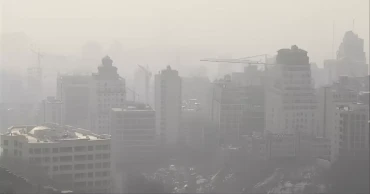
Dhaka ranks third among world’s most polluted cities
Dhaka, the densely populated capital of Bangladesh, ranked third among the world’s most polluted cities on Monday morning, recording an Air Quality Index (AQI) of 248 at 8:11 am.
Today, the city’s air was classified as ‘very unhealthy’, indicating a serious health threat, according to the AQI report.
Dakar in Senegal, Doha in Qatar, and Cairo in Egypt occupied the first, second, and fourth spots on the list, with AQI scores of 380, 254, and 246 respectively.
According to the AQI scale, a reading between 50 and 100 is considered ‘moderate’, with generally acceptable air quality, though sensitive individuals should limit prolonged outdoor exertion. AQI levels of 101–150 are ‘unhealthy for sensitive groups’, 151–200 is ‘unhealthy’, 201–300 is ‘very unhealthy’, and readings above 301 are considered ‘hazardous’, posing severe health risks.
The AQI, which reports daily air quality, informs residents how clean or polluted the air is and highlights potential health effects. In Bangladesh, the AQI is calculated based on five key pollutants: particulate matter (PM10 and PM2.5), nitrogen dioxide (NO2), carbon monoxide (CO), sulfur dioxide (SO2), and ozone.
Air pollution: Dhaka 5th worst city in the world today
Dhaka has long struggled with air pollution. Air quality usually deteriorates in winter and improves during the monsoon season.
The World Health Organization (WHO) estimates that air pollution causes about seven million deaths worldwide each year, primarily from stroke, heart disease, chronic obstructive pulmonary disease, lung cancer, and acute respiratory infections.
5 days ago

Driving across the frozen Baltic: Estonia opens seasonal ice road
A spell of bitter cold across northern Europe has allowed Estonians to do something unusual: drive across a frozen stretch of the Baltic Sea linking two of the country’s largest islands.
Officials on Sunday opened a 20-kilometer (12½-mile) “ice road” between Saaremaa and Hiiumaa, situated in western Estonia between the Baltic Sea and the Gulf of Riga. By afternoon, a queue of vehicles had formed, eager to make the rare journey.
The temporary route was sanctioned after residents began crossing the frozen waters on their own, risking their safety. Regular ferry services had struggled in recent weeks as temperatures hovered around minus 10 degrees Celsius (14 degrees Fahrenheit), causing ice to clog sea lanes.
For Hiiumaa’s roughly 9,000 residents, access to nearby Saaremaa — home to about 31,000 people — is vital for everyday needs such as shopping, schooling and onward travel to mainland Estonia.
Hiiumaa Mayor Hergo Tasuja described the ice road not only as a practical solution but also as a tradition deeply rooted in local life.
“Generations of people living by the sea swim and sail during summer,” Tasuja told The Associated Press. “In winter, it’s natural for them to head out onto the frozen sea.”
The route is carefully mapped out across ice deemed thick enough to support vehicles. Preparing it is a demanding task. Marek Koppel, a road maintenance supervisor at Estonian construction firm Verston Eesti, said crews measure the ice every 100 meters to ensure it exceeds the minimum 24-centimeter (9½-inch) thickness required for safety. Workers also level uneven patches and seal cracks, while conditions are monitored continuously.
Strict rules apply. Vehicles must weigh no more than 2.5 tons and travel either below 20 kilometers per hour or between 40 and 70 kph, as mid-range speeds can create vibrations that weaken the ice. Drivers are prohibited from stopping and must keep safe distances. Passengers are advised not to wear seat belts and to keep doors unlatched for a quick exit if necessary.
Visitors have embraced the experience. Alexei Ulyvanov, who traveled from Tallinn with his children, described the ride as smooth and said he wanted to show them that “it’s possible to drive a car across the sea.”
According to local officials, the islands were last connected by an ice road about eight years ago, as recent winters have been too mild to allow it.
Verston Eesti said it has also been commissioned to prepare two additional ice routes this week, linking mainland Estonia to smaller offshore islands — another sign of how extreme winter conditions are reshaping daily life in the Baltic nation.
6 days ago
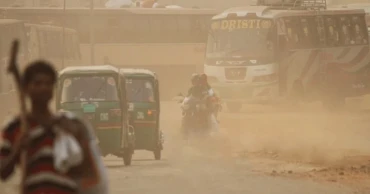
Air pollution: Dhaka 5th worst city in the world today
Dhaka, the overcrowded capital city of Bangladesh, has ranked fifth on the list of cities with the worst air quality with an AQI index of 194 at 09:09 am today.
Dhaka’s air was classified as 'unhealthy', according to the air quality and pollution city ranking.
Pakistan’s Lahore, Egypt’s Cairo, India's Delhi and Kolkata occupied the first four spots in the list, with AQI scores of 309, 306, 239 and 199, respectively.
Dhaka’s air quality 2nd worst in the world this morning
An AQI between 151 and 200 is considered 'unhealthy' while 201-300 is 'very unhealthy' and 301-400 is considered 'hazardous', posing severe health risks to residents.
The AQI, an index for reporting daily air quality, informs people how clean or polluted the air of a certain city is and what associated health effects might be a concern for them.
The AQI in Bangladesh is based on five pollutants: particulate matter (PM10 and PM2.5), NO2, CO, SO2, and ozone.
Dhaka has long been grappling with air pollution issues. Its air quality usually turns unhealthy in winter and improves during the monsoon.
7 days ago
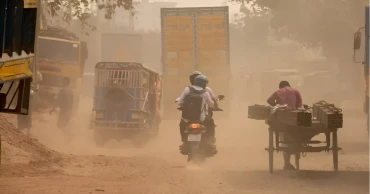
Dhaka’s air turns ‘very unhealthy’, ranks 3rd most polluted city globally
Dhaka, the densely populated capital of Bangladesh, ranked third among the world’s most polluted cities on Friday morning, recording an Air Quality Index (AQI) of 214 at 10:34 am.
Today, the city’s air was classified as ‘very unhealthy’, indicating a serious health threat, according to the AQI report.
Lahore in Pakistan, Karachi in Pakistan, and Kolkata in India occupied the first, second, and fourth spots on the list, with AQI scores of 234 227, and 197 respectively.
According to the AQI scale, a reading between 50 and 100 is considered ‘moderate’, with generally acceptable air quality, though sensitive individuals should limit prolonged outdoor exertion. AQI levels of 101–150 are ‘unhealthy for sensitive groups’, 151–200 is ‘unhealthy’, 201–300 is ‘very unhealthy’, and readings above 301 are considered ‘hazardous’, posing severe health risks.
The AQI, which reports daily air quality, informs residents how clean or polluted the air is and highlights potential health effects. In Bangladesh, the AQI is calculated based on five key pollutants: particulate matter (PM10 and PM2.5), nitrogen dioxide (NO2), carbon monoxide (CO), sulfur dioxide (SO2), and ozone.
Dhaka has long struggled with air pollution. Air quality usually deteriorates in winter and improves during the monsoon season.
The World Health Organization (WHO) estimates that air pollution causes about seven million deaths worldwide each year, primarily from stroke, heart disease, chronic obstructive pulmonary disease, lung cancer, and acute respiratory infections.
8 days ago

Unhealthy air grips Dhaka, ranks second globally
Dhaka, the densely populated capital of Bangladesh, ranked second among the world’s most polluted cities on Wednesday morning, recording an Air Quality Index (AQI) of 282 at 8:18 am.
Today, the city’s air was classified as ‘very unhealthy’, indicating a serious health threat, according to the AQI report.
Delhi in India, Kolkata in India and Karachi in Pakistan occupied the first, third, and fourth spots on the list, with AQI scores of 326, 193, and 176 respectively.
According to the AQI scale, a reading between 50 and 100 is considered ‘moderate’, with generally acceptable air quality, though sensitive individuals should limit prolonged outdoor exertion. AQI levels of 101–150 are ‘unhealthy for sensitive groups’, 151–200 is ‘unhealthy’, 201–300 is ‘very unhealthy’, and readings above 301 are considered ‘hazardous’, posing severe health risks.
Dhaka ranks second globally for air pollution with AQI at 288
The AQI, which reports daily air quality, informs residents how clean or polluted the air is and highlights potential health effects. In Bangladesh, the AQI is calculated based on five key pollutants: particulate matter (PM10 and PM2.5), nitrogen dioxide (NO2), carbon monoxide (CO), sulfur dioxide (SO2), and ozone.
Dhaka has long struggled with air pollution. Air quality usually deteriorates in winter and improves during the monsoon season.
The World Health Organization (WHO) estimates that air pollution causes about seven million deaths worldwide each year, primarily from stroke, heart disease, chronic obstructive pulmonary disease, lung cancer, and acute respiratory infections.
10 days ago