Science

Climate scientists change El Nino labeling as temperatures spike
Meteorologists say the natural El Nino cycle, which shapes global weather, is both influencing and being influenced by a warming planet.
A new study suggests an unusual recent shift in the El Nino–La Nina cycle may help explain why Earth’s already rising temperature jumped sharply over the past three years. At the same time, scientists have revised how El Niño and La Niña are defined because rapid climate change is altering ocean conditions. Persistently hotter global waters led the U.S. National Oceanic and Atmospheric Administration (NOAA) this month to change how it determines when the cycle shifts, likely resulting in more events labeled La Niña and fewer classified as El Niño despite warming tropical seas.
Brain organoids show goal-directed learning in control task
Earth’s average monthly temperature rose markedly above the long-term human-caused warming trend in early 2023 and continued through 2025. Possible causes include faster greenhouse gas warming, reduced ship pollution, an underwater volcanic eruption and increased solar output.
A Nature Geoscience study by Japanese researchers found Earth’s “energy imbalance” — the gap between incoming and outgoing energy — increased in 2022, trapping more heat and raising temperatures. About three-quarters of this change was linked to long-term climate change combined with a shift from a three-year cooling La Niña to a warm El Niño phase.
El Niño is the natural warming of parts of the equatorial Pacific that alters global weather, while La Niña features cooler waters. El Niño generally boosts global temperatures, while La Niña suppresses the long-term rise and can worsen U.S. hurricanes and drought. From 2020 to 2023, Earth experienced an unusual “triple dip” La Niña, trapping extra heat. About 23% of the recent energy imbalance came from this prolonged event, while slightly over half came from fossil-fuel greenhouse gases.
Rare smiling fossil found on Holy Island
Because “normal” temperatures keep shifting, NOAA replaced its old 30-year baseline with a relative index comparing Pacific temperatures to the rest of the tropics, improving atmosphere–ocean interaction tracking. NOAA forecasts another El Niño later this year, which could curb Atlantic hurricanes but push global temperatures higher in 2027 and possibly set a new record.
5 hours ago
Brain organoids show goal-directed learning in control task
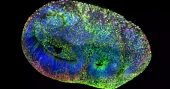
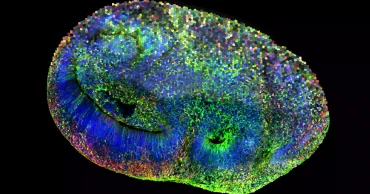
Researchers at the University of California, Santa Cruz have successfully trained lab-grown brain organoids to solve a classic engineering challenge known as the inverted pendulum or cart-pole problem, marking the first rigorous academic demonstration of goal-directed learning in brain organoids.
The cart-pole problem is often compared to balancing a ruler vertically in the palm of one’s hand, where constant attention and small adjustments are needed to keep it upright. In engineering, robotics and artificial intelligence, it is widely used as a benchmark to test whether a control system can learn, adapt and respond effectively to changing information. Every human infant, researchers note, must solve a similar problem while learning to stand and walk.
In the new study, scientists trained tiny pieces of brain tissue grown in the laboratory, known as brain organoids, to balance a virtual pole by sending and receiving electrical signals. The work was led by Ash Robbins, a PhD student in electrical and computer engineering at UC Santa Cruz’s Baskin School of Engineering, alongside Professor Mircea Teodorescu and Distinguished Professor of Biomolecular Engineering David Haussler. Their findings were published in the journal Cell Reports.
The research aims to better understand how neurons transmit information through electrical spikes in ways that allow learning and improvement. Such insights could help scientists study how neurological conditions such as Alzheimer’s disease, dementia, stroke, concussion, autism, schizophrenia, Parkinson’s disease, dyslexia and ADHD alter the brain’s ability to learn.
“We are trying to understand the fundamentals of how neurons can be adaptively tuned to solve problems,” Robbins said. “If we can figure out what drives that in a dish, it gives us new ways to study how neurological disease can affect the brain’s ability to learn.”
Brain organoids are small, three-dimensional tissues grown from stem cells that mimic early brain development, structure and function. Although smaller than a peppercorn, they can contain networks of several million neurons. For about 15 years, organoids of different organs have been widely used in biomedical research, but only recently have scientists begun exploring how brain organoids might be used to study learning.
In this study, the researchers placed mouse-derived brain organoids on a specialized chip that allows them to record electrical activity from neurons and stimulate selected cells. Using electrical signals of varying strength, the team conveyed information about the angle of a virtual pole as it tipped in one direction or the other. In response, the organoid produced electrical activity that was translated into forces applied to the virtual cart, helping to balance the pole.
Each attempt to balance the pole was treated as an episode. When the pole fell, the episode ended and a new one began. The goal was to keep the pole upright for as long as possible, similar to playing a video game.
Rare smiling fossil found on Holy Island
The organoid’s performance was evaluated in five-episode blocks. If its average performance over the most recent five episodes improved compared with the previous 20, no training signal was given. If performance did not improve, a training signal was applied. Importantly, this feedback was only delivered after an episode ended, not while the organoid was actively balancing the pole.
An artificial intelligence method known as reinforcement learning was used to decide which neurons received training signals. Robbins compared the process to having an artificial coach that tells the system it is doing something wrong and nudges it to adjust.
The results showed clear improvement. Organoids trained with adaptive reinforcement learning achieved a 46 percent “winning” rate, defined by a minimum time threshold for balancing the pole. In contrast, organoids that received random training signals achieved only a 4.5 percent winning rate.
“When we can actively choose training stimuli, we can actually shape the network to solve the problem,” Robbins said. “What we showed is short-term learning. We can consistently shift an organoid from one state into another that we are aiming for.”
However, the learning did not last. After about 15 minutes of training, the organoids were allowed to rest for 45 minutes. Following this rest period, performance dropped back to baseline, suggesting the organoids forgot most of what they had learned.
Haussler said this limitation may be overcome in the future by developing more complex organoids. He suggested that tissues incorporating multiple brain regions involved in learning might be needed to reproduce the kind of long-term learning seen in animals.
Independent experts say the findings are significant. Keith Hengen, an associate professor of biology at Washington University in St. Louis who was not involved in the research, said the study shows that even minimal neural circuits can be guided toward solving real control problems when given targeted electrical feedback.
“These are incredibly minimal neural circuits. There is no dopamine, no sensory experience, no body to sustain, no goals to pursue,” Hengen said. “Yet the tissue is plastic and structured enough to be pushed toward adaptive computation. This suggests that the capacity for learning is intrinsic to cortical tissue itself.”
The research team, part of the Braingeneers group within the UC Santa Cruz Genomics Institute, drew inspiration from earlier work conducted decades ago at Caltech and Georgia Tech by scientist Steve Potter. They used an electrophysiology system developed with industry partners at Maxwell Biosciences to communicate electrically with the organoids.
From an engineering perspective, Professor Teodorescu said the study is powerful because it combines measurement, stimulation and adaptation in a single closed-loop system. He noted that this allows researchers to study learning as a physical process, something that is very difficult to do in intact brains.
To support further research, Robbins developed an open-source software platform called BrainDance. The tool is designed to allow biologists to run complex neural learning experiments with organoids without needing to build custom games, hardware interfaces or training environments.
“This software makes running very complicated experiments extremely easy,” Robbins said, adding that labs typically spend years developing such systems on their own.
Preparing astronauts for Moon missions: challenges of isolation and survival
Haussler emphasized that the goal of the research is to advance understanding of the brain and improve treatment of neurological diseases, not to replace traditional computers or robotic controllers with lab-grown brain tissue. He cautioned that such applications, especially involving human brain organoids, would raise serious ethical concerns.
The researchers now plan to investigate why their coaching method works, which neurons are most effective to target, what kinds of training signals are best, and how long-term learning might eventually be achieved in lab-grown brain tissue.
#From News-Medical
1 day ago
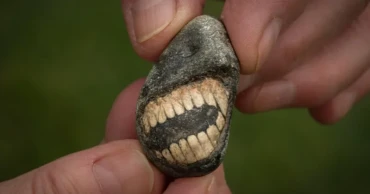
Rare smiling fossil found on Holy Island
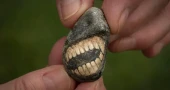
Christine Clark, 64, spotted the unusual find while walking along the beach on Boxing Day during a holiday in Northumberland. She said a small pebble caught her attention because it looked as if it was grinning back at her, resembling a set of false teeth.
Clark later shared photos of the object on a Facebook fossil identification group, where it quickly attracted thousands of reactions. Fellow enthusiasts suggested it was an ancient marine fossil, a view later supported by experts.
Clark, who visits the area every year with her husband Gerard, said they often search for “St Cuthbert’s beads” on the island. Holy Island, home to around 150 residents and regularly cut off by the sea, is regarded as the birthplace of early English Christianity.
The so-called beads are fossilised segments of the stem of a marine animal known as a crinoid. Their name is linked to St Cuthbert, the patron saint of northern England.
According to Dr Frances McIntosh, a collections curator at English Heritage, St Cuthbert arrived on the island as a monk in the 670s and was later buried there. In medieval times, people believed the small fossils were created by the saint and collected them for spiritual reasons.
While searching for these beads, Clark instead came across a very different fossil. Joking about the discovery, she said it was the first “set of teeth” she had ever found.
The fossil was examined with the help of BBC and identified by the British Geological Survey as a larger section of a crinoid stem.
Crinoids are marine animals that first appeared more than 500 million years ago and still exist today. They have a flexible stem attached to the sea floor, topped with a body surrounded by branching arms, which has earned them the nickname “sea lilies”.
Dr Jan Hennissen, a senior palaeontologist at the British Geological Survey, explained that the fossil consists of several disc-like segments, known as ossicles, still connected together in a structure called a columnal. The stem appears to have split lengthways and curved, creating its distinctive mouth-like shape. He said it likely came from the Alston Formation, a limestone dating back about 350 million years.
Crinoids belong to the same group of animals as sea urchins and sea cucumbers. Complete specimens are rare, but the individual stem discs are common along the Northumberland coast and are easily recognised by their colour, composition and distinctive lines.
Experts note that members of the public can have fossils identified by sending photographs to the British Geological Survey or the Natural History Museum identification service.
Although Clark has received offers to buy her find, she said she plans to keep it for now, adding that it has brought amusement to many people.
#With inputs from BBC
2 days ago
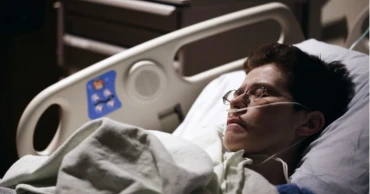
Brain may remain active after heart stops, study finds
A new study suggests that the human brain may remain active and conscious for some time after the heart stops beating, challenging long-held assumptions about the moments following death.
The research, led by Dr Sam Parnia, examined 53 cardiac arrest survivors across 25 hospitals in the United States and the United Kingdom. Cardiac arrest occurs when the heart suddenly stops, and it has been widely believed that the brain suffers irreversible damage within about 10 minutes due to oxygen deprivation.
However, the study, published in the journal Resuscitation, detected brain activity during resuscitation efforts, sometimes lasting up to an hour after the heart stopped. Around 40% of patients reported conscious thoughts or memories during their clinical death, with some recalling conversations and events in the room. Brain scans showed spikes in brain waves linked to thinking and awareness.
Dr Parnia said the findings indicate the brain may be more resilient than previously thought. He added that understanding this phenomenon could improve CPR techniques and treatment of brain injuries following cardiac arrest. The study has sparked debate among medical experts on the nature of consciousness and the definition of death.
Experts urge that the results may help refine resuscitation practices and deepen understanding of how the human brain responds to extreme stress and oxygen deprivation.
With inputs from BBC
3 days ago

Rare dart frog toxin allegedly used in Navalny’s death
A rare and powerful toxin found in South American poison dart frogs was allegedly used to kill Russian opposition leader Alexei Navalny, according to claims by the UK Foreign Office and several European allies.
They said traces of epibatidine a highly toxic natural substance were detected in samples taken from Navalny’s body and were very likely the cause of his death at a Siberian penal colony two years ago. The allies also stated that only the Russian state had the “means, motive and opportunity” to use such a rare toxin. The Kremlin rejected the allegation, calling it an information campaign, Russian state news agency Tass reported.
Epibatidine is a natural neurotoxin found in the skin of certain poison dart frogs living in parts of South America. Toxicology expert Jill Johnson said it is about 200 times stronger than morphine. The chemical can also be produced in laboratories, but it does not occur naturally in Russia, European allies noted.
The toxin affects the nervous system by overstimulating nerve receptors. Experts say this can cause muscle spasms, seizures, slowed heart rate, breathing failure and ultimately death. Professor Alastair Hay of the University of Leeds explained that victims may die from suffocation as breathing becomes blocked.
Epibatidine is extremely rare and naturally found only in limited regions, mainly in frogs from Ecuador and Peru. The frogs produce the toxin based on their diet in the wild, making it very difficult to obtain naturally.
Chinese scientists identify key brain network in Parkinson’s disease
European laboratories reportedly confirmed the presence of the toxin. Moscow has previously claimed Navalny died of natural causes, while his widow has insisted he was poisoned. The Russian embassy in London denied any involvement, while a former senior officer linked to Nato said evidence suggests state involvement in the killing.
Navalny, 47, had been imprisoned for three years before his death. Russian officials said he fell ill after a walk and collapsed without regaining consciousness.
With inputs from BBC
4 days ago

Obama clarifies views on aliens after saying ‘they exist’
Former US President Barack Obama has clarified that while extraterrestrial life may exist, the chances that Earth has been visited by aliens are low.
Obama made the remarks during a podcast with Brian Tyler Cohen, explaining that his earlier comment “they’re real” was part of a rapid-fire round of questions. He stressed there is no evidence of aliens visiting Earth or being hidden in secret US facilities such as Area 51.
“Statistically, the universe is vast, so life likely exists elsewhere, but I saw no evidence of contact during my presidency,” Obama wrote in a statement on Instagram.
He previously said he had inquired about any alien specimens or spacecraft when he assumed office, but found none, though unexplained aerial phenomena have been recorded.
With inputs from BBC
4 days ago

Preparing astronauts for Moon missions: challenges of isolation and survival
As NASA’s Artemis programme prepares to return humans to the Moon, astronauts will face extreme isolation, harsh environments, and a range of physical and psychological challenges.
NASA astronaut Victor Glover, set to pilot Artemis II—the first crewed Orion capsule mission beyond the Moon—emphasised the mission's difficulty. “Space is really challenging. It’s harder than it looks,” he said, noting that resources like water and food are finite with no immediate resupply. Even daily routines, including hygiene, could disturb fellow crew members in the confined spacecraft.
Artemis II marks the initial step toward establishing a lunar base near the Moon’s South Pole, where astronauts will live for months, enduring long lunar nights, extreme temperatures, dust, and high radiation levels.
Sergi Vaquer Araujo, head of space medicine at the European Space Agency (ESA), highlighted the need for astronauts who excel across multiple domains. Physical fitness remains crucial, and chronic conditions such as asthma or heart issues can disqualify candidates. Equally important are cognitive and psychological skills, including teamwork, resilience, and the ability to cope with stress in confined, isolated conditions.
British surgeon Nina Purvis, who spent a winter at ESA’s Concordia research station in Antarctica, described the experience as a “White Mars” simulation, highlighting the importance of cooperation, adaptability, and mental health management. Experiments there, including mindfulness exercises, have informed strategies for future space missions.
Meanwhile, architects Sebastian Aristotelis and Karl-Johan Sørensen tested lunar habitat prototypes in northern Greenland, living 60 days in a prefabricated, solar-powered structure to simulate Moon-base conditions. Their experiment focused on practical living, psychological adaptation, and design challenges for future lunar habitats.
Glover, who has trained for years for the Moon mission, acknowledged the uncertainty of leaving Earth behind. “I don’t know if I’m fully prepared psychologically. Ask me that when I get back,” he said.
The Artemis programme represents humanity’s next leap in lunar exploration, combining rigorous astronaut selection, psychological preparation, and innovative habitat design to overcome the unique challenges of life on the Moon.
With inputs from BBC
5 days ago
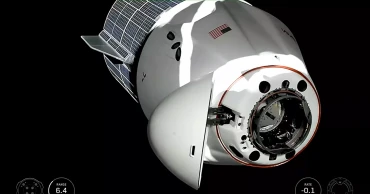
SpaceX Crew-12 Dragon successfully docks with space station
SpaceX’s Dragon spacecraft, carrying four astronauts for NASA’s Crew-12 mission, autonomously docked with the International Space Station on Saturday.
The spacecraft launched at 5:15 a.m. Eastern Time on Friday aboard a Falcon 9 rocket from Cape Canaveral Space Force Station and reached the space-facing port of the station’s Harmony module at around 3:15 p.m. Eastern Time on Saturday.
The four-member team comprises Jessica Meir and Jack Hathaway from NASA, Sophie Adenot of the European Space Agency, and cosmonaut Andrey Fedyaev from Roscosmos.
SpaceX sends new team to ISS after medical emergency
Over the nearly eight-month mission, Crew-12 will carry out a range of scientific experiments to support future human missions beyond low Earth orbit and deliver benefits for life on Earth, NASA said.
The crew will investigate pneumonia-causing bacteria to support better cardiovascular therapies and evaluate technologies for producing intravenous fluids on demand for future space missions. They will also assess how different physical traits influence blood circulation during spaceflight.
According to NASA, other studies will focus on automated monitoring of plant health and exploring interactions between plants and nitrogen-fixing microbes to boost food production in space.
Elon Musk’s SpaceX to build self-sustaining Moon city
5 days ago
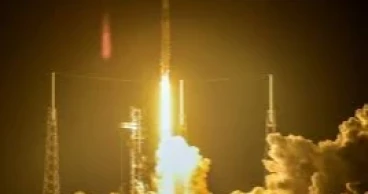
SpaceX sends new team to ISS after medical emergency
A fresh team of astronauts blasted off Friday for the International Space Station (ISS), replacing crew members who returned to Earth early in NASA’s first-ever medical evacuation during a human spaceflight mission.
At NASA’s request, SpaceX launched the new crew as quickly as possible from Cape Canaveral, sending American astronauts Jessica Meir and Jack Hathaway, France’s Sophie Adenot and Russia’s Andrei Fedyaev on a mission expected to last eight to nine months, through the fall. The quartet is scheduled to dock with the orbiting laboratory on Saturday, restoring the station to full staffing after last month’s emergency return.
Launch controllers jokingly called Friday the 13th a lucky day once the spacecraft reached orbit. Commander Jessica Meir described the ascent as an exhilarating ride.
While waiting for the replacements, NASA paused spacewalks and postponed other activities. The incoming crew will join three astronauts — one American and two Russians — who have kept operations running aboard the ISS over the past month.
Confident in existing medical protocols, NASA did not require extra health screenings before launch or send additional diagnostic gear. An onboard ultrasound machine had been heavily used in early January to examine the sick astronaut, whose identity and condition remain undisclosed. After splashing down near San Diego, all four evacuated crew members were taken directly to a hospital.
The early return marked the first time in 65 years of human spaceflight that NASA ended a mission for medical reasons.
As missions grow longer, NASA continues evaluating upgrades to the station’s medical capabilities, though some situations still require bringing astronauts back to Earth, officials said.
The new arrivals will conduct several health-related experiments aimed at preparing for deep-space missions, including testing a device that converts drinking water into emergency IV fluid, evaluating an AI-assisted ultrasound system, and studying blood clots by scanning their jugular veins. They will also rehearse lunar landing procedures amid growing anticipation for Artemis II, the first crewed mission to the moon in more than 50 years.
Adenot becomes only the second French woman to travel to space, inspired as a teenager by Claudie Haigneré’s 1996 mission to Russia’s Mir station. Hathaway and Adenot are first-time space travelers, while Meir and Fedyaev are on their second ISS missions. During her 2019 flight, Meir participated in the first all-female spacewalk alongside Christina Koch, who is now assigned to Artemis II.
The crew launched from Cape Canaveral Space Force Station as SpaceX continues preparing facilities at nearby Kennedy Space Center for its larger Starship rockets, which NASA plans to use for future lunar landings.
NASA Administrator Jared Isaacman said additional fueling tests are underway for the Space Launch System rocket at the Artemis launch pad after recent hydrogen leaks prompted seal replacements. No official launch date for Artemis II will be set until testing is complete, though the earliest possible liftoff could come in early March, he said.
7 days ago

Earth’s core may hide dozens of oceans of hydrogen
The oceans are the largest entity on Earth’s surface. All that blue, however, may be dwarfed by an immense reservoir of hydrogen concealed in the planet’s heart. Experiments indicate that enough hydrogen to form dozens of oceans of water may have been entombed in Earth’s core during its formation, researchers report February 10 in Nature Communications. Those chthonic reserves may influence processes on the planet’s surface.
Hydrogen does not exist as liquid water in the core. However, as it slowly moves upward into the mantle, it can react with oxygen to form water, said geodynamicist Motohiko Murakami of ETH Zurich. Oxygen is one of the most abundant elements in mantle minerals, making such reactions possible.
Previous estimates of hydrogen in the core varied widely and relied on indirect methods. Scientists had measured how much iron expands when hydrogen is added to it to estimate hydrogen content. In the new study, Murakami and his team used a more direct experimental technique.
They created artificial samples resembling early core material by enclosing small pieces of iron in hydrogen-rich glass. The samples were then compressed between two diamonds in a high-pressure device and heated with a laser to temperatures reaching 4,826 degrees Celsius.
Under these extreme conditions, the materials melted into iron droplets containing silicon, hydrogen and oxygen. Scientists believe Earth’s early core formed from similar molten blobs when the young planet was largely covered by a magma ocean.
Elon Musk’s SpaceX to build self-sustaining Moon city
After rapidly cooling the samples, the team used advanced imaging tools to examine how the elements were distributed. They discovered tiny solid structures within the iron that contained both silicon and hydrogen in equal atomic proportions.
This one-to-one ratio is important because earlier studies had indicated that Earth’s core contains between 2 and 10 percent silicon by weight. Using their findings, the researchers estimate that hydrogen makes up about 0.07 to 0.36 percent of the core’s total weight. That amount would be equivalent to roughly nine to 45 oceans of water.
Murakami said some of this hydrogen has likely migrated into the mantle over time, where it formed water. The presence of water in the mantle can lower the melting point of rocks, making it easier for magma to form and potentially driving volcanic activity at the surface. #With inputs from Science News
10 days ago