World
Global experts welcome US tariff ruling, warn risks remain
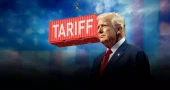
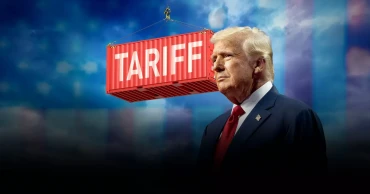
The U.S. Supreme Court has struck down a major portion of tariffs imposed by President Donald Trump, triggering positive reactions from analysts, economists and international media, while leaving questions over the future course of US trade policy.
In a 6–3 ruling, the court said the executive branch overstepped its legal authority under the International Emergency Economic Powers Act. The judges found that the law does not allow the president to impose sweeping, across-the-board tariffs without clear approval from Congress.
Political analyst Sandile Swana of South Africa said the decision reaffirmed that taxation powers belong to Congress, not the executive. He added that the tariffs mainly hurt US businesses and consumers rather than foreign exporters.
Croatian economist Ljubo Jurcic described the ruling as a serious blow to what he called a misguided economic approach. He said the tariff policy damaged the US economy and warned that companies affected could now seek refunds worth billions of dollars. Jurcic also argued that unilateral trade measures failed to deliver real benefits while increasing costs for Americans.
European markets reacted positively. France’s leading business daily Les Echos reported a rally across regional markets, noting that the CAC 40 briefly crossed the 8,500-point mark for the first time. Greece’s financial outlet OT also cited gains, driven by investor hopes of easing trade tensions.
Portuguese analyst Rui Cardoso called the verdict a “complete defeat” for Trump, saying countries that had accepted what he described as unfair trade deals with Washington might now push for renegotiation. He also criticised the European Union for taking an overly soft position, arguing recent developments showed it had conceded more than necessary.
Trump imposes new 10% tariff after court blocks global import taxes
In Africa, economists said the ruling could bring limited relief to exporters, though the impact would differ by sector and country. Andre Thomashausen, professor emeritus of international law at the University of South Africa, said the decision could open the door for refund claims and help restore fairer competition. South African economist Chris Harmse said industries such as automobiles and agriculture could benefit if tariff barriers are lifted.
Rwandan economist Teddy Kaberuka said the tariffs had unsettled the global economy by fuelling a trade war and straining relations with key partners, also weighing on financial markets. He warned that continued uncertainty could slow growth, especially in Africa, where economies remain highly vulnerable.
Analysts cautioned that risks have not disappeared. Edward Fishman, a former US State Department and Treasury official, said the ruling may limit the use of tariffs as a quick geoeconomic weapon, though they could still be applied through other legal mechanisms during trade talks.
Observers agree that while the court has curbed the recent tariff drive, the long-term direction of US trade policy remains uncertain, keeping global markets and trading partners on edge.
42 minutes ago
Trump lashes out at Supreme Court over tariff ruling, targets his own appointees
President Donald Trump reacted angrily Friday after the Supreme Court struck down his signature global tariffs, a move that included dissent from two of the three justices he appointed.
Trump, who has long expected personal loyalty from his appointees, criticized the court sharply, saying he was “ashamed” of the justices who opposed him and questioning their courage. Speaking in the White House briefing room, he singled out Justices Neil Gorsuch and Amy Coney Barrett, calling their votes “an embarrassment to their families.”
Vice President JD Vance also condemned the ruling on X, describing it as “lawlessness from the Court,” though he avoided personal attacks. Legal challenges to the tariffs had come from groups across the political spectrum, including the libertarian Liberty Justice Center and business-friendly organizations like the Chamber of Commerce.
The decision highlights the ongoing tension between Trump’s aggressive use of presidential powers—covering trade, immigration, and other policy areas—and the Supreme Court’s role as a check on executive authority.
Trump’s fraught relationship with the court is not new. During his first term, he won a major ruling protecting him from prosecution over efforts to overturn the 2020 election and secured repeated emergency appeals to enforce parts of his immigration agenda. But the court has also rebuked him publicly, particularly Chief Justice John Roberts, though Trump did not name him in Friday’s remarks.
Presidential criticism of Supreme Court decisions has historical precedent. Thomas Jefferson opposed the landmark Marbury v. Madison ruling, Franklin Roosevelt tried and failed to expand the court over New Deal frustrations, and Barack Obama openly criticized the Citizens United decision in 2010.
Experts note, however, that Trump’s personal attacks on justices—especially those he appointed—cross a line. “It’s fine to criticize a ruling, but demagogic to claim justices lack courage,” said Ed Whelan, former law clerk to Justice Antonin Scalia.
Past presidents have privately regretted appointing certain justices, including Dwight D. Eisenhower after Brown v. Board of Education, but none aired such criticisms publicly during live broadcasts.
Trump and members of the court are expected to be in the same room Tuesday for his State of the Union address, a setting likely to be tense given the recent clash.
4 hours ago
Trump imposes new 10% tariff after court blocks global import taxes
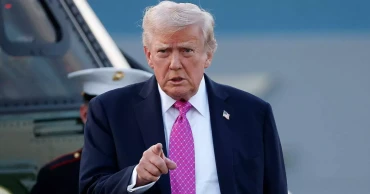
US President Donald Trump has announced a new 10% global tariff, hours after the US Supreme Court struck down most of his previous import taxes, ruling that he exceeded his constitutional authority.
Trump strongly criticised the court’s decision, calling it “terrible” and attacking the justices who opposed his trade policy. He unveiled the new tariff plan at the White House shortly after the court, in a 6–3 ruling, blocked the global duties imposed last year.
The verdict marked a major win for US states and businesses that challenged the tariffs, potentially opening the door to billions of dollars in refunds. It also created fresh uncertainty for global trade. Trump, however, warned that any refunds would likely be delayed by lengthy legal battles and said the issue could remain in court for years.
The president said his administration would use alternative legal authorities to continue imposing tariffs, arguing that such measures boost domestic investment and manufacturing.
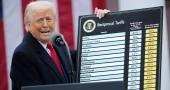
The legal dispute centred on sweeping import taxes announced last year on goods from nearly every country. The tariffs initially targeted Mexico, Canada and China before expanding to dozens of trading partners during what Trump called “Liberation Day” last April.
The White House relied on the International Emergency Economic Powers Act of 1977 to justify the move, saying it allowed the president to regulate trade during a national emergency. Critics argued the law does not authorise tariffs and accused the administration of bypassing Congress’s taxing powers.
In the majority opinion, Chief Justice John Roberts said Congress had only delegated tariff authority in clear and limited terms, adding that it would have explicitly granted such power if intended.
The ruling was supported by the court’s three liberal justices and two Trump-appointed conservatives, Amy Coney Barrett and Neil Gorsuch. Three other conservative justices dissented.
US Supreme Court strikes down Trump’s global tariffs
Trump later expressed anger at the Republican-appointed justices who ruled against him, accusing them of disloyalty. Financial markets reacted positively, with Wall Street stocks rising as businesses welcomed the decision.
Despite the ruling, Trump on Friday signed a proclamation imposing a new 10% tariff under Section 122, a rarely used law that allows temporary tariffs of up to 15% for 150 days, after which congressional approval is required. The new tariff will take effect on 24 February.
The order includes broad exemptions covering some minerals, natural resources, fertilisers, agricultural products, pharmaceuticals, electronics and certain vehicles. Canada and Mexico will remain largely exempt under the USMCA trade agreement.
Countries that previously signed trade deals with the US, including the UK, India and the European Union, will now face the flat 10 percent tariff, according to a White House official, who said those nations are still expected to honour earlier concessions.
Trade analysts said the decision has further complicated the global trade environment. International reaction remained cautious, with the European Commission saying it was studying the ruling carefully.
#From BBC
5 hours ago
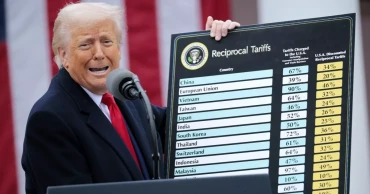
US Supreme Court strikes down Trump’s global tariffs
The U.S. Supreme Court on Friday struck down President Donald Trump’s sweeping global tariffs, delivering a significant setback to a central pillar of his economic agenda.
In a 6-3 ruling, the court said Trump’s use of an emergency powers law to impose wide-ranging import duties, including so-called “reciprocal” tariffs on nearly all countries, was unconstitutional because the authority to levy taxes rests with Congress, not the president. Chief Justice John Roberts wrote that the framers did not assign any part of the taxing power to the executive branch.
Justices Samuel Alito, Clarence Thomas and Brett Kavanaugh dissented, arguing the tariffs were legally permissible, though their policy merits could be debated.
Reacting to the decision, Trump called it “deeply disappointing” and criticised the justices who voted against the tariffs. The ruling marks the first major element of his broad economic agenda to be squarely rejected by the high court.
The court did not clarify whether businesses that paid billions of dollars in tariffs would receive refunds, noting the process could be complicated. Federal data show the Treasury collected over $133 billion from the import taxes by December, with long-term impacts projected to reach trillions.
However, the decision does not prevent the administration from pursuing tariffs under other statutory authorities, though those come with stricter limits.
Legal challengers, including small businesses and several states, hailed the verdict as a reaffirmation that Congress, not the president, controls taxation. Trade partners also sought clarity on Washington’s next steps following the ruling.
16 hours ago
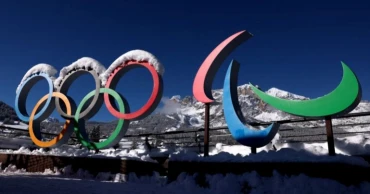
Ukraine to boycott Paralympics opening over Russian, Belarusian participation
Ukraine will boycott the opening ceremony of the Milano Cortina 2026 Paralympics on March 6 due to the participation of Russian and Belarusian athletes under their national flags, the country’s Paralympic Committee said.
The International Paralympic Committee (IPC) allocated 10 slots for Russian and Belarusian athletes, sparking protests from Ukraine over the ongoing war. Ukraine called the move “disappointing and outrageous” and demanded that its flag not be used at the ceremony.
Ukrainian Sports Minister Matvii Bidnyi confirmed officials will boycott the event, though Ukrainian athletes will still compete. The country’s skeleton racer Vladyslav Heraskevych criticized the IPC for allowing athletes supporting the war to carry their flags.
Russia has two slots each in Para alpine skiing, cross-country skiing, and snowboarding, while Belarus received four places in cross-country skiing. Ukraine said neither country went through the qualification process and condemned their inclusion amid the “horrific military aggression” in Ukraine.
The IPC said it is in contact with Ukraine’s committee and will discuss the matter internally.
With inputs from ALJAZEERA
20 hours ago
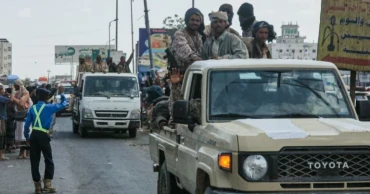
One killed, 11 injured as Yemen STC protest is dispersed
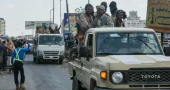
At least one person was killed and 11 others injured when Yemeni security forces fired on protesters linked to the Southern Transitional Council (STC) who tried to storm the al-Maashiq Presidential Palace in Aden, an Al Jazeera correspondent reported.
The incident occurred Thursday during the first session of Yemen’s internationally recognised government, led by Prime Minister Shaya Mohsen al-Zindani, amid opposition demonstrations. Footage obtained by Al Jazeera showed several wounded individuals at the site.
The Aden Governorate Security Committee said security forces responded lawfully to armed protesters attempting acts of sabotage and warned against any attacks on personnel.
The STC, backed by the United Arab Emirates, claimed at least 21 people were wounded, condemning the use of live ammunition and calling for an investigation. The group urged the international community to act against “systematic repression” in southern Yemen.
Earlier, the STC had controlled Aden and much of southern Yemen until a Saudi-backed government offensive pushed them back in January. On Friday, the STC refused to recognise the new government in Aden, calling it a “de facto authority” without political or popular support and warning that any official presence in the south would not bind southern representatives politically.
Yemen has faced ongoing conflict and instability since Houthi rebels seized much of the country, including the capital Sanaa, in 2014. The STC, formed in 2017, seeks independence for southern Yemen.
With inputs from ALJAZEERA
20 hours ago
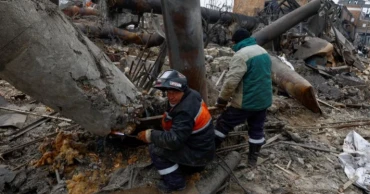
Ukraine frustrated as US presses Kyiv in peace talks
Ukraine has voiced growing frustration over US-backed peace efforts with Russia, saying Washington is putting heavy pressure on Kyiv while failing to apply the same level of pressure on Moscow.
President Volodymyr Zelenskyy said the latest round of talks had not delivered acceptable results for Ukraine. In a video address to the nation on Wednesday, he said the outcome so far was insufficient.
Ahead of talks held in Geneva this week, Zelenskyy rejected Russian demands that Ukraine hand over the remaining parts of the eastern Donetsk region not under Russian control. He said Ukrainians would never accept giving up more land, warning that such a move would not be forgiven by the public.
Russia currently controls about 19 percent of Ukrainian territory, down from around 26 percent in early 2022, according to estimates. Recent opinion polls show a majority of Ukrainians strongly oppose ceding Donetsk to Russia, even in exchange for security guarantees. Many also doubt the current US-led negotiations will bring lasting peace.
Zelenskyy has instead suggested freezing the current front line as a basis for a ceasefire, followed by negotiations. He said such an approach could gain public support if put to a referendum.
US President Donald Trump has said Ukraine is holding up a peace deal, a claim Zelenskyy called unfair. He said he hoped the US stance was part of negotiating tactics rather than a fixed position.
Several US senators visiting Ukraine recently said Washington should increase pressure on Russia. They argued that Moscow is not negotiating in good faith and continues to use force during talks.
On the same day as the Geneva discussions, Russia launched a large-scale drone and missile attack on Ukraine’s energy infrastructure. Ukrainian officials said the strikes damaged power and heating supplies and showed Russia’s lack of interest in peace.
Zelenskyy again urged Western allies to tighten sanctions on Russian energy exports and stop the flow of critical components to Russia through third countries. Ukraine says Russia continues to rely on a large shadow fleet of oil tankers to bypass sanctions.
Despite ongoing fighting, Ukrainian officials say their forces have made recent gains in eastern and central regions. Military observers report that Ukrainian troops reclaimed territory in mid-February, marking one of their fastest advances since 2023.
European allies have pledged increased military and financial support to Ukraine this year, including funding for drone production and weapons supplies. The European Union has also approved new financial assistance packages.
The United States, however, has halted direct military and financial aid to Ukraine since President Trump took office in January 2025, increasing concerns in Kyiv about the balance of pressure in the peace process.
With inputs from ALJAZEERA
20 hours ago
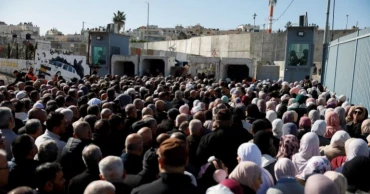
Israel restricts Al-Aqsa access for Ramadan prayers
Israeli authorities have imposed tight restrictions on Palestinian access to the Al-Aqsa Mosque compound in occupied East Jerusalem for the first Friday prayers of Ramadan, allowing only a limited number of worshippers from the occupied West Bank to enter.
Israel said a maximum of 10,000 Palestinians from the West Bank would be permitted to attend prayers on Friday, far fewer than the hundreds of thousands who traditionally gather at the site during Ramadan in previous years. Entry is being allowed only with special permits.
According to the restrictions, only children under 12, men over the age of 55 and women aged 50 and above are eligible to enter Jerusalem from the West Bank for the prayers.
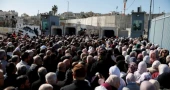
From early morning, hundreds of Palestinians queued at the Qalandiya checkpoint, hoping to reach the holy site. Israeli media reported that by mid-morning only about 2,000 people had managed to cross, amid heightened Israeli military alert at checkpoints separating the West Bank from East Jerusalem.
Palestinian officials later said Israeli authorities claimed the daily quota for West Bank worshippers had already been filled, effectively barring further entry to the mosque compound.
Palestinian journalists and officials said the restrictions were unprecedented in scale. In previous years, up to 250,000 worshippers have attended Friday prayers at Al-Aqsa during Ramadan, including Palestinians from the West Bank, East Jerusalem and Palestinian citizens of Israel.
Observers say the measures are deepening the separation between occupied East Jerusalem and the rest of the West Bank, disrupting long-standing religious and social traditions linked to Ramadan prayers and communal gatherings at Al-Aqsa.
The restrictions come amid rising violence in the occupied West Bank and East Jerusalem. Palestinian authorities, human rights groups and the United Nations have reported an increase in attacks by Israeli settlers, often under the protection of Israeli forces, involving shootings, home burnings and land seizures.
According to the UN Office for the Coordination of Humanitarian Affairs, more than 1,100 Palestinians have been killed in the West Bank since 2023, while over 10,000 have been forcibly displaced.
Earlier this week, Israel approved a plan that Palestinian officials and international critics describe as a de facto annexation of large areas of the occupied West Bank by declaring them Israeli “state property”. The move has drawn condemnation from more than 80 UN member states, who say it undermines Palestinians’ right to self-determination and further erodes prospects for a future Palestinian state.
With inputs from ALJAZEERA
20 hours ago
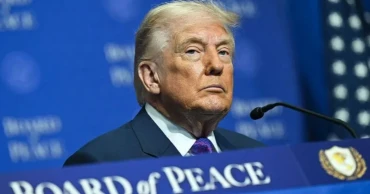
Trump-Iran tensions expose US policy dilemma
Rising tensions between the United States and Iran have highlighted deep contradictions in President Donald Trump’s foreign policy, as he calls for peace while simultaneously threatening military action against Tehran.
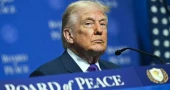
Speaking at a meeting of the Board of Peace, a Middle East coalition he helped form, Trump issued his latest warning to Iran, underscoring the clash between diplomacy and force that has defined much of his second term. While he has said he prefers a negotiated deal to halt Iran’s nuclear weapons programme, the White House has also sharply increased pressure, both rhetorically and militarily.
US officials say Iran would be “very wise” to reach an agreement, but at the same time Washington has overseen what analysts describe as the largest US military buildup in the Middle East since the 2003 Iraq War. Warships, fighter jets and other assets have been deployed near Iran, fuelling fears of a major escalation.
Trump’s threats are being taken seriously, particularly after the US followed through on military action against Venezuela earlier this year, an operation that ended with the capture of former President Nicolás Maduro. Unlike that strike, however, Washington’s objectives in Iran remain unclear.
The US president insists that last year’s strike on Iran “obliterated” its nuclear facilities, but has not explained why further military action may now be necessary, what new targets would be hit, or what the broader political goal would be.
Iran, weakened by sanctions and internal protests against its leadership under Supreme Leader Ayatollah Ali Khamenei, has signalled openness to talks on uranium enrichment. But negotiations have stalled, largely over US demands that Tehran also limit its ballistic missile programme and support for regional proxy groups.
Key questions remain unanswered, including whether Washington seeks regime change in Iran, how it would respond to Iranian retaliation against US bases in the region, and how a prolonged conflict could affect other Middle East priorities, such as efforts to rebuild Gaza under the Board of Peace framework.
Israel’s role is also uncertain. Israel previously joined US strikes on Iran and is widely expected to be involved again if a new campaign begins. Israeli Prime Minister Benjamin Netanyahu discussed the situation with Trump during a recent White House meeting.
Domestically, Trump faces growing political pressure. He returned to office promising to pull the US out of foreign conflicts, a message popular with his support base. Yet since taking office, he has authorised military actions in Syria, Venezuela, Iran and the Caribbean.
A large-scale air campaign against Iran could alienate some supporters ahead of the US midterm elections, particularly as voters express frustration over issues such as immigration and the economy. It could also clash with Trump’s repeated claims that he deserves the Nobel Peace Prize for ending multiple wars, a claim widely disputed.
Despite the uncertainty, Trump appears comfortable keeping allies and adversaries guessing. He has embraced the image of a global dealmaker, hosting high-profile summits and presiding over negotiations on trade, security and diplomacy.
On Iran, however, he has offered only a warning.
“We have to make a meaningful deal,” Trump said. “Otherwise, bad things happen.”
With inputs from BBC
20 hours ago
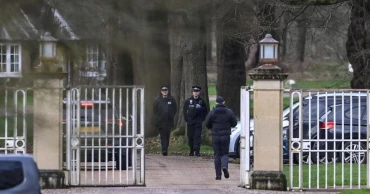
Police search continues at Andrew’s former home after arrest
Police continued searching Royal Lodge for a second day on Friday as Andrew Mountbatten-Windsor was released under investigation following his arrest on suspicion of misconduct in public office.
More unmarked police vehicles were seen arriving at the Windsor property, which is Andrew’s former residence, as officers pressed on with their inquiry. Police searches linked to the case have already ended in Norfolk but are ongoing in Berkshire, according to authorities.
Andrew was arrested on Thursday and held for around 11 hours before being released under investigation. This means he faces no restrictions on his movement while police continue their inquiries. He was later photographed returning to the Sandringham estate.
The arrest, first reported by the BBC, followed an assessment by Thames Valley Police of a complaint alleging that Andrew shared confidential material with late US sex offender Jeffrey Epstein during his time as a UK trade envoy.
Police sources said the investigation is not limited to a small number of emails already reported in the media and could involve a wider review of documents. Buckingham Palace has said it will cooperate fully with the investigation.
Andrew has previously denied any wrongdoing in connection with Epstein. He has not responded to specific BBC questions related to millions of Epstein-related documents released earlier this year. He has not been charged.
King Charles III, who was not informed in advance of the arrest, said he learned of the development with deep concern and stressed that the law must take its course.
Political reaction followed swiftly. UK Prime Minister Keir Starmer said no one is above the law, while opposition figures called for the police to be allowed to complete their work without interference.
Legal experts said a release under investigation is the least restrictive option available to police and is used when inquiries are at an early stage and further evidence gathering is required. Investigators may still question Andrew again as the probe continues.
Despite losing several royal titles last year, Andrew remains eighth in line to the British throne. Any change to that status would require an act of Parliament and the agreement of other Commonwealth nations.
Police have not given a timeline for completing the investigation.
With inputs from BBC
20 hours ago