Europe
Ukraine frustrated as US presses Kyiv in peace talks
Ukraine has voiced growing frustration over US-backed peace efforts with Russia, saying Washington is putting heavy pressure on Kyiv while failing to apply the same level of pressure on Moscow.
President Volodymyr Zelenskyy said the latest round of talks had not delivered acceptable results for Ukraine. In a video address to the nation on Wednesday, he said the outcome so far was insufficient.
Ahead of talks held in Geneva this week, Zelenskyy rejected Russian demands that Ukraine hand over the remaining parts of the eastern Donetsk region not under Russian control. He said Ukrainians would never accept giving up more land, warning that such a move would not be forgiven by the public.
Russia currently controls about 19 percent of Ukrainian territory, down from around 26 percent in early 2022, according to estimates. Recent opinion polls show a majority of Ukrainians strongly oppose ceding Donetsk to Russia, even in exchange for security guarantees. Many also doubt the current US-led negotiations will bring lasting peace.
Zelenskyy has instead suggested freezing the current front line as a basis for a ceasefire, followed by negotiations. He said such an approach could gain public support if put to a referendum.
US President Donald Trump has said Ukraine is holding up a peace deal, a claim Zelenskyy called unfair. He said he hoped the US stance was part of negotiating tactics rather than a fixed position.
Several US senators visiting Ukraine recently said Washington should increase pressure on Russia. They argued that Moscow is not negotiating in good faith and continues to use force during talks.
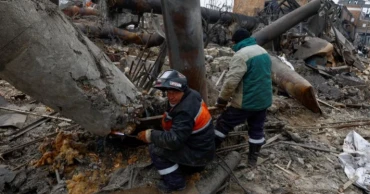
On the same day as the Geneva discussions, Russia launched a large-scale drone and missile attack on Ukraine’s energy infrastructure. Ukrainian officials said the strikes damaged power and heating supplies and showed Russia’s lack of interest in peace.
Zelenskyy again urged Western allies to tighten sanctions on Russian energy exports and stop the flow of critical components to Russia through third countries. Ukraine says Russia continues to rely on a large shadow fleet of oil tankers to bypass sanctions.
Despite ongoing fighting, Ukrainian officials say their forces have made recent gains in eastern and central regions. Military observers report that Ukrainian troops reclaimed territory in mid-February, marking one of their fastest advances since 2023.
European allies have pledged increased military and financial support to Ukraine this year, including funding for drone production and weapons supplies. The European Union has also approved new financial assistance packages.
The United States, however, has halted direct military and financial aid to Ukraine since President Trump took office in January 2025, increasing concerns in Kyiv about the balance of pressure in the peace process.
With inputs from ALJAZEERA
20 hours ago
Police search continues at Andrew’s former home after arrest
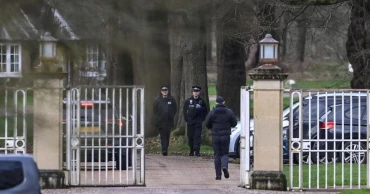
Police continued searching Royal Lodge for a second day on Friday as Andrew Mountbatten-Windsor was released under investigation following his arrest on suspicion of misconduct in public office.
More unmarked police vehicles were seen arriving at the Windsor property, which is Andrew’s former residence, as officers pressed on with their inquiry. Police searches linked to the case have already ended in Norfolk but are ongoing in Berkshire, according to authorities.
Andrew was arrested on Thursday and held for around 11 hours before being released under investigation. This means he faces no restrictions on his movement while police continue their inquiries. He was later photographed returning to the Sandringham estate.
The arrest, first reported by the BBC, followed an assessment by Thames Valley Police of a complaint alleging that Andrew shared confidential material with late US sex offender Jeffrey Epstein during his time as a UK trade envoy.
Police sources said the investigation is not limited to a small number of emails already reported in the media and could involve a wider review of documents. Buckingham Palace has said it will cooperate fully with the investigation.
Andrew has previously denied any wrongdoing in connection with Epstein. He has not responded to specific BBC questions related to millions of Epstein-related documents released earlier this year. He has not been charged.
King Charles III, who was not informed in advance of the arrest, said he learned of the development with deep concern and stressed that the law must take its course.
Political reaction followed swiftly. UK Prime Minister Keir Starmer said no one is above the law, while opposition figures called for the police to be allowed to complete their work without interference.
Legal experts said a release under investigation is the least restrictive option available to police and is used when inquiries are at an early stage and further evidence gathering is required. Investigators may still question Andrew again as the probe continues.
Despite losing several royal titles last year, Andrew remains eighth in line to the British throne. Any change to that status would require an act of Parliament and the agreement of other Commonwealth nations.
Police have not given a timeline for completing the investigation.
With inputs from BBC
20 hours ago
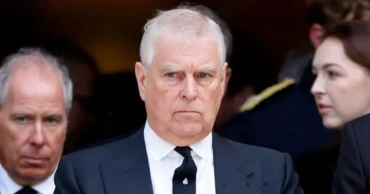
Former Prince Andrew arrested on suspicion of misconduct in public office
Andrew Mountbatten-Windsor, the younger brother of King Charles, was arrested on Monday on suspicion of misconduct in public office, Thames Valley Police confirmed. The arrest coincides with his 66th birthday.
Police are conducting searches at multiple locations, including addresses in Berkshire, Norfolk, and the Royal Lodge in Windsor Great Park, where Andrew lived until recently. Unmarked vehicles were also spotted arriving at his Sandringham Estate home earlier today.
King Charles, who was reportedly not informed in advance about the arrest, released a statement expressing “the deepest concern” over the news and emphasizing that “the law must take its course.” Buckingham Palace also confirmed full support for the ongoing police investigation.
The investigation relates to allegations that Andrew, during his time as a trade envoy, shared confidential material with the late convicted sex offender Jeffrey Epstein. Thames Valley Police stressed that the inquiry focuses on potential misconduct in public office rather than allegations involving Virginia Giuffre.
Legal experts noted that proving misconduct in public office requires meeting several conditions, including establishing that the individual knowingly abused their official position and acted without reasonable excuse. The arrest allows police to search Andrew’s properties and access relevant documents, files, and electronic equipment.
Despite the arrest, Queen Camilla and other senior royals continued with scheduled public engagements. Analysts say that while royal duties are ongoing, Andrew’s arrest is likely to dominate public and media attention in the coming days.
Thames Valley Police said the investigation followed a thorough assessment and cautioned that the case is active, urging care in reporting to avoid contempt of court.
With inputs from BBC
1 day ago
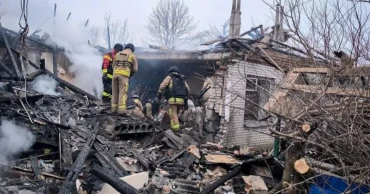
First day of Russia-Ukraine peace talks ends in Geneva
The first day of United States brokered peace talks between Russia and Ukraine ended in Geneva on Tuesday, with negotiations set to resume on Wednesday amid low expectations of a breakthrough.
Ukrainian Defence Minister Rustem Umerov, who is leading Kyiv’s delegation, said the discussions would continue in the Swiss city on Wednesday morning.
The latest round marks the third trilateral talks involving Ukraine, Russia and the United States, coming just a week ahead of the fourth anniversary of Russia’s full scale invasion of Ukraine. However, hopes remain limited as Moscow has maintained its hardline demands over Ukrainian territory.
Even as talks were underway, fighting continued on the ground. Russian forces carried out large scale overnight attacks across Ukraine, further straining the country’s already damaged power grid as freezing winter temperatures persist.
Ukrainian officials said Russia launched around 400 drones and nearly 30 missiles, striking 12 regions and killing at least three people. Russia, meanwhile, claimed its air defence systems intercepted more than 150 Ukrainian drones, while a drone strike caused a fire at an oil refinery inside Russian territory.
In a post on social media, Umerov said Tuesday’s discussions focused on “practical issues and the mechanics of possible solutions.” He added that he would brief President Volodymyr Zelensky on the outcome of the talks.
In a video address later, Zelensky said Ukraine was prepared to refrain from strikes if an earlier US proposal for mutual restraint was implemented. He stressed that Ukraine seeks peace but will continue defending its sovereignty.
“We are ready to move quickly towards a worthy agreement to end the war,” Zelensky said, adding that the key question now lies with Russia.
Russia’s state media quoted sources as saying the six hour talks were tense and were held in a mix of bilateral and trilateral formats. The negotiations are being mediated by Steve Witkoff and Jared Kushner. On the Russian side, President Vladimir Putin’s aide Vladimir Medinsky is leading the delegation. Senior military officials from both countries are also part of the talks.
Ahead of the meeting, US President Donald Trump urged Ukraine to move quickly towards negotiations, signalling growing impatience over the prolonged conflict.
Russia currently occupies around 20 percent of Ukrainian territory, including large parts of the eastern Donbas region. Moscow has demanded control over the remaining parts of the region, a condition Kyiv has firmly rejected. Ukraine has repeatedly said any settlement must include strong security guarantees from Western allies, including the United States.
In Kyiv, Foreign Minister Andrii Sybhiha condemned the latest Russian strikes, saying they demonstrated Moscow’s disregard for peace efforts. Ukrainian officials said at least three energy workers were killed near the frontline city of Slovyansk, while several others, including children, were injured elsewhere.
Ukraine said damage to homes, railways and energy infrastructure left thousands without electricity, particularly in the southern port city of Odesa. Energy company DTEK said the destruction to power facilities was severe and repairs would take a long time.
Ukraine is facing a deepening energy crisis after months of sustained Russian attacks on critical infrastructure during winter.
At the same time, Ukraine launched drone strikes into Russia, with officials reporting a fire at the Ilsky oil refinery in the southern Krasnodar region and further damage in the border region of Belgorod region.
The Geneva talks follow last month’s meeting in Abu Dhabi, the first trilateral talks since the invasion began in February 2022. That round ended without a breakthrough, though it led to the first prisoner exchanges in months.
With inputs from BBC
3 days ago
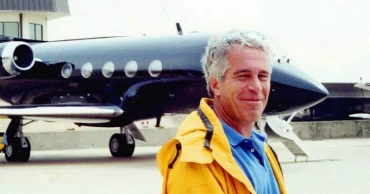
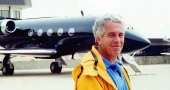
Essex Police assessing private flights at Stansted after Epstein files
Essex Police said it is assessing information related to private flights into and out of Stansted Airport following the publication of the Jeffrey Epstein files by the US Department of Justice.
Police sources said the assessment does not automatically mean a full criminal investigation will be launched.
A BBC investigation last year revealed that at least 87 flights linked to convicted sex offender Jeffrey Epstein arrived at or departed from UK airports between the early 1990s and 2018, with dozens of additional flights to the UK identified later.
Former British Prime Minister Gordon Brown wrote recently that police urgently need to re-examine whether Epstein’s victims were trafficked within the UK or taken abroad, saying the scale of abuse would become clearer through a full investigation of flight records.
In a statement, Essex Police said it is reviewing information linked specifically to private aircraft movements at Stansted Airport after the release of the Epstein files.
In December, the BBC reported that flight records appeared to include three British women who were allegedly trafficked, alongside other documents connected to Epstein. Lawyers representing hundreds of Epstein’s victims in the US said it was shocking that no full-scale investigation into his UK activities had ever taken place.
Brown said Stansted, located about 40 miles from central London, was among the airports where women were transferred between Epstein’s aircraft. He has written to senior officers in the Metropolitan Police, Essex Police and Thames Valley Police urging renewed scrutiny.
Stansted Airport said all private jets operate through independent fixed-base operators and that passengers on such flights do not enter the main terminal. Immigration and customs checks are carried out directly by UK Border Force, the airport authority added.
The National Police Chiefs' Council said a new national group has been formed to support police forces assessing allegations arising from the Epstein files.
Separately, Thames Valley Police is reviewing claims that a woman was sent to the UK by Epstein for a sexual encounter with Prince Andrew, who has denied any wrongdoing.
Earlier this month, the Metropolitan Police launched a criminal investigation into Peter Mandelson over allegations he passed sensitive information to Epstein. Mandelson has denied any criminal conduct and previously apologised for maintaining links with Epstein.
With a inputs from BBC
3 days ago
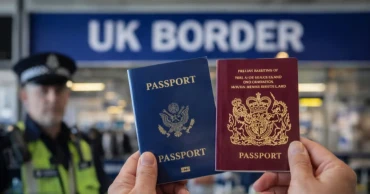
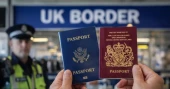
Dual nationals rush for UK passports as new entry rules take effect
Thousands of United Kingdom dual nationals are scrambling to secure British passports or official entitlement documents as new border rules come into force from February 25, raising fears that some could be barred from re-entering the country.
Under the revised rules, British citizens who also hold another nationality will no longer be allowed to enter the UK using a non-British passport, even if their second nationality does not require a visa. Instead, they must travel with a valid UK passport or a digital certificate of entitlement linked to their foreign passport.
The changes are part of broader immigration reforms linked to the rollout of the Electronic Travel Authorisation (ETA) system, which the government says is aimed at modernising and streamlining border controls.
Many dual nationals say they were unaware of the changes and are now facing tight deadlines, long processing times and high costs. A British passport costs about £100, while a certificate of entitlement costs £589 and can take weeks to obtain.
The new rules do not apply to Irish passport holders, but they will affect other European citizens with British nationality. Dual nationals are also not eligible to apply for an ETA and must meet the new documentation requirements instead, with airlines responsible for checking compliance before departure.
According to the 2021 census, more than 1.2 million UK residents hold dual nationality. Critics say poor communication and the short notice period have left many people at risk of being stranded abroad, particularly those already travelling or living temporarily outside the UK.
Campaign group the3million, which represents EU citizens in Britain, accused the Home Office of failing to adequately warn affected individuals. The group has urged the government to pause the changes or introduce a low-cost temporary travel authorisation for dual nationals.
The Home Office said information about the new requirements has been publicly available since October 2024 and argued that the policy brings the UK in line with countries such as the United States, Canada and Australia.
Officials said all British citizens, regardless of other nationalities, are expected to travel using valid UK documentation once the new rules are enforced.
With inputs from BBC
3 days ago
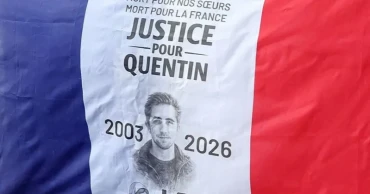
Student killing puts French far left under fire
France’s radical left has come under intense political pressure following the death of a university student in Lyon, with government ministers blaming militants linked to the far-left for the fatal attack.
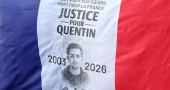
Quentin Deranque, a 23-year-old mathematics student and nationalist activist, died on Saturday, two days after he was beaten in a street assault. Lyon state prosecutor said a murder investigation has been opened, adding that Deranque was punched and kicked by at least six people and suffered fatal injuries to his skull and brain.
The attack followed a confrontation on Thursday linked to a small protest in Lyon against a visit by a left-wing politician to the Institute of Political Studies, also known as Sciences Po. Deranque had gone to support the hard-right feminist collective Némésis, which was staging the demonstration.
According to prosecutors, there was an initial clash between two opposing groups. Later, Deranque and two other nationalist activists were chased and cornered. Mobile phone footage from nearby streets showed three young men being attacked by a larger group, with one left lying on the ground.
Senior figures in President Emmanuel Macron’s government directly blamed the far left. Interior Minister Laurent Nuñez said the violence was clearly carried out by far-left militants, while Justice Minister Gérald Darmanin said there was no doubt about who was responsible.
The killing has put the radical left party France Unbowed under scrutiny, along with a banned militant group known as La Jeune Garde, which has previously provided security at left-wing rallies. Members of Némésis claimed they recognised activists from La Jeune Garde among those who disrupted their protest, though the group has denied involvement.
The demonstration was directed against a meeting involving LFI European lawmaker Rima Hassan, who condemned the violence and called for a full investigation. She said the security present during her visit was provided by her party and had no role in the clashes.
Deranque’s family lawyer said the student was not part of any security detail and had never been involved in violent activity. Friends described him as a practising Catholic who had become active in nationalist politics in recent years.
Right-wing politicians strongly attacked LFI, accusing it of encouraging violence by so-called anti-fascist militants. European lawmaker Marion Maréchal said responsibility lay with the radical left, while others said the killing reflected a climate of hatred.
LFI leader Jean-Luc Mélenchon rejected the accusations, saying his party had nothing to do with the incident. He expressed sympathy for Deranque’s family and said LFI opposes all forms of violence.
No arrests have yet been made, and investigators say efforts to identify the suspects are continuing as political tensions rise ahead of key local elections next month.
With inputs from BBC
4 days ago
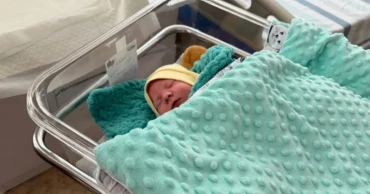
Ukraine freezes soldiers’ sperm amid deepening population crisis
War-torn Ukraine has introduced a state-funded programme allowing serving soldiers to freeze their sperm, as the country grapples with a worsening demographic crisis intensified by Russia’s full-scale invasion.
Under the scheme, Ukrainian troops can store sperm free of charge, giving their partners the option of having children in the future if the soldiers are killed or if prolonged stress and injury affect their fertility.
Maxim, a 35-year-old National Guard soldier deployed near the eastern frontline, said he agreed to freeze his sperm during recent leave in Kyiv at his wife’s urging. Speaking by phone from his position, he said constant danger from drones and shelling meant no soldier could feel safe, even far from the front.
“Our men are dying. The Ukrainian gene pool is dying. This is about the survival of the nation,” he said, adding that stress and combat conditions can reduce reproductive health.
Private clinics first began offering fertility preservation to military personnel in 2022, shortly after Russia’s invasion. In 2023, Ukraine’s parliament stepped in to regulate the practice and provide public funding.
Lawmaker Oksana Dmitrieva, who helped draft the legislation, said the aim was to protect soldiers’ future family plans. “They are defending our future, but may lose their own,” she said.
Initial versions of the law sparked public anger after it emerged that stored sperm would be destroyed if a soldier died, preventing widows from using it. The legislation was later amended to allow samples to be preserved free of charge for up to three years after death, provided prior written consent exists.
The policy is also meant to counter a demographic decline that pre-dated the war but has sharply worsened as thousands of young men have been killed and millions of civilians, mostly women, have fled abroad. Many refugees remain outside Ukraine, citing insecurity and difficult living conditions.
Ukraine’s state-run Centre for Reproductive Medicine in Kyiv began enrolling soldiers in the programme in January. Although only a small number have joined so far, officials expect demand to grow as awareness spreads.
Clinic director Oksana Holikova said the war has severely affected reproductive health, with pregnancy rates falling sharply since the invasion. She said stress, depression and fear of missile attacks have led many couples to delay having children.
The programme has not been without legal complications. Katerina Malyshko, whose husband Vitaly was killed by a Russian guided bomb strike, was initially denied the right to use their frozen embryos. After months of legal struggle, a court eventually ruled in her favour.
“I felt joy and grief at the same time,” she said, describing the ruling as a way to honour her husband.
Lawmakers admit the law still needs refinement, with further amendments expected to be debated later this year.
On the frontline, Maxim said the biggest challenge is persuading men to take part. Many soldiers feel embarrassed discussing fertility, despite widespread psychological strain.
“We need to talk about this openly and explain why it matters,” he said. “Because tomorrow I could be gone, but my wife would still have the chance to carry on our family.”
With inputs from BBC
4 days ago
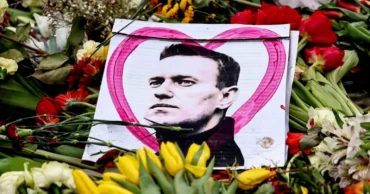
UK seeks action against Russia over Navalny poisoning claims
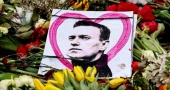
The United Kingdom has said it wants action to be taken following findings that Russian opposition figure Alexei Navalny died after being poisoned, British Foreign Secretary Yvette Cooper said on Sunday.
Speaking on the sidelines of the Munich Security Conference, Cooper said European laboratory tests indicated Navalny was killed using a rare toxin derived from dart frogs, adding that the evidence pointed to a breach of international chemical weapons rules.
Navalny, a prominent critic of Russian President Vladimir Putin, died in a Siberian prison in 2024 while serving a sentence that Western governments and his supporters had described as politically motivated. Russian authorities have previously said he died of natural causes.
Cooper said the UK and its allies had been pursuing the circumstances surrounding Navalny’s death since it occurred and were now seeking accountability through international mechanisms. She said a group of European ministers had reported the findings to the Organisation for the Prohibition of Chemical Weapons for further action.
Asked about possible steps, Cooper said Britain would continue to consider coordinated measures with its allies, including sanctions against Russia, as part of its broader response to Moscow’s actions, including the war in Ukraine.
Russia’s embassy in London has denied any involvement in Navalny’s death and rejected the poisoning allegations, describing them as unfounded.
The issue has renewed calls within the UK for tougher measures against Russia, with opposition figures also urging stronger enforcement of existing sanctions.
With inputs from BBC
5 days ago
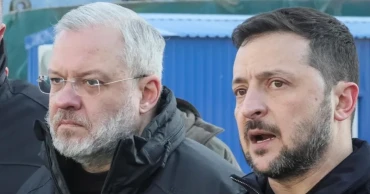
Ukraine ex-energy minister held while trying to flee amid corruption probe
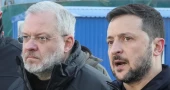
A former energy minister of Ukraine has been detained while attempting to leave the country, authorities said, in a major corruption case that has shaken the government of President Volodymyr Zelensky.
The National Anti-Corruption Bureau of Ukraine, known as NABU, said on Sunday that its detectives detained the former minister while he was crossing the state border as part of the so-called Operation Midas investigation.
Although NABU did not officially name him, several Ukrainian media outlets identified the detainee as German Galushchenko, who was forced out of government last year after being linked to a high-profile corruption scandal.
According to reports, Galushchenko was apprehended while on a train leaving Ukraine. His intended destination remains unclear. He has since been taken to Kyiv for further questioning.
The former official was among several senior figures accused in November of involvement in an alleged $100 million embezzlement scheme in the energy sector. The case triggered political shockwaves and threatened to tarnish the administration of President Zelensky, who came to power pledging to eradicate corruption.
Galushchenko served as energy minister for three years and later briefly held the justice portfolio. He was asked to resign in November. His successor as energy minister, Svitlana Hrynchuk, also stepped down after being implicated in the same scandal.
NABU and the Specialised Anti-Corruption Prosecutor’s Office said the investigation followed 15 months of probing alleged kickbacks in Ukraine’s energy sector, including at the state nuclear operator Energoatom. Investigators allege that bribes amounting to 10 to 15 percent of contract values were systematically collected, laundered and transferred abroad, including to Russia.
The scandal sparked public outrage as it emerged amid intensified Russian attacks on Ukraine’s energy infrastructure during winter. Authorities said further details on the detention would be released later.
Ukraine has long struggled with entrenched corruption, despite operating dedicated anti-graft bodies for over a decade. Tackling corruption remains a key condition for the country’s bid to join the European Union.
With inputs from BBC
5 days ago