Others

Trump and NFL share long uneasy relationship
US President Donald Trump’s relationship with the National Football League has long been tense and complicated, marked by legal battles, failed ownership bids and sharp political clashes, even as recent public appearances suggest a temporary thaw.
The complexity was on display last May when NFL commissioner Roger Goodell stood beside Trump in the Oval Office to announce that Washington DC would host the NFL Draft in 2027. The moment appeared symbolic, given Trump’s decades long disputes with America’s most popular sports league.
Trump’s clashes with the NFL date back more than 40 years. In the early 1980s, he tried but failed to buy an NFL franchise before purchasing the New Jersey Generals of the now defunct United States Football League. He later pushed the USFL into direct competition with the NFL and led an antitrust lawsuit accusing the league of monopolising television contracts.
Although a jury ruled the NFL an illegal monopoly, it awarded the USFL only nominal damages. The league collapsed soon after, and Trump’s hopes of forcing a merger and gaining an NFL team ended.
Trump made further attempts to buy NFL teams over the years, including the Dallas Cowboys, New England Patriots and Buffalo Bills, but each bid failed. Analysts and former associates have suggested those setbacks fuelled his resentment toward the league and may even have influenced his later political ambitions.
Tensions escalated during Trump’s first presidency when NFL players protested racial injustice by kneeling during the national anthem. Trump publicly criticised the players and urged team owners to discipline them, drawing sharp responses from league officials and several team owners.
The controversy deepened divisions between the White House and the NFL, with Trump calling for rule changes and boycotts, while the league defended players’ rights to peaceful protest. The issue also affected traditional White House visits by Super Bowl champions, with some teams declining invitations and others seeing visits cancelled.
Despite past hostility, Trump has recently sought closer ties with the NFL. He became the first sitting US president to attend a Super Bowl and has promoted major league events in Washington DC. He has also revived the presidential fitness test and formed a sports council that includes NFL figures.
Still, friction remains. Trump has criticised the NFL’s choice of performers for the Super Bowl half time show and has threatened to intervene in league matters, including disputes over team names and stadium deals.
With Super Bowl 60 set to conclude the current season, observers say Trump’s relationship with the NFL continues to shift between cooperation and confrontation, shaped as much by politics and personal history as by sport itself.
With inputs from BBC
12 days ago
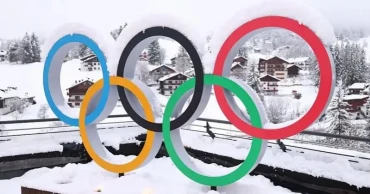
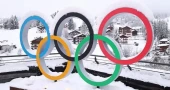
Winter Olympics 2026: Key stats and insights in six charts
The 25th Winter Olympics is almost here, returning to Europe with a record 116 medal events, including three in the new sport of ski mountaineering. Here’s what you need to know about Milan-Cortina 2026.
Britain eyes historic Winter Games
Great Britain has never won more than five medals – or more than one gold – at a single Winter Olympics, but 2026 could change that. UK Sport is now targeting four to eight medals, while Team GB chef de mission Eve Muirhead says there is an "opportunity to get the most we ever have."
British athletes recently won nine medals at World Championships across bobsleigh, curling, figure skating, freestyle skiing, skeleton, and snowboarding. Medal hopefuls also include snowboarder Mia Brookes and freestyle skier Kirsty Muir, both winners in this season’s World Cup events.
However, GB’s previous Winter Olympics target of three to seven medals in 2022 did not go as planned. The team won nothing until the final weekend, picking up a gold and silver in curling, falling short of expectations.
The most gender-equal Winter Games yet
The Winter Olympics have come a long way since 1924, when just 11 women competed. For Milan-Cortina, roughly 1,300 female athletes will participate, with women competing in a record 53.4% of medal events. Of the 116 events, 50 are for women and 12 are mixed. Twelve of the 16 disciplines will have fully balanced athlete numbers.
New women’s events include luge doubles and ski jumping individual large hill, alongside a mixed skeleton relay. This is also the first Winter Olympics overseen by IOC president Kirsty Coventry, the first woman in the organisation’s top post.
Yet some gaps remain: Nordic combined is still the only Winter Olympic sport without a women’s event, as the IOC decided against including one for 2026 despite lobbying from leading athletes.
NHL stars return to ice hockey
Ice hockey is one of the Winter Games’ biggest draws, and NHL players are back after a 12-year absence. They missed the 2018 Games, while Covid disrupted 2022 participation. Even for 2026, the inclusion of NHL players was uncertain due to rink readiness issues.
Their return boosts the USA’s hopes of winning its first men’s Olympic ice hockey title since the 1980 “Miracle on Ice,” especially with Russia banned from competing. While most NHL teams are US- or Canada-based, almost every Olympic team will feature NHL players, including 2022 champions Finland and semi-finalists Slovakia and Sweden.
US olympic committee bars transgender women from Women’s Sports in line with Trump order
Milan-Cortina 2026 vs. Cortina 1956
Cortina d’Ampezzo will host the Winter Olympics for the second time, joining St Moritz, Innsbruck, and Lake Placid. The Games have grown dramatically since 1956 – with five times as many events and almost four times as many athletes – making it impossible for a single ski resort to host alone. Events will take place across multiple cities, including Milan.
The IOC emphasizes sustainability, and spreading events reduces the need for new infrastructure. Cortina’s Olympic Ice Stadium, which hosted opening ceremonies, ice hockey, and figure skating outdoors in 1956, will now host curling under a roof in 2026.
A golden era of record-breaking athletes
The 2026 Games could see new names join the list of Winter Olympic gold medal leaders. German lugers Tobias Wendl and Tobias Arlt aim for their seventh and eighth golds, equalling Norwegian legends Ole Einar Bjorndalen, Bjorn Daehlie, and Marit Bjorgen. Their 100% gold rate could surpass the Norwegians, who won gold in 53%, 33%, and 30% of their events respectively.
Norwegian cross-country skier Johannes Hosflot Klaebo, a five-time Olympic champion, could also rise to the top, having won all six events at last season’s World Championships.
Bangladesh T20 exclusion may jeopardise India’s 2036 Olympic hosting, Guardian reports
How will hosts Italy perform?
Hosts often get a medal boost, though not always. Italy won 13 medals in 2002 but only 11 in Turin 2006, despite five golds. For 2026, the Italian Olympic Committee has set a minimum target of 19 medals, one short of their 1994 record of 20.
Italy’s medal hopes have faced setbacks, with flagbearer Federica Brignone and freestyle skier Flora Tabanelli struggling with fitness, while alpine skier Marta Bassino is already ruled out. Others, like speed skater Davide Ghiotto, snowboarder Maurizio Bormolini, and curling pair Amos Mosaner and Stefania Constantini, remain strong contenders.
Short track legend Arianna Fontana, who won bronze at 15 in Turin 2006, aims to win a medal at a sixth consecutive Winter Olympics, cementing her place as Italy’s most successful Winter Olympian.
With inputs from BBC
17 days ago
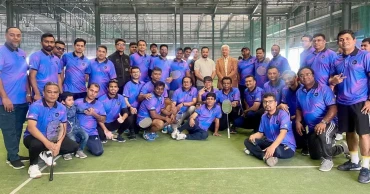
Club Notredamians holds badminton tournament in Dhaka
Club Notredamians Bangladesh Ltd has organised its flagship badminton tournament at Bashundhara Sports City, bringing together alumni and members in a competitive and festive atmosphere.
The event, held on Saturday, was sponsored by NRB Bank and supported by the Notre Dame College Batch of 2002, said a press release on Sunday.
The tournament featured 56 skilled athletes competing in 28 teams under a doubles format.
After a series of intense matches that showcased exceptional sportsmanship, the duo of Mohammad Abu Nader Al Mukkaddes and Mohammad Mamunur Rashid (both from the ’94 Batch) emerged as the Champions.
The Runners-up title was secured by the formidable pair of Mohammad Sadikur Rahman (’96 Batch) and Mohammad Shafiqul Islam Ontu (’97 Batch).
The event was officially inaugurated at 11:00 am by the Club’s President, Syed Abu Naser Bukhtear Ahmed.
20 days ago
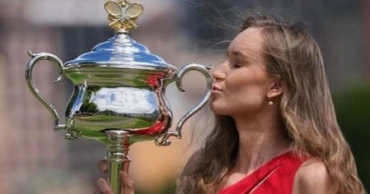
Elena Rybakina wins Australian open with calm precision
Kazakhstan’s Elena Rybakina claimed the Australian Open women’s singles title on Saturday, defeating world No. 1 Aryna Sabalenka 6-4, 4-6, 6-4 in a tense three-set final.
Rybakina, 26, kept her emotions in check even at match point, delivering a decisive ace to end the contest. “Maybe my face didn’t show it, but inside I felt a lot of emotions,” she said.
The win marks Rybakina’s second Grand Slam title after her Wimbledon triumph in 2022. She also recently won the WTA Finals, defeating Sabalenka again and earning a record $5.2 million in prize money.
Seeded No. 5 in Melbourne, Rybakina beat top-ranked players including Sabalenka, four-time major winner Iga Świątek, and No. 6 Jessica Pegula on her way to the title.
“They are tough opponents with strong results. I’m glad I could take the opportunities I had during the matches,” she said.
Rybakina will return to No. 3 in the world rankings next week.
After a challenging 2025 season, which included her coach’s suspension and inconsistent form, Rybakina’s comeback has been remarkable. She credits her coach Stefano Vukov and her support team for helping her regain top form.
Tennis players distrust doping agencies after Sinner case: Djokovic
“I always believed I could return to my best level,” she said. “It’s a win for the whole team and everyone who supports me.”
Rybakina celebrated the victory quietly, raising a glass at the champion’s press conference and smiling for photos by the Yarra River before heading to her next flight.
20 days ago
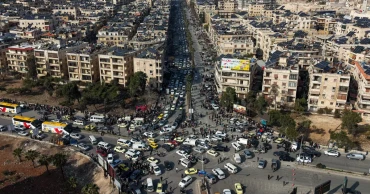
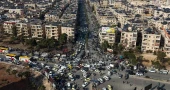
Tens of thousands flee Aleppo amid Syrian-Kurdish clashes
Clashes between government and Kurdish forces in a contested area in Syria's northern city of Aleppo intensified Thursday after Syrian authorities ordered civilians to evacuate.
The authorities opened a corridor for civilian evacuations for a second day and tens of thousands fled.
The government of Aleppo province gave residents until 1 p.m. local time to evacuate in coordination with the army. State news agency SANA, citing the army, said the military would begin “targeted operations” against the Kurdish-led Syrian Democratic Forces in the neighborhoods of Sheikh Maqsoud, Achrafieh and Bani Zaid half an hour after that deadline.
The military later issued a series of maps with the areas under evacuation order.
An Associated Press journalist at the scene heard sporadic sounds of shelling as civilians streamed out of the area Thursday morning. More than 142,000 people have been displaced across the province, according to the Aleppo Central Response Committee.
“There’s a large percentage of them with difficult medical issues, elderly people, women, and children,” said Mohammad Ali, operations director with the Syrian Civil Defense in Aleppo.
Kurdish forces said at least 12 civilians were killed in the Kurdish-majority neighborhoods, while government officials reported at least nine civilians have been killed in the surrounding government-controlled areas in the fighting that broke out Tuesday. Dozens more on both sides have been wounded. It was not clear how many fighters were killed on each side.
Each side has accused the other of deliberately targeting civilian neighborhoods and infrastructure, including ambulance crews and hospitals.
Clashes intensified in the afternoon, with continuous exchanges of shelling and drone strikes, and tanks could be seen rolling into the contested neighborhoods. The SDF-affiliated Internal Security Forces said they had “destroyed two armored vehicles and inflicted casualties on the attackers” as they advanced.
Aleppo governor Azzam al-Gharib, meanwhile, said Thursday evening that “a large number” of SDF fighters had defected or fled. Late in the evening, as clashes subsided, government forces began to deploy in largely-abandoned neighborhoods where the fighting had taken place.
Churches hosting displaced peopleSt. Ephrem Syrian Orthodox Church in Aleppo city was hosting about 100 people who had fled the fighting. Parishioners donated mattresses, blankets and food, priest Adai Maher said.
“As soon as the problems started and we heard the sounds (of clashes), we opened our church as a shelter for people who are fleeing their homes," he said.
Among them was Georgette Lulu, who said her family is planning to travel to the city of Hasakeh in SDF-controlled northeast Syria when the security situation allows.
“There was a lot of bombing and loud noises and a shell landed next to our house,” she said. “I’ve been through these circumstances a lot so I don’t get frightened, but my niece was really afraid so we had to come to the church.”
Hassan Nader, a representative of the Ministry of Social Affairs in Aleppo said about 4,000 were staying in shelters in the city while tens of thousands had gone to other areas of the province, and the ministry was working with NGOs to supply them with food, medicine and other necessities.
Political impasseThe clashes come amid an impasse in political negotiations between the central state and the SDF.
The leadership in Damascus under interim President Ahmad al-Sharaa signed a deal in March with the SDF, which controls much of the northeast, for it to merge with the Syrian army by the end of 2025. There have been disagreements on how it would happen. In April, scores of SDF fighters left Sheikh Maqsoud and Achrafieh as part of the deal.
Officials from the central government and SDF met again on Sunday in Damascus, but government officials said that no tangible progress had been made.
Some of the factions that make up the new Syrian army, formed after the fall of former President Bashar Assad in a rebel offensive in December 2024, were previously Turkey-backed insurgent groups that have a long history of clashing with Kurdish forces.
In the city of Qamishli in the Kurdish-controlled northeast, thousands of protesters gathered Thursday, chanting, “SDF, we are with you until death.”
Sawsan Khalil, a protester in Qamishli who was displaced from Afrin in Aleppo province in a 2018 Turkish offensive against Kurdish forces there, called for the international community “to feel for the Syrian people who have been killed for no reason” in Aleppo.
Izzeddin Gado, co-chair of the Qamishli City Council accused the government forces of “following a foreign and regional agenda from Turkey.”
International concernsThe SDF has for years been the main U.S. partner in Syria in fighting against the Islamic State group, but Turkey considers the SDF a terrorist organization because of its association with the Kurdistan Workers’ Party, or PKK, which has waged a long-running insurgency in Turkey. A peace process is now underway.
Despite the long-running U.S. support for the SDF, the Trump administration in the U.S. has also developed close ties with al-Sharaa’s government and has pushed the Kurds to implement the March deal.
A U.S. State Department official said in a statement Thursday that U.S. envoy Tom Barrack was trying to facilitate dialogue between the two sides.
Barrack later posted on X, “Just this past week, we stood on the threshold of successfully concluding the March 10, 2025 integration agreement,” a goal that he said remains “eminently achievable.”
“Together with our allies and responsible regional partners, we stand ready to facilitate efforts to de-escalate tensions and to afford Syria and its people a renewed opportunity to choose the path of dialogue over division,” he said.
Turkey’s Ministry of National Defense said Thursday that the “operation is being carried out entirely by the Syrian Army” while Turkey is “closely monitoring.”
“Syria’s security is our security,” the statement said, adding that “Turkey will provide the necessary support should Syria request it.”
Turkish Foreign Minister Hakan Fidan described the SDF as the “greatest obstacle for peace in Syria.”
The United Nations expressed concern at the violence and called for de-escalation.
1 month ago
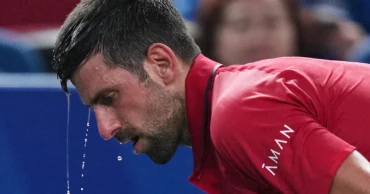
Novak Djokovic withdraws from the Australian Open tuneup tournament in Adelaide
Novak Djokovic has pulled out of the Adelaide International, an Australian Open warm-up event, citing a lack of physical readiness as he continues his build-up to the season’s first Grand Slam.
The 38-year-old Serb announced his decision on Monday through social media, saying he is not yet prepared to return to competitive action. Djokovic expressed disappointment at missing the tournament, where he lifted the trophy two years ago and enjoyed strong support from local fans.
Addressing supporters in Adelaide, Djokovic said the decision was difficult, adding that he had been looking forward to returning to a venue where he felt “at home” and had created special memories. However, he stressed that his priority is now fully focused on preparing for the Australian Open.
Djokovic has not played an official match for nearly two months. His last appearance came on Nov. 8, when he defeated Italy’s Lorenzo Musetti to win the Hellenic Championship final in Athens. Shortly after that victory, he withdrew from the ATP Finals for the second consecutive year, citing a shoulder injury.
The former world No. 1 said he expects to arrive in Melbourne soon as he continues his preparation for the Australian Open, which gets underway at Melbourne Park on Jan. 18.
Djokovic is the most successful player in the history of the tournament, having won the Australian Open a record 10 times, including his most recent title in 2023. However, he has failed to reach the final in each of the past two editions, exiting at the semifinal stage both times. In 2025, he was forced to retire after one set of his semifinal match against Alexander Zverev due to a torn hamstring.
Despite injury setbacks, Djokovic reached the semifinals at all four Grand Slam events last season. He begins the new year ranked No. 4 in the world, behind Carlos Alcaraz, Jannik Sinner and Zverev.
His withdrawal from Adelaide follows another significant announcement, made a day earlier, that he is ending his involvement with the Professional Tennis Players Association, the organization he co-founded that has been engaged in legal action against tennis’s governing bodies.
Bangladesh refuses to travel to India for World Cup next month
1 month ago

Sports events suspended nationwide after Khaleda Zia’s death
All scheduled Federation Cup and women’s football league matches were suspended on Tuesday following the death of former prime minister and BNP chairperson Khaleda Zia.
The Bangladesh Football Federation (BFF) confirmed that both Federation Cup fixtures slated for the day were postponed as part of nationwide mourning.
The Under-15 National Championship final, scheduled to be held in Noakhali, was also called off.
In women’s football, three league matches due to be played at Kamalapur Stadium were suspended, with revised dates to be announced later.
BFF vice-president Fahad Rahman said the media all sporting activities for the day had been halted out of respect.
He added that it remained uncertain whether matches would resume the following day, as Khaleda Zia’s funeral prayers were expected to be held on Wednesday.
Khaleda’s Death: Govt announces 3-day state mourning, general holiday Wednesday
Other national sports bodies, including the Bangladesh Cricket Board (BCB), also issued condolence messages.
Officials said further decisions on fixtures would depend on the duration of the official mourning period.
Khaleda Zia, a two-time prime minister, died on Tuesday morning at Evercare Hospital in Dhaka.
1 month ago
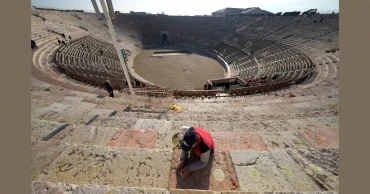
Verona’s iconic Arena set for major makeover before 2026 Winter Games
Verona’s ancient Roman Arena is set for a modern renovation, with major upgrades to improve accessibility for people with disabilities ahead of the 2026 Milan-Cortina Winter Games. The venue will host the Olympic closing ceremony and the Paralympic opening ceremony.
Dating back to the 1st century, the Arena has served many purposes — from staging gladiatorial combat and exotic animal hunts in Roman times to functioning as a Medieval marketplace — and is now best known as the site of a celebrated opera festival.
Despite its long history, the massive structure has never been properly adapted for visitors with disabilities or others requiring mobility support. Several temporary safety measures have also remained in place for years without being modernized.
The forthcoming Games have created an opportunity to upgrade both accessibility and safety at the Arena — a landmark older than the Colosseum — before it welcomes an expected 11,000 spectators for the Feb. 22 Olympic closing ceremony and nearly 10,000 for the Paralympic opening ceremony on March 6.
“This is an ancient monument that is some 2,000 years old, that remains active and hosts audiences,” said architect Giulio Fenyves, whose Milan studio designed the new safety and accessibility features.
“The occasion of the Olympics has made it possible to reconsider a series of logistical aspects, including facilitating the entry and exit, precisely because it continues to host major events with thousands of people,” Fenyves said.
The facelift is part of a 18 million euro ($21 million) project that improves accessibility for the entire area surrounding the Arena and is being overseen by the governmental company responsible for Olympic infrastructure.
The works include making a kilometer-stretch of sidewalks from Verona’s main train station to the Arena safer for wheelchairs or baby strollers by building small curb ramps. Dedicated bike lanes are also being built.
Paralympians participating in the Parade of Athletes up Corso Porta Nuova, across Piazza Bra, and into the Arena will find that the route has been significantly upgraded for people who require wheelchairs or have other mobility issues.
The work is being coordinated with officials responsible for the preservation of the monument as well as those overseeing accessibility codes to bring the structure more in line with current legislation.
The new elements “must be integrated in the most delicate and harmonious way possible to a monument that is both robust and fragile at the same time,” Fenyves said.
Inside the Arena, the centerpiece project is a wheelchair-accessible ramp clad with pre-rusted steel and the same Prun stone from the Lessinia hills above Verona that was used by the Romans to build the Arena.
The local stone gives the Arena its pinkish-yellow hue and contains fossilized shells — remnants of a prehistoric sea that once covered this region now known for hills and vineyards.
The ramp will be removable, but project manager Paolo Zecchinelli said he hopes that it will be retained as a legacy of the Games.
Until now, people with wheelchairs or walkers approached from a natural slope leading down from the adjacent Piazza Bra.
In addition to the ramp that is meant to blend with the Arena’s original features, the local organizing committee is planning an ad hoc temporary ramp to accommodate not only disabled spectators and athletes, but also the elderly, families with children and anyone needing assistance.
The overall project also includes a new railing along the top level of the Arena to replace one built in the 1950s that was meant to be temporary, as well as new handrails at varied heights on internal stairways and at the 72 entrances to the tiered seats. Bathrooms are being renovated by the city, and the infrastructure company is making new ramps to make them more accessible.
Work will continue after the Olympics and Paralympics, including the installation of an elevator that will allow people with limited mobility to reach the Arena's uppermost level, either to watch a show or take in a view of the surrounding hills.
“A part will remain as a gift to the city, which will help this beautiful monument to be more accessible both to people who tour it and those who attend opera performances and other concerts,” Zecchinelli said.
2 months ago
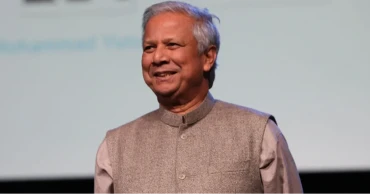
Prof Yunus congratulates youth hockey team on lifting Challenger title
Chief Adviser Prof Muhammad Yunus on Tuesday congratulated the Bangladesh youth hockey team after lifting the Challenger division of the Youth Hockey World Cup, calling it a source of pride for the nation.
In a congratulatory message, Prof Yunus said the players’ success had uplifted the country and reflected their hard work, discipline, team unity and indomitable spirit.
He noted that the team’s performance had further strengthened Bangladesh’s presence on the international sporting stage.
The Chief Adviser also credited the collective efforts of the players, the dedication of the coaching staff and the support of all concerned for making the triumph possible.
Prof Yunus expressed hope that the victory would open a new chapter to flourish the county’s hockey.
Maintaining the momentum of progress and excellence, he added, would create greater opportunities for the youth to achieve even bigger successes in the future.
Bangladesh secured the Challenger title on Monday in Madurai, India, with a commanding 5–2 victory over Austria in the final.
This year, the International Hockey Federation introduced the Challenger division for the classification round involving eight teams eliminated in the group stage of the Youth World Cup.
2 months ago
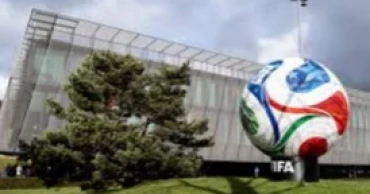
Iran to skip World Cup draw over U.S. visa restrictions for officials
Iran has announced it will boycott next week’s 2026 World Cup draw in Washington after the U.S. reportedly denied visas to members of its delegation, according to the state-run IRNA news agency.
Iranian soccer federation spokesman Amir-Mahdi Alavi said the officials faced visa hurdles that extended beyond normal sports considerations. The White House has not commented on the matter.
Alavi noted that the federation has contacted FIFA, hoping the organization could help resolve the issue, but FIFA has yet to respond.
In June, the Trump administration imposed a travel ban on citizens from 12 countries, including Iran and Haiti, which recently qualified for the World Cup. The ban included exemptions for athletes, coaches, support staff, and immediate family members attending major competitions like the World Cup or Olympics, but it remains unclear whether these exemptions cover attending the World Cup draw on December 5 at the Kennedy Center.
Iran’s delegation would likely have been led by soccer federation president Mehdi Taj, a senior figure in Asian football who sits on two FIFA committees overseeing the World Cup. He is also a vice president of the Asian Football Confederation and a member of FIFA panels responsible for competitions and men’s national teams.
The 2026 World Cup, co-hosted by the U.S., Canada, and Mexico, will feature a record 48 teams and run from June 11 to July 19.
2 months ago