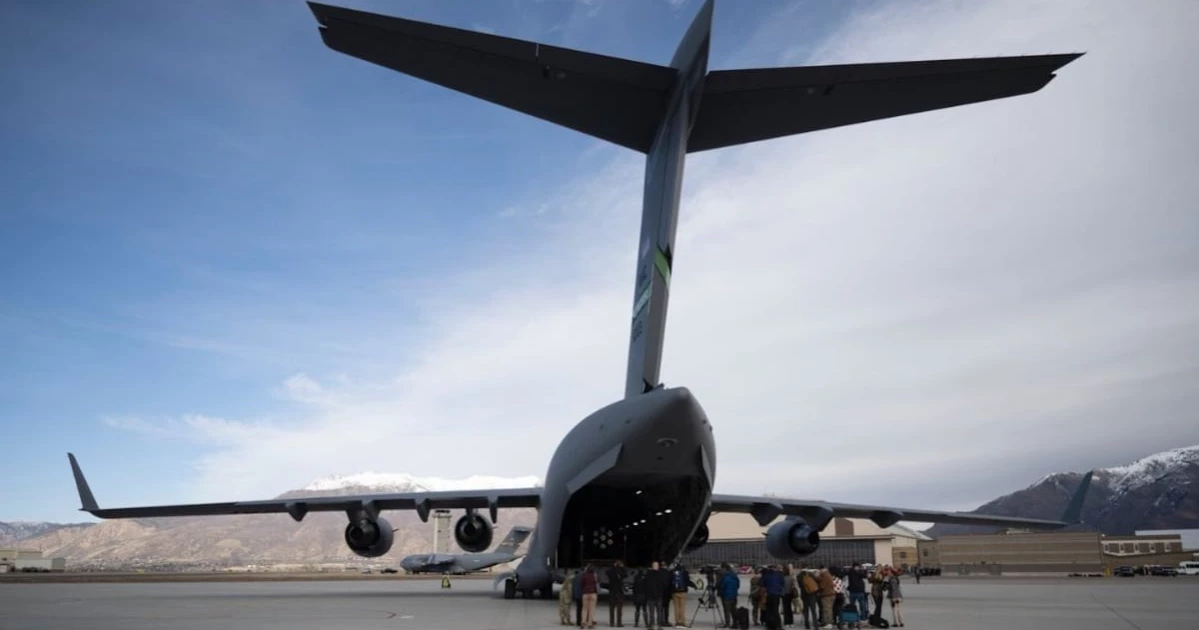
The Pentagon and the Energy Department have airlifted a small nuclear reactor from California to Utah for the first time, showcasing the United States’ ability to quickly deploy portable nuclear power for military and civilian use.
The nearly 700-mile flight on a C-17 military aircraft on Feb. 15 carried a 5-megawatt microreactor without nuclear fuel. Officials say the move highlights the Trump administration’s push to expand nuclear energy to meet rising electricity demand from artificial intelligence and data centers, as well as to strengthen energy security at military bases.
Energy Secretary Chris Wright and Defense Undersecretary Michael Duffey described the airlift as a breakthrough that could help speed up licensing and deployment of next-generation microreactors.
President Donald Trump has strongly backed nuclear power as a reliable, carbon-free energy source, even as his administration prioritizes fossil fuels and takes a cautious stance on renewables.
The portable reactor, about the size of a minivan, is designed to generate up to 5 megawatts of electricity, enough to power roughly 5,000 homes. Officials said at least three such reactors are expected to reach operational capability later this year.
Microreactors are intended to provide flexible power in remote areas, including military installations that may need to operate independently from the civilian grid. The reactor flown to Utah will undergo testing at the Utah San Rafael Energy Lab, with fuel expected to be supplied from a federal site in Nevada.
However, some experts have raised safety and cost concerns, questioning whether the technology is economically viable or secure once fueled and transported. Critics also say long-term plans for handling nuclear waste remain unresolved.
Despite the concerns, US officials say the project marks a major step toward faster, more mobile nuclear power deployment.