global leaders

Global leaders, businesses pore over fallout of more US tariff swoons
South Korean trade officials scrambled Saturday to assess the impact of a U.S. Supreme Court ruling to invalidate some Trump administration tariffs, as business and governments around the world pored over the possible fallout from moves in Washington on the global economy.
The emergency meeting announced by the Trade Ministry in Seoul came as officials from South Korea to South America and beyond acknowledged tariffs would remain on some specific exports to the U.S., like automobiles and steel, that aren't affected by the U.S. high court decision.
It marked yet another swoon in the U.S. tariff posture since President Donald Trump returned to office 13 months ago, upending dozens of trading relationships with the world's biggest economy.
In Paris, French President Emmanuel Macron hailed the checks and balances in the United States, praising the “rule of law. during a visit to a Paris agricultural fair: “It’s a good thing to have powers and counter-powers in democracies. We should welcome that.”
But he cautioned against any triumphalism.
Officials were going over the language of bilateral or multilateral deals struck with the U.S. in recent months, even as they braced for new swings. Trump said Friday he plans new 10% global tariffs, under different rules.
“I note that President Trump, a few hours ago, said he had reworked some measures to introduce new tariffs, more limited ones, but applying to everyone,” Macron said. “So we’ll look closely at the exact consequences, what can be done, and we will adapt.”
Businesses brace south of the border — and beyond
Alluding to the new 10% tariff threat, Sergio Bermúdez, head of an industrial parks company in Ciudad Juárez, Mexico, along the Texas border, said Trump “says a lot of things, and many of them aren’t true. All of the businesses I know are analyzing, trying to figure out how it’s going to affect them."
The impact could be felt especially in Juarez: Much of its economy depends on factories producing goods to export to consumers in the U.S., the result of decades of free trade between the U.S. and Mexico.
The policy swoons in the United States over the last year have made many global business leaders cautious, as they struggle to forecast and see investment take a hit.
Economy Secretary Marcelo Ebrard on Friday said Mexico was watching the tariffs with a “cool head,” noting that 85% of Mexico’s exports face no tariff, largely because of the United States-Mexico-Canada agreement. He plans a trip to the U.S. to meet with economic officials next week.
CEO Alan Russell of Tecma, which helps American businesses set up operations in Mexico, has seen his job grow increasingly complicated over the past year — his company's workload has surged as much as fourfold as it grapples with new import requirements. He worries the last U.S. moves will only make things more difficult.
“We wake up every day with new challenges. That word ‘uncertainty’ has been the greatest enemy,” said Russell, who is American. “The difficult part has been not being clear what the rules are today or what they’re going to be tomorrow.
Looking for a piece of possible tariff refunds
Some U.S. importers who paid what may turn out to be excess tariffs are looking for possible refunds — likely a very complex process — and some foreign companies may want to get their piece, too.
Bernd Lange, chairman of the European Parliament’s trade committee, insisted on Deutschland radio that excess tariffs “must be refunded.” He estimates German companies or their U.S. importers alone overpaid more than 100 billion euros ($118 billion).
Swissmem, a top technology industry association in Switzerland, hailed a “good decision” from the Supreme Court, writing on X that its exports to the U.S. fell 18% in the fourth quarter alone -- a period when Switzerland was facing much higher U.S. tariffs than most neighboring countries in Europe.
“The high tariffs have severely damaged the tech industry," Swissmem President Martin Hirzel said on X, while acknowledging the dust is far from settled. “However, today’s ruling doesn’t win anything yet.”
3 hours ago
BNP’s election win earns praise from global leaders
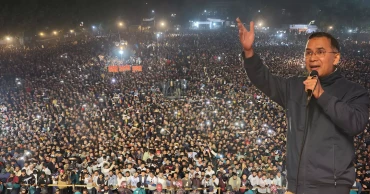
Global leaders and diplomatic missions stationed in Dhaka have been quick to congratulate Bangladesh Nationalist Party (BNP) Chairman Tarique Rahman on his party’s significant election victory and are signalling a willingness to work closely with Bangladesh under his leadership.
India, China, the United States, the United Kingdom, Malaysia, Nepal, Bhutan, Pakistan and the Maldives are among countries which congratulated Tarique Rahman, his party and the people of Bangladesh.
Indian Prime Minister Narendra Modi spoke with the BNP chief over the phone and extended support in his endeavour to fulfill the aspirations of the people of Bangladesh.
"Delighted to speak with Tarique Rahman. I congratulated him on the remarkable victory in the Bangladesh elections," PM Modi said.
He conveyed his best wishes and support in his endeavour to fulfil the aspirations of the people of Bangladesh.
"As two close neighbours with deep-rooted historical and cultural ties, I reaffirmed India’s continued commitment to the peace, progress, and prosperity of both our peoples," said the Indian Prime Minister.
In a separate message through his X handle, PM Modi conveyed his warm congratulations to Tarique Rahman on leading BNP to a decisive victory in the Parliamentary elections in Bangladesh.
"This victory shows the trust of the people of Bangladesh in your leadership," PM Modi said.
Progressive, Inclusive Bangladesh
India will continue to stand in support of a democratic, progressive and inclusive Bangladesh, he said.
"I look forward to working with you to strengthen our multifaceted relations and advance our common development goals," PM Modi said.
"Congratulations to the Bangladesh Nationalist Party and its leader Tarique Rahman as well as the people of Bangladesh. The United States looks forward to working with the newly elected government to advance prosperity and the security of the region," said US Secretary of State Marco Rubio.
The United States congratulated the people of Bangladesh on a successful election and the Bangladesh Nationalist Party and Tarique Rahman on his historic victory.
"The United States looks forward to working with you (Tarique) to realize shared goals of prosperity and security for both our countries," said the US Embassy in Dhaka on Friday morning.
Writing New Chapters
China congratulated the people of Bangladesh on the smooth and successful 13th national parliamentary election and the Bangladesh Nationalist Party for taking the lead in the election.
"We look forward to working together with the new government of Bangladesh and writing new chapters of China-Bangladesh relations," said the Chinese Embassy in Dhaka in a message.
China noted that Bangladesh had a steady and smooth general election and congratulates the BNP on winning the election, said Chinese Foreign Ministry Spokesperson.
"As a traditional friend and neighbor of Bangladesh, China supports Bangladesh in advancing its domestic political agenda, and stands ready to work with Bangladesh to carry forward the time-honored friendship, deepen high-quality Belt and Road cooperation and practical cooperation in various areas, and further strengthen the China-Bangladesh comprehensive strategic cooperative partnership," said the Chinese government Spokesperson.
Modi talks to Tarique over phone, reaffirms India's support
The United Kingdom (UK) congratulated BNP Chairman Tarique Rahman and his party on election victory.
The UK also greeted the people of Bangladesh as the country enters a new chapter.
"We look forward to working together on our shared priorities: economic growth, migration, climate and security," said the British High Commission in Dhaka on Friday in a message through its verified X handle.
New Energy in Ties
Malaysian Prime Minister Anwar Ibrahim congratulated Tarique Rahman and said Malaysia looks forward to working with the new Bangladeshi leadership to bring new energy to Dhaka-Kuala Lumpur bilateral ties.
"I warmly congratulate Tarique Rahman and the Bangladesh Nationalist Party on their emphatic election victory. This is a triumph of democracy: the Bangladeshi people, having navigated a period of extraordinary challenges, have spoken clearly at the ballot box," he said.
The Malaysian PM also expressed appreciation to his friend Dr Muhammad Yunus for his stewardship as Chief Adviser during this important transition and for ensuring that the democratic process proceeded smoothly.
"Malaysia looks forward to working with the new Bangladeshi leadership to bring new energy to our bilateral ties. I join Malaysians in extending our warmest regards to the people of Bangladesh," said the Malaysian Prime Minister.
Partnership to Grow
President of the Republic of the Maldives Dr Mohamed Muizzu congratulated BNP Chairman Tarique Rahman on Bangladesh Nationalist Party’s remarkable victory in the 13th National parliamentary elections.
"I extend my warm regards and look forward to working closely together, to further advance and deepen the longstanding friendship and cooperation between the Maldives and Bangladesh," he said.
'I am confident that our partnership will continue to grow in scope and strength in the years ahead," said the President of Maldives.
Remarkable Victory
Prime Minister of Nepal Sushila Karki on Friday congratulated BNP Chairman Tarique Rahman, noting that her country eyes strong ties with Bangladesh.
"Warm congratulations to the Government and the people of Bangladesh on the successful conduct of the 13th parliamentary elections," she said in a message.
Maldivian President eyes deeper cooperation as he congratulates Tarique, BNP
The Nepal’s Prime Minister extended her heartiest congratulations to Tarique Rahman on leading the Bangladesh Nationalist Party to a remarkable victory in the elections .
"I look forward to working closely with you to strengthen our neighbourly ties and consolidate cooperation in areas of mutual interest," she said.
Warm Ties
Prime Minister of Bhutan Tshering Tobgay congratulated BNP Chairman Tarique Rahman on his party's massive election victory.
"I look forward to working closely to further strengthen the warm ties of friendship between Bhutan and Bangladesh," he said in a message.
"Warmest congratulations to Mr. Tarique Rahman and the BNP on winning the Bangladesh General Elections," said the Bhutanese Prime Minister.
He said this resounding mandate reflects the confidence of the people of Bangladesh in Tarique Rahman's leadership and heralds a new chapter of peace and progress.
Democratic Bangladesh
On behalf of the Indian National Congress, its President Mallikarjun Kharge congratulated BNP Chairman Tarique Rahman and the BNP for winning the Parliamentary elections in Bangladesh.
UK congratulates Tarique as well as BNP on election victory
"India and Bangladesh share deep rooted bonds of history, language, culture, and multitude of other commonalities," he said.
"A democratic, progressive and inclusive Bangladesh would always be supported by all Indians for the stability and peace of our region," said the Congress President.
Mamata's Message
Chief Minister of West Bengal Mamata Banerjee congratulated BNP Chairman Tarique Rahman, his party and people of Bangladesh, for the election victory, wishing for a cordial relations between the two sides.
"My hearty congratulations, shubhonandan, to all my brothers and sisters, all the people, in Bangladesh. My advance Ramazan Mubarak to all of them," she said in a message from her verified X handle.
"For this great victory, my congratulations to my Tarique-Bhai, his party, and all the parties. Pray, you all be well and happy," Mamata said.
She wished that their relations with Bangladesh would be always cordial.
8 days ago
Global leaders extend full support to Prof Yunus, acknowledge Bangladesh's progress
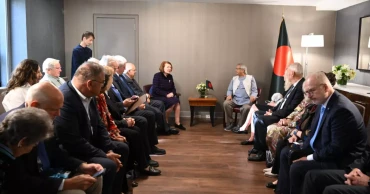
Dozens of global leaders gathered on Friday to meet Chief Adviser Prof Muhammad Yunus at his hotel suite in New York, offering their full support to him and his interim government.
They expressed readiness to provide their expertise and assistance to Bangladesh during this pivotal time, said Chief Adviser’s Deputy Press Secretary Abul Kalam Azad Majumder.
The delegation, led by former President of Latvia Vaira Vīķe-Freiberga, met Prof Yunus on the sidelines of the United Nations General Assembly.
Vīķe-Freiberga is also co-chair of the Nizami Ganjavi International Center (NGIC), named after the renowned 11th-century Persian poet.
The high-profile group included:Borut Pahor, former President of Slovenia, Boris Tadić, former President of Serbia, Egils Levits, former President of Latvia, Charles Michel, President Emeritus of the European Council and former Prime Minister of Belgium, George Papandreou, former Prime Minister of Greece, Rosen Plevneliev and Petar Stoyanov, former Presidents of Bulgaria, Ivo Josipović, former President of Croatia, Mladen Ivanić, former President of Bosnia and Herzegovina and Ameenah Gurib-Fakim, former President of Mauritius.
Return wealth to its rightful owners: Prof Yunus
Also in attendance were a former secretary general of Commonwealth, a former deputy Prime Minister of Georgia, four former Presidents of the UN General Assembly, several former foreign ministers, Ismail Serageldin, former Vice President of the World Bank and NGIC co-chair, Kerry Kennedy, President of Robert F. Kennedy Human Rights, and senior representatives from the IAEA and the Georgetown Institute for Women, Peace and Security.
4 months ago

Chief Adviser Yunus engages with global leaders at COP29 to address climate crisis
Chief Adviser Prof Muhammad Yunus on Tuesday had brief interactions separately with a number of leaders as COP29, UN's biggest climate conference, is underway.
Prof Yunus met with Prime Minister Daniel Risch of Liechtenstein and Prime Minister Tshering Tobgay of Bhutan.
He also met with President Mohamed Muizzu of the Maldives and President Denis Becriovic of Bosnia and Herzegovina.
Read: COP29: “Won’t revert back to the energy system of the 1950s,” says US top climate negotiator
1 year ago
Global leaders congratulating new govt is driving BNP insane: Hasan Mahmud
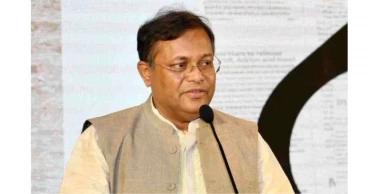
Foreign Minister Dr Hasan Mahmud on Tuesday said BNP has gone “insane,” from global leaders congratulating the new government under the leadership of Prime Minister Sheikh Hasina.
“I had 17 bilateral meetings during my visit to Ugandan capital Kampala, though we were there for two days only. And I exchanged greetings with at least another 17 as we were in the same hall. Each and everyone has congratulated the government under the leadership of Prime Minister Sheikh Hasina," he told reporters in a post-visit press conference at the Ministry of Foreign Affairs.
The Foreign Minister said BNP leader Ruhul Kabir Rizvi used to “talk nonsense” but now that has intensified even more.
Hasan Mahmud said all countries have expressed willingness to work together with the government of Prime Minister Sheikh Hasina.
Regarding Awami League Working Committee’s decision to not back candidates with the party's electoral symbol in the upazila elections, the AL joint general secretary said such elections were held in the past without party symbols, including after AL's return to power in 2009.
Hasan Mahmud returned home on Tuesday after attending the two-day 3rd South Summit that ended in Ugandan capital Kampala on Monday.
During his four-day visit, he also led the Bangladesh delegation in the 19th NAM Summit.
The Foreign Minister led the Bangladesh delegation in the third South Summit and delivered a national statement.
The South Summit is the supreme decision-making body of the Group of 77.
High-level representatives of nearly 100 countries and heads of United Nations agencies attended the meeting.
The Summit was held with the theme “Leaving No One Behind”.
The statements delivered by the member states emphasized trade, investment, sustainable development, climate change, poverty eradication, and the digital economy in fostering South-South Cooperation and collaboration.
The member states including Bangladesh called for solidarity, unity, and complementarity in the Global South to achieve the ultimate goals of sustainable development.
2 years ago

Davos 2024: Can AI provide solutions, as Global leaders confront $88.1 trillion debt crisis?
This week, the picturesque Swiss town of Davos becomes the epicenter of global policy discussions as world leaders convene to address a plethora of critical issues. High on their agenda are two ongoing major wars, a burgeoning shipping crisis, and the ever-increasing threat of cyber-attacks.
Complicating these discussions, however, is the staggering $88.1 trillion global debt burden, a figure reported by CNN. This unprecedented surge, predominantly fueled by public borrowing during the pandemic, now significantly undermines governments’ capabilities to tackle existing and emerging global crises effectively.
The soaring debt servicing costs not only strain public services, already reeling from successive budget cuts, but also limit efforts to combat climate change and provide adequate care for aging populations.
UN council to hold first meeting on potential threats of artificial intelligence to global peace
The risk looms larger as governments might find themselves unable to borrow more to fulfill existing obligations and fund essential services, says the report.
Former Bank of England’s monetary policy committee member, Michael Saunders, warned that a government unable to finance its debt could face abrupt and painful spending cuts or tax hikes, hampering its response to future shocks, it also said.
As the world faces a risky year of elections with half the global population heading to the polls, there is little incentive for belt-tightening among incumbent administrations. The prospect of new leaders implementing ambitious tax and spending plans raises concerns about the sustainability of already soaring levels of public debt, the report said.
In the United States, record levels of public borrowing have become a major point of contention between Republicans and Democrats, affecting national budget negotiations and jeopardizing the functioning of federal agencies, it said.
China warns of artificial intelligence risks, calls for beefed-up national security measures
The implications of mounting debt are not limited to economic challenges. Political polarization has already impacted the credit rating of the United States, with agencies like Fitch downgrading its rating. Moody’s has also warned about the potential removal of the country’s last remaining perfect rating.
Amidst these challenges, the increased cost of servicing debt, driven by rising interest rates, is diverting significant funds away from essential public services. In the UK, the Labour Party has scaled back green spending plans due to concerns about adding to the country's debt burden, the report further stated.
As the global economy grapples with these debt challenges and slowing economic growth, some experts, including Raghuram Rajan, former governor of the Reserve Bank of India, suggest that artificial intelligence (AI) could hold the key to a relatively painless recovery.
They hope for discussions at Davos to shed light on potential solutions, emphasizing the transformative power of an AI-driven productivity boom to reshape the world’s economic fortunes.
UN chief warns of risks of artificial intelligence
2 years ago

Finance Minister Mustafa Kamal urges global leaders to ease economic crisis
Finance Minister AHM Mustafa Kamal on Wednesday urged world leaders to normalise the global economy for the sake of humanity.
The minister said this while addressing virtually at the 7th Board of Governors meeting of the Asian Infrastructure Investment Bank (AIIB).
Read:Bangladesh has one of the lowest debt-to-GDP ratios: Finance Minister tells ADB
Kamal said all the developing countries were already facing huge challenges amid their efforts to recover from the COVID-19 pandemic. But another blow of the Russia-Ukraine war has made their struggle more difficult.
The theme of the 2022 AIIB Annual Meeting is “Sustainable infrastructure toward a connected world”, which aims to reaffirm infrastructure's crucial role in supporting recovery, growth and connectivity.
The annual meeting provides a diverse range of engaging sessions on topics and issues that impact sustainable economic development and the improvement of infrastructure connectivity in Asia and beyond.
Read:Market-based foreign exchange rate may be introduced soon: Finance Minister
It is the flagship event of the AIIB. It provides an opportunity to report on the bank's work and receive guidance from shareholders on the AIIB's strategic direction and activities. It also gathers and facilitates discussions among senior official delegates from the AIIB Members, as well as partners, business leaders, civil society organisations, and experts from a range of fields.
The meeting was also addressed by - Kun Liu, Governor of China; Ken Ofori-Atta, Governor of Ghana, Nirmala Sitharaman, Governor of India; Sardar Ayaz Sadiq, Governor of Pakistan; Indrani Raja, Governor of Singapore; Jamshid Khodzaev, Governor, Uzbekistan; Samad Bashirli, temporary substitute Governor, Azerbaijan; Rudiger von Kleist, temporary substitute Governor, Germany; Nathalie Labuschagne, alternate interim governor of New Zealand and Leonardo Rodriguez Garcia, provisional Alternate Governor of Spain.
3 years ago
.jpg)
Unite for common good: Hasina to global leaders
Prime Minister Sheikh Hasina on Friday urged the world leaders to seize the moment to forge a strong partnership for the common good of global humanity as the world is now moving towards recovery from the pandemic fallouts.
“May I entreat that as the world is now moving on the way to recovery from the pandemic, let’s seize the moment to forge a strong partnership for the common good of our global humanity,” she said.
Sheikh Hasina said this while speaking at a programme here at the UNESCO headquarters marking the 75th Anniversary of UNESCO with its Director-General Audrey Azoulay in the chair.
She said the 75th anniversary is a unique moment to celebrate the achievements while it is also an important occasion to introspect and revisit the organization’s activities for the next 25 years leading to its centenary.
“The pandemic menace has taken lives, and changed our lives. It has also taught us to survive through innovative acts and speed,” she said.
Read: South-South cooperation: Hasina for setting up ‘Knowledge Centre’ in Bangladesh
The Prime Minister put forward a four-point proposal before the global community.
Raising the proposals, she said, “First, the pandemic has severely disrupted the education system. For recovery, there’s a need for a global plan to prioritise learning by investing in digital tools and services, access to internet, digital content, and capacity building of teachers,” she said.
Secondly, Hasina said, public-private partnership must be forged for creating a technology-assisted meaningful learning environment.
In her third point, the PM said, Covid-19 vaccines must be considered as a global public good. We must ensure its access to all, especially students and educators worldwide,” she said.
In the 4th proposal, she said the benefit of science and scientific research must be harnessed for the welfare of peoples, with technology transfer at the core.
The PM mentioned that Bangladesh’s commitment to the principles of UNESCO is reflected by its early membership in 1972. “We consider this organization as one of the most effective platforms for promoting global peace and collective prosperity,” she said.
Guided by the peace-centric foreign policy of Bangabandhu Sheikh Mujibur Rahman, she said Bangladesh always remains at the forefront of global peace initiatives. “Our participation in UN peacekeeping as the top contributor is one such case,” she added.
As a proponent of a culture of peace, Bangladesh has been disseminating the message of peace through instilling tolerance and respect, Hasina said.
Read: Hasina urges UNESCO to declare online and remote learning as public good
“To do this, we’ve chosen education, science, culture and communications as effective tools. Our investment is particularly enormous in education with targeted interventions like stipends, gender-sensitive approach, school-feeding programmes and ICT education,” she said.
Hasina mentioned that some 400 million free textbooks are distributed among around 42 million students in the beginning of school years.
The PM said the Digital Bangladesh vision has been preparing, through ICT based learning, the future generations for the 4th Industrial Revolution.
“We’ve launched ICT in our Education Master Plan under which about 83,000 schools were provided with ICT devices, and 3,26,936 teachers trained,” she said.
4 years ago

Global leaders commit support for equitable access to Covid vaccines
The global leaders have pledged financing, dose donations, support for country readiness and delivery, and scale-up of global manufacturing to enable equitable access to Covid vaccines.
To improve access for the lower-income economies, the US will contribute an additional 500 million doses of Pfizer vaccine, to be delivered through COVAX, beginning in 2022. Sweden will provide an additional $243 million through 2021 and 2022.
New dose commitments from the European Union, including Italy and Spain, as well as Sweden, Denmark, and Japan mean further doses will be available to COVAX participants in 2021 and 2022.
Global leaders made the commitment while attending the Global Covid-19 Summit hosted by the US Thursday.
They underlined their commitment to ensuring equitable access to Covid vaccines for all countries through COVAX – noting that equitable access is essential to end the acute stage of the pandemic.
Building on the momentum and global solidarity generated over the past eighteen months by various commitments, including at summits organised by the European Commission, the G20 under the Saudi and Italian presidencies, the UK, including the G7 under its presidency, the US, and the prime minister of Japan, the summit saw further pledges made to COVAX and equitable access.
READ: Declare Covid vaccines as 'global public good': Hasina
Alongside these commitments, several countries pledged additional dose donations to be made available to countries around the world, including through COVAX, with Spain pledging an additional 7.5 million doses, Italy pledging an additional 30 million doses to be made available by the end of the year.
And Japan, which hosted the "One World Protected" Gavi COVAX AMC Summit in June 2021, pledging approximately 60 million doses.
Also, Denmark announced during the United Nations General Assembly this week that it would be doubling its dose donation commitment, bringing the total to 6 million doses pledged to be shared.
José Manuel Barroso, chair of the Gavi board, said this summit marks a major step forward in the global response against Covid and a major step forward for multilateralism.
Dr Tedros Adhanom Ghebreyesus, the director-general of the World Health Organisation, said if they are to meet the targets they have set of vaccinating 10% of the population of all countries by the end of this month, 40% by the end of 2021 and 70% by mid-next-year, they need to drastically scale up access to vaccines now.
Unicef Executive Director Henrietta Fore said with only 12% of the pledges made earlier this year turning into actual doses, low-income countries can no longer wait. "We urge dose-sharing countries to accelerate their donation plans."
READ: Conduct study to understand vaccine performances, suitability in Bangladesh: Experts
Dr Seth Berkley, CEO of Gavi, said with the rise of variants and the current gap in equitable access to Covid vaccines they must urgently vaccinate those most at risk everywhere in the world.
"We cannot afford further delays in getting vaccines to the most vulnerable – to do so will mean a continuation of this pandemic and its impact on all of our lives."
So far COVAX has delivered more than 300 million doses to 142 economies, and according to the latest forecast, approximately 1.2 billion doses will be available for the lower-income economies supported by the COVAX Advance Market Commitment (AMC) by the end of 2021.
This is enough to protect 20% of the population, or 40% of all adults, in all 92 AMC economies with the exception of India.
The key COVAX milestone of 2 billion doses released for delivery is now expected to be reached in the first quarter of 2022.
4 years ago

No chance for Bangladesh to look back: PM Hasina
Prime Minister Sheikh Hasina on Wednesday said there is no chance for Bangladesh to look back as it is time to march forward.
4 years ago