death anniversary
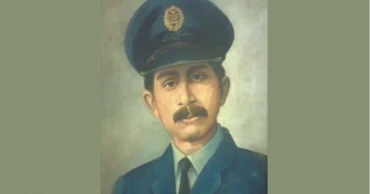
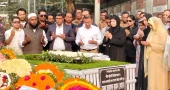
Sergeant Zahurul Haque’s death anniversary observed
The Bangladesh Air Force (BAF) on Sunday observed the 57th death anniversary of Shaheed Sergeant Zahurul Haque with due solemnity.
Marking the day, a Milad Mahfil was held after Fajr prayers at the central mosque of Bangladesh Air Force Base Zahurul Haque in Chattogram, seeking divine blessings for the departed soul and continued peace and prosperity of the country.
Air Officer Commanding of BAF Base Zahurul Haque, Air Vice Marshal Md Abdullah Al-Mamun, along with senior officers, airmen and other members of the base, attended the programme.\
BAF marks 55th death anniversary of Shaheed Sergeant Zahurul Haque: ISPR
On this day in 1969, Sergeant Zahurul Haque, a Bengali member of the then Pakistan Air Force and an accused in the Agartala Conspiracy Case, was shot dead by a Pakistani soldier while in detention at Dhaka Cantonment.
He had been arrested in December 1967 in connection with the case filed by the Pakistan government and was initially kept at Dhaka Central Jail, according to an ISPR media release. He was later taken into custody under the Air Force Act and held at Dhaka Cantonment.
Amid the mass uprising of 1969, the then Pakistani ruler Ayub Khan withdrew the Agartala Conspiracy Case. However, Sergeant Zahurul Haque was killed on February 15, 1969, while still in detention.
BAF observes 54th death anniversary of Sergeant Zahurul Haque
In recognition of his contribution to the country’s liberation struggle, a residential hall of Dhaka University was named Sergeant Zahurul Haque Hall, and Bangladesh Air Force Base Zahurul Haque in Chattogram was named in his honour in 1982.
He was posthumously awarded the Swadhinata Padak in 2018.
6 days ago
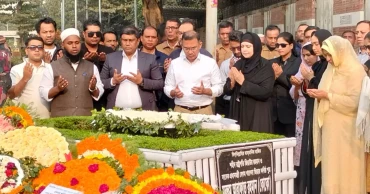
Tarique visits Koko’s grave, attends milad mahfil on his death anniversary
BNP Chairman Tarique Rahman on Saturday visited the grave of his younger brother Arafat Rahman Koko on the occasion of his 11th death anniversary and later joined a doa and milad mahfil.
Tarique, accompanied by family members including his wife Dr Zubaida Rahman, daughter Zaima Rahman and Koko’s wife Syeda Shameela Rahman, went to the Banani Graveyard in the afternoon, said BNP Media Cell member Sayrul Kabir Khan.
They offered fateha and a munajat there seeking salvation for the departed soul of Koko and for his parents, late President Ziaur Rahman and former Prime Minister Begum Khaleda Zia.
Read More: Tarique Rahman appeals to voters, highlights BNP’s track record
Later, Sayrul said, Tarique joined a doa and milad mahfil at the BNP Chairman’s Gulshan office, marking the day.
BNP Standing Committee members Mirza Abbas, Dr Abdul Moyeen Khan and Nazrul Islam Khan, and members of the Chairman’s advisory council, including Ismail Zabiullah and Mahdi Amin, along with other party leaders and activists, were present.
A munajat was offered for the eternal peace of Arafat Rahman Koko's departed soul, and the well-being of his family.
Earlier in the morning, BNP senior leaders and party activists, led by Senior Joint Secretary General Ruhul Kabir Rizvi, paid homage to Koko by placing a wreath at his grave.
Read More: Tarique urges voters to back BNP, warns against vote fraud
Following the visit, a doa and milad mahfil was held at the BNP central office in Nayapaltan, attended by leaders and workers from the party’s central, city and affiliated bodies.
Different professional and associate organisations of the BNP, as well as its city and district units and sports organisations, also placed wreaths at Koko’s grave and arranged various programmes in observance of the death anniversary.
On 24 January 2015, Koko, also a sports organiser, died of cardiac arrest in Malaysia at the age of 45. His body was brought back home on 27 January and buried at Banani Graveyard.
28 days ago
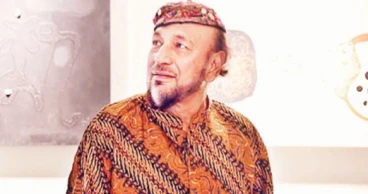
Eminent printmaker Kalidas Karmakar’s fifth death anniversary today
Today marks the fifth death anniversary of eminent Bangladeshi printmaker Kalidas Karmakar.
Born on January 10, 1946 in Faridpur to a family of goldsmiths and artisans, Kalidas cemented his legacy as one of the most diverse and well-respected artists of Bangladesh.
He was one of the advisers of Gallery Cosmos who initiated the state-of-the-art printmaking studio Atelier-71 at the gallery venue in Cosmos Centre, Malibagh in the capital, for which he had always shown great dedication. He was engaged with the gallery till his death on October 18, 2019.
Kalidas was naturally attracted to crafts, drawing and painting. To begin with his artistic endeavours, he completed his two-years preliminary degree in fine arts at the Institute of Fine Arts, Dhaka University, in 1964.
He then went on to complete his graduation from the Government College of Fine Arts and Crafts in Kolkata and achieved the prestigious degree in 1969.
Known as the ‘Alluvial Man’ in the country's art sphere, Kalidas began his career with painting through assembling metal objects in the 1970s and with prints, he began to explore mythic and tantric images in the 1980s, opening up new possibilities for etching and aquatint.
Marking the esteemed artist's fifth death anniversary, Gallery Cosmos and Cosmos Atelier-71 Artistic Director Sourav Chowdhury said: “For our Gallery Cosmos and Cosmos Atelier-71, Kalidas Karmakar has always been a family member and a guardian angel since its inception. Although his sudden departure has left a void, we are glad to honour his legacy, and we know that Kali da is always with us in spirit.”
A maestro of printmaking, especially viscosity printing, Kalidas Karmakar’s diverse artworks featuring metallic and other objects, handmade paper, and oil on canvas prints have been widely exhibited throughout South Asia, the Middle East, Europe, the United States and many other places across the world.
His maiden solo art exhibition was held at Bangladesh Shilpakala Academy on August 7, 1976.
Throughout his acclaimed career, he received multiple prestigious scholarships and fellowships including the Polish Government Scholarship in Graphic Art at the Warsaw Academy of Fine Art, Warsaw University; the French Government Superior Scholarship in Fine Arts for research in multicolour etching; Japan Foundation Fellowship on Japanese Woodblock Printing at Tokyo National University of Fine Arts and Music; ICCR Special Scholarship for research in Contemporary Modern Sculpture, West Bengal Lalit Kala Academy Studio; and Asian Cultural Council New York, Fellowship with Artist Residency program in the US.
For his remarkable contribution to the Bangladeshi fine arts, Kalidas Karmakar was awarded the Shilpakala Padak in 2016 and the Ekushey Padak in 2018.
1 year ago

Humayun Ahmed’s 11th death anniversary being observed nationwide
The nation is observing the 11th death anniversary of the iconic writer, filmmaker Humayun Ahmed today (January 19, 2023).
Widely considered one of the cornerstones of modern Bangla literature, the legendary writer passed away on July 19, 2012, due to colorectal cancer at the age of 63 at Bellevue Hospital, New York, in the United States.
His family and several organizations are observing the day with different programmes and events.
Humayun Ahmed's widow and actress-media personality Meher Afroz Shaon, alongside their two sons Ninit and Nishad, placed wreaths at his grave in Nuhash Palli, Gazipur in the morning.
Remembering Humayun Ahmed on his 74th birth anniversary
Special prayers and Quran Khatam have been organized since morning, and a prayer ceremony was also held to seek eternal peace of his soul. Orphans will be fed at noon marking the occasion, according to both Shaon and the authority of Nuhash Palli.
Himu Paribahan, a renowned fan unit of the prolific writer, has been observing the special day since 2013. Members of the platform placed wreaths at the writer's grave in the morning.
Several other organisations are also commemorating the day with various events, while fans and admirers are sharing emotional tributes to the legend on their social media accounts.
Television channels and radio stations are also airing various programmes, highlighting the life and glorious career of the wordsmith.
Remembering Humayun Ahmed on his 10th death anniversary
Humayun Ahmed was born in Kutubpur village at Mohanganj, Netrakona to Foyzur Rahman Ahmed and Ayesha Foyez on November 13, 1948.
He passed the School Certificate (1965) from Bogra Zilla School, Intermediate from Dhaka College and earned his BSc and MSc in Chemistry from Dhaka University with first class. He joined Dhaka University as a lecturer of Chemistry and later went to North Dakota State University in the United States to pursue his PhD in Polymer Chemistry.
'Nondito Noroke' (1972) was Humayun Ahmed's debut novel, which gave him the breakthrough and propelled his career as a writer. The Ekushey Padak winner writer wrote over 200 fiction and non-fiction books, all of which were bestsellers in Bangladesh to date.
Remembering Humayun Ahmed, a polymath par excellence
He won Bangla Academy Award, Lekhak Shibir Award, Shishu Academy Award, Michael Madhusudan Padak, Bachsas Award, and more for his outstanding contributions in his illustrious career to the Bengali culture and entertainment sphere.
Humayun Ahmed debuted with his drama 'Prothom Prohor' (1983) for Bangladesh Television (BTV). His successful journey in television continued with popular drama serials 'Ei Shob Din Ratri', 'Bohubrihi', 'Ayomoy', 'Nokkhotrer Raat', 'Aaj Robibar' and most notably, 'Kothao Keu Nei' which created a never-before-seen hype in the nation surrounding the lead character 'Baker Bhai', portrayed by veteran actor Asaduzzaman Noor.
Humayun Ahmed also explored success as a filmmaker in the early 1990s and went on to make a total of eight films in his filmmaking career, each based on his novels. Two of his films, ‘Shyamol Chhaya’ (2004) and 'Ghetuputra Komola' (2012) were the official Bangladeshi submissions for the Academy Award for Best Foreign Language Film in their respective years.
He received seven Bangladesh National Film Awards in different categories for the films 'Shonkhonil Karagar' (as screenwriter), 'Aguner Poroshmoni', 'Daruchini Dwip' and 'Ghetuputra Komola'.
Read more: Humayun Ahmed: The Creator of Versatile Fictional Characters
2 years ago
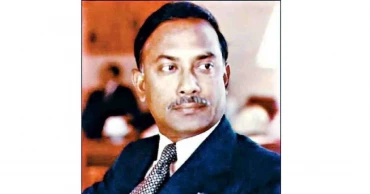
Zia’s 42nd death anniversary Tuesday
BNP will observe the 42nd death anniversary of its founder and former president Ziaur Rahman on Tuesday.
The party and its different associate bodies have chalked out a 13-day programme to observe the death anniversary across the country with due respect.
The observance of Zia's death anniversary programmes began today (Monday) through a discussion programme at the Institution of Engineers, Bangladesh, and will end on June 10.
The programmes include arranging discussion meetings, seminars, photo exhibitions, wearing black badges, publishing posters and supplements in newspapers and distributing food and relief materials among the destitute.
Ziaur Rahman who founded the Bangladesh Nationalist Party (BNP) in 1978 was assassinated by a group of disgruntled army officers at Chittagong Circuit House on 30 May, 1981.
In observance of the day, black flags will be hoisted and party flags kept at half-mast atop the offices of the party and its associate bodies, including Nayapaltan headquarters at 6:00am on Tuesday.
Besides, BNP senior leaders, led by party secretary general Mirza Fakhrul Islam Alamgir, will place wreaths at Zia's grave at Sher-e-Bangla Nagar in the morning.
BNP and its associate bodies will arrange discussions on Zia’s activities until June 10 as part of the death anniversary programmes.
Also read: BNP chalks out 13-day programme to observe Zia's 42nd death anniversary
The leaders of the party’s Dhaka south and north city units will distribute food and relief materials among the destitute in different parts of the city on Tuesday.
All of the party's district, city and thana units will also observe the day by holding various programmes, including discussions, to be participated by senior BNP leaders.
2 years ago

BNP chalks out 13-day programme to observe Zia's 42nd death anniversary
BNP on Tuesday chalked out a 13-day programme to observe the 42nd death anniversary of its founder and leader Ziaur Rahman with due respect.
The observance of the anniversary will begin on May 29 and end on June 10.
The programmes were finalized at a joint meeting of the party and its associate bodies held at its Nayapaltan central office with BNP Secretary General Mirza Fakhrul Islam Alamgir in the chair.
After the meeting, Fakhrul announced the programmes that include discussion meetings, seminars, photo exhibitions and wearing black badges, paying homage to Zia, and distributing food and relief materials among the destitute.
Ziaur Rahman, a military-ruler-turned-president, founded the Bangladesh Nationalist Party (BNP) in 1978. He was assassinated by a group of army officers at Chittagong Circuit House on May 30, 1981.
As part of the programmes, black flags will be hoisted and party flags kept at half-mast atop the offices of the party, including its Nayapaltan headquarters, at 6am on May 30.
Besides, party leaders and activists, led by senior leaders, will place wreaths at Zia's grave at Sher-e-Bangla Nagar in the morning.
BNP and its associate bodies will arrange discussions on Zia’s activities, from May 29 to June 10 as part of the death anniversary programmes.
The party leaders of Dhaka's south and north city units will distribute food and relief materials among the destitute in different parts of the city on May 30.
The party's all district, city and thana units will also observe the day with various programmes.
2 years ago

Gandhi’s philosophy of truth, humanism, non-violence underscored
Indian High Commissioner to Bangladesh Pranay Verma on Monday visited the Gandhi Ashram in Noakhali and paid rich tributes to Mahatma Gandhi on his 75th death anniversary.
The Ashram commemorates Bapu’s “Peace Mission” to Noakhali in 1946 and his message of non-violence and communal harmony.
The High Commissioner also participated in a discussion titled “The Relevance of Mahatma Gandhi in the Contemporary World” organized by the Gandhi Ashram Trust.
Members of the trust, local political leaders, representatives of local administration as well as civil society and academia joined the interaction.
High Commissioner Verma underlined the guiding light of Gandhiji’s philosophy of truth, humanism and non-violence in showing them the path to deal with today’s global menace of extremism and terrorism.
He also emphasised Gandhi’s belief in harmony with nature, his determination for the empowerment of the poorest and his message of “Vasudhaiva Kutumbakam” that inspires the motto of “One Earth, One Family, One Future” adopted by India for its G20 Presidency.
3 years ago

Awami League pay tributes to Syed Ashraf on 4th death anniversary
Awami League on Tuesday paid tributes to its former general secretary and public administration minister Syed Ashraful Islam.
The party leaders and activists laid wreaths on his grave at Banani graveyard in the city.
Read more: Awami League united under Sheikh Hasina's leadership: Quader
Awami League joint general secretaries Dr. Hasan Mahmud, Mahbubul Alam Hanif MP, Syed Ashraf's sister Syed Zakia Noor Lipi and Syed Ashraful Islam's family members were present.
Syed Ashraf died at Bumrungrad International Hospital in Bangkok, aged 68, on January 3 in 2019.
Read more: Awami League pays tribute at Bangabandhu‘s portrait on Martyred Intellectuals Day
His death came just four days after he was elected lawmaker from Kishoreganj-1. Before that, Ashraf was elected member of parliament from the same constituency in 1996, 2001, 2008 and 2014.
3 years ago

Shilpacharya Zainul Abedin’s 108th birth anniversary being observed amid festivities
The 108th birth anniversary of the master painter and pioneering art educator Zainul Abedin, widely revered as the 'Shilpacharya' (great master of fine arts), is being observed on Thursday .
Zainul Abedin, who was born on December 29, 1914, in Kishoreganj, was a key figure in the formation of the Dhaka University Faculty of Fine Art (FFA) and the Folk Art Museum in Sonargaon, Narayanganj.
The 108th birth anniversary of Shilpacharya is being celebrated with a variety of celebrations, most notably the traditional ‘Zainul Utsab’ and ‘Zainul Mela’ by Dhaka University's Faculty of Fine Art.
Education Minister Dr Dipu Moni joined the inauguration ceremony of the three-day festivities as the chief guest, while DU Vice-Chancellor Prof Md Akhtaruzzaman inaugurated the festival. The prestigious ‘Zainul Award 2022’ was also handed over to three art luminaries - former DU FFA Dean Professor Emdadul Haque Mohammad Matlub Ali, eminent artist Shahid Kabir and Indian contemporary art historian, art critic, and curator Raman Shiv Kumar.
Read: 106th birth anniversary of Shilpacharya Zainul Abedin today
Earlier, the Faculty of Fine Art and Bangladesh Shilpakala Academy (BSA) Department of Fine Arts placed floral wreaths on the grave of the Shilpacharya in the morning.
Zainul Abedin earned global respect for his 1943 illustrations of the Bengal famine. He visited Palestinian camps in Syria and Jordan in 1970 and made 60–70 paintings of the refugees there, adding just another example of his caliber as a modern, international artist.
During his childhood, he discovered his love of art while a young child frolicking by the Brahmaputra River.
His motherland, Bangladesh (then East Pakistan), welcomed him back after he graduated from the Government Art School in Kolkata in 1932. However, shortly after the Indian subcontinent was divided in 1947, he permanently departed Kolkata and came back to his own motherland in Bangladesh.
The Dhaka Art Institute was subsequently founded with active help from Zainul Abedin, who was appointed as the institute's principal in 1949. The institute was later developed into Dhaka University's Faculty of Fine Art.
He retired from the Dhaka Art Institute in 1967 and was conferred the honorary title of Shilpacharya (great master of fine arts) by the institute.
Prior taking the mantle of Shilpacharya, Zainul Abedin received two years of training from Slade School of Fine Art in London and developed a new style of art called the 'Bengali style' featuring folk art forms with their geometric shapes including the usage of semi-abstract representation and primary colours.
Read: Tribute to Shilpacharya Zainul Abedin on his 107th birth anniversary
However, he lacked the sense of perspective, realising the limitations of folk art, and went back to nature, rural life and the daily struggles of people to make art that would be realistic but modern in appearance, thus being the pioneer of modern artistic style in the subcontinent.
Known for the simple yet majestic projection of natural and social hazards, Zainul painted the 1970 Bhola cyclone that devastated then East Pakistan, portraying the effect of the cyclone through his painting ‘Monpura’.
As a fond lover of folk arts, Zainul formed Charu O Karu Shilpi Sangram Parishad and also collected a large number of traditional crafts, ceramic works, nakshi kanthas in his lifetime which he preserved through founding the Folk Art Museum at Sonargaon, Narayanganj in 1975.
He also founded the Zainul Abedin Sangrahashala, a gallery of his own works at the Shaheeb Quarter Park on the bank of his nostalgia-infused Brahmaputra River in Mymensingh in the same year.
In 1973, Zainul received honorary D.Litt from Delhi University. He was declared National Professor of Bangladesh in 1975. NASA honoured the iconic artist by naming a crater on the planet Mercury after the painter, called the 'Abedin Crater' in 2009.
The revered artist passed away in Dhaka on May 28, 1976 after losing his battle with lung cancer. He was buried beside the Dhaka University Central Mosque.
3 years ago

Maulana Bhasani's 46th death anniversary Thursday
The 46th death anniversary of Maulana Abdul Hamid Khan Bhasani, a legendary political leader of the nation, will be observed in the country on Thursday with due respect.
Bhasani, popularly known as 'Majlum Jananeta' (the leader of the downtrodden), passed away on November 17, 1976.
Different socio-political organisations, including BNP, Awami League, Bangladesh National Awami Party (NAP Bhasani), Krishak Sramik Janata League, Moulana Bhasani University of Science and Technology, Bhasani Onusari Parishad and Bhasani Foundation, have chalked out elaborate programmes to observe the day across the country in a befitting manner.
The programmes include placing wreaths at Bhasani's mazar at Santosh in Tangail district, holding discussions, arranging doa and milad mahfils, art competitions and poetry recitation, food distribution and blood donation.
BNP has taken a two-day programme to mark the death anniversary of the great leader.
As part of the programmes, the party arranged a discussion at the Jatiya Press Club on Wednesday, while a BNP delegation, will place wreaths at the grave of Bhasani in Tangail, and offere fateha there on Thursday.
Read more: Maulana Bhasani's 44th death anniversary today
The local units of Awami League and other parties and different organisations will also place wreaths at the late leader's grave.
President Abdul Hamid and Prime Minister Sheikh Hasina issued separate messages, paying rich tributes to Maulana Bhasani on the occasion.
In his message, the President said, "I pay my deep tribute to the memory of Majlum Jananeta Maulana Abdul Hamid Khan Bhasani on his 46th death anniversary."
He also recalled Bhasani's outstanding contributions to the nation and different rights movement. "He always gave priority to national interests rising above personal gains." the President observed.
In her message, the Prime Minister said Bhasani worked throughout his life for establishing the rights of working-class people.
Mentioning that Bhasani had ideological unity and political closeness with Father of the Nation Bangabandhu Sheikh Mujibur Rahman, Hasina said he had struggled all his life for building a democratic, secular and progressive Bangladesh free from deprivation and exploitation.
Bhasani was a popular leader in his fight against imperialism and the oppression of Pakistani rulers. He played a key role in the 1969 mass movement against autocratic ruler Ayub Khan.
Bhasani also worked as the chairman of the All Party Action Committee during the Liberation War. He led the historic Farakka March in 1976 to ensure Bangladesh's just rights to share of the Ganges River water.
Born in 1880 in Dhangara, Sirajganj, Bhasani gained immense popularity among peasants. He is regarded as the proponent of secular and left-leaning politics in present-day Bangladesh.
He was the founder and president of the Pakistan Awami Muslim League which later became the Awami League (AL). He also formed a progressive political organisation, National Awami Party (NAP).
3 years ago