economic reforms
Implement bold economic reforms to stay globally competitive: Dr Zaidi
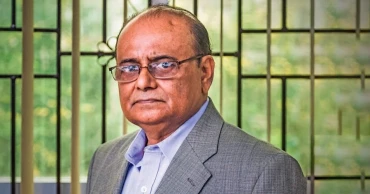
Chairman of Policy Research Institute of Bangladesh (PRI) Dr Zaidi Sattar on Monday called for bold, fundamental economic reforms similar to those undertaken in the early 1990s, warning that the country’s current situation demands urgent structural changes to sustain growth and remain competitive globally.
“Bangladesh is at a critical juncture comparable to the reform period of 1990–91, when the country moved towards a more open, market-oriented economy,” he said.
He was speaking at a programme titled “Macroeconomic Insights: An Economic Reform Agenda for the Elected Government” held at a hotel in the capital this afternoon.
The Policy Research Institute of Bangladesh (PRI) and Department of Foreign Affairs and Trade (DFAT) of the Australian Government jointly organised the event.
The discussion was attended by Finance Adviser Dr Salehuddin Ahmed as chief guest, along with leading economists, policymakers and representatives from development partners.
Presided over by Chairman of the PRI Dr Zaidi Sattar, Dr KAS Murshid, Former Director General of Bangladesh Institute of Development Studies (BIDS), Clinton Pobke, Deputy High Commissioner, High Commission of Australia to Bangladesh, spoke as special guests.
Dr Ashikur Rahman, Principal Economist, PRI, made the keynote presentation.
Dr Fahmida Khatun, Executive Director, Centre for Policy Dialogue (CPD), Dr M Masrur Reaz, Chairman and CEO, Policy Exchange Bangladesh (PEB), spoke as distinguished panelists.
The closing remark was made by Dr Ahmad Ahsan, Director, PRI.
Policy reforms, ethical business key to competitiveness after LDC graduation: Business leaders
Dr. Zaidi stressed that the present challenges offer a similar opportunity for political and economic transformation.
According to PRI chairman, recent economic shocks have slowed growth to around 4 percent, but this does not reflect the country’s long-term potential. Without reforms, the economy’s intrinsic growth rate could return to about 5.5 to 6 percent once political stability is restored.
With strong and timely structural reforms, growth could accelerate to 7 to 8 percent, he said.
Dr Zaidi, however, cautioned that external developments are reshaping the global trade landscape and Bangladesh cannot continue with ‘business as usual’.
Among recent developments, PRI chairman described the Bangladesh-Japan Economic Partnership Agreement (EPA) as a major milestone.
The agreement, he said, based on asymmetrical reciprocity, offers Bangladesh significantly wider market access with relatively lower commitments in return.
He credited the government’s negotiation efforts, noting that while a full free trade agreement (FTA) would have been more beneficial, complexities in Bangladesh’s tariff regime made that difficult at this stage.
At the same time, Dr Zaidi flagged concerns over the India-EU free trade agreement, which it said could pose a serious challenge to Bangladesh’s exports, particularly garments.
India’s improved market access and production-linked incentives could intensify competition in the European market, where Bangladesh currently enjoys duty-free access and holds a large share, he said.
With Bangladesh set to graduate from least developed country (LDC) status, he stressed the urgency of pursuing an FTA with the European Union within the next two to three years.
But he warned that the country’s “mountain-sized” tariff structure and complex trade regime remain major obstacles.
The PRI chairman also highlighted the need for deep reforms in the National Board of Revenue (NBR), describing it as a key institution that requires restructuring to support economic transformation.
He welcomed the recent initiative to split the NBR into separate policy and management divisions, though implementation has yet to begin.
The institute chairman identified major weaknesses in the current tax system, including a narrow tax base, excessive reliance on manual administration and slow progress in automation.
He noted that Bangladesh still depends heavily on indirect taxes, with a 70:30 ratio compared to direct taxes, making the system regressive.
He recommended moving towards a 50:50 balance between direct and indirect taxation to ensure fairness and improve revenue mobilisation.
He also pointed out that nearly 58 percent of revenue comes from trade taxes, a level much higher than peer countries.
The PRI chief proposed reducing reliance on trade taxes from around 2.5 percent of GDP to about 1 percent over the next decade through tariff rationalisation and tax reforms.
He further stressed that high and prolonged protection for domestic industries is discouraging exports and placing a burden on consumers.
DCCI calls for immediate normalisation of Ctg port operations
He argued that industrial protection should be time-bound and performance-based, rather than continuing for decades.
The PRI chairman also raised concerns over limited export diversification and what they described as an “anti-export bias” created by high domestic protection, which makes local sales more profitable than exporting.
He said modernising tariffs, expanding the tax base, digitising tax administration and aligning trade policies with global standards are essential for Bangladesh to integrate more deeply with global markets and negotiate future FTAs.
He expressed hope that the next elected government would take decisive steps to implement structural reforms, noting that democratic administrations are generally better positioned to carry out major policy changes.
12 days ago
BNP to ensure political, economic reforms if voted back to power: Fakhrul
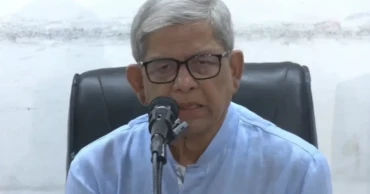
BNP Secretary General Mirza Fakhrul Islam Alamgir on Monday said the party is committed to ensuring both political reforms and economic progress if it earns the people’s mandate to govern again.
“If BNP gets the responsibility of running the state with support from people, then undoubtedly, under the leadership of our leader and acting chairman Tarique Rahman, BNP will bring about political changes in Bangladesh on the one hand and economic growth on the other. Bangladesh will surely move forward further,” he said.
Mirza Fakhrul Islam said this while talking to reporters after paying homage to BNP founder and Martyred President Ziaur Rahman by placing wreaths at his grave in the capital’s Sher-e-Bangla Nagar, marking the party’s 47th founding anniversary day.
National polls to take place on schedule, says BNP leader Fakhrul
Senior BNP leaders accompanied him in offering prayers and Fateha at the grave of Ziaur Rahman who founded the BNP on September 1, 1978.
About reforms, the BNP Secretary General said his party has fully supported the recommendations made by the reform commissions (formed by the interim government). And with the BNP’s 31-point programme, his party has taken steps to bring about a radical transformation in Bangladesh’s politics, he added.
BNP happy with EC’s election roadmap, says Fakhrul
“The challenge before us is to provide all-out cooperation and assistance to ensure that the election, announced to be held in February 2026, takes place in a fair manner,” he said.
Fakhrul recalled BNP’s struggles for democracy over the years.
“BNP fought long and hard to restore democracy time and again in the country. Repeated attempts were made to destroy the party, but BNP, like a phoenix bird, has risen again, inspired by the ideals of Ziaur Rahman and Khaleda Zia,” he said.
He said false cases were filed against some 6 million BNP men in the last 15 years, while around 20,000 BNP men were killed and 1700 BNP leaders and activists were forcibly disappeared and killed.
Mentioning that a ruthless fascism was established, he claimed the sole aim of this fascism is to annihilate BNP.
BNP Secretary General Mirza Fakhrul Islam Alamgir said it was by the grace of Allah and through the struggles of the people and students that the nation has been able to break free from what he described as Prime Minister Sheikh Hasina’s ‘fascist rule’.
5 months ago
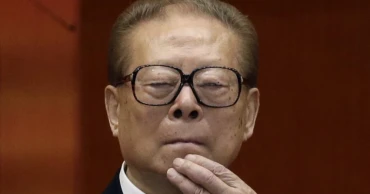
Former President Jiang Zemin, who guided China’s rise, dies
Former President Jiang Zemin, who led China out of isolation after the army crushed the Tiananmen Square pro-democracy protests in 1989 and supported economic reforms that led to a decade of explosive growth, died Wednesday. He was 96.
Jiang died of leukemia and multiple organ failure in Shanghai, where he was a former mayor and Communist Party secretary, state TV and the official Xinhua News Agency reported.
A surprise choice to lead a divided Communist Party after the 1989 turmoil, Jiang saw China through history-making changes including a revival of market-oriented reforms, the return of Hong Kong from British rule in 1997 and Beijing’s entry into the World Trade Organization in 2001.
Read more: China’s Communist Party vows 'crackdown on hostile forces' as public tests Xi
Even as China opened to the outside, Jiang’s government stamped out dissent. It jailed human rights, labor and pro-democracy activists and banned the Falun Gong spiritual movement, which the ruling party saw as a threat to its monopoly on power.
Jiang gave up his last official title in 2004 but remained a force behind the scenes in the wrangling that led to the rise of current President Xi Jinping, who took power in 2012.
Xi has tightened political control, crushed China’s little remaining dissent and reasserted the dominance of state industry.
Rumors that Jiang might be in declining health spread after he missed a ruling party congress in October at which Xi, China's most powerful figure since at least the 1980s, broke with tradition and awarded himself a third five-year term as leader.
Jiang was on the verge of retirement as Shanghai party leader in 1989 when he was drafted by then-paramount leader leader Deng Xiaoping to pull together the party and nation. He succeeded Zhao Ziyang, who was dismissed by Deng due to his sympathy for the student-led Tiananmen Square protesters and was held under house arrest until his 2005 death.
In 13 years as party general secretary, China's most powerful post, Jiang guided the country's rise to economic power by welcoming capitalists into the ruling party and pulling in foreign investment after China joined the WTO. China passed Germany and then Japan to become the second-largest economy after the United States.
Jiang captured a political prize when Beijing was picked as the site of the 2008 Summer Olympics after failing in an earlier bid.
A former soap factory manager, Jiang capped his career with the communist era’s first orderly succession, handing over his post as party leader in 2002 to Hu Jintao, who also took the ceremonial title of president the following year.
Jiang tried to hold onto influence by staying on as chairman of the Central Military Commission, which controls the party’s military wing, the 2 million-member People’s Liberation Army. He gave up that post in 2004 following complaints he might divide the government.
Even after he left office, Jiang had influence over promotions through his network of proteges.
He was said to be frustrated that Deng had picked Hu as the next leader, blocking Jiang from installing his own successor. But Jiang was considered successful in elevating allies to the party’s seven-member Standing Committee, China’s inner circle of power, when Xi became leader in 2012.
Portly and owlish in oversize glasses, Jiang was an ebullient figure who played the piano and enjoyed singing, in contrast to his more reserved successors, Hu and Xi.
Read more: China's Xi faces public anger over draconian 'zero COVID'
He spoke enthusiastic if halting English and would recite the Gettysburg Address for foreign visitors. On a visit to Britain, he tried to coax Queen Elizabeth II into singing karaoke.
Jiang had faded from public sight and last appeared publicly alongside current and former leaders atop Beijing’s Tiananmen Gate at a 2019 military parade celebrating the party’s 70th anniversary in power.
Jiang was born Aug. 17, 1926, in the affluent eastern city of Yangzhou. Official biographies downplay his family’s middle-class background, emphasizing instead his uncle and adoptive father, Jiang Shangqing, an early revolutionary who was killed in battle in 1939.
After graduating from the electrical machinery department of Jiaotong University in Shanghai in 1947, Jiang advanced through the ranks of state-controlled industries, working in a food factory, then soap-making and China’s biggest automobile plant.
Like many technocratic officials, Jiang spent part of the ultra-radical 1966-76 Cultural Revolution as a farm laborer. His career rise resumed, and in 1983 he was named minister of the electronics industry, then a key but backward sector the government hoped to revive by inviting foreign investment.
As mayor of Shanghai in 1985-89, Jiang impressed foreign visitors as a representative of a new breed of outward-looking Chinese leaders.
A tough political fighter, Jiang defied predictions that his stint as leader would be short. He consolidated power by promoting members of his “Shanghai faction” and giving the military double-digit annual percentage increases in spending.
Foreign leaders and CEOs who shunned Beijing after the crackdown were persuaded to return.
When Deng emerged from retirement in 1992 to push for reviving market-style reform in the face of conservative opposition after the Tiananmen crackdown, Jiang followed.
He supported Premier Zhu Rongji, the party’s No. 3 leader, who forced through painful changes that slashed as many as 40 million jobs from state industry in the late 1990s.
Zhu launched the privatization of urban housing, igniting a building boom that transformed Chinese cities into forests of high-rises and propelled economic growth.
After 12 years of negotiations and a flight by Zhu to Washington to lobby the Clinton administration for support, China joined the WTO in 2001, cementing its position as a magnet for foreign investment.
Despite a genial public image, Jiang dealt severely with challenges to ruling party power.
His highest-profile target was Falun Gong, a meditation group founded in the early ’90s. Chinese leaders were spooked by its ability to attract tens of thousands of followers, including military officers.
Activists who tried to form an opposition China Democracy Party, a move permitted by Chinese law, were sentenced to up to 12 years in prison on subversion charges.
“Stability above all else,” Jiang ordered, in a phrase his successors have used to justify intensive social controls.
It fell to Jiang, standing beside Britain’s Prince Charles, to preside over the return of Hong Kong on July 1, 1997, symbolizing the end of 150 years of European colonialism. The nearby Portuguese territory of Macao was returned to China in 1999.
Hong Kong was promised autonomy and became a springboard for mainland companies to go abroad. Meanwhile, Jiang turned to coercion with Taiwan, the self-ruled island Beijing says is part of its territory.
During Taiwan’s first direct presidential election in 1996, Jiang’s government tried to intimidate voters by firing missiles into nearby shipping lanes. The United States responded by sending warships to the area in a show of support.
At the same time, trade between the mainland and Taiwan grew to billions of dollars a year.
China’s economic boom split society into winners and losers as waves of rural residents migrated to factory jobs in cities, the economy grew sevenfold and urban incomes by nearly as much.
Protests, once rare, spread as millions lost state jobs and farmers complained about rising taxes and fees. Divorce rates climbed. Corruption flourished.
One of Jiang’s sons, Jiang Mianheng, courted controversy in the late 1990s as a telecommunications dealmaker and later the chairman of phone company China Netcom Co.
Critics accused him of misusing his father’s status to promote his career, a common complaint against the children of party leaders.
Jiang Mianheng, who has a Ph.D. from Drexel University, went on to hold prominent academic positions, including president of ShanghaiTech University in his father’s old power base.
Jiang is survived by his two sons and his wife, Wang Yeping, who worked in government bureaucracies in charge of state industries.
3 years ago