Business

2,100 tonnes of rice imported through Benapole Port
A total of 2,100 metric tonnes of non-basmati coarse rice have been imported through Benapole port, over six working days.
The rice consignments, brought in through 15 separate shipments, entered the port’s 31 No. transshipment yard, said Benapole Port Director Shamim Hossain on Tuesday.
According to port sources, the imports were made between Jan 27 and Feb 17.
Earlier, 6,128 metric tonnes of rice were imported through the port during the four months from August to November last year.
Benapole Port on high alert after import of 125 tonnes of MGMCL
On January 18, the government allowed 232 importing firms to bring in 2,00,000 metric tonnes of rice, setting March 3 as the deadline for completing the imports and marketing the rice in Bangladesh.
The importing firm, Haji Musa Karim & Sons, brought the rice from India, while C&F agent M/s Bhuiya Enterprise is handling the clearance process.
Abdus Samad, proprietor of Haji Musa Karim & Sons, said they imported 2,100 metric tonnes of coarse rice from India in 58 trucks over six days.
4 days ago

DSE slips after previous surge, turnover declines
The benchmark index of the Dhaka Stock Exchange (DSE) fell on Monday, a day after a major rally, as most listed companies witnessed price erosion and overall turnover declined.
On the second trading day of the week, the DSEX, the prime index of the DSE, lost 11 points. The Shariah-based DSES dropped 8 points, while the blue-chip DS30 index shed 9 points.
The total turnover at the DSE stood at Tk 1,257 crore, down from Tk 1,275 crore in the previous session.
DSE slips, CSE gains in early trading
Most of the traded issues ended lower, with 218 companies posting losses against 153 gainers, while prices of 26 companies remained unchanged.
In the block market, shares worth Tk 32 crore were traded from 26 companies, with Grameenphone topping the list with Tk 14 crore worth of shares changing hands.
Premier Bank PLC emerged as the top gainer at the DSE, advancing nearly 10 percent, while ICB Islamic Bank PLC was the worst loser, shedding around 10 percent.
Meanwhile, trading at the Chittagong Stock Exchange (CSE) ended on a positive note, with its benchmark CASPI index rising by 7 points.
DSE revises trading hours for Ramadan
Out of the traded issues, 116 companies advanced, 90 declined and 22 remained unchanged.
The turnover at the CSE, however, dropped to Tk 13 crore from Tk 24 crore in the previous session.
Safko Spinning Mills Ltd topped the gainers’ chart at the CSE with nearly 10 percent price appreciation, while Shepherd Industries PLC was the worst performer, losing around 10 percent.
5 days ago

Sahosei Bikash documentary showcases courage of Sundarbans’ honey collectors
Sundarbans, the world’s largest mangrove forest, is a land of mystery, danger, and constant risk. Yet it is here that the region’s traditional honey collectors, known as Mawalis, venture deep into the wilderness, often risking their lives to harvest honey.
Their courage and resilience are at the heart of a new documentary titled Sahosei Bikash (Courage to Prosperity), said a media release on Monday.
Released on 14 December marking ‘Sundarbans Day’, the three‑minute‑forty‑seven‑second documentary portrays the harsh realities of the honey collectors’ lives. It captures how they brave tigers, crocodiles, venomous snakes, unpredictable tides and the lurking threat of quicksand, all while gathering honey inside one of the world’s most unforgiving ecosystems.
Expatriates remit Tk 200bn via bKash in 2025
The documentary also shows how the honey collectors often stay away from their families for weeks at a time. After risking their lives to earn an income, they now rely on the safety and convenience of mobile wallets to store their hard‑earned money and send money back home without hassle.
Documentary reveals that even while working in remote forest areas, honey collectors prefer not to carry cash due to security concerns. Instead, they use their bKash accounts to conduct transactions, both for selling honey and for safeguarding their earnings.
This digital access allows them to remain emotionally and financially connected with their families despite the physical distance. The film presents a powerful reflection of how technology is delivering reliability and safety to people living in some of the country’s most inaccessible regions.
As a result, bKash has emerged as a trusted companion in their lives. Driven by the desire to ensure the well-being and happiness of their loved ones, the honey collectors repeatedly venture deep into the Sundarbans, risking their lives time and again with unwavering courage.
Customers win Nepal, Cox’s Bazar tour thru travel payment with bKash
The documentary on honey collectors life is available on Amar bKash Facebook page, Instagram page, and YouTube channel-https://www.youtube.com/watch?v=Qo0pxJHrvSk.
For nearly fifteen years, bKash has been a trusted financial partner for millions of users across Bangladesh, serving people in cities, towns, villages, hills, coastal regions and remote areas.
By offering simple, secure and time‑saving digital services, bKash continues to empower customers with freedom, capability and safety in their financial transactions.
5 days ago

Gold price drops by Tk7,640 per bhori in Bangladesh
Gold prices in Bangladesh have been reduced by Tk7,640 per bhori on Friday, following a fresh price revision announced by the Bangladesh Jewellers Association (BAJUS).
The association explained that the decision was taken in view of an overall assessment of the market situation, particularly a fall in the local price of tejabi gold (pure gold).
Under the new rates, the price of 22-carat gold has been fixed at Tk254,450 per bhori (11.664 grams), which comes into effect immediately, BAJUS said in a statement.
According to the revised price list, 21-carat gold will now sell at Tk242,903 per bhori, while 18-carat gold has been priced at Tk208,202 per bhori.
Gold made under the traditional method has been fixed at Tk170,411 per bhori.
Gold Price Shock: Tk16,330 surge hits Bangladesh overnight
In addition to the declared selling price, buyers will have to pay a mandatory 5 percent government VAT and a minimum 6 percent making charge set by BAJUS.
However, the making charge may vary depending on the design and quality of the jewellery.
BAJUS last adjusted gold prices on February 3, when it raised the price by Tk10,906 per bhori, fixing the rate of 22-carat gold at Tk262,090.
So far in 2026, gold prices in the domestic market have been revised around 25 times — increased on 16 occasions and reduced nine times.
Alongside gold, silver prices have also been lowered. The price of 22-carat silver has been reduced by Tk175 per bhori to Tk6,357.
The new rates for 21-carat silver stand at Tk6,065 per bhori, 18-carat silver at Tk5,190 per bhori, and traditional silver at Tk3,907 per bhori.
This marks the 17th adjustment of silver prices in the local market this year, with prices raised 10 times and cut seven times so far.
15 days ago
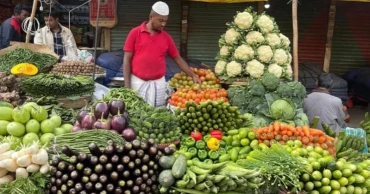
Plenty on fields: Why vegetables so expensive in Dhaka?
Winter has brought a bumper vegetable harvest across the country, supported by smooth transportation and abundant supply, yet Dhaka’s consumers are seeing little relief at the markets.
Visits to several city markets showed that vegetable prices remain stubbornly high, even as farmers complain they are barely recovering production costs, raising fresh questions about possible market manipulation and the role of middlemen in the supply chain.
Dhaka’s kitchen markets are actually awash with winter vegetables, but prices show little sign of easing even in what is traditionally the cheapest season of the year.
While consumers continue to pay inflated rates, farmers across producing districts say they are selling their produce at throwaway prices, pointing to a widening gap between farm-gate and retail prices driven largely by middlemen.
Major wholesale markets in the capital receive winter vegetables from Bogura, Naogaon, Chuadanga, Sirajganj, Rajshahi, Jashore and other districts.
Traders say more than 50 truckloads of vegetables arrive in Dhaka every day from Bogura alone during the peak season.
Despite ample supply, winter vegetables costly in Lalmonirhat
Wholesalers at Karwan Bazar said supply is higher than last year, yet prices have not come down. By late January, wholesale prices were on average Tk 20 per kg higher than the same period a year ago.
“Last year at this time, cauliflower sold at Tk 15–20 per kg wholesale. This year it is Tk 30–35,” said Latif Munshi, a vegetable trader at Karwan Bazar, adding, “We are buying at higher prices from upstream traders, so we have no option but to sell at higher rates to retailers.”
Anwar Mia, a trader at the Swarighat wholesale market, echoed the sentiment. “Prices of cabbage, tomato, cucumber, carrot, bottle gourd—almost all winter vegetables—are higher than last year. There is no supply shortage, but increased intermediary costs are pushing prices up.”
The picture is starkly different at the production level.
In Bogura’s Sherpur upazila, vegetable grower and trader Naim Meyajan said he cultivated cauliflower on nearly 10 bighas of land. While early varieties fetched good prices between September and November, prices collapsed once peak harvesting began in December.
“Wholesalers bought fields early at Tk 80,000 to Tk 100,000 per bigha against a production cost of around Tk 50,000. But when the main harvest started, there were no buyers for fields. I had to take cauliflowers to market where prices fell to Tk 5 per kg,” he said.
Farmers at Fulbari and Mohasthan haats in Bogura said prices of most vegetables started falling sharply by late December.
In many cases, they were forced to sell produce at an inflated ‘maund’ calculation—60 kg instead of the standard 40 kg—yet still failed to recover costs.
Early winter vegetable cultivation gains momentum across Khulna division
In Dhaka, however, prices moved in the opposite direction. Cauliflower that sold at Tk 25 per piece in late December is now priced at Tk 40–50 depending on size. At Shantinagar kitchen market, cabbage is selling at around Tk 50 per piece.
By contrast, in Sirajganj’s Ullapara upazila, farmer Bhobesh Ghoshal said he sold cabbage at Tk 6–10 per piece in January. “Those same cabbages are being sold in Dhaka at Tk 20 or more”.
A visit to the Jatrabari wholesale hub shows cabbage trading at Tk 25–30 per piece wholesale, before reaching consumers at Tk 50. For key winter vegetables, the price gap between farmers and consumers ranges from Tk 30 to Tk 40 per unit.
Tomato prices show an even sharper disparity. Early varieties arrive in Dhaka from Chattogram, while seasonal tomatoes mainly come from Rajshahi. In both phases, retail prices in Dhaka have ranged between Tk 100 and Tk 150 per kg.
In Rajshahi’s Godagari upazila, tomato farmer Moktar Hossain said he is currently selling tomatoes at Tk 40 per kg, down from Tk 50–80 during the early season. “Middlemen are selling those tomatoes in Dhaka at Tk 60 per kg, and prices keep rising along the chain.”
At wholesale markets in Dhaka, tomatoes are sold to retailers at Tk 80–90 per kg and finally reach consumers at Tk 100–120. The cumulative price difference from farm to table stands at Tk 50–70 per kg.
Radish prices, though relatively lower, reflect a similar pattern. In retail markets, radish sells at Tk 30–40 per kg. In Cumilla’s Gomti char area, farmer Sohrab said radish is sold in bundles rather than by weight.
“One bundle of 8–10 radishes sells for Tk 30, which is roughly Tk 10 per kg,” he said. “But consumers are paying at least Tk 20 more per kg in Dhaka.”
According to a study by the Food and Agriculture Organization (FAO), more than 700,000 kg of vegetables are sold daily in Dhaka. Even assuming a conservative price gap of Tk 20 per kg between farmers and consumers, the additional daily burden on consumers stands at around Tk 15 million—amounting to nearly Tk 500 million over January due to elevated prices.
Commenting on the situation, Consumers Association of Bangladesh (CAB) President AHM Shafiquzzaman blamed market syndicates and weak oversight.
“A group of traders is taking advantage of the pre-election period by forming syndicates and destabilising the vegetable market. Vegetables have been selling at high prices for nearly a month, but there is no effective monitoring. Extortion at different stages of the supply chain is also pushing prices up,” he said.
Shafiquzzaman warned that prices could rise further during Ramadan, expressing doubts about official assurances of market stability. “Government data is often unreliable,” he said.
Calling for decisive action, he urged the authorities to dismantle syndicates of middlemen, ensure fair prices for farmers and protect consumer rights through stricter market regulation.
Former Jahangirnagar University vice-chancellor and agricultural economist Abdul Bayes, however, advised that ensuring fair prices for both consumers and farmers in the agricultural market should not rely solely on government intervention; instead, marginal farmers must be empowered.
Vegetable prices soar in Manikganj amid inclement weather
Emphasising the formation of farmers’ cooperatives, Bayes said, “A single farmer from Bogura cannot bring 100 kilograms of cauliflower to Dhaka to sell. But if 100 farmers from the same area form a cooperative, they can collectively bypass middlemen and bring their produce directly to the market. This would allow farmers to secure better prices from wholesalers, while consumers would be able to buy vegetables at lower prices.”
He also noted that NGOs could play an important role by supporting farmers in forming such cooperatives.
Besides, Bayes said, if the government can dismantle syndicates in wholesale markets, foster competition, and curb extortion along supply chains, long-term market instability in the vegetable sector could be brought under control.
29 days ago
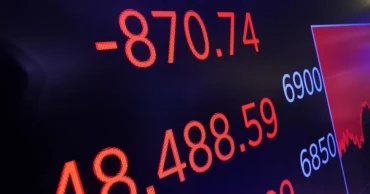
Wall Street tumbles as Trump threatens tariffs on eight European nations
Wall Street plunged sharply on Tuesday after US President Donald Trump threatened to impose new tariffs on eight European countries, intensifying tensions over his push to assert American influence over Greenland.
The sell-off affected nearly all sectors, extending losses from last week. The S&P 500 fell 143.15 points, or 2.1%, to 6,796.86, marking its steepest decline since October. The Dow Jones Industrial Average dropped 870.74 points, or 1.8%, to 48,488.59, while the Nasdaq composite slid 561.07 points, or 2.4%, to 22,954.32.
Technology stocks led the decline, with Nvidia down 4.4% and Apple falling 3.5%. Retailers, banks and industrial companies also lost ground, including Lowe’s (-3.3%), JPMorgan Chase (-3.1%) and Caterpillar (-2.5%).
Global markets reacted similarly, with European and Asian indices falling. Japanese long-term bond yields hit record levels amid concerns over fiscal policy. Gold and silver prices surged 3.7% and 6.9% respectively, while bitcoin retreated to around $89,700 from last week’s peak above $96,000.
Trump said on Saturday that he would levy a 10% import tax in February on goods from Denmark, Norway, Sweden, France, Germany, the UK, the Netherlands, and Finland. Combined imports from these European nations exceed those from the US’s two largest import partners, Mexico and China.
The threat has drawn sharp diplomatic reactions in Europe, with leaders considering countermeasures, including retaliatory tariffs. Analysts warned that such measures could push up inflation, complicating the Federal Reserve’s policy outlook.
Investors are also monitoring corporate earnings amid the tariff uncertainty. Industrial giant 3M fell 7% after reporting mixed quarterly results, while other major firms, including Johnson & Johnson, Halliburton and Intel, are expected to release earnings this week.
1 month ago

Prof Yunus introduces political leaders with top US companies
Chief Adviser Prof Muhammad Yunus has introduced six political leaders accompanying him at the 80th United Nations General Assembly (UNGA) with top US companies, encouraging them to expand investments in Bangladesh.
“It was a big meeting. Prof Yunus spoke and called upon US companies to invest more in Bangladesh,” Chief Adviser’s Press Secretary Shafiqul Alam told reporters after the event.
Chief Adviser’s Deputy Press Secretary Abul Kalam Azad Majumder and Senior Assistant Press Secretary Foyez Ahmmad were also present.
The US-Bangladesh Business Council (USBBC) hosted the roundtable discussion titled “US-Bangladesh Executive Business Roundtable: Advancing Reform, Resilience and Growth” at a New York hotel on Wednesday.
Senior executives from leading US companies and major investors in Bangladesh, including MetLife, Chevron and Excelerate Energy, attended the meeting.
UN budget cuts, shrinking ODA to be 'counterproductive' for Bangladesh: Prof Yunus
Bangladesh’s political delegation included BNP Secretary General Mirza Fakhrul Islam Alamgir, BNP leader Humayun Kabir, Jamaat-e-Islami Nayeb-e-Ameer Syeed Abdullah Muhammad Taher, Jamaat leader Mohammad Nakibur Rahman, National Citizen Party (NCP) Member Secretary Akhter Hossen, and NCP First Senior Joint Member Secretary Dr Tasnim Jara.
Prof Yunus introduced the political leaders with the US businesses and highlighted that a new political government will be formed through a fair election scheduled for February next year.
“Prof Yunus introduced them with the US business community so that they could get to know each other better,” said Press Secretary Alam.
Talking to reporters, Jamaat leader Taher praised the initiative and said US investors expressed encouragement.
Foreign Affairs Adviser Md Touhid Hossain, Energy Adviser Fouzul Kabir Khan, and leaders of the USBBC were present.
4 months ago

Indices edge up at DSE, CSE in early trading
Stocks at both Dhaka and Chattogram bourses edged higher in the early hours of Wednesday’s trading, supported by gains in a majority of company shares.
At the Dhaka Stock Exchange (DSE), the benchmark index DSEX advanced 8 points within the first hour of trade.
The Shariah-based index DSES added 2 points, while the blue-chip index DS30 remained almost flat.
Out of the traded issues, prices increased for 162 companies, declined for 149 and remained unchanged for 81.
DSE ends lower, CSE higher after volatile trading
The turnover at the DSE exceeded Tk 400 crore during the opening hour.
The Chittagong Stock Exchange (CSE) also mirrored the upward trend as its overall index gained 44 points.
Of the 139 issues traded, 56 advanced, 62 declined and 21 remained unchanged.
The turnover at the CSE stood at around Tk 3 crore in the same period.
5 months ago

Stock markets extend losses as trading resumes after holiday break
Trading on the country’s stock markets resumed on Tuesday after the Bengali New Year holiday, but investors saw no signs of recovery as both major bourses witnessed a fall in indices, with most company share prices declining.
All key indices of the Dhaka Stock Exchange (DSE) dropped within the first two hours of trading.
Asian shares mostly gain as Trump temporarily eases tariffs
The benchmark index, DSEX, fell by 19 points. The Shariah-compliant index, DSES, lost 6 points, while the DS30 index, which comprises blue-chip companies, declined by 11 points.
A majority of companies saw their share prices slide. Out of the securities traded, the prices of 207 companies dropped, while only 114 advanced.
The prices of 74 companies remained unchanged.
By midday, the total turnover on the DSE had exceeded Tk 240 crore in shares and units.
Similar trends were observed at the Chittagong Stock Exchange (CSE), where trading also took a significant hit.
The overall index of the CSE fell by 54 points during the first two hours of the session.
Of the 135 companies that participated in trading at the CSE, prices rose for only 35, dropped for 78 and remained unchanged for 22.
Do you consider Bangladesh as a cashless economy?
During the first half of the session, the CSE recorded over Tk 3.5 crore in share and unit transactions.
Despite hopes of a post-holiday rebound, market sentiment appears to remain subdued, reflecting continued caution among investors.
10 months ago

Bangladesh seeks Singapore’s investment to boost growth in key sectors
Highlighting Singapore as a key source of foreign direct investment (FDI) in Bangladesh, Foreign Secretary Md Jashim Uddin has invited more investment in priority sectors like energy, ICT, telecommunications, port and airport infrastructure, urban development and agro-processing.
The Foreign Secretary particularly drew the attention of Singapore's Foreign Minister Vivian Balakrishnan and stressed on cooperation in the health sector in terms of capacity building, sharing of expertise and development of health infrastructure in Bangladesh catering to the growing demand for quality health services.
Bangladesh, Türkiye eye stronger ties through enhanced collaboration
Foreign Secretary Jashim Uddin met Dr Vivian Balakrishnan on Monday in Singapore, following the Foreign-Secretary level bilateral consultations between Bangladesh and Singapore.
The Foreign Secretary informed him that both sides had very productive discussions on a number of important issues during the consultations.
Dhaka signs OIC Statute for promoting labour rights
He praised Singapore’s leadership for championing economic development, good governance and free market economy, standing as an example for the Asian countries, including Bangladesh.
The Foreign Secretary also appreciated Singapore for its excellent migrant workers’ regime and thanked the Singapore government for taking care of Bangladesh’s expatriates who are contributing to both the economies.
Noting the growing bilateral trade, Jashim Uddin highlighted the import-potential of Bangladeshi products particularly pharmaceuticals, leather goods, RMG, ceramics, bicycles, home textile and footwear in the Singapore market and beyond.
He underlined the importance of concluding the Free Trade Agreement (FTA) with Singapore, under negotiation, to boost bilateral trade.
Foreign Minister Balakrishnan heard updates in detail on the Rohingya crisis from Foreign Secretary and reiterated Singapore’s support to Bangladesh on this issue, said the Ministry of Foreign Affairs.
In regard to Bangladesh’s bid for Asean sectoral dialogue partner status, he reaffirmed Singapore’s support to Bangladesh saying that two friendly countries would continue to support each other on the regional and global issues of mutual interest.
Foreign Secretary Jashim Uddin thanked the Foreign Minister and hoped that Singapore would play its role within the Asean platform to build consensus on this matter as a close friend of Bangladesh.
Bangladesh, Singapore to finalise FTA by 2026
The Foreign Secretary underlined the significance of regular interactions at the political level and exchange of high-level visits including Foreign Minister’s visit to Bangladesh to further strengthen bilateral ties between two friendly countries.
10 months ago