Russia-Ukraine peace talks
First day of Russia-Ukraine peace talks ends in Geneva
The first day of United States brokered peace talks between Russia and Ukraine ended in Geneva on Tuesday, with negotiations set to resume on Wednesday amid low expectations of a breakthrough.
Ukrainian Defence Minister Rustem Umerov, who is leading Kyiv’s delegation, said the discussions would continue in the Swiss city on Wednesday morning.
The latest round marks the third trilateral talks involving Ukraine, Russia and the United States, coming just a week ahead of the fourth anniversary of Russia’s full scale invasion of Ukraine. However, hopes remain limited as Moscow has maintained its hardline demands over Ukrainian territory.
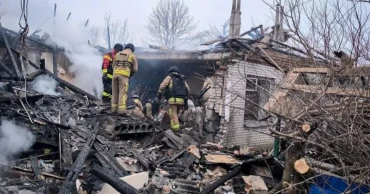
Even as talks were underway, fighting continued on the ground. Russian forces carried out large scale overnight attacks across Ukraine, further straining the country’s already damaged power grid as freezing winter temperatures persist.
Ukrainian officials said Russia launched around 400 drones and nearly 30 missiles, striking 12 regions and killing at least three people. Russia, meanwhile, claimed its air defence systems intercepted more than 150 Ukrainian drones, while a drone strike caused a fire at an oil refinery inside Russian territory.
In a post on social media, Umerov said Tuesday’s discussions focused on “practical issues and the mechanics of possible solutions.” He added that he would brief President Volodymyr Zelensky on the outcome of the talks.
In a video address later, Zelensky said Ukraine was prepared to refrain from strikes if an earlier US proposal for mutual restraint was implemented. He stressed that Ukraine seeks peace but will continue defending its sovereignty.
“We are ready to move quickly towards a worthy agreement to end the war,” Zelensky said, adding that the key question now lies with Russia.
Russia’s state media quoted sources as saying the six hour talks were tense and were held in a mix of bilateral and trilateral formats. The negotiations are being mediated by Steve Witkoff and Jared Kushner. On the Russian side, President Vladimir Putin’s aide Vladimir Medinsky is leading the delegation. Senior military officials from both countries are also part of the talks.
Ahead of the meeting, US President Donald Trump urged Ukraine to move quickly towards negotiations, signalling growing impatience over the prolonged conflict.
Russia currently occupies around 20 percent of Ukrainian territory, including large parts of the eastern Donbas region. Moscow has demanded control over the remaining parts of the region, a condition Kyiv has firmly rejected. Ukraine has repeatedly said any settlement must include strong security guarantees from Western allies, including the United States.
In Kyiv, Foreign Minister Andrii Sybhiha condemned the latest Russian strikes, saying they demonstrated Moscow’s disregard for peace efforts. Ukrainian officials said at least three energy workers were killed near the frontline city of Slovyansk, while several others, including children, were injured elsewhere.
Ukraine said damage to homes, railways and energy infrastructure left thousands without electricity, particularly in the southern port city of Odesa. Energy company DTEK said the destruction to power facilities was severe and repairs would take a long time.
Ukraine is facing a deepening energy crisis after months of sustained Russian attacks on critical infrastructure during winter.
At the same time, Ukraine launched drone strikes into Russia, with officials reporting a fire at the Ilsky oil refinery in the southern Krasnodar region and further damage in the border region of Belgorod region.
The Geneva talks follow last month’s meeting in Abu Dhabi, the first trilateral talks since the invasion began in February 2022. That round ended without a breakthrough, though it led to the first prisoner exchanges in months.
With inputs from BBC
3 days ago

China calls for Russia-Ukraine cease-fire, peace talks
China, a firm Russian ally, has called for a cease-fire between Ukraine and Moscow and the opening of peace talks as part of a 12-point proposal to end the conflict.
The plan issued Friday morning by the Foreign Ministry also urges the end of Western sanctions imposed on Russia, measures to ensure the safety of nuclear facilities, the establishment of humanitarian corridors for the evacuation of civilians, and steps to ensure the export of grain after disruptions caused global food prices to spike.
China has claimed to be neutral in the conflict, but it has a “no limits” relationship with Russia and has refused to criticize its invasion of Ukraine over even refer to it as such, while accusing the West of provoking the conflict and “fanning the flames" by providing Ukraine with defensive arms.
Read more: UN approves resolution calling for Russia to leave Ukraine
China and Russia have increasingly aligned their foreign policies to oppose the U.S.-led liberal international order. Foreign Minister Wang Yi reaffirmed the strength of those ties when he met with Russian President Vladimir Putin during a visit to Moscow this week.
China has also been accused by the U.S. of possibly preparing to provide Russia with military aid, something Beijing says lacks evidence.
Given China's positions, that throws doubt on whether its 12-point proposal has any hope of going ahead — or whether China is seen as an honest broker.
Before the proposal was released, Ukrainian President Volodymyr Zelenskyy called it an important first step.
“I think that, in general, the fact that China started talking about peace in Ukraine, I think that it is not bad. It is important for us that all states are on our side, on the side of justice,” he said at a news conference Friday with Spain's prime minister.
Read more: Russia, China show off ties amid maneuvering over Ukraine
State Department spokesman Ned Price said earlier Thursday that the U.S. would reserve judgment but that China’s allegiance with Russia meant it was not a neutral mediator. “We would like to see nothing more than a just and durable peace ... but we are skeptical that reports of a proposal like this will be a constructive path forward,” he said.
Price added that the U.S. hopes “all countries that have a relationship with Russia unlike the one that we have will use that leverage, will use that influence to push Russia meaningfully and usefully to end this brutal war of aggression. (China) is in a position to do that in ways that we just aren’t.”
The peace proposal mainly elaborated on long-held Chinese positions, including referring to the need that all countries' “sovereignty, independence and territorial integrity be effectively guaranteed."
Read more: Philippines eyes South China Sea patrols with US, Australia
It also called an end to the “Cold War mentality" — it's standard term for what it regards as U.S. hegemony and interference in other countries.
“A country’s security cannot be at the expense of other countries’ security, and regional security cannot be guaranteed by strengthening or even expanding military blocs,” the proposal said. “The legitimate security interests and concerns of all countries should be taken seriously and properly addressed.”
China abstained Thursday when the U.N. General Assembly approved a nonbinding resolution that calls for Russia to end hostilities in Ukraine and withdraw its forces. It is one of 16 countries that either voted against or abstained on almost all of five previous resolutions on Ukraine.
The resolution, drafted by Ukraine in consultation with its allies, passed 141-7 with 32 abstentions, sending a strong message on the eve of the first anniversary of the invasion that appears to leave Russia more isolated than ever.
While China has not been openly critical of Moscow, it has said that the present conflict is “not something it wishes to see,” and has repeatedly said any use of nuclear weapons would be completely unacceptable, in an implied repudiation of Putin’s statement that Russia would use “all available means” to protect its territory.
Read more: China blasts Pentagon official’s Taiwan visit, military ties
“There are no winners in conflict wars," the proposal said.
“All parties should maintain rationality and restraint ... support Russia and Ukraine to meet each other, resume direct dialogue as soon as possible, gradually promote the de-escalation and relaxation of the situation, and finally reach a comprehensive ceasefire," it said.
2 years ago