World War III
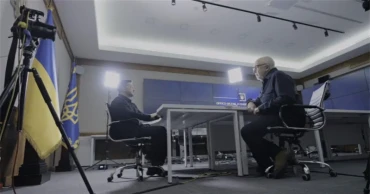
Zelensky says Putin has triggered World War III, rejects territorial concessions
Ukrainian President Volodymyr Zelensky has said Russian leader Vladimir Putin has already started World War III, insisting that only sustained military and economic pressure can force Moscow to retreat, while firmly rejecting any ceasefire deal based on Ukraine surrendering territory.
In an interview with BBC at the heavily guarded government headquarters in Kyiv, Zelensky said Ukraine would not pay the price demanded by Russia, including withdrawal from strategic areas Moscow has failed to fully capture despite heavy losses.
He dismissed Russian demands that Ukraine hand over parts of eastern Donetsk and additional land in the southern regions of Kherson and Zaporizhzhia, saying such a move would mean abandoning hundreds of thousands of Ukrainians and would fracture society. Any pause achieved through concessions, he warned, would only allow Russia time to regroup and resume the war.
Zelensky said stopping Putin and preventing the occupation of Ukraine would be a victory not only for his country but for the entire world, arguing that Moscow’s ambitions would not end with Ukraine. While reaffirming Ukraine’s ultimate goal of restoring its internationally recognised 1991 borders, he said attempting to retake all territory immediately would cost an unacceptable number of lives and requires greater support from partners.
Responding to scepticism from some Western analysts and pressure from Donald Trump, Zelensky said Ukraine is not losing the war and is fighting for its independence. He acknowledged uncertainty over Washington’s position but stressed that lasting US security guarantees must be approved by Congress to outlast changing administrations.
Zelensky also addressed calls for Ukraine to hold elections, saying they could only be considered after credible security guarantees are in place, given martial law, millions of refugees abroad and Russian occupation of parts of the country.
He reiterated his appeal for stronger air defence, including permission to produce US-made systems such as Patriot missiles under licence, noting that Ukraine has yet to receive approval for domestic manufacturing.
Despite corruption scandals and wartime pressures, Zelensky said Ukraine would continue pursuing parallel diplomatic, military and economic efforts to stop Russia, expressing confidence that sustained pressure would eventually force Moscow to step back.
With inputs from BBC
3 hours ago
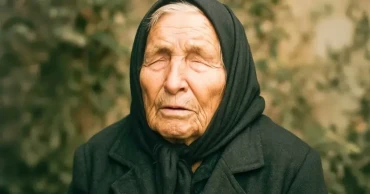
Why Baba Vanga’s 2026 ‘World War III’ prophecy is going viral worldwide
As 2026 begins amid mounting geopolitical strain, renewed attention has turned to Bulgarian mystic Baba Vanga, whose alleged warning of a year marked by “war and destruction” is spreading rapidly online.
Often dubbed the “Nostradamus of the Balkans,” Vanga is popularly credited with foreseeing major global events, including the 9/11 attacks, the death of Princess Diana and China’s emergence as a world power.
A New York Post report says she also predicted the outbreak of World War III in 2026 and humanity’s first encounter with extraterrestrial life. Nearly three decades after her death in 1996, her prophecies continue to fascinate audiences around the globe.
Who was Baba Vanga?
Born Vangelia Pandeva Gushterova in 1911 in Strumica, now in North Macedonia, Baba Vanga lost her eyesight at the age of 12 after being caught in a violent storm. Followers believe this incident triggered her supposed clairvoyant powers.
Despite having no formal education, she became a widely consulted figure in Bulgaria and beyond, offering guidance on personal and global issues. She continued giving readings until her death at 85. Admirers claim her visions stretched centuries ahead, reportedly up to the year 5079.
Why the prediction is trending
Centuries-old prophecies are resurfacing on social media as users link Baba Vanga’s 2026 warning of “war and destruction” to present-day geopolitical flashpoints.
The renewed interest has been fuelled by escalating US–Venezuela tensions following reports surrounding President Nicolás Maduro, debates over foreign intervention and regional stability, and widespread protests in Iran, all of which have added to a growing sense of global uncertainty.
From viral buzz to ancient prophecy
Claims about Baba Vanga predicting World War III are spreading fast on TikTok, X and YouTube, often blending conspiracy theories with current headlines. Analysts say the trend reflects online hype, global anxieties and fascination with myth, not any proven warning of an imminent world war.
Her record: some hits, many missesSupporters point to several predictions often described as accurate:
The 9/11 attacks, allegedly foretold as “American brethren falling after an assault by steel birds”The 2000 sinking of Russia’s Kursk submarineBarack Obama becoming US presidentThe Chernobyl nuclear disasterThe rise of global terrorismSceptics highlight major failures, including claims that:
World War III would begin in 2010Aliens would appear at a major sporting event in 2025A sweeping vision of the futureStories attributed to Vanga outline a timeline stretching far ahead:
2028: Humans explore Venus for energy2033: Severe melting of polar ice caps2076: Communism spreads worldwide2170: Massive drought hits large regions3005: War with a Martian civilisation3797: Earth becomes uninhabitable5079: The end of the worldWhy Vanga still captivates audiencesDespite the lack of reliable sources, Baba Vanga remains a powerful cultural figure. Her supposed prophecies about disasters, space travel, geopolitics and doomsday continue to grip imaginations around the world.
Analysts say her enduring appeal lies in how her legend connects humanity’s fear of the unknown with its deep curiosity about the future.
Source: Gulf News
1 month ago
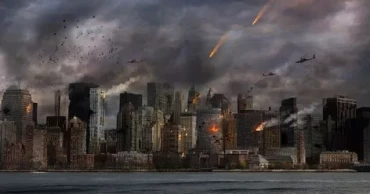
Are we on the verge of World War III?
As tensions surge across multiple global regions, the fear of a third world war is no longer a distant nightmare.
Escalating conflicts in Ukraine, the Middle East, Africa, and other parts of the world present a precarious situation that demands urgent attention.
The potential ramifications for global stability could be catastrophic if these developments continue unchecked.
Ukraine-Russia War
The conflict between Ukraine and Russia has escalated into a full-scale war since February 2022, when Russia initiated its invasion.
Originally spurred by the annexation of Crimea in 2014, the struggle has now expanded into a brutal fight for control over Ukrainian territories.
President Vladimir Putin's initial three-day invasion plan has turned into an entrenched and bloody conflict that has devastated entire regions and claimed thousands of lives.
Putin's nuclear rhetoric has exacerbated the situation, with Western leaders on high alert.
CIA Director Bill Burns recently confirmed that the early stages of the war saw a genuine risk of nuclear escalation, with Putin contemplating detonating a tactical nuclear weapon over the Black Sea.
This led to urgent crisis talks at the Pentagon, highlighting the fragility of the situation. Despite immense pressure, Ukraine continues to defend its sovereignty with unwavering determination, bolstered by support from its Western allies.
However, the war shows no signs of abating, as both sides remain locked in a deadly stalemate.
Palestine-Israel Conflict
In the Middle East, the longstanding Palestine-Israel conflict erupted dramatically in October 2023 after a surprise attack by Hamas prompted Israel to launch a full-scale military operation in Gaza.
The escalation has resulted in a significant loss of life and massive destruction, especially in Gaza, where civilian infrastructure has been heavily targeted.
Despite numerous international calls for a ceasefire, the fighting continues to rage, exacerbating the humanitarian crisis as thousands of civilians are caught in the crossfire.
Sudan’s Civil War
Sudan, already plagued by decades of internal strife, plunged into civil war once again in April 2023.
The breakdown of peace talks between the military government and the paramilitary Rapid Support Forces (RSF) has unleashed chaos across the country.
The fighting has been particularly intense in the capital, Khartoum, and the Darfur region, leading to millions of people being displaced and countless casualties.
So far, international efforts to mediate peace have faltered, leaving Sudan in a state of uncertainty and escalating violence.
Myanmar’s Civil War
Myanmar’s descent into civil war began in earnest following the military coup in February 2021, which ousted the democratically elected government.
Since then, the conflict has been marked by widespread atrocities, including attacks on civilians and fierce resistance from ethnic groups and pro-democracy forces. With no resolution in sight, Myanmar remains deeply divided and engulfed in violence, drawing condemnation from the international community.
Ethiopia’s Conflict
In the Horn of Africa, Ethiopia’s internal conflict, primarily centred in the Tigray region, has continued to devastate the country. After a brief ceasefire in 2022, fighting resumed in 2023, involving multiple ethnic groups and resulting in a dire humanitarian situation.
The conflict has caused mass displacement, famine, and severe human rights abuses, leaving Ethiopia teetering on the edge of collapse.
Haiti’s Gang Violence
Haiti, though not in a state of conventional warfare, is engulfed in violent chaos due to rampant gang violence following the assassination of its president in 2021.
Gangs now control large portions of the country, including the capital, Port-au-Prince, leading to widespread displacement and a severe breakdown of law and order. Despite international efforts to stabilise the situation, Haiti remains in near-anarchy, with no clear path to recovery.
Mexico’s Drug Violence
The ongoing conflict in Mexico, widely known as the Mexican Drug War, represents a brutal struggle for power among various drug cartels and between these criminal organisations and the Mexican government.
The violence has claimed hundreds of thousands of lives since its escalation in 2006, as powerful cartels like the Sinaloa Cartel and Jalisco New Generation Cartel (CJNG) battle for dominance over drug trafficking routes and territories.
Despite government efforts to restore order, including the deployment of the National Guard, the cartels continue to exert significant control over vast regions of the country.
Their influence is deeply embedded in Mexico’s political and economic fabric, complicating efforts to end the violence.
The cartels have also diversified their operations, expanding into human trafficking, extortion, and other criminal activities, making the path to peace increasingly elusive.
A World on Edge
With conflicts raging in multiple regions and the potential for escalation high, the world stands on a precipice.
The actions of world leaders in the coming months will determine whether these crises spiral further out of control or whether a path towards stability and peace can be found.
The consequences of inaction could be dire, not only for the regions directly involved but for global stability as a whole.
1 year ago