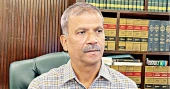
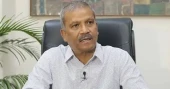
Asif Nazrul
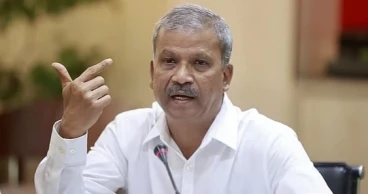
Amid criticism, Law Adviser Asif Nazrul lists ministry’s steps since taking charge
Law Adviser Dr. Asif Nazrul has outlined a wide range of legal and institutional reforms carried out by the Ministry of Law, Justice and Parliamentary Affairs since the July mass uprising, amid criticism over his role.
In a Facebook post, he said while the work was done collectively by the ministry, he had personally been involved in every initiative, often working long hours, including weekends, to ensure implementation.
Responding to critics, he urged them to review the ministry’s work before passing judgment.
South Plaza chosen for oath to honour July Uprising legacy: Asif Nazrul
According to the post, the ministry implemented 22 legal reforms, 15 institutional reforms and digitalisation measures, recommended withdrawal of 23,866 politically motivated harassment cases, supported genocide trials related to the July uprising, and significantly increased daily administrative output.
Legal Reforms
Among the key reforms highlighted:
The International Crimes (Tribunal) Ordinance was updated to align with international standards, incorporating enforced disappearance as a crime against humanity, ensuring witness protection, allowing international observers, introducing interim appeal provisions, and enabling victim compensation.
The Supreme Court Judges Appointment Ordinance established an independent Judicial Council to ensure merit-based appointments.
The Supreme Court Secretariat Ordinance ensured greater judicial independence by transferring administrative and financial authority over subordinate courts to the judiciary.
A Commercial Courts Ordinance introduced specialised courts with documentary-based trials, expedited case disposal, mediation, virtual hearings and online case management.
‘World Cup boycott was govt’s decision, I remain firm on this’: Asif Nazrul
The National Human Rights Commission Ordinance, 2025 restructured the commission, enhancing its investigative and compensation powers and establishing a national preventive mechanism against torture under OPCAT. Commissioners were appointed through a public notice and interview process for the first time.
The Prevention of Enforced Disappearance Ordinance, 2025 defined enforced disappearance, set maximum punishment including the death penalty, empowered the NHRC to investigate, mandated trial completion within 120 days, and provided compensation and property use provisions for victims’ families.
The July Mass Uprising (Protection and Accountability) Ordinance provided protection to participants of the uprising while ensuring accountability for serious crimes. It also withdrew civil and criminal cases filed against protesters for political resistance and barred new such cases.
Amendments to the Code of Civil Procedure introduced affidavit-based testimony, online summons and enforcement of decrees within the main suit.
Criminal law reforms ensured transparency and accountability in arrest and remand processes, safeguarded accused persons’ rights, removed gender-insensitive terminology and addressed false case harassment.
Mandatory pre-case mediation was introduced in certain disputes. In 20 districts, ADR initiatives led to a 339.86% increase in successful settlements between September and December 2025, while dowry cases fell by 79.74%.
Amendments to the Women and Children Repression Prevention Act set investigation and trial deadlines, introduced accountability for investigators, ensured witness protection, created separate tribunals for child rape cases and recognised abuse of male children as an offence.
Two options under consideration for oath of new MPs: Asif Nazrul
Reforms to the Representation of the People Order introduced postal ballots for expatriates and strengthened judicial oversight of election-related offences.
The Cyber Security Ordinance, 2025, formulated jointly with the ICT Ministry, repealed repressive provisions of the previous cyber law and cancelled related cases.
Amendments to Power of Attorney rules simplified procedures for expatriates, allowing execution without a valid Bangladeshi passport if supported by “No Visa Required” status, birth certificate or NID.
Marriage Registration Rules were amended to remove gender-discriminatory provisions and allow online marriage and divorce registration.
The ministry also assisted other ministries in drafting ordinances related to the Anti-Corruption Commission, Police Reform Commission and amendments to telecommunications law.
Institutional Reforms and Digitalisation
The ministry reported adopting three separate rules to strengthen judicial service independence, granting the Supreme Court authority to create judicial posts and establishing clear posting and promotion rules.
Information and Service Centres were established in all court premises nationwide to reduce harassment and provide case updates.
Centralised recruitment through the Bangladesh Judicial Service Commission was initiated to fill 2,733 vacant court positions.
Asset declarations of subordinate court judges were collected and reviewed as part of anti-corruption measures.
A Prosecution Monitoring Cell was formed to oversee cases related to crimes committed against students and civilians during July–August events.
Oman to reopen work visas for Bangladesh soon: Asif Nazrul
Digital initiatives included online testimony for government officials, regular e-cause list updates in 80% of courts, launch of e-Family Courts in Dhaka and Chattogram, introduction of e-bail bonds in nine districts reducing procedural steps from 14 to one, and full digitalisation of attestation services in the ministry.
The National Legal Aid Directorate was established, introducing emergency legal assistance, expatriate support and a new hotline (16699).
Civil court renaming removed confusion by replacing “Assistant Judge Court” with “Civil Judge Court” and “Senior Civil Judge Court.”
Civil and criminal courts were separated, and a record 1,605 new courts were created.
Registration services reforms introduced modern digital systems, with plans for biometric verification and online deed storage to prevent fraud.
Withdrawal of Harassment Cases
Following district-level review and ministry evaluation, 23,866 politically motivated cases were recommended for withdrawal. Public notices were issued to ensure affected individuals could apply.
Additionally, 410 speech-related cases under cyber laws and nearly all cases filed against student protesters during the July–August uprising were withdrawn, benefiting several hundred thousand people.
Genocide Trial Support
The ministry facilitated appointment of judges and prosecutors of the International Crimes Tribunal for genocide cases linked to the July uprising, provided logistical support and oversaw prosecution work. Four verdicts have been delivered, at least six cases are in final stages, and trials including enforced disappearance cases have begun.
Increased Administrative Output
In the past one and a half years, 2,281 files were disposed of at the ministerial level compared to 1,235 during the same period under the previous government. The ministry provided 578 legal opinions to various ministries and departments (compared to 210 previously) and organised a record 15 stakeholder consultations on lawmaking.
Rule of law biggest challenge despite progress: Asif Nazrul
It also provided secretarial support to reform commissions on the Constitution, election system, judiciary, enforced disappearance investigations and the National Consensus Commission.
For the first time, codification of rules and regulations has begun. A compilation of 127 ordinances and one order issued under the interim government has been published.
Due to the departure of previously appointed law officers during the past regime, around 5,500 law officers were newly appointed over the last 18 months — a record in Bangladesh’s history.
The ministry also provided secretarial assistance in appointing the Chief Justice and five Appellate Division judges, as well as 48 High Court Division judges.
Asif Nazrul mentioned that the details of work done at the Ministry of Expatriates’ Welfare would also be published before the nation in the near future.
5 days ago
South Plaza chosen for oath to honour July Uprising legacy: Asif Nazrul
Law Adviser Asif Nazrul on Sunday said the idea of holding the oath-taking ceremony of the new cabinet members at the South Plaza of the Jatiya Sangsad was initially expressed by BNP.
“My understanding is that this parliament is somewhat different. We attained this parliament through the sacrifices of students and the masses in July, through a mass uprising marked by immense sacrifice, hardship, pain and loss of lives. That is why this parliament is a little different from all others,” he told reporters at the Bangladesh Secretariat.
Besides, many historic events, including the July Declaration and the July Charter, have taken place in the parliament complex, said the adviser.
“The South Plaza of this parliament is particularly memorable to us for various reasons. The funeral prayer of our late leader Begum Khaleda Zia was held at a nearby place as was the funeral of our beloved martyr Osman Hadi,” he added.
Asif Nazrul said South Plaza had also emerged as a venue for documenting various aspects of the July mass uprising. “Considering all these factors, they perhaps expressed this intention, and we arranged it accordingly.”
The adviser said a farewell meeting was held earlier in the day but no major decisions were taken. “We reflected on our work, shared experiences, and informed everyone about the oath programme. It was more like a final meeting together.”
“The cabinet oath-taking ceremony will be held at the South Plaza at 4pm. As far as I know, the President is scheduled to administer the oath,” Nazrul said.
Asked about invitees, he said those customarily invited under convention would be invited and the Cabinet Division is handling the matter.
On whether the Indian Prime Minister would attend, he said he had no such information. “What I have heard so far is that the Ministry of Foreign Affairs has informed the foreign ministers of SAARC countries. I have no information about any Prime Minister attending,” he said.
When asked about speculations that he might be included in the next cabinet the Law Adviser said, “There is no question at all.”
6 days ago
‘World Cup boycott was govt’s decision, I remain firm on this’: Asif Nazrul
Youth and Sports Adviser Dr. Asif Nazrul has clarified that the decision for Bangladesh not to play the World Cup matches in India was taken solely by the government due to security concerns, dispelling confusion arising from his recent remarks.
In a Facebook post on Wednesday, the Adviser addressed the criticism he faced after seemingly attributing the boycott decision to the Bangladesh Cricket Board (BCB) and the players during a press interaction the previous day.
"I have clearly stated since the beginning of January that not playing the World Cup in India due to security risks was the government's decision. I certainly remain steadfast in this statement," Nazrul wrote.
He explained that the confusion arose from his response to a journalist's question about whether he had any "regrets" regarding the decision.
Speaking at an event where the BCB handed over Tk 2 crore to Dhaka University, Nazrul said he was "emotional" about the board's generosity during such a sensitive time.
"When asked about regrets... I felt that my or the government's regret was not the main issue. The main issue was the sacrifice of the cricket board and the players," he explained.
Nazrul drew a distinction between making the decision and accepting it. While the government made the call, he argued that the players and the board deserve the credit for accepting it without protest, despite facing financial losses and potential sanctions.
"I admit my failure in not being able to explain the matter clearly during an unprepared discussion," he concluded, reaffirming that the government's stance would not have been easy to maintain had the players not complied so willingly.
9 days ago
Two options under consideration for oath of new MPs: Asif Nazrul
Law Adviser Asif Nazrul on Thursday said the government is thinking about two options for who will swear in the newly elected MPs.
Talking to reporters at the Secretariat, he said the oath could either be administered by a person nominated by the President or by the Chief Election Commissioner (CEC), with the aim of ensuring a quick oath-taking process after the election.
“This is a policy-level decision of the government, so I cannot say anything final at this moment. We have two options before us. The President may nominate someone to administer the oath — for example, the Chief Justice,” he said.
Asif Nazrul, however, said if the oath is administered by the Chief Election Commissioner, there would be a mandatory three-day waiting period.
“We do not want to wait. We want to arrange the oath-taking as soon as possible after the elections,” he said.
16 days ago
Oman to reopen work visas for Bangladesh soon: Asif Nazrul
Expatriates’ Welfare and Overseas Employment Adviser Asif Nazrul has said Oman has assured that work visas for Bangladeshis would be reopened within the next two months.
He said this after a meeting with Oman’s Minister of Labour Dr Mahad bin Said bin Ali Baawain on the sidelines of the Global Labour Market Conference in Riyadh of Saudi Arabia on Monday.
During the discussion, Asif Nazrul praised Oman’s initiative to regularise irregular Bangladeshi workers without imposing fines.
He also urged the Omani minister to facilitate the entry of skilled Bangladeshi professionals, including engineers, doctors and nurses, into Oman’s labour market.
At the same time, he requested a review of the suspension on visas for unskilled and semi-skilled workers, said a PID handout.
The Omani Labour Minister said new work visas for unskilled and semi-skilled workers have been temporarily suspended since 2023 to prioritise the regularisation of undocumented migrant workers already in Oman.
Asif Nazrul highlighted Bangladesh’s ongoing efforts to improve migration management through the use of technology, ensuring transparency and accountability, legal reforms, pre-departure skill verification, and training on host country language, culture and laws.
ICC flags Mustafiz as security risk; Asif Nazrul calls decision ‘absurd’
He also proposed convening the next meeting of the Joint Technical Committee in Muscat in the first half of this year.
The Adviser invited the Omani labour minister to sign a finalised Memorandum of Understanding to further strengthen bilateral relations and enhance labour cooperation between the two countries.
25 days ago
Rule of law biggest challenge despite progress: Asif Nazrul
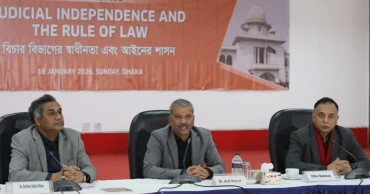
Law Adviser Dr Asif Nazrul on Sunday said establishing the rule of law remains the country’s biggest challenge, though significant progress has been made in that direction.
He, however, cautioned that achieving lasting success would be difficult without sincerity and commitment from an elected government after the next election.
"Some people say no reforms have been made. However, in such a short time, there has never been such a significant amount of reform in the history of Bangladesh," he said.
Turning to the exchange rate, the Adviser said it has remained unchanged, while remittance inflows have increased. "Where there was previously no sufficient mechanism to retain, now it has been made possible. Our reform commissions are at an expensive level," Asif Nazrul said.
The adviser went on to say, “Among 10 recommendations, six have been kept. So, you cannot say that no recommendations have been kept. Some people spread negativities, which acts like a stimulus, but it negatively influences people."
If independence exists without accountability, it does not bring success, the Adviser said, adding that the judges of the higher judiciary must strictly adhere to the code of conduct. "The majority provision will provide success for people. Legal aid has now increased fivefold. Theoretically, we have done everything required for judicial independence. If accountability is ensured, you will achieve success."
ICC flags Mustafiz as security risk; Asif Nazrul calls decision ‘absurd’
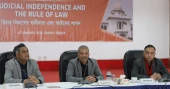
The Centre for Governance Studies (CGS) organised the policy dialogue titled ‘Judicial Independence and the Rule of Law’ at the CIRDAP (Centre for Integrated Rural Development for Asia and the Pacific) auditorium in Dhaka.
The event brought together political leaders, civil society representatives, academics, lawyers, and human rights activists to discuss how judicial independence and the rule of law can be ensured through the protection of citizens' fundamental rights, accountability of state power, and equality in law enforcement in a just and democratic state.
Shamim Haider Patwary, General Secretary of the Jatiya Party (Japa); Ruhin Hossain Prince, former General Secretary of the Communist Party of Bangladesh (CPB); Subrata Chowdhury, President of Gono Forum; Nilufar Chowdhury Moni, former Minister of BNP; Barrister Nusrat Khan, Vice Principal of the British School of Law; Bajlur Rashid Firoz, Bangladesh Socialist Party (BASAD); Dr. Mostafizur Rahman Faisal, Joint General Secretary of Khelafat Majlis; Mohammad Tajul Islam, Chief Prosecutor of the International Crimes Tribunal; Ekhtedar Ahmed, Former Judge; Barristers M. Moin Alam Firozi, Shihab Uddin Khan, Sarwar Hossain, and Mohammad Ali; Dr. Abdul Latif Masum, former Professor at Jahangirnagar University; Dr Borhan Uddin Khan, Professor at Dhaka University; Advocate Shaukat Ali Howlader, Central Law Secretary of the Islamic Movement of Bangladesh; Zillur Rahman, President of the Centre for Governance Studies (CGS); and Parvez Karim Abbasi, Executive Director of CGS also spoke at the event.
1 month ago
ICC flags Mustafiz as security risk; Asif Nazrul calls decision ‘absurd’
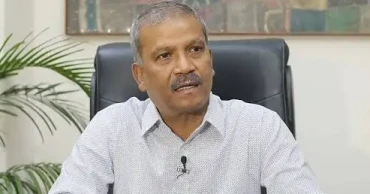
Bangladesh’s participation in the T20 World Cup hit fresh controversy on Monday after Youth and Sports Adviser Asif Nazrul said the International Cricket Council (ICC) had formally flagged pacer Mustafizur Rahman as a potential security risk.
Speaking at a press conference at the Bangladesh Football Federation, Asif Nazrul disclosed that the global body’s security department sent a letter to the Bangladesh Cricket Board (BCB) citing three specific factors that would heighten risks for the team in India.
ICC may reject Sri Lanka move, will offer Bangladesh southern India venues instead
According to the Sports Adviser, the ICC said the presence of Mustafizur in the squad, Bangladeshi supporters wearing national jerseys in public, and the proximity of Bangladesh's upcoming national elections are the security risk for the Bangladesh team.
Asif Nazrul vehemently rejected the ICC’s assessment, labeling the observations as ‘bizarre’ and ‘illogical’.
He argued that expecting a nation to drop its best bowler, forbid fans from wearing team colors, or alter an election schedule for a cricket tournament is completely unrealistic.
Bangladesh standoff a litmus test' for ICC chair Jay Shah, reports NDTV
According to the Adviser, the letter itself serves as undeniable proof that the environment in India is currently hostile and unsafe for Bangladeshi cricketers.
He pointed to a 16-month-long ‘anti-Bangladesh campaign’ and the prevailing ‘radical communal situation’ in India as the root causes of the tension.
The Adviser criticised the Board of Control for Cricket in India (BCCI) for allegedly bowing to “radical communal forces” by forcing the Kolkata Knight Riders to release Mustafiz, a move he described as evidence that no part of India is currently safe for the team.
BCB to continue ‘constructive engagement’ with ICC for T20 World Cup solution
Addressing potential solutions, Adviser Nazrul welcomed recent reports suggesting Pakistan as an alternative host, stating that playing in Pakistan or the UAE would be acceptable, provided the matches are moved out of India.
He sharply rebuked the governance of cricket, asserting that no single country should hold a monopoly over the sport and that if the ICC is truly a global organisation, it must grant Bangladesh the opportunity to play in a neutral venue like Sri Lanka.
1 month ago
'Bangladesh will not play World Cup in India,' Asif Nazrul reiterates
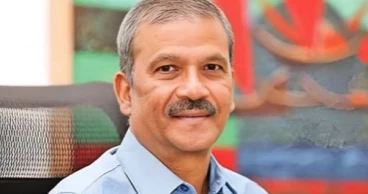
Sports Adviser Asif Nazrul reaffirmed on Wednesday that Bangladesh will not travel to India for the upcoming T20 World Cup, reiterating the nation’s demand to have their matches relocated to co-host Sri Lanka.
Speaking to the media following a meeting with directors of the Bangladesh Cricket Board (BCB), Asif Nazrul said while the nation is eager to participate it cannot be at the expense of national dignity or player safety.
“We have discussed the situation.The Bangladesh team played hard and fought to qualify for the T20 World Cup, and as a cricket-crazy nation, we certainly want to play in the World Cup,” he said.
However, he drew a firm line regarding the venue.
Action on Sports Ministry graft, time permitting: Asif Nazrul
“We do not want to take part in the World Cup at the cost of the honour of the country, or at the cost of the security of the team, players, and the journalists of Bangladesh,” he said.
This development follows a week of escalating tensions.
On Monday, the Ministry of Information and Broadcasting officially banned the telecast of the IPL in Bangladesh, labeling Mustafizur’s removal as ‘illogical’.
Asif Nazrul earlier endorsed that blackout, asserting that ‘the days of slavery are over’ in response to what Dhaka views as the BCCI's ‘radical communal policy.’
He also revealed that the Bangladesh had received communication from the sport's governing body but felt the gravity of the situation was misunderstood.
“We got a letter from the ICC,” he said. “I think they did not fully realise the security issue that is in place in India. It’s not just a security issue; it is an issue of national honour as well.”
The Adviser pointed to the recent controversy involving pacer Mustafizur Rahman as undeniable proof of the hostile environment.
Mustafizur was released by the Kolkata Knight Riders (KKR) following a directive from the Board of Control for Cricket in India (BCCI) earlier this week—a move Nazrul cited as evidence that ‘there is no situation to play in India for Bangladesh.’
“There is a bigger picture regarding the communal issue that I don’t want to discuss here,” he added. “We will not compromise with our national honour or the security of our cricketers. We of course want to play the World Cup, but only in the other host nation, Sri Lanka. We are standing firmly by this stance.”
He concluded by stating that Bangladesh would continue to press the ICC to understand the reality on the ground.
“Our main position is that we will not compromise our national honour and security,” he added.
1 month ago

Khaleda’s condition not good at all: Law Adviser
Chief Adviser Professor Muhammad Yunus on Friday night (November 28) sent Law Adviser Asif Nazrul and his Special Assistant Monir Haider to Evercare Hospital to enquire about the health condition of BNP Chairperson and former Prime Minister Khaleda Zia.
The duo talked to doctors at the hospital to learn about Khaleda Zia’s condition, said BNP Media Cell member Sayrul Kabir Khan.
He said they also spoke with BNP Secretary General Mirza Fakhrul Islam Alamgir, who was present at the hospital.
Read more: 'Political realities prevent my return', says Tarique as he seeks prayers for Khaleda
Later, in a Facebook post around 1am, the Law Adviser wrote, “I went to Evercare Hospital and just returned. Begum Khaleda Zia’s physical condition is not good at all. Please everyone pray for her.”
Khaleda Zia was admitted to Evercare Hospital on the night of November 23 on the advice of the medical board after being diagnosed with infections in her heart and lungs.
She is also suffering from pneumonia and is currently under intensive observation in the Coronary Care Unit (CCU), with supervision from both local and foreign specialist doctors.
Read more: CA’s representatives visit Evercare to enquire about Khaleda’s health
2 months ago

CA’s representatives visit Evercare to enquire about Khaleda’s health
Chief Adviser Professor Muhammad Yunus on Friday night sent Law Adviser Asif Nazrul and his Special Assistant Monir Haider to Evercare Hospital to enquire about the health condition of BNP Chairperson and former Prime Minister Khaleda Zia.
The duo talked to doctors at the hospital to learn about Khaleda Zia’s condition, said BNP Media Cell member Sayrul Kabir Khan.
He said they also spoke with BNP Secretary General Mirza Fakhrul Islam Alamgir, who was present at the hospital.
Chief Adviser seeks prayers for Khaleda Zia’s recovery
Khaleda Zia was admitted to Evercare Hospital on the night of November 23 on the advice of the medical board after being diagnosed with infections in her heart and lungs.
She is also suffering from pneumonia and is currently under intensive observation in the Coronary Care Unit (CCU), with supervision from both local and foreign specialist doctors.
2 months ago