Jamaat-e-Islami
Bangladesh’s newly elected MPs to take oath on Tuesday
Newly elected MPs are set to take oath as members of the 13th parliament and also the Constitution Reform Council on Tuesday.
Chief Election Commissioner AMM Nasir Uddin will administer the oath in line with the Constitution as the posts of Speaker and Deputy Speaker of the 12th Parliament are currently vacant.
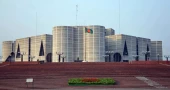
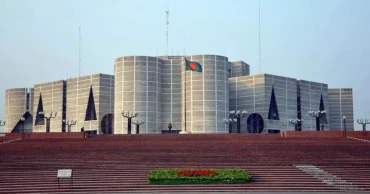
The swearing-in ceremony will be held at the oath-taking room of the Jatiya Sangsad.
BNP’s MPs-elect will take oath at 10am, while those of Jamaat-e-Islami will do so at 12pm, said Parliament Secretariat Secretary Kaniz Moula.
“Both oaths of the elected MPs as members of parliament and as members of the Constitution Reform Council will be held at a time (the same event),” she told UNB on Monday evening.
Besides, the Election Commission on Monday wrote to the Parliament Secretariat asking to take necessary measures as the Chief Election Commissioner will administer the oath of newly elected members of the 13th parliament and also members of the Constitution Reform Council at 10am on Tuesday.
EC Senior Secretary Akhtar Ahmed wrote the letter to the Secretary of Parliament Secretariat.
However, BNP Standing Committee member Salahuddin Ahmed on Monday raised constitutional concerns regarding the oath of the Constitution Reform Council, casting uncertainty over whether such an oath can legally be administered now.
DMP issues traffic guidelines for oath-taking ceremony
“If the Constitutional Reform Council is incorporated into the Constitution through an amendment, and if a specific oath format is included in the Third Schedule of the Constitution with a designated authority to administer that oath—only after all these conditions are met could such a process take place,” he said.
While the Third Schedule of the Constitution specifies the oaths for various offices, including that of Members of Parliament, it does not mention any oath for members of a Constitution Reform Council, he said.
Responding to questions from journalists, Salahuddin Ahmed, also a newly elected MP, said the constitutional responsibility of the Election Commission is to conduct the national parliamentary and presidential elections.
Officials at the Parliament Secretariat said newly elected MPs will sign the oath book and provide fingerprints, images and digital signatures for preparation of their digital identity cards following the ceremony.
The 13th parliamentary election and referendum on the July National Charter (Constitutional Reform) Implementation Order 2025 were held on Thursday last (February 12) in 299 out of the country’s 300 constituencies amid festivity and peaceful atmosphere.
On Friday last, the EC published a gazette of 297 elected MP candidates. The election results of two other constituencies – Chattogram-2 and 4-- were withheld as per the court orders. Besides, the election to Sherpur-3 was earlier cancelled following the death of a contesting candidate.
But BNP Chairman Tarique Rahman has left Bogura-6 seat for by-election as he is set to take oath as a member of parliament from Dhaka-17 constituency.
In the election, Bangladesh Nationalist Party (BNP) secured 209 parliamentary seats, while Bangladesh Jamaat-e-Islami won 68.
Besides, National Citizen Party-NCP settled victory in six constituencies, independent candidates in seven constituencies, Bangladesh Khelafat Majlish in two, Islami Andolan Bangladesh in one, Bangladesh Jatiya Party-BJP (led by Andaleeve Rahman Partho) in one, Ganaodhikar Parishad in one, Ganasamhati Andolan in one and Khelafat Majlish in one parliamentary seat.
So, the BNP-led electoral alliance sealed victory in a total of 212 constituencies, while the Jamaat-led electoral alliance won in 77 constituencies.
According to the July National Charter (Constitutional Reform) Implementation Order 2025, a Constitution Reform Council shall be formed with the representatives elected in the general election, which could apply all authorities related to the constitutional reform.
The representatives elected in the election shall act as the members of the parliament and also members of the Council simultaneously.
The Constitution Reform Council shall complete the implementation of the July National Charter and the Constitutional Reforms in line with the mandate gained through the referendum within 180 working days since the formation of the council and then the tenure of the council will end immediately.
The Order also states that the authority entitled to administer the oath of MPs will likewise administer the oath of members of the Constitution Reform Council.
According to the Constitution, newly elected MPs must take their oath, typically administered by the Speaker within three days of the gazette notification. Due to the resignation/absence of the 12th Parliament Speaker, the Chief Election Commissioner (CEC) or a President-nominated person will administer the oath.
Maldives' President, FM to join oath-taking ceremony
The Article 148 (2A) states, ”If, within three days next after publication through official Gazette of the result of a general election of members of Parliament under clause (3) of article 123, the person specified under the Constitution for the purpose or such other person designated by that person for the purpose, is unable to, or does not, administer oath to the newly elected members of Parliament, on any account, the Chief Election Commissioner shall administer such oath within three days next thereafter, as if, he is the person specified under the Constitution for the purpose.”
Tenures of all Parliaments
The tenure of first parliament was from 07-04-1973 to 06-11-1975 (2 years 6 months and 30 days), the second parliament from 02-04-1979 to 24-03-1982 (2 years 11 months 22 days), the third parliament from 10-07-1986 to 06-12-1987 (1 year 4 months 26 days), the fourth parliament from 15-04-1988 to 06-01-1990 (1 year 8 months 22 days), the fifth parliament from 05-04-1991 to 24-11-1995 (4 years 7 months 19 days), the sixth parliament from 19-03-1996 to 30-03-1996 (11 days), the seventh parliament from 14-07-1996 to 13-07-2001 (4 years 11 months 29 days), the eight parliament from 28-10-2001 to 27-10-2006 (4 years 11 months 29 days), the ninth parliament from 25-01-2009 to 24-01-2014 (4 years 11 months 30 days), the 10th parliament from 19-01-2014 to 28-01-2019 (5 years 9 days), the 11th parliament from 30-01-2019 to 06-01-2024 (4 years 11 months 7 days) and the 12th parliament from 10-01-2024 to 06-08-2024 (6 months 27 days).
5 days ago
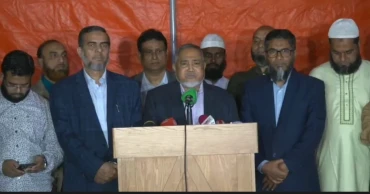
Jamaat hails Tarique’s visit to Ameer's residence, highlights joint fight against fascism
Nayeb-e-Ameer of Bangladesh Jamaat-e-Islami Dr Syed Abdullah Muhammad Taher on Sunday said the new government, led by the Bangladesh Nationalist Party (BNP), and the opposition party Jamaat-e-Islami will work together to build a 'new Bangladesh'.
“We welcome the incoming Prime Minister of Bangladesh Tarique Rahman's courtesy visit to the residence of Ameer-e-Jamaat. It is a qualitative change in our political culture and a new beginning,” he said.
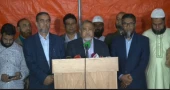
He made the remarks while speaking at a press briefing following a meeting between BNP Chairman Tarique Rahman and Jamaat Ameer Dr Shafiqur Rahman.
Taher said the two parties had long fought against the fascist government led by the Awami League.
Following its removal, he said, BNP and Jamaat contested the election separately, but expressed hope that they would now work together for the welfare of the country.
Jamaat Ameer calls meeting with Tarique 'an important moment'
During the meeting, the Jamaat Ameer urged Tarique Rahman to maintain law and order across the country, Taher said, adding that they also discussed ways to resolve any potential misunderstandings or issues between the two parties.
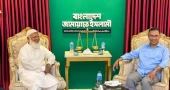
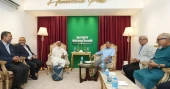
Earlier in the evening, Tarique Rahman visited the Jamaat chief’s residential office in the Bashundhara Residential Area around 7:10 pm and held a nearly 45-minute meeting, which BNP leaders described as a positive political gesture following the election.
Among others, BNP Secretary General Mirza Fakhrul Islam Alamgir, BNP Standing Committee member Nazrul Islam Khan, Jamaat Nayeb-e-Ameer Dr Abdullah Muhammad Taher and Assistant Secretary General and Central Publicity and Media Secretary Advocate Ahsanul Mahboob Zubair were present at the meeting.
5 days ago
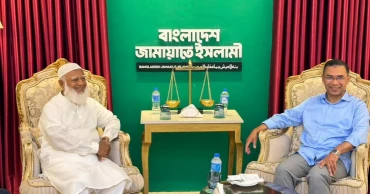
Jamaat Ameer calls meeting with Tarique 'an important moment'
Jamaat Ameer Dr Shafiqur Rahman has reiterated his party’s commitment to democratic governance and constitutional accountability following a meeting with BNP Chairman Tarique Rahman.
In a Facebook post on Sunday night, Dr Rahman congratulated Tarique Rahman in advance as he set to assume the office of Prime Minister, describing his visit to the Jamaat Ameer’s residential office as “an important moment in our national political journey.”
“We welcome this engagement in a spirit of dialogue and responsibility, and we hope it signals a new chapter of institutional maturity and mutual respect. We envision building a Bangladesh that is free from fascism, sovereign in its decision-making and founded upon justice,” he wrote.
Dr Shafiqur Rahman said Bangladesh Jamaat-e-Islami, along with the 11-party alliance, remains committed to establishing a prosperous, stable and modern state grounded in democratic values and constitutional governance.
He also welcomed the BNP Chairman’s assurance that steps are being taken to address incidents of post-election violence, including actions concerning harm against opposition supporters and minority communities.
Jamaat demands vote recount in 30 constituencies
“We reiterate that no citizen, regardless of political affiliation, should face intimidation or insecurity,” he said.
The Jamaat Ameer added that his party would cooperate fully on matters of national interest while fulfilling its constitutional responsibility as a firm and principled opposition.
“Where the government acts in the public interest, we will support. Where accountability is required, we will speak. Our objective is not confrontation but correction; not obstruction, but oversight,” he said, adding that the people deserve a parliament that safeguards justice, protects rights and advances the nation with stability and confidence.
Earlier, Tarique visited the Jamaat chief’s residential office in the Bashundhara Residential Area around 7:10 pm and held a nearly 45-minute meeting, which BNP leaders described as a positive political gesture following the election.
Keep guard until final count: Jamaat Ameer urges party leaders
Jamaat Ameer Shafiqur Rahman received Tarique with a floral wreath.
BNP Secretary General Mirza Fakhrul Islam Alamgir, Standing Committee member Nazrul Islam Khan, Jamaat Nayeb-e-Ameer Abdullah Muhammad Taher, and its Assistant Secretary General as well as Central Publicity and Media Secretary Advocate Ahsanul Mahboob Zubair were present at the meeting.
The meetings came a day after Tarique called for cooperation from all political parties and forces to help build a ‘safe and humane Bangladesh’.
BNP is set to form the next government after securing a landslide victory with 209 seats in Thursday’s national election.
5 days ago
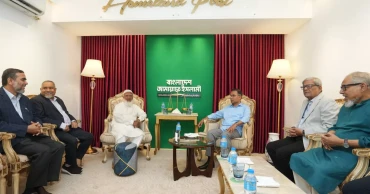
Tarique Rahman meets Jamaat Ameer
BNP Chairman Tarique Rahman on Sunday met Bangladesh Jamaat-e-Islami Ameer Shafiqur Rahman, just two days before forming the next government following his party’s massive victory in Thursday’s national election.
Tarique reached the Jamaat chief’s political office at his residence in Bashundhara Residential Area around 7:10pm to hold a meeting, in what is seen as a positive political gesture after the election, said BNP Media Cell member Atikur Rahman Rumon.
He said the Jamaat Ameer received Tarique with a floral wreath.
BNP Secretary General Mirza Fakhrul Islam Alamgir, Standing Committee member Nazrul Islam Khan, Jamaat Nayeb-e-Ameer Abdullah Muhammad Taher and its Assistant Secretary General and Central Publicity and Media Secretary Advocate Ahsanul Mahboob Zubair were present.
Later, Tarique is also scheduled to meet National Citizen Party (NCP) Convener Nahid Islam at his residence in the capital’s Bailey Road area.
The meetings come a day after Tarique called for cooperation from all political parties and forces to help build a ‘safe and humane Bangladesh’.
BNP is set to form the next government after securing a landslide victory with 209 seats in Thursday’s national election. In the election, Bangladesh Jamaat-e-Islami won 68 seats, while the National Citizen Party secured six.
6 days ago
Jamaat wins three Kushtia seats as 17 candidates lose deposits
Seventeen of the 25 candidates who contested the national election from parliamentary constituencies in Kushtia have got their election deposits forfeited, according to official figures.
Under rules set by the Election Commission, a candidate loses their deposit if they fail to secure at least one-eighth — or 12.5% — of the total votes cast in their constituency.
A total of 25 candidates, including one independent and nominees from 14 political parties, took part in the election across Kushtia’s four seats. The only female contender stood under the banner of the Bangladesh Republican Party.
The results highlight the strong showing of Bangladesh Jamaat-e-Islami in the district, with the party winning three of the four constituencies. The Bangladesh Nationalist Party (BNP) secured the remaining seat.
Kushtia-1
In Kushtia-1, where 282,543 votes were cast, BNP candidate Reza Ahmed defeated Jamaat’s Belal Uddin.
Candidates who failed to reach the required threshold included JSD’s Md. Gias Uddin (star symbol), who received 203 votes; Bangladesh Islami Front’s Md. Badiruzzaman (candle symbol) with 241 votes; Islami Andolan Bangladesh’s Md. Aminul Islam (fan symbol) with 4,063 votes; independent candidate Md. Nuruzzaman Hablu Molla (cycle symbol) with 17,864 votes; Ganoadhikar Parishad’s Md. Shahabul Islam (truck symbol) with 613 votes; and JP’s Md. Shahriar Jamil (plough symbol) with 1,094 votes.
Kushtia-2
A total of 348,911 votes were cast in Kushtia-2. Jamaat candidate Md. Abdul Gafur defeated BNP’s Ragib Rauf Chowdhury.
Three candidates forfeited their deposits: Bangladesh Communist Party’s Nur Uddin Ahmed (spade symbol), who secured 80 votes; Islami Front Bangladesh’s Md. Babul Akter (chair symbol) with 1,123 votes; and Islami Andolan Bangladesh’s Md. Ali (fan symbol) with 3,887 votes.
Kushtia-3
In Kushtia-3, Mufti Amir Hamza won the seat, defeating BNP’s Engineer Md. Zakir Hossain Sarker. Of the 321,323 votes cast, four candidates failed to retain their deposits.
They were BASAD’s Mir Nazmul Islam (moy symbol) with 442 votes; Bangladesh Republican Party’s Rumpa Khatun (elephant symbol) with 475 votes; Ganoadhikar Parishad’s Md. Shariful Islam (truck symbol) with 299 votes; and Islami Andolan Bangladesh’s Md. Abdullah Akand (fan symbol) with 5,153 votes.
Kushtia-4
In Kushtia-4, where 308,260 votes were cast, Jamaat’s Md. Afzal Hossain defeated BNP’s Syed Mehdi Ahmed Rumi.
Among those forfeiting deposits were Islami Andolan Bangladesh’s Anwar Khan (fan symbol) with 1,373 votes; Bangladesh Minority Jatiya Party’s Tarun Kumar Ghosh (rocket symbol) with 671 votes; Ganoforum’s Md. Abdul Hakim Miah (rising sun symbol) with 255 votes; and Bangladesh Labour Party’s Md. Shahidul Islam (pomegranate symbol) with 308 votes.
6 days ago
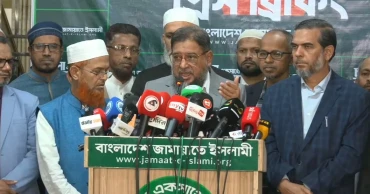
Jamaat demands vote recount in 30 constituencies
Bangladesh Jamaat-e-Islami on Saturday called for a recount of votes in 30 constituencies following the 13th national parliamentary election, citing alleged irregularities in the counting process.
“We will also apply to the Election Commission to postpone the oath-taking of the MPs from these seats,” said Assistant Secretary General Advocate Muazzem Hossain Helal at an emergency press conference in the evening.
The constituencies listed include Panchagarh-1; Thakurgaon-2; Dinajpur-3 and 5; Lalmonirhat-1 and 2; Gaibandha-4; Bogura-3; Sirajganj-1; Jashore-3; Khulna-3 and 5; Barguna-1 and 2; Jhalakathi-1; Pirojpur-2; Mymensingh-1, 4 and 10; Kishoreganj-3; Dhaka-7, 8, 10, 13 and 17; Gopalganj-2; Brahmanbaria-5; Chandpur-4; Chattogram-14; and Cox’s Bazar-4.
Helal claimed that, if the votes are recounted, these seats ‘would return to the 11-party alliance’.
Ehsanul Mahbub Zubayer, Jamaat’s Assistant Secretary General and head of its central publicity department, said the party has already submitted applications for the 30 seats but added that “the number may increase.”
Tarique Rahman to visit Jamaat Ameer, NCP chief Sunday
Abdul Mannan, Jamaat’s candidate in Dhaka-6, alleged that he had been defeated due to ‘manipulation’ during vote counting. He said he hopes the Election Commission ‘will take proper action in this regard’.
6 days ago
EC's official announcements see BNP take lead in 15 seats, Jamaat in 4
BNP-led alliance candidates have taken lead in 15 constituencies, while Jamaat-led coalition contestants in four constituencies, according to the partial election results of 19 parliamentary seats, announced by the Election Commission.
Joypurhat-2: BNP candidate Md Abdul Bari bagged 157,128 votes, while his nearest rival Jamaat contestant SM Rashedul Alam obtained 91,012 votes in 104 out of 105 polling stations.
Habiganj-3: BNP candidate GK Gous bagged 58,456 votes, while his nearest rival Jamaat contestant Kazi Mohsin Ahmed obtained 17,503 votes in 57 out of 138 polling stations.
Bogura-5: BNP candidate Golam Mohammad Siraz obtained 162,801 votes, while his nearest rival Jamaat’s Dabibur Rahman pocketed 101,362 votes in 124 out of 189 polling stations.
Bogura-6: BNP chairman Tarique Rahman gained 144,913 votes, while his nearest rival Jamaat’s Abidur Rahman obtained 67,823 votes in 101 out of 151 polling stations.
Cumilla-1: BNP candidate Dr Khandaker Mosharraf Hossain obtained 98,377 votes, while his nearest rival Jamaat’s Moniruzzaman pocketed 59,750 votes in 103 out of 146 polling stations.
Cumilla-3: BNP candidate Kazi Shah Mofazzel Hossain Kaikobad bagged 76,442 votes, while his nearest rival Jamaat contestant Yousuf Sohel obtained 50,952 votes 75 out of 160 polling stations.
Cumilla-9: BNP candidate Abdul Kalam obtained 88,424 votes, while his nearest rival Jamaat contestant Syed AKM Sarwar Uddin Siddiqui gained 55,379 votes 69 out of 135 polling stations.
Cumilla-10: BNP candidate Mobasser Alam Bhuiyan obtained 75,211 votes, while his nearest rival Jamaat contestant Yasin Arafat gained 51,187 votes 71 out of 153 polling stations.
Madaripur-3: BNP candidate Anisur Rahman gained 43,514 votes, while his nearest rival Jamaat contestant Rafiqul Islam obtained 35,400 votes in 59 out of 135 polling stations.
Sylhet-4: BNP candidate Ariful Haque Chowdhury obtained 49,875 votes, while his nearest rival Jamaat contestant Joynal Abedin gained 24,603 votes in 51 out of 173 polling stations.
Sylhet-6: BNP candidate Emran Ahmed Chowdhury 66,720 votes, while his nearest rival Jamaat contestant Md Selim Uddin obtained 52,530 votes in 95 out of 193 polling stations.
Chandpur-1: BNP candidate ANM Ehsanul Haque Milon obtained 55,249 votes, while his nearest Jamaat contestant Abu Nasar Mohammad Makbul Ahmed gained 29,321 votes 49 out of 110 polling stations.
Chandpur-2: BNP candidate Jamal Uddin obtained 57,908 votes, while his nearest LDP contestant Billal Hossain gained 15,430 votes in 55 out of 98 polling stations.
Chandpur-3: BNP candidate Sheikh Farid Ahmed obtained 84,996 votes, while his nearest rival Jamaat contestant Md Shahjahan Miah gained 49,851 votes in 85 out of 166 polling stations.
Nilphamari-2: Jamaat contestant Al-Faruk Abdul Latif gained 82,432 votes, while his nearest rival BNP candidate Shahrin Islam obtained 69,122 votes in 74 out of 135 polling stations.
Chapainawabganj-2: Jamaat contestant Md Mizanur Rahman gained 77,158 votes, while his nearest rival BNP candidate Aminul Islam obtained 73,655 votes in 90 out of 185 polling stations.
13th JS Election ‘very good by any standard’ in country’s history: CEC
Chapainawabganj-3: Jamaat contestant Nurul Islam (Bulbul) gained 58,951 votes, while his nearest rival BNP candidate Harunur Rashid obtained 40,376 votes in 56 out of 173 polling stations.
Rajbari-2: BNP candidate Harunur Rashid obtained 177,737 votes, while his nearest rival NCP contestant Jamil Hizazi gained 53,267 votes in 156 out of 199 polling stations.
Faridpur-1: Jamaat contestant Elius Mollah gained 61,872 votes, while his nearest rival BNP candidate Khandarkar Nasir Uddin obtained 53,129 votes in 75 out of 198 polling stations.
8 days ago
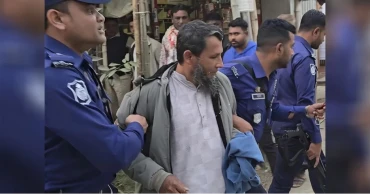
Jamaat activist held with cash in Shariatpur; jailed for 2 years
A Jamaat activist was arrested with over Tk 7 lakh during a joint force operation in Naria upazila of Shariatpur on Wednesday.
The arrestee is Golam Mustafa, an assistant teacher of Shaheed Samad High School in Japsa Union and a resident of the Rajnagar area.
He was sentenced to two years’ imprisonment and fined Tk 3,000, said Naria Assistant Commissioner (Land) and Executive Magistrate Luki Das.
In default of payment, he will have to serve an additional 10 days of rigorous imprisonment.
Tipped off, members of the joint forces conducted a drive at the house of Jalil Master in Ward No. 1 of Baishakhipara area under Naria Municipality around 5pm.
Jamaat leader Belal Uddin hospitalised after arrest ‘with Tk 74 lakh’
During the operation, law enforcers recovered Tk 7,20,000 in cash, a laptop, some empty envelopes and documents related to the distribution of money from the house.
District Jamaat Nayb-e-Ameer KM Maqbul Hossain and Jamaat activists Advocate Mahfuz Alam and Hasan Al Mannan were also detained during the operation but were later released after questioning.
10 days ago
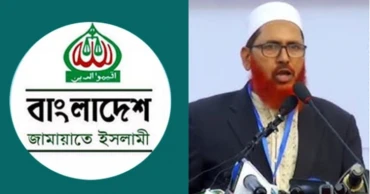
Jamaat leader Belal Uddin hospitalised after arrest ‘with Tk 74 lakh’
Thakurgaon district unit Jamaat-e-Islami Ameer Belal Uddin Pradhan, who was detained at Saidpur Airport ‘with around Tk 74 lakh’, fell ill and was admitted to a hospital on Tuesday afternoon.
After he complained of illness, he was taken to Saidpur 100-bed Hospital in Nilphamari district by an ambulance at 1:47pm.
Nazmul Huda, Resident Medical Officer of the hospital, said, “No sign of a heart attack was found in the Jamaat leader after conducting medical tests. An ECG was performed, but no indication of a heart attack was detected. He has been referred to Rangpur Medical College Hospital for further evaluation.”
Additional law enforcers were deployed in and around the hospital to avoid any untoward incident.
Earlier in the day, police arrested Belal Uddin at Saidpur Airport in Nilphamari and recovered ‘Tk 74 lakh’ from his possession, said Officer-in-Charge of Saidpur Police Station Abdus Sattar.
Jamaat leader’s arrest with cash ‘stage-managed drama’, party claims
A case was filed in connection with the cash recovery, said OC.
Meanwhile, Bangladesh Jamaat-e-Islami Assistant Secretary General Ahsanul Mahboob Zubair on Wednesday claimed the arrest of Thakurgaon district Jamaat Ameer Belal Uddin with a large amount of cash was a ‘stage-managed drama by law enforcers’.
Speaking at an emergency press conference at the party’s central office in Moghbazar, the Jamaat leader claimed that the recovered money was not related to the election but was linked to Belal Uddin’s personal business transactions.
10 days ago
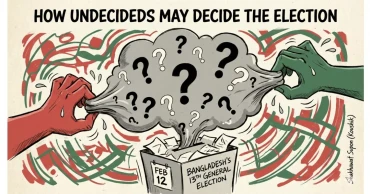
How Undecideds May Decide the Election
As Bangladesh heads into a landmark election to choose Members of Parliament for its 13th Jatiya Sangshad on February 12, opinion polls show a large segment of the electorate is still saying “I haven’t decided yet,” rather than choosing a party outright. That is surprising in a country where elections tend to be predictable and it has turned undecided voters into one of the most important blocs in the race.
A nationwide Pulse Survey conducted by the BRAC Institute of Governance and Development (BIGD) shows that 48.5 percent of voters have not yet decided whom they will support, up from about 38 percent eight months earlier. In the same survey, 14.4 percent refused to say who they might vote for and 1.7 percent said they will not vote at all. (BIGD Pulse Survey: July 2025 – Citizens’ Perceptions, Expectations, and Experiences)
That means nearly half of the electorate remains in “thinking mode,” even as campaign rallies intensify, debates are held and political narratives are repeated across social media platforms.
How Big Are the Undecideds Really?
Multiple opinion polls show a similar pattern of uncertainty.
In the most recent People’s Election Pulse Survey (PEPS Round-3) by Innovision Consulting, party preference figures among decided voters show the Bangladesh Nationalist Party (BNP) and its allies leading with 52.8 percent support, while the Jamaat-led alliance stands at 31.0 percent. Yet the same poll records 13.2 percent of voters as undecided on party choice itself.(PEPS Round-3)
Leadership projections from the same survey reveal further ambiguity. About 22.2 percent of respondents said they could not yet say who would become the next prime minister, even while 47.6 percent named a specific leader and 22.5 percent chose another candidate.(PEPS Round-3 prime minister projection)
Among younger voters, uncertainty is even more pronounced. A separate youth-focused study, the Youth Matters Survey 2025, found that nearly 30 percent of young respondents were undecided about their vote, with only smaller shares committing to parties or leaders.
These undecideds are not a marginal group. Their numbers rival those of entire voting blocs and make them impossible to ignore.
Voices from the Ground
Efforts to speak with voters who say they are unlikely to cast a ballot often meet quiet resistance. Many decline to comment for reasons they do not fully explain. Still, a handful agreed to share their views on condition of anonymity, offering insight into the hesitation behind the statistics.
A young lecturer of Political Science at a time-honored educational institution in Dhaka pointed to the unusual political configuration of the election.
“The two main political forces contesting the 13th parliamentary election, the BNP and Jamaat-e-Islami, have been long-time allies with overlapping ideological positions. Although they are now competing against each other due to the absence of a major political party, that absence itself shapes how voters see the election.”
He argued that the participation deficit that marked the 12th national election in 2024 has not been fully resolved.
“For the same reasons the 2024 election was not truly participatory, the 13th election also lacks full participation. This may not be discussed forcefully in the post-uprising environment, but it will matter in historical analysis. That is why I believe a segment of voters will stay away from polling centres.”
On the referendum being held alongside the election, he expressed cautious approval mixed with concern.
“There are positive elements in the referendum that could make future governments more accountable. But the way the questions are framed is problematic. Multiple issues are bundled together and voters are asked to answer only ‘yes’ or ‘no.’ It is not realistic to expect citizens to agree with every component at once.”
He cited provisions on increasing women’s representation, proposals involving the Supreme Court and changes that would curtail prime ministerial power while expanding presidential authority as areas where reasonable disagreement exists.
“Reaching a single ‘yes’ or ‘no’ decision on so many complex matters is extremely difficult. That is why there is uncertainty about the referendum as well. Nearly a quarter of the population remains illiterate and many voters are not fully aware of what the referendum entails. If voters do not understand the questions, how meaningful is the vote?”
A student from the Institute of Leather Engineering and Technology at the University of Dhaka expressed a more resigned pragmatism: “Looking at the situation, I do not expect much. This time, my vote is for what I see as the lesser of evils and for forces aligned with democratic freedoms. That means the BNP.”
Others were more dismissive of the process altogether. A former student of the law department at Chattogram University said he has decided not to vote: “None of the public’s expectations have been fulfilled. The promises that were made were not delivered, not even a fraction of them. Instead, a group of people have benefited enormously. I do not believe ordinary people’s expectations will be met after this election either.”
This election also introduces a new variable which is the inclusion of expatriate voters through postal ballots. Yet even among overseas Bangladeshis, enthusiasm appears limited.
Sumaiya Jannat, a Bangladeshi expatriate living in the United Kingdom, offered a blunt assessment: “I do not see this as a real election. It feels more like a consolation prize to keep the mass people calm.”
Kashpiya Badhon, another expat-voter based in the United States, cited the absence of her preferred party: “The party I support is not contesting this election. Not just me, my entire bloodline supports that party. If I were in Bangladesh, fear and social pressure might have pushed me to a polling centre. But since I am in the United States, voting is simply not an option for me.”
Together, these voices suggest that indecision is not rooted in apathy alone, but in doubts about participation, representation and the meaning of the vote itself.
Why the Undecideds Matter
In most elections, undecided voters shrink as polling day approaches. Campaign messaging intensifies, loyalties harden and choices become predictable.
This election is different. The absence of a previously dominant political party has altered the competitive landscape. International coverage has noted that many voters remain uncertain precisely because of this absence, creating an unusual and fluid electoral environment for Bangladesh.
Undecided voters also matter beyond party competition. Their views shape attitudes toward the constitutional referendum being held alongside the election. In another Innovision survey, about 59.5 percent of respondents favoured a “Yes” vote, while 12 percent remained undecided on the referendum question itself.(Innovision referendum poll)
Surveys also show that economic pressures, law and order concerns, and demands for timely elections strongly influence voting intentions, suggesting that undecideds are grappling with tangible issues rather than abstract political messaging.(Survey reveals economic woes and poll urgency)
A Snapshot of Voter Confidence
Despite widespread uncertainty, some indicators point to relatively strong confidence in the election process. One survey reports that 72.3 percent of respondents believe the interim government can conduct a free and fair election, while 82.3 percent expect to vote safely at polling centres. (PEPS Round-3 confidence metrics)
These figures suggest that many undecided voters are not rejecting the process itself. Instead, they are weighing their options carefully in an unfamiliar political context.
The Final Days
As election day draws closer, undecided voters remain the closest thing Bangladesh has to a wildcard. Their decisions in the final days could shape constituency-level outcomes and influence national results in ways early polls may fail to capture.
For journalists, analysts and citizens alike, paying close attention to this group is essential.
Understanding why undecided voters hesitate, and what ultimately motivates their choices, may offer deeper insight into the future direction of Bangladesh’s politics.
Rather than forming a quiet background chorus, the undecideds may end up setting the tempo of this election.
Read More: From posters to punchlines: How Bangladesh’s politics got 'Meme-ified'
13 days ago