July Charter
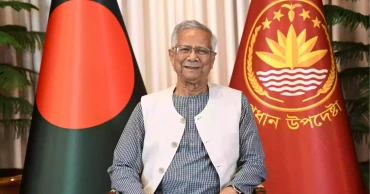
Implementation of July Charter to block fascism’s paths to return: Prof Yunus
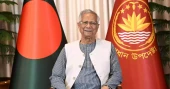
Chief Adviser Prof Muhammad Yunus on Monday identified the July National Charter as the biggest achievement of the interim government, on the basis of which the people of the country decided to implement it with a huge majority in a referendum.
“If the July Charter is implemented, the paths to the return of fascism will be closed forever. I hope it will be implemented within the stipulated time frame,” Prof Yunus said in a televised address to the nation.
Even if the interim government forgets many things, big and small, good and bad, the nation will never forget the July Charter, Prof Yunus said.
“Today, I congratulate all the political parties, social organisations, and human rights organisations who worked tirelessly to draft this charter and get it passed in the referendum,” he said.
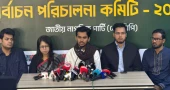
Before his speech, National Citizen Party (NCP) signed the July National Charter, giving it compete shape on the aspects of approval of all stakeholders. Earlier, NCP remained absent from signing the instrument saying signing would be meaningless without clarity on implementation.
In the presence of the Chief Adviser, NCP Convener Nahid Islam and Member Secretary Akhter Hossain signed the charter at State Guest House Jamuna on Monday evening.
National Consensus Commission Vice-Chairman Professor Ali Riaz, Commission Member Badiul Alam Majumdar, and Special Assistant to the Chief Adviser Monir Haider were present on the occasion.
Prof Yunus sees vast economic prospects in wider regional cooperation
For the first time, Prof Yunus said, the opportunity has been created for expatriates to vote in this election.
“When a voter proudly shares his experience of voting in this election and the referendum on social media, as a citizen, I cannot contain my joy. I hope that many more expatriates will be able to participate in this process safely in the future,” he said.
“When we took office, the economy was in turmoil. The banking system had collapsed, and money laundering was rampant. We have brought structural reforms in revenue management, tax policy, currency management and financial sector,” Prof Yunus said.
He said the ‘bottomless economy’ was left for them by the previous fascist government.
“Now, while leaving, I am relieved that we have been able to deal with the situation. And I can leave the foundation of a new economy. Now the creditors will not come to chase us anymore,” Prof Yunus said.
He said the reserves are now 34 billion dollars. “This reserve is gradually increasing with the remittances of our patriotic expatriate brothers and sisters.”
4 days ago
NCP to sign July Charter at Jamuna this evening
A delegation of the National Citizens Party (NCP), led by its Convener Nahid Islam, will visit state guest house Jamuna at 6pm on Monday to sign the July Charter.
In a media release, the party said the delegation will also include Sarwar Tushar, Monira Sharmin, Javed Rasin and Advocate Zahirul Islam Musa.
The July National Charter 2025 was signed on October 17 last year at the South Plaza of Jatiya Sangsad Bhaban in Dhaka, amid boycott by several political parties, including NCP.
The charter was signed by Chief Adviser Muhammad Yunus, members of the National Consensus Commission and leaders of different political parties.
Besides the NCP, the ceremony was boycotted by the Communist Party of Bangladesh (CPB), Bangladesh Samajtantrik Dal (Basad), Bangladesher Samajtantrik Dal (Marxist) and the Bangladesh Jatiya Samajtantrik Dal (Jasad).
After meeting Jamaat Ameer, Tarique meets NCP chief Nahid
Meanwhile, Gonoforum attended the ceremony but did not sign it.
In October last year, NCP Member Secretary Akhter Hossen said the party would sign the July Charter only after receiving assurances that it would be implemented through an official order and a referendum.
5 days ago
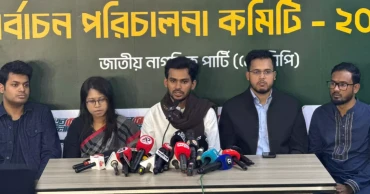
AL’s mass killing trial, July Charter to get stuck under BNP: Asif Mahmud
National Citizen Party (NCP) spokesperson Asif Mahmud Shojib Bhuiyan on Saturday claimed that the trial of the genocide during the 2024 mass uprising and the implementation of the July Charter would not take place if the BNP comes to power.
Addressing a press conference at the party’s Banglamotor office in the evening, Asif Mahmud alleged that recent remarks by BNP’s top leadership clearly indicate the party’s stance.
“The BNP chief has said in a recent interview that Sheikh Hasina’s children could enter politics if people want. This proves that if BNP assumes power, it will not try the Awami League for genocide.”
In a scathing attack on BNP founder and former President Ziaur Rahman, Asif Mahmud said allowing Sheikh Hasina to do politics was a ‘historic mistake’.
“That mistake has cost the people of Bangladesh for decades. Even Khaleda Zia had to pay for it with her life. Yet, blinded by lust for power, her son is now willing to give the Awami League space in politics.” Asif added.
Claiming that people no longer want the Awami League in politics, the NCP spokesperson said the 2024 mass uprising would not have happened if there was any such public support. “At this point, BNP coming to power and Awami League coming to power mean the same thing. BNP has already reached a kind of understanding with the Awami League.”
Asif Mahmud also accused the BNP of deceiving its grassroots leaders and activists. “Grassroots leaders endured imprisonment and repression, while top leaders lived a luxurious life in London. Now, by allowing the Awami League to return to politics, they are betraying their own activists.”
He also alleged that BNP has already ‘betrayed’ the July Charter, despite signing it. “The issue of an upper house in parliament, as clearly stated in the July Charter, has been avoided in BNP’s election manifesto. Even if BNP comes to power, regardless of whether a referendum says ‘yes’ or ‘no’, they will not implement the July Charter.”
Warning of security risks ahead of the election, Asif Mahmud alleged that some political parties are stockpiling weapons, which could be used on polling day and make the situation ‘dangerous’.
He urged the joint forces to launch an all-out drive to recover illegal arms.
Nasiruddin criticises Tarique Rahman, Chhatral Dal, Jubo Dal
Asif also complained of the absence of a level playing field, alleging bias by the Election Commission. “Our candidates are being served show-cause notices over minor issues, while candidates of other parties openly violate the code of conduct without any action. This discriminatory attitude is destroying the level playing field.”
Expressing optimism over voter turnout in the February-12 election, Asif Mahmud dismissed claims that a significant portion of Awami League supporters would stay away from voting.
“Those who worked as polling agents during the Awami League-era are now either working for BNP or independent candidates. With them active in the field, general voters will also turn out,” he said.
13 days ago
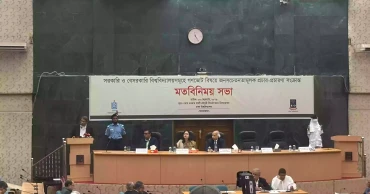
Every ‘July Charter’ word written in blood: Ali Riaz
Prof Ali Riaz, special assistant to the chief adviser, on Tuesday said the book of the July Charter presented to the public may be printed in black and white, but every single word of it has been written with the blood of the country’s people.
He made the remarks at an interactive meeting titled ‘Public Awareness Campaign on Referendum in Public and Private Universities’ held at the Nabab Nawab Ali Chowdhury Senate Building auditorium of Dhaka University.
Referring to the sacrifices of the July martyrs and injured, Ali Riaz said they did not seek to become prime minister or president; they wanted a dignified state. The July Charter, he said, is the recognition of that debt.
“Do we have no responsibility? Will we deny the debt that allows us to speak here today?” he asked, adding that acknowledging this debt is precisely what the July Charter represents.
He said the charter was prepared through discussions with political parties, civil society, various organisations, groups, and individuals. “When I open the book of the July Charter, I hear the cries of mothers who lost their children.”
Ali Riaz also discussed the context behind the abolition of the caretaker government system.
He said the July Charter includes safeguards to ensure that ‘one-person rule’ never returns to Bangladesh. “Everyone knows that the farce carried out in the name of three so-called elections in Bangladesh happened at the will of one individual. That became possible through the abolition of the caretaker government system.”
Referring to the 2014 Election Commission, he said, “The President staged another drama.”
He claimed that the name Kazi Rakibuddin Ahmad was not on the search committee’s list, yet he was appointed Chief Election Commissioner at the Prime Minister’s behest, leading to a rigged election in 2014. “No conscientious person with democratic aspirations can say that such a situation should continue.”
He said that through extensive dialogue, political parties have agreed in the July National Charter that future Election Commissions will be formed based on consultations among representatives of the ruling party, the main opposition party and the third party-the second-largest opposition party- in parliament.
Ali Riaz highlighted the role of the Public Service Commission during the previous regime and said that if the July Charter is implemented, the President will no longer hold unilateral authority to grant pardons.
He said the Constitution allows the ‘right to life’ to be violated during a state of emergency, but political parties have agreed that future emergencies will drop the term ‘internal disturbance’ and require cabinet approval with opposition representation.
Mentioning past instances of constitutional amendments made for the benefit of a single individual, he said that any future constitutional amendment would require a two-thirds majority in the parliament, followed by the support of at least 51 members of a 100-member upper house.
He also spoke about reforms related to the presidential election and changes to Article 70. “The situation created by forcing public representatives into party servitude has meant that our parliament has not even become a debating club,” he said.
Awami League must face trial, seek apology before returning to politics: Ali Riaz
Ali Riaz said all political parties have agreed that out of the standing committees of the parliament, four key committees will be chaired by members from the opposition.
He urged all to work in support of the July Charter.
Those present included the Chief Adviser’s Special Assistant Monir Haidar, University Grants Commission Chairman Dr SMA Fayez, DU Pro-Vice-Chancellor Prof Dr Sayma Haque Bidisha, individuals injured in July, and vice-chancellors, teachers, students and officials from various universities.
18 days ago
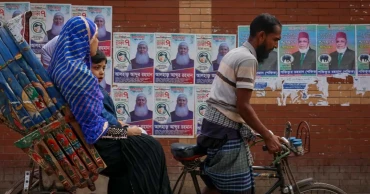
Feb 12 election to mark 'final step in delicate political transition': International Crisis Group
Bangladesh’s interim government, led by Nobel laureate Muhammad Yunus, which assumed office amid high public expectations, is approaching the end of its tenure as the country moves closer to elections, that mark "the final step in the delicate political transition that has been under way for a year and a half," according to the International Crisis Group, the Brussels-based think tank.
“Bangladeshis had high expectations of the interim government, which remained popular for some time, though it has lost some of its lustre of late,” said Crisis Group's expert on Bangladesh, Senior Consultant Thomas Kean, in a Q&A published Monday on the ICG's website.
Chief of interim government Prof Muhammad Yunus and his cohort have chalked up major achievements, including stabilising an economy that had been teetering under Hasina and maintaining a fragile consensus on the course of the transition with the army and political parties, Kean said.
Six international organisations to deploy 63 observers for Bangladesh elections
Their signature achievement as regards reform has been to oversee drafting the July Charter. All the political parties agreed on the need for change, but not necessarily on which measures to take or in what order.
It was nonetheless important for the interim government to seek buy-in from all the parties contesting the vote, since making these reforms will be the responsibility of the incoming government. Yunus and his cabinet succeeded, but with caveats.
"After assuming office on August 8, 2024, Prof Yunus quickly outlined his agenda: initiate major political, economic and institutional change; prosecute those responsible for violence during the protests; and organise free and fair elections," said Kean.
He said the government re-established the International Crimes Tribunal (ICT) – a domestic judicial body first formed in 2009 to investigate crimes committed during the 1971 war – to try those allegedly responsible for serious abuses under Hasina’s regime. It also formed six reform commissions focused on areas considered critical, such as the constitution, election system and judiciary. These steps culminated in a ceremony in October 2025, when most of the country’s political parties signed the July Charter (so named after the month when the uprising against Hasina began), an agreement on a set of reforms the next government is expected to make.
The interim government has not been without its critics, who argue that it has waged a vendetta against the Awami League, failed to restore security and been too accommodating toward far-right Islamist groups, among other things. But it has managed to shore up a cross-party political consensus (excluding the Awami League), helping it reach agreement on the July Charter. Its final task will be to make a smooth exit from Bangladesh’s political scene by ensuring credible, peaceful polls, then transferring power to a democratically elected administration.
Up to 127 million Bangladeshis will go to the polls on 12 February, in the first national elections since Prime Minister Sheikh Hasina’s government fell in August 2024. For tens of millions of them, it will be the first chance in their lives to participate in a credible vote.
The elections mark the final step in the delicate political transition that has been under way for a year and a half.
In the February election, the contest is expected to be closely fought between two blocs led by the Bangladesh Nationalist Party (BNP) and Jamaat-e-Islami.
The BNP retains a strong organisational base but has been weakened by allegations of extortion, internal disputes over candidate selection, and a perception among many voters that it differs little from the Awami League. Party leaders have attempted to counter this image through disciplinary expulsions.
The BNP may benefit from recent events, including the December 2025 return of acting leader Tarique Rahman from long exile and the death of former prime minister Khaleda Zia, which drew huge public crowds. However, Tarique Rahman lacks his mother’s broad appeal and faces lingering corruption allegations, leaving the party’s electoral prospects uncertain.
He also mentioned that Jamaat-e-Islami, Bangladesh’s largest Islamist party, has gained momentum since the 2024 protest movement and appeals to voters as a disciplined alternative to elite-dominated politics, particularly among younger people.
It has also made significant gains in student politics. Jamaat has further strengthened its position through an electoral alliance with the National Citizen Party, though the deal has triggered internal dissent within the NCP.
With the political landscape transformed and the Awami League sidelined, predicting the outcome of the 12 February election is difficult. Polling suggests the BNP holds a narrow lead, while Jamaat appears set to surpass its best-ever electoral performance, Thomas Kean said.
Bangladeshi expats cast 458,000 postal votes ahead of Feb-12 polls
Kean said the biggest risks revolve around security in the run-up to and during the polls. "Historically, political violence in Bangladesh has tended to increase around competitive elections. Bangladeshi human rights groups have already documented an uptick since August 2024. Recent months have witnessed clashes between BNP and Jamaat partisans, and more could flare up in hotly contested districts," according to Kean.
Given the stakes, managing a dispute over the outcome of the vote would be Yunus's biggest challenge yet, he added.
18 days ago
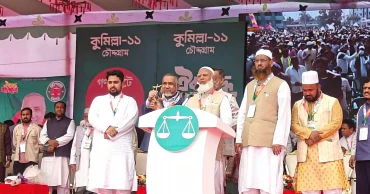
Jamaat pledges unity govt if voted to power
Bangladesh Jamaat-e-Islami Ameer Dr Shafiqur Rahman on Saturday said his party would invite rival political parties to take part in running the country if Jamaat comes to power with a parliamentary majority.
Speaking at a rally at Chouddagram High School ground in Cumilla , he said, “If we achieve a majority, we will offer those who are now competing with us to play a role in governing the country. However, the condition is that they must not engage in corruption and must implement July charter.”
He stressed that Jamaat-e-Islami would form a unity government if it secures a majority in the next national election.
Dr Shafiqur Rahman said Bangladesh has historically stood by the oppressed and would continue to do so.
“We do not want victory for Jamaat-e-Islami alone, we want a collective victory for 18 crore people,” he said.
Condemning violence against women, the Jamaat ameer said the country’s nine crore mothers and sisters would never be safe under those who assault women, describing protest against such oppression as a moral responsibility.
He warned that Jamaat would not allow anyone who assaults women to go unpunished.
Jamaat Ameer warns fascism-free Bangladesh impossible without reforms
The Jamaat leader also called for unity among candidates of the 11-party alliance to ensure victory in all 300 parliamentary constituencies.
He expressed hope that a new chapter would begin after February 12, with young people as well as the country’s mothers and sisters playing a central role.
Dr Shafiqur Rahman said the party no longer wanted fascism or corruption in government.
“If you vote for us and we come to power, you will see Dr Syed Abdullah Mohammad Taher as a senior member of the cabinet,” he said.
Referring to past repression, he said Jamaat leaders and activists had remained in the country despite difficulties. “We were there, we are here, and we will remain, InshaAllah.”
21 days ago
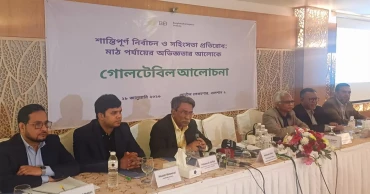
July Charter a pact with people and parties, not an imposition: Ali Riaz
The July National Charter is a pact between people and political parties, with the parties themselves primarily responsible for its implementation, said Prof Ali Riaz, Special Assistant to the Chief Adviser.
“Thirty political parties formulated these agendas through uninterrupted discussions over nine months. Therefore, the responsibility to translate this pact into reality rests with the political parties. This is not something imposed from above; it is meant to realise the dreams of countless martyrs,” he said.
Ali Riaz was speaking at a seminar titled ‘Peaceful Election and Prevention of Violence: Grassroots Experiences’, organised by the Bangladesh Enterprise Institute (BEI) in Gulshan in the morning.
He said the July mass uprising was centred on one fundamental demand— establishing justice in Bangladesh.
“Those who committed injustice must be brought to justice. The core objective of the uprising is to ensure that fascism or feudal domination can never again be established in Bangladesh,” Ali Riaz said.
Italy supports Bangladesh’s democratic transition, July Charter: Deputy Minister
Stressing the need for accountability, he said a balance of power must be created and the people’s voting rights ensured through elections. “If we want justice, reforms and a new democratic political system, there is no alternative to elections. The authority over referendums, elections and constitutional reforms belongs to the people alone.”
He pointed out that students and citizens sacrificed their lives to free the country from fascist oppression and that Bangladesh is now on a path of democratic transition.
“That democracy must be strengthened so that every citizen feels they are an owner of the state. Therefore, on February 12, everyone must exercise their voting rights freely and independently, and vote ‘Yes’ in the referendum.”
Calling for collective action, Ali Riaz expressed the hope that a prosperous, egalitarian, humane and justice-based Bangladesh could be built with the people united.
He urged all to campaign in favour of the ‘Yes’ vote on February 12.
Meanwhile, a BEI survey conducted among 400 men and women at the grassroots, 200 local influential figures and political leaders, as well as district and upazila-level administrators, found that only 30 percent of respondents believe the July Charter will be implemented, while only 40 percent are aware of the referendum.
Vote ‘Yes’ to curb concentration of power: Prof Ali Riaz
The survey also revealed that 50 percent of respondents believe the country’s situation will improve after the election, while 60 percent expect a violence-free election.
24 days ago
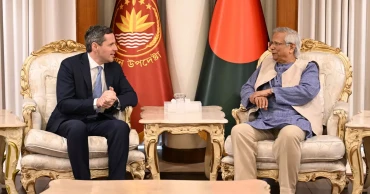
Italy supports Bangladesh’s democratic transition, July Charter: Deputy Minister
Italy’s Undersecretary for Defence (Deputy Minister for Defence) Matteo Perego di Cremnago has described the Indo-Pacific as the new centre of global gravity, saying Italy is keen to strengthen ties with countries in the region, including Bangladesh, whose growing economy offers scope for charting a common path forward in the coming days.
He said the Bangladeshi community is integrating well in Italy but raised concerns over illegal migration through the Mediterranean route.
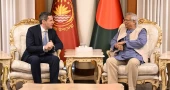
Italy expressed its full support for Bangladesh’s democratic transition and the July Charter, which aims to introduce sweeping reforms for the country’s democratic renewal, the Italian Deputy Minister said on Tuesday during a courtesy meeting with Chief Adviser Prof Muhammad Yunus at the State Guest House Jamuna in Dhaka.
The two leaders held wide-ranging talks on issues including trade and defence cooperation, migration, the upcoming February 12 general elections and referendum, European Union election observation, and the July Charter, said the Chief Adviser’s press wing.
Praising the July Charter, the visiting minister said Italy supports the comprehensive reforms outlined in the document. He also reaffirmed Rome’s backing of Bangladesh’s democratic transition through the February 12 vote.
1 month ago
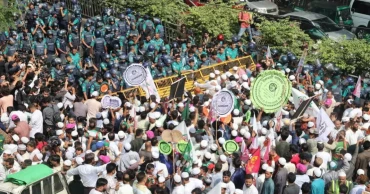
Police intercept Jamaat, Islami Andolon procession near Matsya Bhaban
Police obstructed a Jamuna-bound procession brought out by Bangladesh Jamaat-e-Islami, Islami Andolon Bangladesh and seven other like-minded parties at Matsya Bhaban intersection on Thursday (6th November 2025) noon.
The procession was organised to press home their several demands, including holding a national referendum in November.
Later, police allowed a delegation from the rally to go to Jamuna. The delegation is supposed to submit a memorandum to Chief Adviser on the referendum and four other points.
Earlier, leaders and activists of the parities brought out a procession from the capital’s Paltan intersection to submit a memorandum to the Chief Adviser at his Jamuna residence.
Jamaat now wants referendum any day before election: Azad
The march, led by Jamaat Secretary General Mia Golam Porwar, began gathering at Paltan intersection around 10:30am, with leaders and activists from different thanas and wards of Dhaka South carrying banners and festoons.
Activists from other Islamic parties also joined the assembly at Paltan.
Their demands are holding the referendum within this month, stopping political harassment and arrests during the interim government period, ensuring equal opportunities for all political parties in the upcoming election, and guaranteeing freedom of religion and unhindered political activities.
Following the rally, the procession started towards Jamuna around 12 noon to submit the memorandum to the Chief Adviser.
Read more: Jamaat not to form any election alliance: Ameer Shafiqur
Meanwhile, additional police were deployed in Paltan area to avert any untoward situation.
3 months ago
NCP’s candidate list on Nov 15; likely to skip Khaleda’s constituencies
National Citizen Party (NCP) is unlikely to field candidates in the three constituencies where BNP Chairperson Khaleda Zia is expected to contest in the upcoming 13th National Parliamentary Election, said party Convener Nahid Islam.
“We may not nominate any candidate out of respect for those, including Khaleda Zia, who played a role in the country’s July movements,” Nahid told reporters on Wednesday while visiting the family of late freedom fighter Gazi Salahuddin in Godnail, Narayanganj.
Read more: NCP to field candidates in all 300 seats: Nahid
Nahid said the NCP’s preliminary list of candidates will be announced by November 15, as the party is preparing to contest the election independently and has already completed groundwork to nominate candidates in all other constituencies.
“In today’s politics, those with muscle power, black money, and local godfather influence dominate elections. But the NCP will challenge that toxic culture,” Nahid said, emphasising that his party wants honest, hardworking individuals to represent ordinary citizens in Parliament.
Regarding possible alliances, Nahid said any coalition would have to be based on ideological alignment. “If any party supports our reform proposals under the July Charter, we may consider forming an alliance,” he added.
Read more: Abbas fears interim govt may use illegal means to secure win for Jamaat, NCP
3 months ago