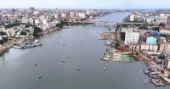
Dhaka rivers
World Bank approves $370m to improve waste management, restore Dhaka rivers
World Bank’s Board of Executive Directors has approved $370 million in financing to improve sanitation and solid waste management services in Dhaka and nearby areas, aiming to cut water pollution and restore rivers and canals.
The support will fund the Metro Dhaka Water Security and Resilience Program, which seeks to strengthen the capacity of local and national institutions to tackle water pollution in greater Dhaka.
The region accounts for about half of the country’s formal employment and nearly one-third of its GDP, said a press release on Wednesday.
The programme will introduce a result-based system to help city corporations and the Water Supply and Sewerage Authority (WASA) deliver measurable improvements.
Under the project, 550,000 people will receive safely managed sanitation services, while 500,000 people will benefit from improved solid waste management. Priority will be given to communities most affected by pollution and service gaps.
“Waterbodies are the lifeline for millions of people in greater Dhaka. But rapid and unplanned urbanisation and industrial growth have outpaced the city's capacity to manage wastewater and pollution, affecting public health, the environment and the economy,” said Jean Pesme, World Bank Division Director for Bangladesh and Bhutan.
He said the programme would help build the institutional foundations needed to reduce pollution and gradually restore the health of Dhaka’s rivers and canals.
Dhaka faces serious wastewater and water pollution challenges and about 20 percent of residents are connected to a piped sewer system, while just 2 percent use functional fecal sludge management services, said the press relesae.
More than 80 percent of untreated wastewater and sewage is discharged into the city’s interconnected waterways.
Over half of Dhaka’s canals have either disappeared or become clogged, worsening pollution and reducing water flow.
To address these problems, the programme will take a comprehensive approach involving the public and private sectors, as well as city corporations. It will improve service delivery, strengthen regulations and help revive rivers and canals by reducing pollution and restoring flow capacity.
Industrial pollution remains a major concern. Around 80 percent of export-oriented garment factories are located in Dhaka, and more than 7,000 factories discharge an estimated 2,400 million litres of untreated wastewater into waterways each day. This contributes to skin diseases, diarrhoea and neurological conditions.
The programme will encourage private sector participation, particularly from industries in and around Dhaka, to scale up industrial effluent treatment and water reuse to improve water efficiency and reduce pollution.
“The programme is part of a multi-phase, long-term engagement supporting Bangladesh’s broader water security and resilience agenda,” said Harsh Goyal, World Bank Senior Water Supply and Sanitation Specialist and Task Team Leader of the project.
He said this phase would focus on reducing pollution discharge into Dhaka’s water bodies, strengthening monitoring and regulatory systems, introducing a comprehensive water quality index for Dhaka’s rivers, establishing digital real-time pollution monitoring and preparing integrated restoration plans for four major rivers around Dhaka.
In the first phase, the programme will cover selected areas in Dhaka and Narayanganj.
It will expand primary waste collection services, especially in underserved communities near major canals and rivers, and upgrade recycling systems.
10 days ago
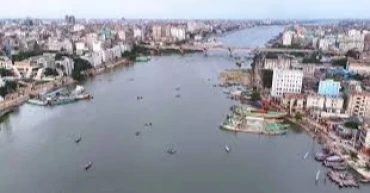
Dhaka rivers to be revived with World Bank support: Adviser
The government is planning to restore five major rivers surrounding Dhaka with financial assistance from the World Bank, said Environment Adviser Syeda Rizwana Hasan.
"If the talks succeed, work will begin soon,” she said while speaking at a seminar at North South University in the capital on Monday.
Rizwana said discussions are underway with the World Bank regarding the river restoration project.
“For now, efforts are being made to bring back navigability to the Dhaleshwari, Turag, Shitalakkhya and Balu rivers with World Bank funding. The Buriganga has not been included in the list due to some dredging complications,” the adviser added.
Citing Bangladesh as a 'failed nation' in terms of environmental potential, Rizwana said the country ranks 179th out of 180 nations in the Environmental Performance Index.
Rising river water worries Charland people in Kurigram
“Most of Bangladesh’s rivers are biologically dead. Bringing them back to life is a huge challenge,” she said.
“It is a misconception that environmental protection is the responsibility of only one ministry. Everyone must work together in a planned way. The River Protection Commission alone cannot do anything,” Rizwana observed.
She also expressed frustration over the construction of the Chattogram-Cox’s Bazar railway line.
“There was no need for this railway at all. It destroyed forests and disrupted elephant habitats. This project is nothing but a political agenda,” she alleged.
“Did anyone from Cox’s Bazar say they needed a railway? They managed transportation all these years without it. The line was built only to serve financial interests and reap political benefits by damaging the environment,” Rizwana said.
Rivers should unite us, not divide: ICIMOD DG Dr Pema
Along with saving the rivers, the adviser also stressed the importance of restoring Dhaka’s canals. She urged future governments to give the highest priority to environmental protection.
The seminar was organised by the South Asian Institute of Policy and Governance. Dhaka North City Corporation Administrator Mohammad Ejaz attended the event as a special guest, while North South University Associate Professor Abdus Samad delivered a keynote presentation on the current state of Dhaka’s major rivers.
4 months ago