Sanae Takaichi
Takaichi secures landslide victory, faces tough test to revive Japan’s economy
Japan’s Prime Minister Sanae Takaichi has emerged from a snap election with a commanding mandate, but the decisive victory now brings sharper focus on whether she can deliver the economic revival that has eluded the country for decades.
Takaichi and her Liberal Democratic Party won 316 of the 465 seats in parliament, giving her one of the strongest majorities seen in recent years in a country known for frequent changes of leadership. Supporters say the result gives her a rare opportunity to reshape policy in the world’s fourth-largest economy.
Japan’s challenges are deep-rooted. Economic growth has been sluggish for years, public debt is the highest in the world and the workforce is shrinking and ageing rapidly. Analysts say Takaichi now has political space to confront these issues, but expectations are high and risks are significant.
During the campaign, Takaichi pledged to prioritise growth over austerity, promising higher public spending, investment in strategic industries and tax cuts to boost household consumption. The approach marked a shift from her immediate predecessors and was closely watched by investors.
Financial markets reacted positively to her victory, with Japanese shares rising and what traders dubbed the “Takaichi trade” gaining momentum. Some investors bought equities while selling the yen and government bonds, although the currency later strengthened, a move seen by parts of the market as a sign of confidence.
However, concerns remain over how her plans will be financed. Government bond yields rose after she took office in October, raising alarms because Japan’s massive debt means even small increases in borrowing costs can have wide global effects. More spending combined with tax cuts would likely require additional borrowing, adding pressure to the bond market.
At the same time, the Bank of Japan is attempting to move away from decades of ultra-low interest rates as inflation picks up. Prices have risen sharply by Japanese standards, with staple items such as rice reportedly doubling in cost last year. The cost-of-living squeeze played a key role in voter dissatisfaction with the previous administration.
Some economists warn that expanding government spending could worsen inflation. They argue that tighter fiscal discipline and allowing interest rates to rise further would better stabilise prices and reassure investors. Others counter that cutting taxes may provide short-term relief to households feeling poorer.
Beyond financial policy, structural issues loom large. Japan’s population has been shrinking for years, creating labour shortages in sectors such as construction, care work, agriculture and hospitality. While immigration could help ease the strain, it remains politically sensitive and unpopular with parts of Takaichi’s conservative support base.
The prime minister has instead emphasised automation, technological innovation and greater participation by women and older people in the workforce. Economists caution that these measures alone may not be sufficient to sustain long-term growth without more foreign labour.
Japan’s external environment adds another layer of complexity. China, now larger in economic scale, is Japan’s biggest trading partner, making stable trade ties crucial while domestic demand recovers. Yet tensions with Beijing, including disputes over rare earth exports, have highlighted vulnerabilities in supply chains vital to industries such as electric vehicles and defence.
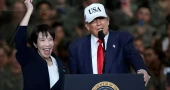
Takaichi has vowed to reduce Japan’s dependence on China in critical sectors while strengthening ties with the United States. She has endorsed higher defence spending and welcomed support from US President Donald Trump, signalling that the alliance with Washington remains central to her strategy.
Analysts say Japan cannot afford to fully align with one power against the other, arguing that balanced engagement with both the US and China is essential for economic resilience.
Observers note that Takaichi’s policy mix echoes that of her mentor, former prime minister Shinzo Abe, who combined aggressive stimulus with loose monetary policy. But the context has changed. Japan is older, competition in Asia is fiercer and global conditions are far less forgiving.
With a historic mandate in hand, Takaichi now faces the defining challenge of her leadership: translating political dominance into sustainable growth for an economy long stuck in low gear.
With inputs from BBC
11 days ago
Japan stocks jump after Takaichi’s landslide win
Japanese stocks surged on Monday as markets reacted positively to Prime Minister Sanae Takaichi’s landslide victory in the snap general election, which media outlets described as a historic result.
The benchmark Nikkei 225 index jumped more than five percent in early trading, briefly crossing the 57,000 mark for the first time. The Japanese yen also strengthened against the US dollar, while government bond prices fell.
Public broadcaster NHK projected that the ruling Liberal Democratic Party secured 316 seats in the 465 member lower house. Together with its coalition partner, the Japan Innovation Party, the alliance won a total of 352 seats, giving it a two thirds majority.
This marks the strongest election result for a single party in post war Japan since the current parliamentary system was established in 1947.
Takaichi called the snap election after becoming Japan’s first female prime minister last October through a vote by lawmakers. She sought a direct mandate from voters, a move that was widely seen as risky but ultimately paid off.
The victory reverses recent political setbacks for the LDP, which had lost its majority under previous leaders. The election came at a time when Japan is facing rising living costs, weak economic growth and pressure from an ageing population.
Market analysts said investors welcomed the political stability created by the decisive result. Takaichi has pledged to cut taxes, increase government spending and push pro business reforms, which helped boost market confidence.
Speaking earlier, Takaichi said her priority would be reviving the economy, raising wages and addressing the cost of living crisis. She has also promised higher defence spending, stricter immigration rules and a review of foreign ownership of land.
US President Donald Trump congratulated Takaichi and her coalition on what he called a landslide victory. He praised her leadership and reaffirmed strong support for Japan, one of Washington’s closest allies.
Takaichi now faces the challenge of delivering economic recovery while managing strained ties with China and navigating domestic debate over her conservative views on social and gender issues.
With inputs from BBC
12 days ago
Trump endorses Japan’s PM Takaichi ahead of snap election
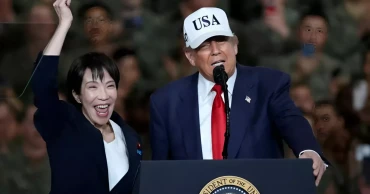
US President Donald Trump has publicly endorsed Japan’s Prime Minister Sanae Takaichi ahead of Sunday’s snap election, describing her as a “strong, powerful, and wise leader” who “truly loves her country” and “will not let the people of Japan down,” according to a post on his social media platform, Truth Social.
Trump’s public support for a foreign leader is unusual, but he has previously endorsed international politicians, including Argentina’s Javier Milei and Hungary’s Viktor Orban. Analysts say the endorsement signals continued US backing for Takaichi amid ongoing regional tensions and efforts to strengthen bilateral ties.
Takaichi, 64, became Japan’s first female prime minister in October after winning her party’s leadership and securing parliamentary support. She called the election to seek a public mandate. Her government has courted Washington following prior US trade tensions, including Trump’s threatened 25% tariffs, which were later reduced to 15% after Japan agreed to invest $550 billion in the US.
Trump and Takaichi share close views on defence and security, advocating increased Japanese military spending. During his visit to Tokyo, Takaichi hosted Trump at the Akasaka Palace and aboard the USS George Washington, where the leaders signed agreements on rare earths and heralded a “new golden era” of US-Japan relations. Takaichi described Trump as a “partner in a new golden era” and praised his role in Middle East peace efforts.
The endorsement also carries geopolitical weight amid heightened tensions with China over Taiwan. Beijing has criticized Takaichi for suggesting Japan could respond militarily if China attacked the self-governed island, a statement she has refused to retract.
Winning Sunday’s election will give Takaichi a public mandate, but her leadership will be judged on managing Japan’s stagnant economy and balancing relations with its key allies, the US and China.
With inputs from BBC
14 days ago
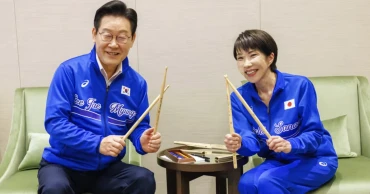
Japan, South Korea leaders drum to K-pop after summit
Japanese Prime Minister Sanae Takaichi and South Korean President Lee Jae Myung agreed to further strengthen cooperation between their countries, then surprised the public with a cultural exchange of their own by drumming together to K-pop hits.
The impromptu jam session followed their summit on Tuesday in Nara, Japan’s ancient capital and Takaichi’s hometown.
Wearing matching athletic jackets, the two leaders sat side by side and played drums to popular songs including BTS’ “Dynamite” and “Golden” by K-pop Demon Hunters in a short video released by Takaichi’s office on Wednesday.
The performance was arranged as a surprise by Takaichi, a heavy metal fan who played drums during her university days.
“Playing the drums has been my longtime dream,” Lee wrote on X, thanking Takaichi for arranging the session. “Just as we respected our differences and harmonised our rhythms, I hope Korea and Japan will deepen cooperation and grow closer step by step.”
Takaichi praised Lee as a quick learner, saying he picked up the basics in just a few minutes.
Japan to host South Korea summit as ties with China worsen
She also said Japan and South Korea would continue close communication between their governments and push forward their “shuttle diplomacy” to develop bilateral relations in a forward-looking and stable manner.
1 month ago