new government of Bangladesh
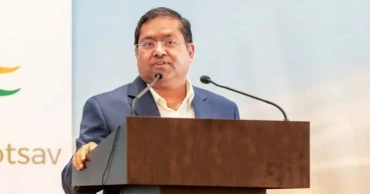
Looking forward to engaging with new govt in Bangladesh: Indian MEA
India on Friday said they look forward to engaging with the new government in Bangladesh and taking things forward, noting that they want to strengthen multifaceted relations with Bangladesh.
"We look forward to engaging with the new government in Bangladesh," Indian Ministry of External Affairs spokesperson Randhir Jaiswal told reporters at a regular briefing in New Delhi.
He said the recent letter to Bangladesh Prime Minister Tarique Rahman from his Indian counterpart Narendra Modi underlines India’s commitment to support a 'democratic, progressive and inclusive' Bangladesh.
The Indian Prime Minister congratulated Bangladesh Prime Minister Tarique Rahman soon after his election victory.
Speaker of Lok Sabha Om Birla attended the swearing-in ceremony on February 17, and handed over a letter from the Indian Prime Minister to PM Tarique) Rahman.
“Building on the warm and historic ties between the two countries, India looks forward to further strengthening our multifaceted bilateral ties with Bangladesh," said the MEA Spokesperson while responding to a question.
Jaiswal also spoke about Bangladesh-India visa operations, saying New Delhi would discuss all the aspects of the relations will be discussed.
Inviting Prime Minister Tarique Rahman and his family to visit India, Indian Prime Minister Narendra Modi said Bangladesh and India can truly become catalysts for each other's sustainable growth, work for each other's security and enable mutual prosperity as two fast-growing economies and aspiring societies.
Bangladesh should pursue ‘no-exclusive-alignment’ policy with major powers: Expert
“I look forward to working closely with you to strengthen our multifaceted bilateral relations, enhance regional cooperation, and advance our common goals in wide-ranging areas of connectivity, trade, technology, education, skill development, energy, healthcare, as well as cultural and people-to-people exchanges,” he said in a letter that was handed over to Prime Minister Tarique on Tuesday.
Speaker of the Indian Lok Sabha Om Birla represented the government of India at the swearing-in ceremony of the newly elected government of Bangladesh led by Tarique Rahman, Chairman of Bangladesh Nationalist Party (BNP).
As two close neighbours, Prime Minister Modi said Bangladesh and India have a deep-rooted friendship founded on shared history, cultural ties, and the aspirations of their peoples for peace and prosperity.
“The strong convergence between our respective developmental priorities shall serve as a guiding principle for our future cooperation,” Modi said.
He invited the Prime Minister, his wife Dr Zubaida Rahman, their daughter Barrister Zaima Rahman to pay a visit to India at a convenient time.
“I take this opportunity to invite you, along with Dr Zubaida Rahman and your daughter Zaima, on a visit to India at a mutually convenient time. A warm welcome awaits you in India,” Modi said.
22 hours ago

Time to view Bangladesh differently: Shama Obaed
State Minister for Foreign Affairs Shama Obaed on Thursday said Bangladesh has issues and challenges with all countries, which will be addressed through discussions at bilateral and multilateral forums.
“We want to look forward, keeping our backbone strong and straight. That backbone has now become stronger after a long time as the government came through people’s mandate. All now need to look at Bangladesh from a different perspective,” she told reporters at the Ministry of Foreign Affairs, sharing how the foreign policy of a democratic government should be.
Asked about the interim government's reported policy position regarding deployment of Bangladeshi troops to Gaza and renewal of the 30-year-old Ganges water-sharing treaty with India, the State Minister said these issues have not yet been discussed at the political level.
"These are not discussed yet. To be honest, this is only the second day of the government. But you will have to wait…those political decisions will definitely,” she said.
On relations with India, China and the United States, Shama said Bangladesh has issues and challenges with all countries and would address them through both bilateral and multilateral engagements.
"We will maintain relations with all states and governments. Our foremost priority is to safeguard the interests of Bangladesh and its people," she said.
The State Minister said they will keep in touch with all countries, talk and advance relations through friendship.
She said the current administration is a democratically elected government after many years and will pursue foreign policy with a firm and principled stance, placing the interests of people first.
The State Minister said Bangladesh will continue its engagement with all countries and affirmed that the government’s foreign policy would reflect the will and aspirations of the people.
She said the government would safeguard the interests of the people of Bangladesh while maintaining cordial relations with all nations.
Diplomacy, she said, will be conducted in a manner that effectively protects national interests.
She said the officials of the Ministry of Foreign Affairs are very experienced and they will work as a team.
She also highlighted the need to conduct foreign policy with a united stance in the national interest, regardless of political party, opinion and religion.
On visa restrictions imposed by several countries, Shama said the Ministry is aware of the challenges and is actively working to resolve them through diplomatic channels.
"We are examining how these issues can be addressed and how we can move forward in a constructive manner," she said
Foreign Minister Dr Khalilur Rahman and the State Minister held a series of meetings with senior officials of the Ministry in the morning.
2 days ago
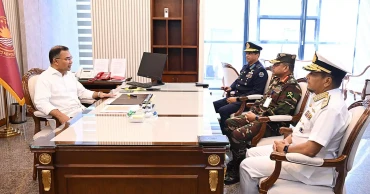
Three services' chiefs meet PM Tarique Rahman
The chiefs of the three services paid a courtesy call on Prime Minister Tarique Rahman at the Secretariat on Thursday.
Chief of Army Staff General Waker-Uz-Zaman, Chief of Naval Staff Admiral M Nazmul Hassan and Chief of Air Staff Air Chief Marshal Hasan Mahmood Khan met the Prime Minister at his office.
The Prime Minister arrived at his Secretariat office in the morning for his second day of official work.
First Day in Office: BNP pays tribute to martyrs, outlines policy plans
After reaching the office, he held a meeting with the three service chiefs.
Prime Minister’s Adviser Brig Gen (retd) Dr AKM Shamsul Islam was also present at the meeting.
Earlier in the morning, Cabinet Secretary Dr Nasimul Ghani and Principal Secretary ABM Abdus Sattar received the Prime Minister at the Secretariat.
2 days ago
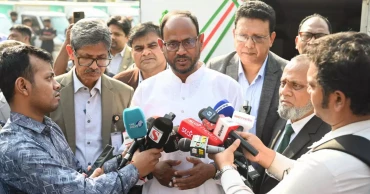
10 lakh families to get affordable protein-rich food during Ramadan
The government will provide protein-rich food at subsidised prices to around 10 lakh low-income families across the country during the holy month of Ramadan, said State Minister for Fisheries and Livestock Sultan Salauddin Tuku on Thursday.
He said the initiative, taken in line with the government’s commitment to public welfare under the leadership of Tarique Rahman, will ensure the supply of milk, eggs, meat and fish for low-income people at affordable prices.
He made the remarks is morning while speaking as the chief guest at the inauguration of a programme to sell milk, eggs and meat at affordable prices at the conference room of the Livestock Research Institute at Mohakhali.
He said all concerned must work with honesty and dedication to fulfil the commitments made by the Prime Minister to the nation.
PM Tarique urges market restraint ahead of Ramadan
Collective efforts are essential to move the country towards development and prosperity, he said .
The state minister noted that during Ramadan some unscrupulous traders hike prices of essential commodities, increasing hardships for low-income people.
He said such government initiatives would help ease their suffering and there are plans to expand the programme further in the future.
The programme was chaired by Director General of the Department of Livestock Services Dr Md Abu Sufian.
2 days ago
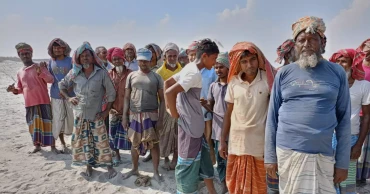
Kurigram looks to new government for solutions to river erosion, jobs crisis
Expectations are running unusually high in the northern district of Kurigram, as residents look to the newly formed government for visible and sustainable solutions to the chronic problems of river erosion and unemployment that have shaped life in the area for decades.
Bordering India and crisscrossed by rivers, Kurigram has long struggled with poverty, unemployment and underdevelopment in education, health care and communications. Locals say repeated promises and short-term projects have failed to deliver lasting change, leaving thousands trapped in a cycle of displacement and economic insecurity.
At least 16 rivers, including the Brahmaputra River, Dharla River, Teesta River and Dudhkumar River, flow through the district. Every year, monsoon floods and erosion eat away homesteads, farmland, schools and roads, forcing hundreds of families to lose their land and relocate, often repeatedly.
Residents say temporary embankments and piecemeal projects have done little to stem the damage. What they want now, they say, is a comprehensive and long-term river management plan involving permanent embankments, regular dredging and science-based river training.
“River erosion destroys our lives every year. Every year we have to battle erosion to survive,” said Shajahan Ali of Baldi Para in Kurigram Sadar upazila, recalling how his family has been displaced multiple times by erosion. “We want a permanent solution.”
Alongside erosion, the lack of employment opportunities has emerged as Kurigram’s most pressing social challenge. With few industries in the district, large numbers of educated and semi-educated youths migrate to Dhaka, Gazipur and Chattogram in search of work, often leaving families behind.
“There is no work here,” said Raju Mia from Char Baraibari village under Bhogdanga union. “We don’t want to leave our families and go to big cities. We want jobs in our own district.”
Sahinur Rahman, a young resident of Jhunkar Char in Jatrapur union, echoed the frustration. “I finished my studies, but there are no jobs. If there were factories here, we could work locally. Instead, we are forced to move to Dhaka.”
Local development advocates argue that the situation can change if the government prioritises Kurigram in its development agenda. They are calling for the establishment of agro-based industries, food processing plants, cold storage facilities, and stronger support for small and medium enterprises, alongside skills development programmes for youths.
PM Tarique urges market restraint ahead of Ramadan
According to Khaja Sharif Uddin Ali Ahmed Rintu, senior vice-president of the Kurigram District Development and Implementation Council, around 1.65 million of the district’s nearly 2.3 million people live in poverty.
“River erosion and decades of mismanagement have repeatedly stripped people of their homes and livelihoods,” he said. “Many NGOs have worked here in the name of poverty reduction, but the lives of ordinary people have not changed much. Proper implementation of development allocations is crucial if poverty is to be reduced.”
Professor Shafiqul Islam Bebu, president of a local char development organisation, said balanced development is key to Kurigram’s future.
“To bring neglected Kurigram forward, we must stop river erosion, improve living standards in char areas and create employment through industrialisation,” he said. “Only fair and equitable distribution of national development resources can ensure sustainable progress here.”
For residents, the message to the new government is clear: move beyond paper plans and political promises to deliver real action on the ground.
“If river erosion is controlled and jobs are created, Kurigram will change,” said one local elder. “People will finally be able to live with dignity, hope and stability.”
As the new administration settles into office, the people of Kurigram wait to see whether this time their long-standing demands will finally translate into lasting change.
2 days ago

Bangladesh’s incoming govt takes office with economy at crossroads
As Bangladesh prepares for the formation of a new government following the 13th national election, expectations are running high among depositors, investors and job seekers seeking relief from prolonged financial strain.
The BNP-led alliance is set to assume office amid mounting economic pressures, with questions swirling over who will take charge of the finance ministry and what policy direction the new administration will adopt to tackle banking fragility, stubborn inflation and sluggish job creation.
For Abdul Hamid, a retired government employee, said the stakes are deeply personal.
He has been unable to recover Tk 24 lakh that he placed as a fixed deposit in a private bank.
“I expected the new government that they will return my Tk 24 lakh, which was fixed and deposited in a private bank. But the bank fails to pay me the principal amount and benefits,” Hamid told UNB.
He said many depositors in several private sector banks face similar hardship, with institutions unable to repay funds, leaving families struggling due to a lack of liquidity.
Stock market investors are also looking for signs of a turnaround. Golam Azad, 45, invested around Tk 35 lakh in 2007 after being encouraged by a friend to seek higher returns.
He suffered losses during the stock market scams of 2010 and 2011 and has since waited for a sustained recovery.
Azad said he hopes the incoming democratic government will take meaningful steps to support market stability and protect investors.
Young graduates represent another anxious constituency.
Washim Habib, who completed his degree at a public university in 2021, has sat for the Bangladesh Civil Service (BCS) and other government recruitment examinations but remains unemployed.
Habib said he is seeking employment in either the public or private sector, noting that his elderly parents can no longer continue to support his expenses.
He expressed hope that the new democratic government will create opportunities to help him secure suitable work.
Finance Adviser Flags Structural Challenges
Against this backdrop, Dr. Salehuddin Ahmed, Finance Adviser to the interim administration, has issued a pointed warning about the scale of the economic challenges awaiting the next leadership.
New MPs, cabinet members to be sworn in Tuesday
Speaking to reporters at the Bangladesh Secretariat, he said the primary mission of the incoming government must be revitalising trade and industry while strengthening financial institutions to ensure long-term stability.
Job creation, he stressed, is central to restoring economic momentum.
“If business does not expand, employment will not be generated. And without employment, the purchasing power of the people will remain weak. This is one of the biggest challenges,” he said.
He urged policymakers to foster a vibrant private sector, arguing that the country’s industrial base remains relatively small and overly dependent on exports.
Inflation and Banking Sector Strains
Inflation, he said, remains a “multidimensional problem” that cannot be resolved through monetary policy alone.
While the interim administration has introduced several measures, broader and more comprehensive steps will be required to provide relief.
On banking sector reform, the adviser acknowledged that reorganisation efforts are under way but cautioned that “difficult decisions” lie ahead.
He praised recent initiatives by the central bank governor but noted that credit flow remains constrained and full public confidence in the banking system has yet to return, despite a recent uptick in deposits.
Capital Market and Energy Reform
To reduce overreliance on banks, Dr Salehuddin called for deeper capital market development.
“If we cannot develop the capital market, trade and commerce will not grow by relying solely on banks. Equity participation through the stock market and a strong bond market, especially for the private sector, are essential,” he said.
He said regulatory reform efforts are being slowed by legal complexities and ongoing court challenges.
The energy sector, he warned, poses a 'major long-term challenge'.
He called for intensified domestic exploration, including offshore drilling, and expressed disappointment at the slower-than-expected progress in solar energy development.
The insurance sector, he said, remains another 'sensitive area' where reform momentum has been limited despite various initiatives.
As the new administration prepares to take the oath of office, its first 100 days are likely to be defined by how effectively it can stabilise markets, restore investor confidence and translate high public expectations into tangible economic gains, economists said.
6 days ago