US policy dilemma
Trump-Iran tensions expose US policy dilemma
Rising tensions between the United States and Iran have highlighted deep contradictions in President Donald Trump’s foreign policy, as he calls for peace while simultaneously threatening military action against Tehran.
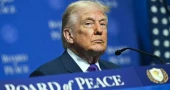
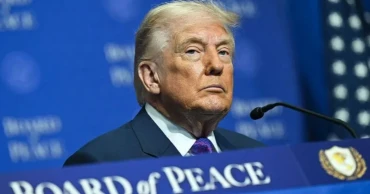
Speaking at a meeting of the Board of Peace, a Middle East coalition he helped form, Trump issued his latest warning to Iran, underscoring the clash between diplomacy and force that has defined much of his second term. While he has said he prefers a negotiated deal to halt Iran’s nuclear weapons programme, the White House has also sharply increased pressure, both rhetorically and militarily.
US officials say Iran would be “very wise” to reach an agreement, but at the same time Washington has overseen what analysts describe as the largest US military buildup in the Middle East since the 2003 Iraq War. Warships, fighter jets and other assets have been deployed near Iran, fuelling fears of a major escalation.
Trump’s threats are being taken seriously, particularly after the US followed through on military action against Venezuela earlier this year, an operation that ended with the capture of former President Nicolás Maduro. Unlike that strike, however, Washington’s objectives in Iran remain unclear.
The US president insists that last year’s strike on Iran “obliterated” its nuclear facilities, but has not explained why further military action may now be necessary, what new targets would be hit, or what the broader political goal would be.
Iran, weakened by sanctions and internal protests against its leadership under Supreme Leader Ayatollah Ali Khamenei, has signalled openness to talks on uranium enrichment. But negotiations have stalled, largely over US demands that Tehran also limit its ballistic missile programme and support for regional proxy groups.
Key questions remain unanswered, including whether Washington seeks regime change in Iran, how it would respond to Iranian retaliation against US bases in the region, and how a prolonged conflict could affect other Middle East priorities, such as efforts to rebuild Gaza under the Board of Peace framework.
Israel’s role is also uncertain. Israel previously joined US strikes on Iran and is widely expected to be involved again if a new campaign begins. Israeli Prime Minister Benjamin Netanyahu discussed the situation with Trump during a recent White House meeting.
Domestically, Trump faces growing political pressure. He returned to office promising to pull the US out of foreign conflicts, a message popular with his support base. Yet since taking office, he has authorised military actions in Syria, Venezuela, Iran and the Caribbean.
A large-scale air campaign against Iran could alienate some supporters ahead of the US midterm elections, particularly as voters express frustration over issues such as immigration and the economy. It could also clash with Trump’s repeated claims that he deserves the Nobel Peace Prize for ending multiple wars, a claim widely disputed.
Despite the uncertainty, Trump appears comfortable keeping allies and adversaries guessing. He has embraced the image of a global dealmaker, hosting high-profile summits and presiding over negotiations on trade, security and diplomacy.
On Iran, however, he has offered only a warning.
“We have to make a meaningful deal,” Trump said. “Otherwise, bad things happen.”
With inputs from BBC
1 day ago