Press freedom
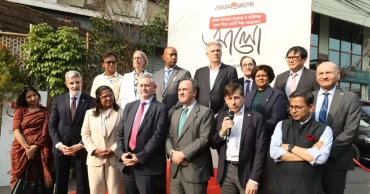
Diplomats call for stronger protection of freedom of speech, press in Bangladesh
Diplomats stationed in Dhaka on Wednesday expressed solidarity with The Daily Star and Prothom Alo, highlighting the importance of freedom of press and freedom of speech as an important pillar of democracy.
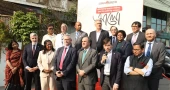
The Ambassadors and High Commissioners and representatives of the diplomatic missions in Dhaka joined a programme held in front of the Prothom Alo office at Karwan Bazar, marking the inauguration of an art exhibition titled ‘An Artwork on the Attacked and Burnt Prothom Alo Building’ by artist Mahbubur Rahman.
Ambassador and Head of Delegation of the European Union to Bangladesh Michael Miller, Indian High Commissioner to Bangladesh Pranay Verma, British High Commissioner to Bangladesh Sarah Cooke, Canadian High Commissioner to Bangladesh Ajit Singh, French Ambassador to Bangladesh Jean-Marc Séré-Charlet and Italian Ambassador to Bangladesh Antonio Alessandro were, among others, present.
EU Ambassador Miller said he and many of his colleagues came to express solidarity in December last and they have come back as they believe in freedom of media and freedom of expression and they believe that journalists are fearless defenders of democracy.
Expressing solidarity with The daily Star and Prothom Alo, the Italian Ambassador said freedom of information is at the core of their values.
The British High Commissioner said they joined the programme to demonstrate their support for media freedom as an important foundation pillar of democracy.
She recalled the shocking events that happened in December and mentioned that as a member of the Media Freedom Coalition in Bangladesh, they strongly condemned the attacks carried out against journalists, editors, and media houses.
"Such acts of violence and intimidation are unacceptable and strike at the heart of press freedom and the public's right to be informed," said the MFC in a statement on December 19.
The MFC called for the safety of all media professionals to be ensured and for swift, impartial investigations so that those responsible are held to account. "Journalists must be able to carry out their work without fear," it said.
The MFC said protecting them is essential to upholding the rule of law, democratic values, and an open, informed society.
US Embassy Spokesperson Poornima Rai said the United States is fully committed to freedom of expression and freedom of speech and they stand behind The Daily Star and Prothom Alo.
Prothom Alo Editor Matiur Rahman said journalists need to remain committed to standing beside one another, rejecting division.
He affirmed that they will continue to pursue the truth, and that the growing spirit of unity within the journalistic community will endure.
The Daily Star Editor Mahfuz Anam urged the new government to conduct an unhindered investigation into the twin attacks to uncover those who orchestrated these attacks from behind the scenes, those who instigated and those who implemented the attacks.
He appreciated his colleagues for the spirit they demonstrated in the post-attacks period, describing it as unbelievable.
He finds this as a symbol of devotion to journalism and courage.
3 days ago
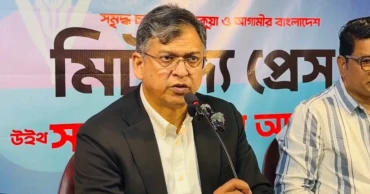
BNP to ensure press freedom to safeguard democracy: Salahuddin
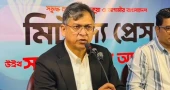
BNP Standing Committee member Salahuddin Ahmed on Wednesday, said their party will ensure full media freedom in Bangladesh, a promise included in the BNP’s 31-point plan.
Speaking at a Meet-the-Press event organised by the party’s media cell in a Chakaria hotel, Salahuddin said BNP would establish a separate media reform commission and take necessary measures based on its recommendations.
“A media reform commission has already been formed, and the BNP will review its proposals,” he said.
Highlighting the importance of press freedom for democracy, Salahuddin said, “In countries where media freedom is guaranteed, the democratic structure is stronger.”
Noting the digitalisation of the world, he said, “Information now spreads globally within moments, and everyone must act with extreme caution to uphold the nation’s dignity worldwide.”
Salahuddin emphasised the crucial role of the media in strengthening Bangladesh’s democratic system. He recalled that an open media environment was fostered in 1991 under the leadership of Begum Khaleda Zia, which allowed electronic media to flourish.
“However, over the past 16–17 years, the media has become increasingly partisan, affecting the democratic process in the country,” he said.
’Those who persecuted Hindus in 71 are back in elections': Salahuddin Ahmed
On the role of journalists, Salahuddin advised, “Journalists should work with their conscience, not merely as employees of media owners. The media should aim to safeguard national sovereignty and democracy.”
Chakaria Upazila BNP President Enamul Haque, General Secretary M Mobarak Ali, Cox’s Bazar Journalists’ Union President Nurul Islam Helali, Cox’s Bazar Press Club President Mahbubur Rahman, and media personnel from Chakaria and Pekua attended the event.
17 days ago
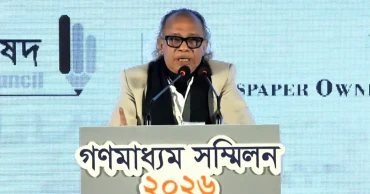
Free, fearless media vital to Bangladesh democracy: Journalists
Editors, journalists and media leaders from across the country on Saturday underscored the vital role of a free, independent, active and fearless media in sustaining democracy, warning that any attempt to silence media organisations ultimately threatens the rights of society as a whole.
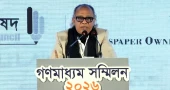
“The democratic aspiration that brings people into journalism can never be a crime,” said President of the Editors’ Council and Editor of New Age Nurul Kabir, while delivering the opening remarks at the first-ever Media Convention held at the Krishibid Institution Bangladesh auditorium.
The country’s first ‘Media Convention-2026’ was jointly organised by the Newspaper Owners’ Association of Bangladesh (NOAB) and the Editors’ Council.
Nurul Kabir said attacks on or attempts to silence media institutions inevitably obstruct the rights of the entire society. Journalists choose the profession with a collective commitment to democracy, human rights, equality and a non-communal social order, he said.
“Those who seek to suppress institutions that serve as vehicles of democratic aspirations do so through laws, force and intimidation,” Nurul Kabir said, stressing the need for unity and collective resistance.
He said if newspapers and other media outlets cannot function independently, remain active or speak out freely, fundamental rights across society will inevitably be curtailed.
Media development and democratic development, he observed, are deeply interconnected worldwide.
The Daily Star Editor Mahfuz Anam said independent journalism ultimately benefits governments the most. “If you truly believe in independent journalism and uphold a liberal perspective, the government will be the biggest beneficiary,” he said.
“Government, remember—no one will tell you the truth. Your party colleagues will not, out of fear. The bureaucracy will not. Even the intelligence community will not. They will keep you surrounded by praise and admiration. Independent journalism is the only institution that tells you the truth,” Mahfuz Anam said.
Prothom Alo Editor Matiur Rahman emphasised the importance of unity among journalists, warning that disputes at any time and on any issue are harmful to the profession.
He described the gathering as a significant step forward and said that regardless of differences in opinions, thoughts, ideas or ideologies, journalists must remain united and stand by one another on issues concerning media institutions, journalism and personal safety. “It is crucial to come together, to remain united, to stand by each other and to demonstrate solidarity and empathy,” he said.
Organisers said democratic values have come under sustained assault in recent times, particularly through incidents of mob violence, posing serious challenges to freedom of expression and democratic principles
Journalists at the convention highlighted the need to protect democratic space and media freedom, ensure the safety of journalists, and uphold the professional dignity and rights of media workers.
Leaders of various journalist organisations, including the Association of Television Channel Owners, Broadcast Journalist Centre, Jatiya Press Club, Bangladesh Federal Union of Journalists, Dhaka Union of Journalists, Dhaka Reporters Unity, Diplomatic Correspondents Association, Bangladesh (DCAB), Economic Reporters Forum (ERF), Photo Journalists Association and the Crime Reporters Association of Bangladesh, took part in the convention.
Editors, journalists urge BNP to ensure press freedom, if elected
Journalists from outside Dhaka, along with editors, publishers, invited media professionals and columnists, also joined the programme, which aimed to project a united stance in support of independent, responsible and courageous journalism.
1 month ago
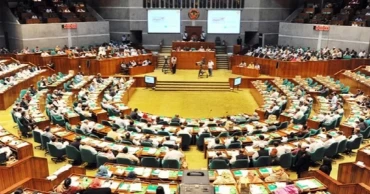
Press freedom won’t be curtailed despite new measures, Law Minister tells Parliament
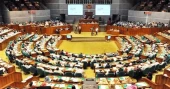
Law Minister Anisul Huq assured the Parliament on Sunday (February 25, 2024) that the government is dedicated to safeguarding press freedom and will not impose any restrictions on it.
He highlighted upcoming legislation aimed at combating misinformation and fake news without infringing on media freedom.
Addressing the Parliament in the absence of the State Minister for Information and Broadcasting, Mohammad Ali Arafat, Huq responded to concerns raised by Jatiya Party MP from Patuakhali, ABM Ruhul Amin Hawladar, regarding the spread of false news by online media outlets.
Home Minister expresses hope for swift conclusion of BDR Carnage Case
Hawladar questioned the necessity of a law to prohibit such practices, to which Minister Huq reaffirmed the constitutional guarantee of free speech and press freedom.
“Law has to be made in that light and with due respect,” he said.
He referenced the existing Cyber Security Act, indicating that it, along with forthcoming laws proposed by the Ministry of Information and Broadcasting, aims to address the issue of misinformation responsibly.
The government's approach is to prevent confusion and the spread of fake news through appropriate measures, not control, the Law Minister emphasized, ensuring that the press's freedom remains intact.
Read more: Information Minister questions countries’ lack of concern when BBC office in India was searched
1 year ago

China biggest global jailer of journalists: Press group
China was the biggest global jailer of journalists last year with more than 100 behind bars, according to a press freedom group, as President Xi Jinping’s government tightened control over society.
Xi's government also was one of the biggest exporters of propaganda content, according to Reporters without Boarders. China ranked second to last on the group’s annual index of press freedom, behind only neighbor North Korea.
The ruling Communist Party has tightened already strict controls on media in China, where all newspapers and broadcasters are state-owned. Websites and social media are required to enforce censorship that bans material that might spread opposition to one-party rule.
Also Read: Chinese who reported on COVID to be released after 3 years
Xi, China’s most powerful figure in decades, called during a 2016 meeting with journalists who had been awarded official prizes for them to adhere to “the correct orientation of public opinion."
Xi is pursuing a “crusade against journalism,” Reporters Without Borders said in a report Wednesday. It called China's decline in press freedom “disastrous.”
Beijing operates what is regarded as the world's most extensive system of internet controls. Its filters try to block the Chinese public from seeing websites abroad operated by news outlets, governments and human rights and other activist groups.
Chinese journalists have been prosecuted on charges of spying, leaking national secrets and picking quarrels, a vague accusation used to jail dissidents. Others are subjected to surveillance, intimidation and harassment.
Also Read: China's foreign minister makes rare visit to Myanmar border
Journalist Dong Yuyu, who worked at a ruling party-affiliated newspaper and is a former Harvard University fellow, faces espionage charges after being detained for more than one year, his family said last week.
In 2022, Chinese-born Australian journalist Cheng Lei was tried in China on national security charges but has yet to learn the verdict, Australian Foreign Minister Penny Wong said in March.
Cheng worked for CGTN, the English-language state TV channel aimed at foreign audiences. She was detained in August 2019 and accused of sharing state secrets.
In Hong Kong, the Communist Party forced a prominent newspaper, Apple Daily, to shut down as part of a crackdown on pro-democracy sentiment.
Apple Daily's founder, Jimmy Lai, was convicted of fraud last year that his supporters said were politically motivated. Six other former executives of the newspaper pleaded guilty.
2 years ago

Bangladesh behind both Pakistan and Afghanistan in World Press Freedom Index 2023
Bangladesh has ranked 163rd out of 180 nations, according to Reporters Without Borders’ (RSF) World Press Freedom Index 2023.
Bangladesh is behind both Pakistan and Afghanistan in this year’s index – with Pakistan ranking 150th and Afghanistan ranking 152nd.
According to RSF: “The Digital Security Act (DSA) is one of the world’s most draconian laws for journalists. It permits searches and arrests without any form of warrant, violation of the confidentiality of journalists’ sources for arbitrary reasons… In this legislative environment, editors routinely censor themselves.”
“Most of the leading private media are owned by a handful of big businessmen who have emerged during Bangladesh’s economic boom. They see their media outlets as tools for exercising influence and maximising profits, and they prioritise good relations with the government over the safeguard of editorial independence,” it adds.
From previous year: B'desh slips 10 notches in RSF press freedom index
The World Press Freedom Index’s analysis for Bangladesh further says: “In the past decade, radical Islamist groups have waged extremely violent campaigns that have led to journalists being murdered. These groups now use social media to track down journalists who defend secularism, the right to alternative opinions or religious freedom.”
Asia, in general, did not fare well when it comes to press freedom. India ranked 161st and China ranked 179th in the World Press Freedom Index.
Regarding India, the index’s observations are: “Modi has an army of supporters who track down all online reporting regarded as critical of the government and wage horrific harassment campaigns against the sources. Caught between these two forms of extreme pressure, many journalists are, in practice, forced to censor themselves.”
Reporters Without Borders noted that India has seen a significant decline in press freedom in recent years, with increasing threats and attacks on journalists, while China remains “one of the world’s most repressive countries” when it comes to media freedom.
Read More: Repeal DSA, demands TIB marking World Press Freedom Day
“The same trend can be found in Bangladesh (163rd) and Cambodia (147th), where governmental persecution of independent media has intensified in the run-up to elections that are due to be held in the coming months,” it says.
The top ten countries in the index, with the highest press freedom, are: Norway, Ireland, Denmark, Sweden, Finland, Netherlands, Lithuania, Estonia, Portugal, and Timor-Leste.
These countries have strong democratic institutions and robust legal frameworks that protect the freedom of the press and the right to information.
The report highlights the need for governments to prioritize the protection of journalists and the promotion of press freedom as a fundamental human right.
It also calls on the international community to take action to hold governments accountable for violating these rights and to support independent journalism around the world.
Read More: Hasan trashes RSF report on press freedom as malicious & unacceptable
2 years ago

Amnesty, RSF, TIB lost credibility in Bangladesh, says Info Minister
Information and Broadcasting Minister Hasan Mahmud on Wednesday came down heavily on the organisations like Amnesty International, RSF and TIB for what he said their biased reporting on human rights, press freedom and corruption in Bangladesh.
“These organisations have lost their credibility because of their partiality against Bangladesh,” Hasan told the members of Overseas Correspondents Association Bangladesh (OCAB) in reply to a question.
He said that the Bangladesh branch of Transparency International (TI) issues statements like a political party instead of any research on an issue.
Also read:Hasan trashes RSF report on press freedom as malicious & unacceptable
In support of his criticism the minister cited a couple of recent examples such as TIB’s statement against the railway minister on the ticketless travel by three of his relatives and allegation of corruption in the treatment of Covid-19 patients in Bangladesh.
Hasan said TIB’s allegation of plundering about Tk 23,000 crore on Covid vaccines was baseless and a misreporting of what the health minister said.
Turning to the Amnesty International (AI) the minister said it was silent when BNP launched the petrol bomb campaign against the government in the name of agitation. It, however, was vocal against the trial of the war criminals in Bangladesh.
“This is how Amnesty International has lost its credibility here,” he observed.
The minister once again rejected the latest press freedom index published by Paris-based RSF (Reporters Without Border) in which Bangladesh slipped 10 notches to 162 among the 180 countries of the world where the survey was done.
How one can trust an organization which places Bangladesh behind even Afghanistan, not at all known for press freedom and security of journalists, he asked.
Responding to another question Hasan said Bangladesh Press Council and Press Institute of Bangladesh (PIB) have been asked to prepare a data base of journalists in the country.
This, he said, is aimed at identifying the genuine journalists so they get security in carrying out their work and keeping the job.
When done the proposed data base will also leave out those who are not journalists at all.
Hasan reiterated that the Digital Security Act (DSA) has been made for the overall security of the people from digital harassment and assaults on their dignity and privacy.
“This is absolutely not against journalists,” he reaffirmed though admitting abuses in some cases.
He said there have been some abuses of the law against journalists and the government acted to stop it.
Also read: Info minister considers legal action against TIB for lies
No case under the DSA can be filed now without permission from the police and no journalist can either be arrested in sweeping action, he said. “The interests of journalists are being protected,” he said.
In his opening remarks Hasan highlighted the achievements of his ministry in safeguarding the interests of journalists and creation of an environment congenial to their work.
He especially referred to the formation of Sangbadik Kallyan Trust by the order of the prime minister and distribution of about Tk 23 crore among media people since its start in 2014.
3 years ago
.jpg)
Bangladesh Mahila Parishad discusses media freedom
The national committee for prevention of violence against women-girls and social injustice at Bangladesh Mahila Parishad arranged an online discussion Tuesday on Constitution, Freedom of Media and Persecution of Journalist Rozina Islam. Chairperson of the national committee Barrister M. Amir-ul Islam moderated the meeting in presence of experts, advocates and the organization members.
A written statement was presented by Adv. Masuda Rehana Begum, member of the national committee and Co-General Secretary of the Central Committee of Bangladesh Mahila Parishad. Citing the constitution, she said that the state must ensure an environment for the media and journalists to perform their duties independently and fearlessly.
READ: Sept sees highest rape incidents since 2010: Mahila Parishad Initiatives will be taken to repeal various sections of the law which are considered to be against the existing civil rights to ensure media freedom and protection of journalists through laws, she added.
Speakers at the meeting praised journalist Rozina Islam for her objective reports and fearless activities seeking truth.
Expressing disappointment at the recent incident, they said it was shocking that Rozina did not get any reward from the government for her fearless reporting, and rather got harassed.
Human rights activist Adv. Sultana Kamal said the people own this country. They have the right to live a corruption free life. Harassment of a journalist is not acceptable in any way. The social justice enshrined in the constitution must be ensured.
READ: Bangladesh Mahila Parishad president Ayesha Khanam dies
Farida Yasmin, president of the National Press Club, said journalists are being harassed in the name of searching allegedly stolen information.
Journalists must be protected by law. Without freedom of the press, democracy and the state cannot move forward, she said.
4 years ago

World Press Freedom Index and Retrogressive Bangladesh
World Press Freedom Index has placed Bangladesh in 152 this year. A total of 180 countries were still as always. Following Honduras, Bangladesh has secured its position with a score of 49.71 just before Turkey. Reporters Without Border – which is also known as Reporters sans frontières (RSF) – has ensured it on their web homepage on the last 20th April 2021. They mentioned the word “Tougher politics” while showing the reason for it. Besides, they added the consequences of the covid-19 pandemic. RSF also pointed the police and civilian violence against reporters. Thus, journalism got completely blocked or seriously impeded in 73 countries. It is just as devastating as coronavirus.
World Press Freedom Index at a glance
The Press Freedom Index is a yearly list for ranking of countries based on the freedom of journalism. An international non-Government organization named Reporters Without Border, shortly RSF, compile and publish the list. Since 2002, they have been releasing the list intending to safeguard the right to freedom of information. They mainly rank 180 countries based on the freedom of journalism.
Read Why press freedom matters
Survey Questionnaire
RSF develops the index through a survey of 87 questionnaires following the 7 general criteria.
1. Pluralism (Opinions in the media space)
2. Media independence
3. environment and self-censorship
4. legislative framework
5. Transparency
6. Infrastructure
7. Abuses
Read Prothom Alo senior reporter Rozina arrested under Official Secrets Act
The survey questionnaire focuses on the legal framework for the media including-
➢ the consequences for press offenses
➢ the way Government regulates the media
➢ the extent of independence of the public media
➢ uninterruptible information flow over the Internet
Read Rozina Islam: Journalism Vs the Colonial hangover of official secrecy
Survey Respondents
The survey respondents are the RSF’s partner organizations. They are 150 correspondents of 18 freedom of expression non-government organizations in five continents. A remarkable number of journalists, researchers, jurists, and human rights activists around the world also participate in this survey.
Scoring
RSF staffs monitor both the victims and the assailants of the press offenses to evaluate the final score. The victims are the journalists, netizens, and media assistants, while the violence may come from the state, armed militias, clandestine organizations, or pressure groups.
RSF send the survey questionnaire translated into 20 languages to the corresponding countries. They assign a score on each country based on the answers given.
Read: Top Bookstore Cafés in Dhaka: 6 Places Bringing Back the Joy of Reading
0 point is for the best while 100 points is for the worst. Accordingly, RSF has a colorful scoring map categorizing the press freedom status of countries.
➔ 0 to 15: Good (White)
➔ 15.01 to 25: Satisfactory (Yellow)
➔ 25.01 to 35: Problematic (Orange)
➔ 35.01 to 55: Difficult (Red)
➔ 55.01 to 100: Very Serious (Black)
Read Freedom of speech threatened in the name of Digital Security: TIB
World Press Freedom Index 2021 Toppers
1. Norway: Score → 6.72
2. Finland: Score → 6.99
3. Sweden: Score → 7.24
4. Denmark: Score → 8.57
5. Costa Rica: Score → 8.76
6. Netherlands: Score → 9.67
7. Jamaica: Score → 9.96
8. New Zealand: Score → 10.04
9. Portugal: Score → 10.11
10. Switzerland: Score → 10.55
Read Freedom of speech must not be undermined with false propaganda: PM
Underneath World Press Freedom Index 2021
1. Eritrea: Score → 81.45
2. North Korea: Score → 81.28
3. Turkmenistan: Score → 80.03
4. China: Score → 78.72
5. Djibouti: Score → 78.62
6. Vietnam: Score → 78.46
7. Iran: Score → 72.70
8. Syria: Score → 70.63
9. Laos: Score → 70.56
10. Cuba: Score → 63.94
Read World Press Freedom Index: Bangladesh slips one place to 151st
Bangladesh’s Whereabouts in World Press Freedom Index
The number 152 in the crowd of 180 with a score of 49.71 basically represents the level of freedom available for Bangladeshi journalists. In the last 10 years, Bangladesh’s scenario is as follows:
1. 2011 Ranking 112 Score → 54
2. 2012 Ranking 129 Score → 57
3. 2013 Ranking 144 Score → 42.01
4. 2014 Ranking 146 Score → 42.58
5. 2015 Ranking 146 Score → 42.95
6. 2016 Ranking 144 Score → 45.94
7. 2017 Ranking 146 Score → 48.36
8. 2018 Ranking 146 Score → 48.62
9. 2019 Ranking 150 Score → 50.74
10. 2020 Ranking 151 Score → 49.37
Last year, the coronavirus disaster and accompanying lockdown led to an alarming growth in police and civilian violence towards newshounds. Some journalists, bloggers, and cartoonists had been additionally arrested and prosecuted for his or her reporting of the pandemic and its effect on society. Under the Digital Security Act 2018 “bad propaganda” is punishable via way of means of up to fourteen years in prison. As a result, self-censorship has reached unparalleled ranges due to the fact editors are justifiably reluctant to hazard imprisonment or their media outlet’s closure.
Read: Watchdog: Media freedom has deteriorated during pandemic
However, despite this violence, there is also a length of speedy improvement for Bangladesh’s media marketplace, with many retailers taking part in each profitability and affect an increasing marketplace. Over the beyond decade, big privately-owned Bangladeshi agencies have moved into the marketplace and lots of the countrywide media is now inside the palms of the most important company organizations inside the country.
Final words
Regardless of World Press Freedom Index criticism, the circulation of information demands unconditional independence. However, it is needless to say that professional reporting requires minimum ethics. Otherwise, the knowledge may go beyond authenticity. A journalist must handle the power given to him carefully. Similarly, every government and non-government entity should cooperate with them spontaneously. And that is when the general people can expect the truth.
Read Future of journalism depends on adaptation, professionalism: Dr Arefin
4 years ago

Dr Kamal demands immediate release of journalist Rozina
Gonoforum President Dr Kamal Hossain on Saturday demanded the immediate resale of Prothom Alo journalist Rozina Islam from jail as he thinks she was implicated in a ‘false case’ by bureaucrats.
“Where’s the barrier to granting bail to Rozina when the entire journalist community, political parties, human rights organisations and eminent citizens of the country are demanding her release?” he said.
Dr Kamal said, “We demand that Rozina be freed immediately and we all are her guarantors.”
Also read: Don’t judge Rozina issue emotionally: Info Minister to journalists
He made the remarks in a written statement at a civic rally in front of the National Museum in the city’s Shahbagh area demanding the release of Rozina and annulment of the Official Secrets Act and the Digital Security Act.
Gonoforum Joint general secretary Mostaq Ahmed read out the statement at the rally in favour of Dr Kamal.
Dr Kamal said Rozina went to the Secretariat on May 17 to perform her professional responsibility.
Also read: Rozina to get fair judgement: FM tells CNN
As she published reports on massive corruption in the health ministry, the Gonoforum President said bureaucrats harassed her for five hours and handed her over to police by implicating her in a ‘false’ case.
“It’s our question as to why journalist Rozina was confined to a room at the Secretariat till 8pm,” he said.
Dr Kamal also demanded the government repeal the Official Secrets Act and Digital Security Act and ensure press freedom.
Also read: Order on journalist Rozina Islam’s bail Sunday
He urged all to get united to force the government to revoke all the ‘black’ laws and ‘restore’ people’s voting rights.
Speaking at the rally, Gonoshasthaya Kendra founder Dr Zafrullah Chowdhury voiced anger as a Dhaka court did not pass its order on a bail petition of Rozina in a bailable case on Thursday.
He urged the journalists to get united putting behind their divisions to establish their rights and ensure press freedom.
Also read: Drop all "oppressive charges" against Rozina: HRW
Nagroik Oikay convener Mahmudur Rahman Manna, Dhaka University professor Asif Nazrul, chief coordinator of Ganosanghati Andolon Zonayed Saki, noted photographer Shahidul Alam and former Dhaka University Central Students' Union (Ducsu) vice president Nurul Haque Nur, among others, spoke at the programme.
4 years ago