Chinese scientists
Chinese scientists identify key brain network in Parkinson’s disease
Chinese researchers have identified a central brain network responsible for Parkinson’s disease, with early clinical trials showing encouraging results from treatments that directly target this network.
The discovery was made by a team led by Professor Liu Hesheng of Changping Laboratory in Beijing and was published on Thursday in the journal Nature.
According to the China Parkinson’s Disease Report 2025, more than 5 million people in China are living with Parkinson’s disease, accounting for about 40 percent of patients worldwide. The condition is the second most common neurodegenerative disorder after Alzheimer’s disease.
Parkinson’s has long been viewed mainly as a movement disorder, marked by symptoms such as tremors, slowed movement and difficulty walking. However, patients also suffer from a range of non-motor problems, including low blood pressure, sleep disorders and digestive issues, which have been harder to explain and treat.
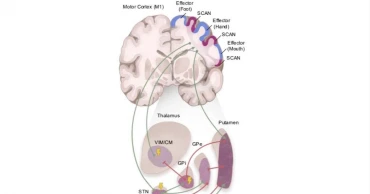
In a study involving more than 800 patients, the researchers found that Parkinson’s affects a brain system known as the somato-cognitive action network, or SCAN. Located in the cerebral cortex, this network connects key regions involved in movement control, including the basal ganglia and thalamus, which are common targets in existing treatments.
The study revealed that connections between SCAN and these regions are abnormally strengthened in Parkinson’s patients. Researchers said understanding this abnormal connectivity is critical, as it points to new treatment approaches that could address both motor and non-motor symptoms at their root.
Building on this and earlier work, Liu’s team helped develop a precision brain circuit stimulator through Galaxy Brain Scientific Inc., capable of targeting affected brain areas with millimeter-level accuracy. The technology is based on Personalized Brain Functional Sectors, which map individual brain functions in greater detail and are combined with real-time navigation for precise magnetic stimulation.
Because functional brain regions vary significantly from person to person, the new approach allows doctors to locate Parkinson’s-affected areas far more quickly. Under traditional methods, this process took 15 to 30 minutes, while the new system can identify targets in less than a second, said Deng Wei, CEO of Galaxy Brain Scientific Inc.
Once the target is identified, the device uses an external magnetic field to stimulate neural cells through transcranial magnetic stimulation, or TMS, helping improve brain function without invasive surgery.
Read More: NASA detects ammonia compounds on Jupiter’s moon Europa
Clinical trials showed that after two weeks of treatment, patients whose SCAN network was targeted achieved an effectiveness rate of 55.5 percent, compared with 22.2 percent in a control group treated in nearby brain regions.
The results support the potential of individualized, non-invasive and highly targeted treatments for Parkinson’s patients in China and other countries. Since 2025, five hospitals across China, including in Beijing, Henan, Guangdong, Zhejiang and Sichuan, have begun using the new equipment.
The cost is also significantly lower than surgery. While brain operations can cost around 200,000 yuan, each TMS session costs less than 200 yuan. A treatment course typically lasts two to three weeks and is repeated every six months, with long-term use potentially slowing disease progression.
Hu Ying, 64, was among the first patients to receive the treatment in 2022. Diagnosed in 2018, her condition rapidly worsened, leaving her with frequent falls, swallowing difficulties and loss of facial expression. As surgery was not suitable and medication became less effective, she opted for the new therapy.
After one 18-day course, Hu was able to walk independently again, and her speech and swallowing improved markedly. Nearly four years of continued treatment have even allowed her to sing karaoke with friends.
Her husband, Jiang Ke, said the therapy has transformed their lives, enabling them to travel across China and even visit Europe. “We never imagined we could still do this,” he said.
13 days ago
2 Chinese scientists will stay in jail while accused of bringing biological material to US
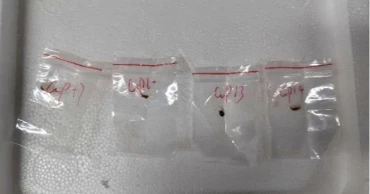
Two Chinese scientists accused of smuggling or shipping biological material into the United States for use at the University of Michigan will remain in custody after waiving their right to a hearing Friday in federal court.
Yunqing Jian and Chengxuan Han said in separate court appearances in Detroit that they would not challenge the government's request to keep them locked up while their cases move forward.
“This is a constantly evolving situation involving a large number of factors,” Han's attorney, Sara Garber, told a judge. She didn't elaborate and later declined to comment.
Han was arrested Sunday at Detroit Metropolitan Airport after arriving on a flight from China, where she is pursuing an advanced degree at Huazhong University of Science and Technology in Wuhan. She planned to spend a year completing a project at the University of Michigan lab, and is accused of shipping biological material months ago to laboratory staff.
It was intercepted by authorities. The FBI, in a court filing, said the material is related to worms and lacked a government permit. Experts told The Associated Press it didn't appear to be dangerous.
Jian's case is different. She is charged with conspiring with her boyfriend, another scientist from China, to bring a toxic fungus into the U.S. Fusarium graminearum can attack wheat, barley, maize and rice.
The boyfriend, Zunyong Liu, was turned away at the Detroit airport last July and sent back to China after authorities found red plant material in his backpack.
UN conference on Palestinian state postponed because of Middle East tensions
Jian, who worked at the university lab, was arrested June 2. Messages between Jian and Liu in 2024 suggest that Jian was already tending to Fusarium graminearum at the lab before Liu was caught at the airport, the FBI said.
Jian's attorneys declined to comment Friday.
Federal authorities so far have not alleged that the scientists had a plan to unleash the fungus somewhere. Fusarium graminearum is already prevalent in the U.S. — particularly in the east and Upper Midwest — and scientists have been studying it for decades. Nicknamed “vomitoxin” because it’s most known for causing livestock to throw up, it can also cause diarrhea, abdominal pain, headache and fever in animals and people.
Researchers often bring foreign plants, animals and even strains of fungi to the U.S. to study them, but they must file certain permits before moving anything across state or national borders.
The university has not been accused of misconduct. It said it has received no money from the Chinese government related to the work of the three scientists. In a statement, it said it strongly condemns any actions that “seek to cause harm, threaten national security or undermine the university’s critical public mission.”
8 months ago

'Covid-19 came from India or Bangladesh': Chinese scientists
China scientists have claimed that Covid-19 may have originated in India or Bangladesh.
5 years ago
.jpg)
Covid-19 could have existed in dormant state before outbreak: WHO
Melita Vujnovic, the representative of the World Health Organization (WHO) to Russia, has said that the novel coronavirus could have existed in a dormant state long before its outbreak in late December last year.
5 years ago
China Focus: Scientists develop AI model for quick cancer detection
Using artificial intelligence (AI) technologies, an international research team led by Chinese scientists has developed a rapid and accurate screening model to detect lymph nodes, which can assist doctors in cancer treatment.
5 years ago
.jpg)
COVID-19 origin-tracing: WHO to send experts to China
China has agreed that the World Health Organization (WHO) will send experts to Beijing to exchange ideas with Chinese scientists and medical experts on science-based cooperation to trace the origin of the COVID-19 virus, Foreign Ministry spokesperson Zhao Lijian said Wednesday.
5 years ago
.jpg)
Another 'pandemic potential' flu virus detected in China
Chinese scientists have expressed concern after detecting another new strain of flu that has the potential to become a pandemic.
The newly emerged flu virus is carried by pigs, but can infect humans and transmit from human to human, they say.
The researchers expressed their concern that it could mutate further so that it can spread easily from person to person, and trigger a global outbreak, reports BBC.
Although it is not an immediate problem, they say, it has "all the hallmarks" of being highly adapted to infect humans and requires close monitoring.
As it is a new type of virus, people could have little or no immunity to it, the scientists said.
Measures to control the virus in pigs, and close monitoring of swine industry workers, should be swiftly implemented, they wrote in the journal Proceedings of the National Academy of Sciences.
New Pandemic threat
When the world is struggling with Covid-19 pandemic, experts have been watching for a new strain of influenza is among the top disease threats.
Earlier in 2009, a swine flu outbreak began in Mexico- but that was less deadly than initially feared, largely because many older people had some immunity to it.
The virus, called A/H1N1pdm09, is now covered by the annual flu vaccine to make sure people are protected.
The new flu strain that has been identified in China is similar to 2009 swine flu, but with some new changes.
So far, it hasn't posed a big threat, but Prof Kin-Chow Chang and colleagues who have been studying it, say it is one to keep an eye on.
The virus, which the researchers call G4 EA H1N1, can grow and multiply in the cells that line the human airways.
They found evidence of recent infection starting in people who worked in abattoirs and the swine industry in China.
Current flu vaccines do not appear to protect against it, although they could be adapted to do so if needed.
Prof Kin-Chow Chang, who works at Nottingham University in the UK, said "Right now we are distracted with coronavirus and rightly so. But we must not lose sight of potentially dangerous new viruses."
While this new virus is not an immediate problem, he says: "We should not ignore it."
Prof James Wood, head of the Department of Veterinary Medicine at the University of Cambridge, said the work "comes as a salutary reminder" that we are constantly at risk of new emergence of pathogens, and that farmed animals.
“Humans have greater contact than with wildlife, may act as the source for important pandemic viruses,” he added.
5 years ago
Chinese scientists determine COVID-19 protease structure for quickened drug identification
Chinese researchers have determined the high-resolution crystal structure of the main protease (Mpro) from the COVID-19 virus and identified drugs that may have promise against COVID-19, according to the research published online in Nature on Thursday.
5 years ago

Scientists say virus may have come from bats
Chinese scientists say they have more evidence that the new virus that recently emerged in China likely originated in bats. In two papers published Monday in the journal Nature, scientists report that genome sequences from several patients in Wuhan show the virus is closely related to the viruses that cause Severe Acute Respiratory Syndrome, or SARS.
6 years ago
World's top virus hunter works with Chinese scientists to curb novel coronavirus outbreak
An expert known as one of the world's top virus hunters is working with Chinese scientists and public health officials to develop strategies for enhancing the basic science needed to reduce morbidity and mortality caused by the novel coronavirus outbreak.
6 years ago