Alexei Navalny
UK seeks action against Russia over Navalny poisoning claims
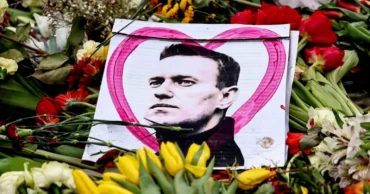
The United Kingdom has said it wants action to be taken following findings that Russian opposition figure Alexei Navalny died after being poisoned, British Foreign Secretary Yvette Cooper said on Sunday.
Speaking on the sidelines of the Munich Security Conference, Cooper said European laboratory tests indicated Navalny was killed using a rare toxin derived from dart frogs, adding that the evidence pointed to a breach of international chemical weapons rules.
Navalny, a prominent critic of Russian President Vladimir Putin, died in a Siberian prison in 2024 while serving a sentence that Western governments and his supporters had described as politically motivated. Russian authorities have previously said he died of natural causes.
Cooper said the UK and its allies had been pursuing the circumstances surrounding Navalny’s death since it occurred and were now seeking accountability through international mechanisms. She said a group of European ministers had reported the findings to the Organisation for the Prohibition of Chemical Weapons for further action.
Asked about possible steps, Cooper said Britain would continue to consider coordinated measures with its allies, including sanctions against Russia, as part of its broader response to Moscow’s actions, including the war in Ukraine.
Russia’s embassy in London has denied any involvement in Navalny’s death and rejected the poisoning allegations, describing them as unfounded.
The issue has renewed calls within the UK for tougher measures against Russia, with opposition figures also urging stronger enforcement of existing sanctions.
With inputs from BBC
5 days ago
Europe says Russia killed opposition leader Alexei Navalny using dart frog toxin
Five European nations have concluded that Russian opposition leader Alexei Navalny was poisoned with a rare toxin derived from poison dart frogs, escalating accusations against the Kremlin over his death.
Foreign ministries of the United Kingdom, France, Germany, Sweden and the Netherlands said laboratory analysis of samples taken from Navalny’s body found the presence of epibatidine, a potent neurotoxin naturally secreted by dart frogs in South America but also capable of being manufactured synthetically.
In a joint statement, the countries said Russia had the “means, motive and opportunity” to administer the poison and announced plans to report Moscow to the Organisation for the Prohibition of Chemical Weapons for an alleged breach of the Chemical Weapons Convention.
Navalny, President Vladimir Putin’s most prominent critic, died on Feb 16, 2024, in an Arctic penal colony while serving a 19-year sentence he said was politically motivated. Russian authorities have maintained that he died of natural causes, denying any involvement.
His widow, Yulia Navalnaya, speaking at the Munich Security Conference, said she had been convinced from the outset that her husband was poisoned and that new findings now provided proof. She again accused Putin of being responsible and called for accountability.
At least 6,000 killed over 3 days during RSF attack on Sudan’s el-Fasher, UN says
European officials said epibatidine affects the nervous system in a manner similar to nerve agents, causing breathing difficulties, seizures, slowed heart rate and potentially death. They expressed high confidence in the findings but acknowledged the investigation was complex and time-consuming.
Navalny survived a previous poisoning in 2020 involving a nerve agent attack he blamed on the Kremlin. He later returned to Russia after treatment in Germany and was immediately arrested, spending the final years of his life in prison.
The Kremlin has repeatedly rejected accusations of using chemical or biological weapons against political opponents.
6 days ago
.jpg)
Russia expels Western diplomats over Navalny rally
Russia's Foreign Ministry on Friday said it was expelling diplomats from Sweden, Poland and Germany for attending a rally in support of opposition leader Alexei Navalny.
5 years ago
.jpg)
Moscow court orders Kremlin foe Navalny to prison
A Moscow court on Tuesday ordered Russian opposition leader Alexei Navalny to prison for more than 2 1/2 years on charges that he violated the terms of his probation while recuperating in Germany from nerve-agent poisoning, a ruling certain to ignite more protests across the country.
5 years ago
.jpg)
Kremlin foe Navalny faces court that may jail him for years
Russian opposition leader Alexei Navalny faced a court hearing Tuesday that could end with him being sent to prison for years.
5 years ago

Russia arrests 3,800 during wide protests backing Navalny
Chanting slogans against President Vladimir Putin, tens of thousands took to the streets Sunday across Russia to demand the release of jailed opposition leader Alexei Navalny, keeping up nationwide protests that have rattled the Kremlin. More than 3,800 people were detained by police, according to a monitoring group, and some were beaten.
5 years ago
.jpg)
Behind the Kremlin's response to Navalny rallies
Rattled by nationwide protests over jailed opposition leader Alexei Navalny, Russian authorities are moving rapidly to block any new ones – from piling legal pressure on his allies to launching a campaign to discredit the demonstrations.
5 years ago

Navalny defiant as Russian court rejects his bid for freedom
A Russian court on Thursday rejected an appeal by opposition leader Alexei Navalny for his release from jail, while authorities detained several of his allies and warned social media companies about promoting more protests after tens of thousands rallied across the country last weekend demanding his freedom.
5 years ago
.jpg)
2,600 arrested at protests demanding Navalny's release
Russian police arrested more than 2,600 people Saturday in nationwide protests demanding the release of opposition leader Alexei Navalny, the Kremlin's most prominent foe, according to a group that counts political detentions.
5 years ago
.jpg)
Why Navalny is a thorn in the Kremlin’s side
The return to Russia from Germany by opposition leader Alexei Navalny was marked by chaos and popular outrage, and it ended, almost predictably, with his arrest.
5 years ago