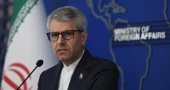
Iran
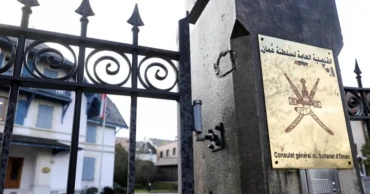
Iran says guiding principles agreed with US at Geneva nuclear talks
Iran said it has reached an understanding with the United States on key guiding principles aimed at resolving the long-running dispute over Tehran’s nuclear programme following indirect talks in Geneva.
Iranian Foreign Minister Abbas Araghchi said some work still remains, while Washington acknowledged that progress was made during the discussions.
Oman, which is mediating the talks, said the negotiations ended with good progress toward identifying shared goals and technical issues. Omani Foreign Minister Badr Albusaidi described the outcome as constructive.
The meeting came amid heightened tensions, including repeated US military warnings over Iran’s nuclear activities and its crackdown on protests. US President Donald Trump earlier said he believed Tehran was interested in reaching a deal.
The US and its European allies have long accused Iran of seeking to develop nuclear weapons, a claim Tehran has consistently denied. Iran has said the talks focus on its nuclear programme and the possible lifting of US economic sanctions, while Washington has indicated interest in discussing other issues, including Iran’s missile programme.
A US official said the sides would continue discussions, with Iran expected to return with detailed proposals in the coming weeks to narrow remaining gaps. US Vice President JD Vance said some US red lines were yet to be addressed.
Trump, speaking earlier, said Iran wanted to avoid the consequences of failing to reach an agreement, referring to past US military action against Iranian nuclear sites.
Iran has meanwhile warned against threats, with Supreme Leader Ayatollah Ali Khamenei saying attempts to predetermine the outcome of negotiations would be wrong.
The latest round followed earlier indirect talks held in Oman, which both sides had described as a positive start.
With inputs from BBC
3 days ago
US boosts naval and air presence near Iran
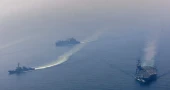
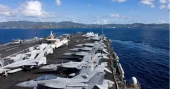
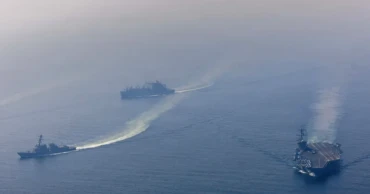
The United States has significantly increased its naval and air deployments in the Middle East, with satellite images confirming the presence of the aircraft carrier USS Abraham Lincoln near Iran, as Washington continues to apply pressure over Tehran’s military programme and its recent crackdown on protests.
BBC Verify said satellite imagery placed the carrier in the Arabian Sea, about 700 kilometres off the coast of Oman. The Lincoln, which leads a strike group of three guided-missile destroyers, carries about 90 aircraft including F-35 fighter jets and has a crew of nearly 5,700. It was reportedly deployed to the region in late January but had not been clearly visible until now.
US and Iranian officials are scheduled to meet in Switzerland on Tuesday for a second round of discussions. Iran has said the talks will focus on its nuclear programme and the possible lifting of US economic sanctions, while Washington has signalled it wants broader issues on the agenda.
The US has also reportedly sent the world’s largest warship, the USS Gerald R Ford, towards the Middle East, with reports suggesting it could reach the region within weeks.
According to BBC Verify, the arrival of the Abraham Lincoln adds to a wider US military build-up in recent weeks. Satellite imagery has tracked at least 12 US naval vessels across the region, including destroyers and combat ships positioned in the Gulf, the eastern Mediterranean and the Red Sea. Several vessels are stationed at a naval base in Bahrain, while others have been seen near a US base at Souda Bay.
US air activity has also increased. Analysts have observed more F-15 and EA-18 fighter jets at a military base in Jordan, along with a rise in US cargo, refuelling and communications aircraft moving from the US and Europe into the Middle East.
Iran has responded with its own show of force. The Islamic Revolutionary Guard Corps recently launched naval drills in the Strait of Hormuz, a vital global oil shipping route through which around a fifth of the world’s oil and gas passes. Iranian media showed missiles being launched from naval vessels during the exercises.
Military experts say the current US deployments appear broader and more sustainable than previous operations in the region, suggesting a posture designed not only for potential strikes but also for long-term deterrence. They note that the scale of naval assets, aircraft and existing US bases would allow Washington to sustain intensive operations while countering possible Iranian responses across the Middle East.
With inputs from BBC
4 days ago
US military preparing for possible weeks-long operations against Iran
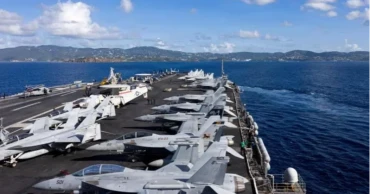
The United States military is preparing for the possibility of weeks-long operations against Iran if President Donald Trump orders military action, according to two US officials, raising concerns of a more serious conflict between the longtime rivals.
The officials, speaking on condition of anonymity, said planning is underway for a sustained campaign that could target Iranian state and security facilities beyond nuclear infrastructure. Such operations would carry greater risks for US forces and could trigger wider instability across the Middle East, reports Reuters.
Diplomatic efforts are continuing alongside the military preparations. US and Iranian diplomats held talks in Oman last week aimed at reviving negotiations over Tehran’s nuclear programme. However, Trump said reaching a deal has been “difficult,” warning that the alternative to diplomacy could be “very traumatic.”
The Pentagon has recently deployed additional military assets to the region, including an aircraft carrier, fighter jets, guided-missile destroyers and thousands of troops to strengthen offensive and defensive capabilities.
US officials said Washington fully expects Iran to retaliate if strikes occur, potentially leading to prolonged exchanges of attacks. Experts warn that Iran’s large missile arsenal could threaten US forces and bases across the region.
The White House said Trump is considering all options regarding Iran but will make a final decision based on US national security interests. The Pentagon declined to comment on the operational planning.
Iran’s Islamic Revolutionary Guard Corps has warned that any strike on Iranian territory would be met with retaliation against US bases in the Middle East, including those in Qatar, Bahrain, Kuwait and Saudi Arabia.
Tehran says it is open to negotiations on limits to its nuclear programme in return for sanctions relief, but it has ruled out linking the talks to its missile programme.
7 days ago
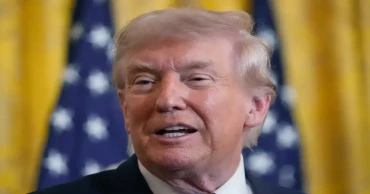
Trump says regime change in Iran “Would be the best Thing”
President Donald Trump said Friday that a change in leadership in Iran “would be the best thing that could happen,” as his administration considers possible military action against Tehran.
Trump made the remarks after visiting U.S. troops at Fort Bragg and confirming that he is deploying a second aircraft carrier strike group to the Middle East.
Responding to reporters’ questions about removing Iran’s Islamic clerical leadership, Trump said such a shift in power could be beneficial, noting that the current regime has been in place for decades.
Although Trump has recently emphasized curbing Iran’s nuclear program as his primary objective, he suggested Friday that Washington expects broader concessions from Tehran beyond nuclear limits.
During a visit to Washington this week, Israeli Prime Minister Benjamin Netanyahu urged that any agreement also address Iran’s ballistic missile capabilities and its support for regional proxy groups such as Hamas and Hezbollah.
Trump indicated that dismantling Iran’s nuclear activities — which were significantly damaged in U.S. strikes last year — would represent only part of a wider mission.
Iran maintains that its nuclear program is peaceful. Prior to last year’s conflict, Tehran had enriched uranium to 60% purity, a level close to weapons-grade material.
Trump’s comments about potentially ending the rule of Supreme Leader Ali Khamenei came weeks after Secretary of State Marco Rubio cautioned that political change in Iran would be far more complicated than efforts to unseat Venezuelan President Nicolás Maduro.
Rubio noted in a Senate hearing that Iran’s leadership has been entrenched for decades and would require careful consideration if change were pursued.
Trump also announced that the USS Gerald R. Ford, currently in the Caribbean, will head to the Middle East to join the USS Abraham Lincoln and other U.S. naval assets already in the region.
He said the additional carrier would be needed if diplomatic efforts fail, adding that it would depart soon.
While Trump had indicated new talks with Iran might take place this week, negotiations did not occur. Iranian officials instead traveled to Oman and Qatar to exchange messages through intermediaries.
Gulf Arab states have warned that any military strike could trigger broader regional conflict, particularly as the Middle East remains tense following the Israel-Hamas war in Gaza. Inside Iran, authorities are facing renewed domestic pressure as citizens hold 40-day mourning ceremonies for those killed during recent nationwide protests.
Netanyahu to press Trump to widen Iran nuclear talks during White House meeting
The Ford strike group would add more than 5,000 personnel to U.S. forces in the Middle East, effectively doubling available aircraft and munitions. However, given its current location, it could take weeks before it reaches waters near Iran.
Trump has repeatedly threatened military action if Iran does not agree to stricter limits on its nuclear activities. Indirect talks were held in Oman last week, and he warned that failing to reach a deal would have serious consequences.
The Ford was previously redeployed to the Caribbean as part of the U.S. military buildup ahead of last month’s operation that led to Maduro’s capture.
Extending the carrier’s deployment could place strain on its crew. The ship has been at sea since June 2025, approaching eight months. Navy officials have previously said prolonged deployments disrupt service members’ personal lives and complicate maintenance schedules.
Aircraft carriers are typically deployed for six or seven months. Longer missions can increase wear on ships and delay scheduled repairs, as seen with the USS Dwight D. Eisenhower, which underwent a nine-month Middle East deployment in 2023–24 and remains in maintenance beyond its planned completion date.
Senior Navy leaders have recently expressed a preference for deploying smaller, newer vessels where possible instead of relying heavily on large aircraft carriers.
7 days ago
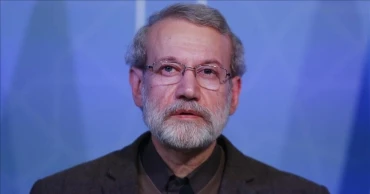
Iran accuses Israel of sabotaging US nuclear talks
Iran’s security chief Ali Larijani has accused Israel of trying to derail ongoing nuclear negotiations between Tehran and Washington in order to trigger conflict in the region.
Speaking to Al Jazeera during a visit to Qatar, Larijani said Iran is negotiating only with the United States and not with Israel. He alleged that Israel is attempting to interfere in the process and undermine talks that are at a sensitive stage.
Larijani claimed Israel wants to destabilise the region and is using Iran as a pretext. He also referred to previous Israeli actions in the region as part of a broader strategy to create tension.
His remarks came as Iran and the US recently held indirect talks in Oman aimed at resolving disputes over Tehran’s nuclear programme. A second round of negotiations is under discussion.
Larijani said there is common ground between the two sides on the issue of Iran not developing nuclear weapons, which Tehran insists it is not pursuing. However, he stressed that Iran’s missile programme and uranium enrichment levels are not open for negotiation.
He warned that Iran would respond if the US carried out any military strike against it.
During his visit to Doha, Larijani also met Hamas officials to discuss regional developments.
With inputs from ALJAZEERA
9 days ago
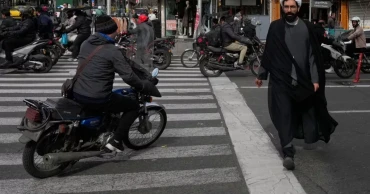
Iran marks 47th Islamic Revolution anniversary amid domestic unrest
Iran on Wednesday commemorated the 47th anniversary of its 1979 Islamic Revolution, even as the country faces growing internal and external pressures.
The anniversary comes as U.S. President Donald Trump suggested sending another aircraft carrier group to the Middle East, while many Iranians continue to protest the government’s deadly crackdown on nationwide demonstrations last year. Trump’s comments came as Israeli Prime Minister Benjamin
Netanyahu, a long-time critic of Tehran, visited Washington to push for tougher terms in ongoing nuclear negotiations.
Amid the celebrations, a top Iranian security official traveled to Qatar after earlier visiting Oman, a key mediator in the nuclear talks. Iranian state media showed thousands of people rallying across the country in support of the Islamic Republic and 86-year-old Supreme Leader Ayatollah Ali Khamenei. However, reports from Tehran also captured citizens shouting “Death to the dictator!” from their homes as fireworks lit the night sky.
In public squares, many waved images of Khamenei and the revolution’s founder, Ayatollah Ruhollah Khomeini, alongside Iranian and Palestinian flags, while chanting slogans against the U.S. and Israel. President Masoud Pezeshkian, a reformist, was expected to speak at Tehran’s Azadi Square.
While a segment of the population remains loyal to the theocracy, including members of the paramilitary Revolutionary Guard that crushed last year’s protests, others participate in state-sponsored events more for social or professional reasons.
Iran warns Netanyahu’s US visit could undermine nuclear talks
Iranian Foreign Minister Abbas Araghchi, speaking to Russian media, stressed the country’s lingering mistrust of the U.S., recalling the June attack on Iranian sites amid previous negotiations. He indicated that Tehran still sees a chance for a nuclear deal “better than Obama’s” 2015 agreement, which Trump withdrew the U.S. from during his first term.
The U.S. has already deployed the aircraft carrier USS Abraham Lincoln and other forces to the region. Tensions remain high, with U.S. forces recently shooting down an Iranian drone and intervening in the Strait of Hormuz to protect a U.S.-flagged vessel. Trump told Axios he is considering sending a second carrier, though details are not yet confirmed.
The anniversary highlights the complex challenges Iran faces as it balances internal dissent, hardline loyalty, and international pressure over its nuclear ambitions.
10 days ago
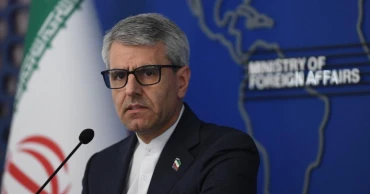
Iran warns Netanyahu’s US visit could undermine nuclear talks
Iran on Tuesday warned that Israeli Prime Minister Benjamin Netanyahu’s visit to the United States could disrupt the newly resumed nuclear negotiations between Tehran and Washington.
Netanyahu left for Washington to meet U.S. President Donald Trump, aiming to push for a tougher stance on Iran’s ballistic missile program. This marks his seventh meeting with Trump since returning to office, including one in Jerusalem last October following a Gaza ceasefire.
“On this trip, we will discuss a range of issues: Gaza, the region, but first and foremost the negotiations with Iran,” Netanyahu told reporters. He said Israel will present its views on “principles of the negotiations,” which he described as crucial for regional peace and security.
Iranian Foreign Ministry spokesman Esmaeil Baghaei criticized the visit, saying Israel has been the main source of insecurity in the region. He accused Israel of turning Iran’s peaceful nuclear program into a “fabricated crisis” and said the U.S. should act independently of “destructive pressures” from foreign lobbies. Baghaei stressed that Iran is serious about diplomacy and seeks the removal of “illegal” sanctions.
Meanwhile, Ali Larijani, secretary of Iran’s Supreme National Security Council, visited Oman, where he met Sultan Haitham bin Tariq to discuss the Iranian-U.S. negotiations and ways to reach a fair agreement. The Omani statement emphasized dialogue, peaceful resolution of disputes, and promotion of regional and global stability.
The talks in Muscat last Friday came amid rising tensions between Tehran and Washington over U.S. military deployments in West Asia. Following the discussions, Trump described them as “very good,” while Iranian Foreign Minister Seyed Araghchi said the process’s continuation depends on consultations in both capitals.
10 days ago
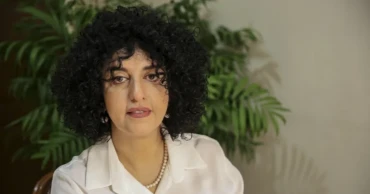
Iran court adds prison term for Nobel laureate Narges Mohammadi
Iranian Nobel Peace Prize winner Narges Mohammadi has been handed additional prison sentences totalling seven and a half years, her lawyer said on Sunday.
Mostafa Nili said a court in the north eastern city of Mashhad sentenced the prominent human rights activist to six years in prison on charges of gathering and collusion, and another one and a half years for what it called propaganda activities.
Mohammadi was arrested in December after attending a memorial ceremony where, according to authorities, she made provocative remarks. Her family said she was beaten during the arrest and later taken to hospital.
Nili said he spoke to Mohammadi for the first time since mid December and confirmed that the court also imposed a two year travel ban and ordered her two years of internal exile to the eastern Khusf region.
The Narges Foundation, which supports Mohammadi, described the trial held on Saturday as a sham and said she began a hunger strike on February 2. According to Nili, she was taken to hospital three days ago due to poor health before being returned to detention.
Mohammadi’s husband, Taghi Rahmani, said she refused to defend herself in court, insisting that the judiciary had no legitimacy and that the proceedings were pre decided. He called the verdict cruel and unjust, and urged international human rights groups to protest.
Her daughter, Kiana Rahmani, said the family was deeply worried about her mother’s condition.
The 53 year old activist has already spent more than a decade in prison. The Narges Foundation said the latest ruling brings the total prison time ordered against her to 44 years.
Since 2021, Mohammadi has been serving a 13 year sentence on charges related to propaganda and state security, which she denies. She was granted temporary medical release from Tehran’s Evin prison in December last year but was expected to return shortly after.
Her latest arrest followed her attendance at a memorial for lawyer Khosrow Alikordi, who was found dead in his office in early December. Human rights groups have called for an independent investigation into his death.
Iranian prosecutors said Mohammadi was among dozens arrested for encouraging slogan chanting and disturbing public order. Rights groups, however, say she was attacked by plainclothes security agents during the memorial.
Mohammadi was awarded the Nobel Peace Prize in 2023 for her long standing campaign against the oppression of women and for human rights in Iran.
With inputs from BBC
12 days ago
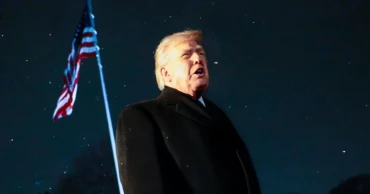
Trump threatens tariffs on countries trading with Iran
US President Donald Trump has signed an executive order warning of additional tariffs on countries that continue doing business with Iran, escalating pressure amid renewed diplomatic talks over Tehran’s nuclear programme.
The order, issued on Friday, does not fix a specific tariff rate but cites 25 percent as an example. It states that such duties could be imposed on goods imported into the United States from any country that “directly or indirectly purchases, imports, or otherwise acquires” goods or services from Iran.
Although Trump did not directly comment on the executive order, he reiterated his long-held position that Iran must not be allowed to develop nuclear weapons while speaking to reporters aboard Air Force One late Friday.
The move came shortly after talks between senior US and Iranian officials in Oman, the first such engagement in months, following weeks of sharp rhetoric from both sides. Trump had earlier warned of a 25 percent tariff on countries trading with Iran in a January post on his Truth Social platform, though details were not provided at the time.
The White House said the new order reaffirmed the “ongoing national emergency with respect to Iran” and noted that the president could modify the measures if circumstances change. It said the administration was holding Iran accountable for pursuing nuclear capabilities, supporting terrorism, developing ballistic missiles and destabilising the region.
Separately, the US State Department announced sanctions on 15 entities accused of trading in Iranian-origin crude oil, petroleum and petrochemical products.
Iran, already under sweeping US and Western sanctions, did not immediately respond. Tehran maintains that its nuclear programme is entirely peaceful and denies accusations that it is seeking nuclear weapons.
Under a 2015 nuclear agreement with world powers, Iran was restricted from enriching uranium beyond 3.67 percent and barred from enrichment at the Fordo facility for 15 years. Trump withdrew from the deal in 2018, calling it insufficient, and reimposed sanctions that severely damaged Iran’s economy, including so-called secondary sanctions targeting countries trading with Tehran.
Iran later began breaching key limits of the agreement, particularly on uranium enrichment. Last year, the United Nations reimposed economic and military sanctions after European powers accused Iran of continued nuclear escalation and poor cooperation.
Despite sanctions, more than 100 countries still trade with Iran. China remains its largest export partner, importing more than $14 billion worth of Iranian goods in the year to October 2025, followed by Iraq, the United Arab Emirates and Turkey.
The Oman talks were led by Iranian Foreign Minister Abbas Araghchi and US special envoy Steve Witkoff, with Trump’s son-in-law Jared Kushner also part of the US side. Trump described the discussions as “very good” and said Iran appeared eager to reach a deal, warning of “very steep” consequences if talks fail. Another round of talks is expected early next week.
Oman’s Foreign Minister Badr Albusaidi said the discussions helped clarify positions and identify possible areas of progress, while Araghchi called them “a good start” and said a positive atmosphere prevailed.
Rising tensions have fuelled fears of a wider conflict, with Trump repeatedly warning that military action remains an option if Iran refuses to agree on its nuclear programme. Iran continues to reject such accusations, insisting its activities are for peaceful purposes only.
With inputs from BBC
14 days ago
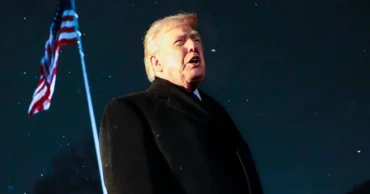
Trump signs order threatening tariffs on countries trading with Iran
Trump has signed an executive order warning that the United States could impose new tariffs on countries that continue trading with Iran.
The order, signed on Friday, allows for additional import taxes on goods entering the US from any country that “directly or indirectly” buys goods or services from Iran. While it does not set a specific tariff rate, it cites 25% as a possible example, reports BBC.
Although Trump has not publicly addressed the order in detail, he reiterated that Iran must not obtain nuclear weapons while speaking to reporters aboard Air Force One on Friday night.
The move comes as senior US and Iranian officials hold talks in Oman, following weeks of escalating rhetoric between the two sides. Earlier this year, Trump had already warned that countries doing business with Iran could face a 25% tariff, writing on Truth Social in January that such penalties would apply immediately. At the time, he did not explain how the policy would be enforced.
The White House said the new order reinforces the existing national emergency related to Iran and noted that the president could revise it if circumstances change. It said the administration is responding to Iran’s nuclear ambitions, support for terrorism, missile development, and actions that destabilize the region.
Iran has not issued an immediate response.
The discussions in Oman, which began on Friday, mark the first direct talks between US and Iranian officials since last June, when the US bombed three of Iran’s main nuclear sites. Iran was represented by Foreign Minister Abbas Araghchi, while the US delegation included special envoy Steve Witkoff and Trump’s son-in-law, Jared Kushner.
Trump described the talks as “very good,” saying Iran appeared eager to reach an agreement. He warned that failure to do so would bring severe consequences and said another meeting is planned for early next week.
Oman’s foreign minister, Badr Albusaidi, who mediated the talks, said they helped clarify each side’s positions and identify potential areas for progress. Araghchi also called the talks a “good start,” saying they were conducted in a positive atmosphere and that both sides had returned home for further consultations.
Growing tensions between Washington and Tehran have raised concerns about a possible conflict. Trump recently said Iran’s Supreme Leader, Ayatollah Ali Khamenei, should be “very worried” and has warned that the US could take military action if Iran refuses to negotiate over its nuclear programme.
Iran maintains that its nuclear activities are peaceful and denies seeking nuclear weapons.
Meanwhile, the US has increased its military presence in the region. Trump described this buildup as a “massive armada,” citing Iran’s violent crackdown on nationwide protests last month. Human rights groups report that thousands may have been killed, though the true scale is uncertain due to government-imposed internet restrictions since early January.
14 days ago