bangladesh bank
Bangladesh Bank halts digital bank licensing process following protest
An initiative to issue digital bank licenses just a day before the formation of a new government has been stalled following strong protests from the Bangladesh Bank Officers Welfare Council.
The Council demanded the cancellation of an emergency board meeting scheduled to approve the licenses on Monday. Although the meeting of the Board of Directors took place in the afternoon, no licenses were approved. Instead, the board was briefed on the evaluation scores of the applicant institutions, effectively halting the approval process amidst day-long tension at the central bank.
Bangladesh Bank announces banking timings for Ramadan
During a press conference leaders of the Officers Welfare Council expressed deep concern over the timing of the emergency meeting. They noted that the meeting was called with only one day’s notice while the process of government formation following the 13th National Parliamentary Election (held on February 12) was still underway.
The Council alleged that the primary objective of the meeting was to grant a license to a specific group. They pointed out a potential conflict of interest, noting that the current Governor previously served as the chairman of a bank owned by that same group.
"This initiative is contrary to the fundamental principles of neutrality of the central bank," the Council stated.
They further alleged that unqualified individuals were being appointed as consultants based on personal ties to the Governor and that outsiders were being allowed to attend critical board meetings without official approval.
The Council raised several legal objections, citing the ‘Bank Company Act’, which prohibits one bank from being a subsidiary of another. They also highlighted that government approval is mandatory for holding more than 10 percent of shares. Taking such a major policy decision during a political transition is a violation of both law and established custom, the officials argued.
Bangladesh Bank lowers floor of interest rate corridor to boost interbank liquidity
Furthermore, the Council emphasized the fragile state of the banking sector, where the default loan rate exceeded 36 percent as of September 2025. With 61 scheduled banks already operating and many struggling to return depositors' money, they questioned the immediate necessity of new digital banks without a transparent and thorough review.
In the wake of the protest, the central bank issued an official order prohibiting employees from making statements to the media or at public gatherings regarding bank policies without prior approval.
Arif Hossain Khan, spokesperson for Bangladesh Bank, clarified to the media that the emergency meeting only reviewed a progress report on the digital bank applications and that no final decisions were made.
According to central bank data, 13 entities have applied for digital bank licenses.
4 days ago
Standard Bank rebranded as ‘Standard Islami Bank’
Bangladesh Bank has officially announced the renaming of Standard Bank PLC to ‘Standard Islami Bank PLC’ effective February 10, 2026.
The change follows the bank's full conversion into a Shariah-compliant financial institution.
The transition reflects the continued expansion of the Islamic finance sector in Bangladesh. With this addition, the country’s banking landscape now features:
In Bangladesh 10 banks are operating in full-fledged Islami Banking. Currently, 16 conventional commercial banks offer Shariah-compliant services through a network of over 600 dedicated windows
Additionally, 15 conventional banks maintain 30 specialized Islamic banking branches.
According to the central bank’s circular, all scheduled banks have been instructed to update their records to reflect the new name of the institution. This move is part of a broader trend where Islamic banking now accounts for over 25 percent of total deposits in the national banking system.
11 days ago
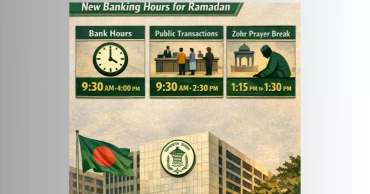
Bangladesh Bank announces banking timings for Ramadan
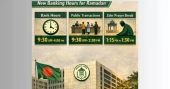
Bangladesh Bank has set banking operation and transaction hours for the holy month of Ramadan.
In a circular on Tuesday, the central bank said all banks will open at 9:30 am and close at 4 pm.
Public transactions time will be ended at 2:30 pm to allow banks’ officials to complete the daily ancillary post transaction works.
Bangladesh Bank lowers floor of interest rate corridor to boost interbank liquidity
There will be a 15-minute Zohr prayers break for from 1:15 pm to 1:30 pm.
Standard banking and office schedules will resume immediately after the conclusion of the Eid-ul-Fitr holidays, it added.
11 days ago
Bangladesh Bank lowers floor of interest rate corridor to boost interbank liquidity
In a strategic move to stimulate the interbank call money market, Bangladesh Bank has announced a reduction in the lower limit of its interest rate corridor.
The decision, aimed at discouraging commercial banks from keeping idle funds with the central bank, was detailed in a circular issued by the Monetary Policy Department on February 9, 2026.
According to the circular, the Standing Deposit Facility (SDF) rate which acts as the floor of the corridor has been slashed by 50 basis points, moving from 8 percent to 7.50 percent.
Bangladesh Bank buys another $196.5 million to stabilize forex market
The central bank observed that many commercial banks were opting to park their excess liquidity in the SDF rather than lending to other banks or the private sector. This trend has been hindering the dynamism of the interbank call money market.
By lowering the SDF rate, the central bank is making it less attractive for banks to hold cash at the central bank, effectively nudging them to provide credit elsewhere.
The 113th meeting of the Monetary Policy Committee (MPC) finalized the structure for the interest rate corridor.
The central bank expects this move to streamline liquidity management and ensure a more robust flow of funds within the financial system. These new rates are scheduled to officially come into effect on February 15, 2026.
The circular was signed by Md. Shadrul Hassan, Director of the Monetary Policy Department, and has been dispatched to the Managing Directors and CEOs of all banks and financial institutions.
Bangladesh Bank keeps policy rate at 10% as inflation risks persist
11 days ago

Remittance surges to $1.03 billion in 8 days of February
Remittance inflows to Bangladesh have seen a massive spike in February ahead of election and Ramadan, expatriates sent US $1.03 billion remittance in the first 8 days of the month.
Arif Hossain Khan, spokesperson for Bangladesh Bank, told UNB on Monday, expatriates sent $1.03 billion in the first 8 days of February.
In the same period of February in 2025, expatriates sent $671 million. It means remittance growth by 53.9 percent in 8 days February this year, compared to the previous (2025).
Bangladesh so far in the current fiscal year FY2025-26, received $20.46 billion, which was $16.63 billion in FY 2024-25. It means remittance growth by 23 percent in 7 months of FY 2025-26.
Bangladesh sees remittance surge to $2.71 billion in January
12 days ago
Bangladesh Bank keeps policy rate at 10% as inflation risks persist
Bangladesh Bank maintained a tight monetary stance for the second half of fiscal year 2025-26, keeping the policy rate unchanged at 10%, as the central bank seeks to contain inflation while pushing lenders for increasing private-sector credit.
Governor Ahsan H Mansur unveiled the January–June monetary policy on Monday at a press conference at the central bank’s headquarters in Motijheel, marking the final policy statement under the interim government.
While key interest rates were left unchanged, the central bank cut the Standing Deposit Facility (SDF) rate by 50 basis points to 7.5% from 8%, a move aimed at discouraging banks from parking excess liquidity with the central bank and encouraging lending and inter-bank market activity. The Standing Lending Facility (SLF) rate was maintained at 11.50%.
Keeping money at the central bank is now less profitable, Dr Mansur said, explaining that the SDF reduction is intended to push banks toward private-sector credit and the inter-bank market.
Bangladesh Bank said inflation, although easing in recent months, remains above its 7% target and warned of renewed price pressures stemming from higher spending ahead of national elections and Ramadan, seasonal increases in essential commodity prices, and the possible implementation of a new public-sector salary structure.
“Lowering the policy rate at this moment could put pressure on the Taka and reignite import-driven inflation,” the governor said.
Bangladesh Bank buys another $196.5 million to stabilize forex market
The banking sector has shown signs of recovery in deposits, with growth rising from below 7% in August 2024 to 11% by December 2025. However, officials noted a “flight to quality,” as depositors increasingly favour banks with stronger reputations.
At the same time, non-performing loans surged to 36% as of September 2025. The central bank attributed the jump to the adoption of international standards requiring stricter loan classification and reporting.
Bangladesh’s external position has strengthened, supported by a stabilised foreign-exchange market. Foreign exchange reserves increased to $33.2 billion in December 2025 from $25.6 billion in August 2024.
For the first time in years, the central bank has not sold any dollars from its reserves since August 2024. Instead, it purchased $4.3 billion from the inter-bank market in FY26. Bangladesh Bank also cleared $3.5 billion in overdue payments to foreign lenders, a move it said significantly boosted international confidence in the economy.
The press conference was attended by Deputy Governors Dr Habibur Rahman and Nurun Nahar, along with the head of the Bangladesh Financial Intelligence Unit (BFIU) and other senior executive directors.
12 days ago

Bangladesh Polls: BB imposes 96-hour freeze on NPSB internet banking
Bangladesh Bank has directed all scheduled banks and mobile financial service (MFS) providers to suspend internet banking fund transfer (IBFT) transactions through the National Payment Switch Bangladesh (NPSB) for 96 hours ahead of the national election.
The central bank, however, said MFS operations will continue on a limited scale during the period, allowing essential transactions while the temporary restriction on IBFT remains in place as part of election-time precautionary measures.
According to the central bank’s directive issued on Sunday, the restrictions will take effect from 12:00am Monday night and remain in force until 11:59pm Thursday.
During this period, all NPSB-based peer-to-peer (P2P) internet banking transactions will remain completely suspended. As a result, customers will not be able to use real-time internet banking services, which normally allow transfers of up to Tk 50,000 per transaction and a maximum of Tk 500,000 per day.
Bangladesh Bank directs MFS providers to halt online gambling transactions
MFS transactions, however, will continue with limitations. Under the temporary measures, customers will be allowed to send a maximum of Tk 1,000 per day to another user through P2P transfers, with a daily transaction cap of 10.
These restrictions will not apply to merchant payments and utility bill payments, which will continue under existing rules.
The directive, sent to the chief executive officers, managing directors and directors general of banks and MFS providers, also instructed MFS operators to form dedicated quick response cells to receive and resolve election-related complaints.
Bangladesh Bank further asked MFS providers to keep all transactions under round-the-clock close monitoring during the restricted period and to promptly report any suspicious or unusual transactions to the respective police stations.
While services for general customers will remain suspended or limited, banks and MFS providers have been instructed to extend necessary cooperation to the Election Commission and law enforcement agencies as required.
The central bank said normal transaction facilities through these channels will be fully restored after the stipulated period.
12 days ago
BB officers' council demands full autonomy and legal reforms
The Bangladesh Bank Officers' Welfare Council has issued a seven-point demand to the authorities, calling for comprehensive legal reforms to establish the full autonomy of the central bank.
The demands were formally presented during a press conference held at the central bank’s headquarters on Thursday (February 5).
The council emphasized that the ‘Bank Company Act-1991,’ and other related regulations must be amended to ensure the central bank can function independently and enforce good governance across the financial sector.
"To ensure an effective and independent role for the central bank, reforming the legal framework is essential," said in the briefing.
The seven-point charter includes several critical administrative and policy changes. Such as-
Cancellation of Contractual Appointments: The Council demanded the immediate termination of all advisors, consultants, and officials appointed on a contractual basis without transparent recruitment or proper evaluation.
Institutional Protection: Ensuring legal and professional protection for officials who face harassment while performing their official duties.
Promotion and Recruitment: Resolving the existing stagnation in the recruitment and promotion process for regular central bank staff.
Focused Leadership: Ensuring the Governor devotes active time and attention specifically to the policy and interests of Bangladesh Bank.
Curbing Misleading Statements: Urging officials to refrain from making inconsistent or whimsical remarks to the media regarding central banking policies.
Bangladesh Bank buys another $196.5 million to stabilize forex market
Golam Mostafa Srabon, General Secretary of the Officers' Welfare Council, noted that these demands are not new. A memorandum was first submitted to the Interim Government’s Finance Adviser, Dr. Salehuddin Ahmed, in August 2024.
The Council followed up with the Governor on November 5 and again on December 23 of last year, specifically highlighting the need to cancel unnecessary contractual appointments. Despite repeated requests, the Council claims significant action has yet to be taken.
15 days ago

Bangladesh Bank buys another $196.5 million to stabilize forex market
Bangladesh Bank (BB) purchased an additional $196.5 million from 16 banks on Thursday, continuing its aggressive streak of dollar procurement to manage the country's foreign exchange market.
The central bank executed the purchase at a cut-off rate of Tk 122.30 per US dollar, Arif Hossain Khan, Executive Director and Spokesperson of Bangladesh Bank, confirmed this.
With this latest move, the central bank’s total dollar purchases for the month of February have reached $586 million in just five days. The total acquisition for the current fiscal year FY2025–26 now stands at a substantial $4.51 billion.
This week has seen consistent intervention by the central bank. Previously on Wednesday (Feb 4), $171 million was purchased from 16 banks.
Before that on Sunday (Feb 2), another $218.50 million was purchased from 16 banks.
The central bank has maintained a steady exchange rate of Tk 122.30 for most of its recent transactions. Earlier interventions in January included:
Jan 29: $55 million from five banks.
Jan 20: $45 million from two banks.
Jan 12: $81 million from 10 banks.
Jan 6: $223.50 million from 14 banks.
Bangladesh Bank buys dollars worth $3.75 billion in 6 months to maintain exchange rate stability
According to central bank sources, the primary goal is to stabilize the exchange rate and prevent the Taka from appreciating too rapidly due to a surge in remittance inflows and export earnings. By purchasing the "excess" supply of dollars from commercial banks, the central bank aims to strengthen foreign reserves, support exporters & remitters, and manage liquidity.
15 days ago
Bangladesh Bank reconstitutes UFIL board amid financial turmoil
Bangladesh Bank (BB) has dissolved the existing board of directors of Uttara Finance and Investments Limited and formed a new board to rescue the struggling non-bank financial institution (NBFI) from deep-rooted loan irregularities.
The listed company shared this information through the Dhaka Stock Exchange (DSE) on Thursday (February 5).
Under the Financial Company Act, 2023, the central bank has appointed five new directors to the board. Md. Mukhtar Hossain has been named the new Chairman and will serve as an independent director.
Read More: Bangladesh Bank reverses policy, allows depositors of merged banks to earn profits
Other newly appointed independent directors include Mohammad Shafiul Azam, Md. Niamul Kabir, Md. Rafiqul Islam (FCS). Additionally, Md. Mahbub Alam has joined the board as a director.
According to central bank sources, the move aims to ensure transparency and restore corporate governance within the institution.
Uttara Finance has been under scrutiny for failing to publish regular financial reports since 2019. However, an audit report for the year 2020, released on October 6 last year, revealed a staggering financial decline.
After taxes and expenses, the company recorded a net loss of Tk 435.54 crore in 2020. The annual operating loss stood at Tk 108.32 crore. By the end of 2020, the total capital shortfall reached Tk 711.55 crore. This includes a core capital deficit of Tk 59.34 crore and a risk-based capital deficit of Tk 652.21 crore.
Central bank officials hope that the reconstitution of the board will bring positive changes to the management and financial health of the company, which has been reeling from years of mismanagement and unauthorized transactions.
Read More: Bangladesh Bank buys $45mn from two banks to bolster reserves
16 days ago