Environment
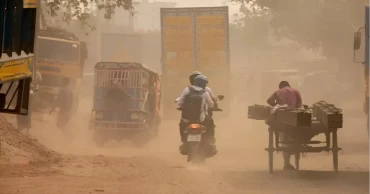
Severe air pollution pushes Dhaka to second spot globally
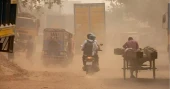
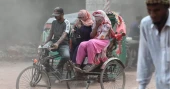
Dhaka, the densely populated capital of Bangladesh, ranked second among the world’s most polluted cities on Saturday morning, recording an Air Quality Index (AQI) of 223 at 10:25 am.
Today, the city’s air was classified as ‘very unhealthy’, indicating a serious health threat, according to the AQI report.
Kabul in Afghanistan, Lahore in Pakistan, and Kolakata in India occupied the first, third, and fourth spots on the list, with AQI scores of 343, 221, and 215 respectively.
According to the AQI scale, a reading between 50 and 100 is considered ‘moderate’, with generally acceptable air quality, though sensitive individuals should limit prolonged outdoor exertion. AQI levels of 101–150 are ‘unhealthy for sensitive groups’, 151–200 is ‘unhealthy’, 201–300 is ‘very unhealthy’, and readings above 301 are considered ‘hazardous’, posing severe health risks.
Dhaka ranks second among world’s most polluted cities
The AQI, which reports daily air quality, informs residents how clean or polluted the air is and highlights potential health effects. In Bangladesh, the AQI is calculated based on five key pollutants: particulate matter (PM10 and PM2.5), nitrogen dioxide (NO2), carbon monoxide (CO), sulfur dioxide (SO2), and ozone.
Dhaka has long struggled with air pollution. Air quality usually deteriorates in winter and improves during the monsoon season.
The World Health Organization (WHO) estimates that air pollution causes about seven million deaths worldwide each year, primarily from stroke, heart disease, chronic obstructive pulmonary disease, lung cancer, and acute respiratory infections.
9 hours ago
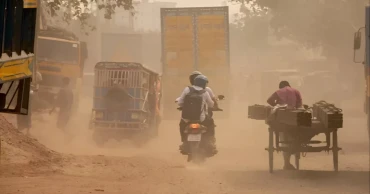
Dhaka ranks second among world’s most polluted cities
Dhaka, the densely populated capital of Bangladesh, ranked second among the world’s most polluted cities on Friday morning, recording an Air Quality Index (AQI) of 299 at 08:45 am.
Today, the city’s air was classified as ‘very unhealthy’, indicating a serious health threat, according to the AQI report.
Lahore in Pakistan, Delhi in India, and Kolakata in India occupied the first, third, and fourth spots on the list, with AQI scores of 320, 208, and 192 respectively.
Dhaka records AQI 222, ranks third in world pollution index
According to the AQI scale, a reading between 50 and 100 is considered ‘moderate’, with generally acceptable air quality, though sensitive individuals should limit prolonged outdoor exertion. AQI levels of 101–150 are ‘unhealthy for sensitive groups’, 151–200 is ‘unhealthy’, 201–300 is ‘very unhealthy’, and readings above 301 are considered ‘hazardous’, posing severe health risks.
The AQI, which reports daily air quality, informs residents how clean or polluted the air is and highlights potential health effects. In Bangladesh, the AQI is calculated based on five key pollutants: particulate matter (PM10 and PM2.5), nitrogen dioxide (NO2), carbon monoxide (CO), sulfur dioxide (SO2), and ozone.
Dhaka has long struggled with air pollution. Air quality usually deteriorates in winter and improves during the monsoon season.
The World Health Organization (WHO) estimates that air pollution causes about seven million deaths worldwide each year, primarily from stroke, heart disease, chronic obstructive pulmonary disease, lung cancer, and acute respiratory infections.
1 day ago

Unhealthy air grips Dhaka, ranks second globally
Dhaka, the densely populated capital of Bangladesh, ranked second among the world’s most polluted cities on Wednesday morning, recording an Air Quality Index (AQI) of 282 at 8:18 am.
Today, the city’s air was classified as ‘very unhealthy’, indicating a serious health threat, according to the AQI report.
Delhi in India, Kolkata in India and Karachi in Pakistan occupied the first, third, and fourth spots on the list, with AQI scores of 326, 193, and 176 respectively.
According to the AQI scale, a reading between 50 and 100 is considered ‘moderate’, with generally acceptable air quality, though sensitive individuals should limit prolonged outdoor exertion. AQI levels of 101–150 are ‘unhealthy for sensitive groups’, 151–200 is ‘unhealthy’, 201–300 is ‘very unhealthy’, and readings above 301 are considered ‘hazardous’, posing severe health risks.
Dhaka ranks second globally for air pollution with AQI at 288
The AQI, which reports daily air quality, informs residents how clean or polluted the air is and highlights potential health effects. In Bangladesh, the AQI is calculated based on five key pollutants: particulate matter (PM10 and PM2.5), nitrogen dioxide (NO2), carbon monoxide (CO), sulfur dioxide (SO2), and ozone.
Dhaka has long struggled with air pollution. Air quality usually deteriorates in winter and improves during the monsoon season.
The World Health Organization (WHO) estimates that air pollution causes about seven million deaths worldwide each year, primarily from stroke, heart disease, chronic obstructive pulmonary disease, lung cancer, and acute respiratory infections.
10 days ago

Mild earthquake jolts Sylhet; epicentre in Gowainghat upazila
A mild tremor shook Sylhet and its adjacent areas on Tuesday.
According to the Bangladesh Meteorological Department (BMD), the tremor was recorded at 5:32 pm with a magnitude of 4.0 on the Richter scale.
The epicentre of the earthquake was Gowainghat upazila of Sylhet division, 214 km North-East from BMD Seismic Centre, Agargaon, Dhaka, according to BMD.
Another earthquake jolts Bangladesh
11 days ago
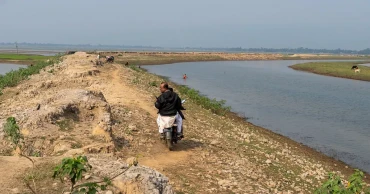
Tk 1,268.80 cr project aims to shield haor and Barind livelihoods from climate shocks
As floodwaters repeatedly inundate homes in the haor basin and drought tightens its grip on the high Barind survival for millions in rural Bangladesh has become an annual test of endurance.
Climate change has turned once-predictable seasons into cycles of uncertainty—washing away crops in one region while parching fields in another.
Against this backdrop, the government has approved a Tk 1,268.80 crore Climate Resilient and Livelihood Enhancement Project (CRALEP), aiming to reduce poverty and strengthen climate resilience among vulnerable communities living in flood-prone haor and drought-prone high Barind areas.
The project, to be implemented from January 2026 to December 2030, will be executed by the Local Government Engineering Department (LGED) under the Local Government Division.
It will cover 33 upazilas in eight districts in Mymensingh, Dhaka, Chattogram, Sylhet and Rajshahi divisions.
The project is jointly funded by the government, international lenders and development partners.
Idle machines, rising waters: A losing battle to protect Noluar Haor
Of the total project cost, Tk 305 crore will come from the government, Tk 854 crore as a loan from the International Fund for Agricultural Development (IFAD), and Tk 109.80 crore as a grant from Denmark’s development agency, DANIDA.
Officials involved in the project say CRALEP aligns with national development plans and climate strategies, placing particular emphasis on resilient infrastructure, food security and livelihood diversification at a time when climate-induced disasters are becoming more frequent and severe.
The project seeks to address poverty not as an isolated economic issue, but as a consequence of repeated climate shocks.
In the haor areas, early floods often destroy standing boro crops, while in the Barind tract, prolonged dry spells undermine agricultural productivity and household incomes.
To improve connectivity and market access, CRALEP will construct or upgrade 334 kilometres of rural roads—141 kilometres in haor regions and 193 kilometres in Barind areas. Another 58 rural markets will be developed or rehabilitated, alongside the construction of 34 ghats to support water-based transport in flood-prone zones.
The project also places strong emphasis on livelihoods.
Vocational training will be provided to 40,000 youths, while 20,150 youths will receive entrepreneurship training to encourage self-employment.
Besides, nearly 3,000 members of Labour Contracting Societies will receive sustainable livelihood support.
Recognising the acute vulnerability of haor settlements during monsoon floods, the project includes the provision of internal village services in 320 haor villages.
These include walkways, toilet blocks and tube-wells, along with the construction of 72 kilas—raised platforms used for temporary crop storage and shelter during floods.
Further interventions include the construction of 72 kilometres of internal walkways, installation of 480 toilets and 720 tube-wells in haor regions, and ecosystem-based village protection measures in 280 haor villages as part of nature-based solutions to disaster risk.
Illegal topsoil extraction threatens ‘Gaillar Haor’, croplands in Sunamganj
A senior Planning Commission official said the project would make a meaningful contribution to safeguarding development gains in some of the country’s most climate-exposed regions.
“Once implemented, the project will help reduce poverty, enhance climate resilience and address disaster-related challenges in flood-prone haor and drought-prone high Barind areas,” the official said, adding that it would also promote diversified and sustainable livelihoods and improve overall community wellbeing.
Bangladesh, one of the world’s fastest-growing developing economies, remains among the countries most exposed to climate change.
Recurrent flooding, erratic rainfall and rising temperatures continue to threaten rural livelihoods and infrastructure.
15 days ago
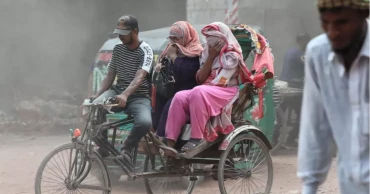
Dhaka air turns ‘very unhealthy’, ranks fourth globally
Dhaka, the densely populated capital of Bangladesh, ranked fourth among the world’s most polluted cities on Friday morning, recording an Air Quality Index (AQI) of 204 at 09:08 am.
Today, the city’s air was classified as ‘very unhealthy’, indicating a serious health threat, according to the AQI report.
Lahore in Pakistan, Hanoi in Vietnam, and Cairo in Egypt occupied the first, second, and third spots on the list, with AQI scores of 362, 289, and 210 respectively.
According to the AQI scale, a reading between 50 and 100 is considered ‘moderate’, with generally acceptable air quality, though sensitive individuals should limit prolonged outdoor exertion. AQI levels of 101–150 are ‘unhealthy for sensitive groups’, 151–200 is ‘unhealthy’, 201–300 is ‘very unhealthy’, and readings above 301 are considered ‘hazardous’, posing severe health risks.
Unhealthy air puts Dhaka third on global pollution list
The AQI, which reports daily air quality, informs residents how clean or polluted the air is and highlights potential health effects. In Bangladesh, the AQI is calculated based on five key pollutants: particulate matter (PM10 and PM2.5), nitrogen dioxide (NO2), carbon monoxide (CO), sulfur dioxide (SO2), and ozone.
Dhaka has long struggled with air pollution. Air quality usually deteriorates in winter and improves during the monsoon season.
The World Health Organization (WHO) estimates that air pollution causes about seven million deaths worldwide each year, primarily from stroke, heart disease, chronic obstructive pulmonary disease, lung cancer, and acute respiratory infections.
15 days ago
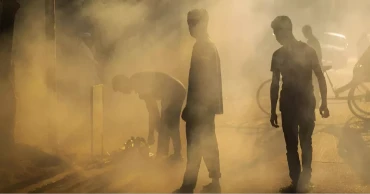
Dhaka’s air hits ‘very unhealthy’ level, ranks second most polluted city globally
Dhaka, the densely populated capital of Bangladesh, ranked second among the world’s most polluted cities on Monday morning, recording an Air Quality Index (AQI) of 262 at 9:02 am.
Today, the city’s air was classified as ‘very unhealthy’, indicating a serious health threat, according to the AQI report.
Kinshasa in Congo, Ulaanbaatar in Mogolia, and Cairo in Egypt occupied the first, third, and third spots on the list, with AQI scores of310, 262, and 265 respectively.
According to the AQI scale, a reading between 50 and 100 is considered ‘moderate’, with generally acceptable air quality, though sensitive individuals should limit prolonged outdoor exertion. AQI levels of 101–150 are ‘unhealthy for sensitive groups’, 151–200 is ‘unhealthy’, 201–300 is ‘very unhealthy’, and readings above 301 are considered ‘hazardous’, posing severe health risks.
The AQI, which reports daily air quality, informs residents how clean or polluted the air is and highlights potential health effects. In Bangladesh, the AQI is calculated based on five key pollutants: particulate matter (PM10 and PM2.5), nitrogen dioxide (NO2), carbon monoxide (CO), sulfur dioxide (SO2), and ozone.
Dhaka's air quality remains ‘very unhealthy’
Dhaka has long struggled with air pollution. Air quality usually deteriorates in winter and improves during the monsoon season.
The World Health Organization (WHO) estimates that air pollution causes about seven million deaths worldwide each year, primarily from stroke, heart disease, chronic obstructive pulmonary disease, lung cancer, and acute respiratory infections.
19 days ago

Unhealthy air grips Dhaka, ranks second globally
Dhaka, the densely populated capital of Bangladesh, ranked second among the world’s most polluted cities on Friday morning.
At 8:22 am, Dhaka recorded an air quality index (AQI) score of 190 and classified it as ‘unhealthy’ as reported by IQAir.
Delhi in India, Kuwait City in Kuwait, and Ulaanbaatar in Mongolia occupied the first, third, and fourth spots on the list, with AQI scores of 194, 186, and 181 respectively.
According to the AQI scale, a reading between 50 and 100 is considered ‘moderate’, with generally acceptable air quality, though sensitive individuals should limit prolonged outdoor exertion.
Air quality worsens as Dhaka tops global pollution ranking
AQI levels of 101–150 are ‘unhealthy for sensitive groups’, 151–200 is ‘unhealthy’, 201–300 is ‘very unhealthy’, and readings above 301 are considered ‘hazardous’, posing severe health risks.
The AQI, which reports daily air quality, informs residents how clean or polluted the air is and highlights potential health effects. In Bangladesh, the AQI is calculated based on five key pollutants: particulate matter (PM10 and PM2.5), nitrogen dioxide (NO2), carbon monoxide (CO), sulfur dioxide (SO2), and ozone.
Dhaka has long struggled with air pollution. Air quality usually deteriorates in winter and improves during the monsoon season.
Dhaka’s air continues to be ‘very unhealthy’
The World Health Organization (WHO) estimates that air pollution causes about seven million deaths worldwide each year, primarily from stroke, heart disease, chronic obstructive pulmonary disease, lung cancer, and acute respiratory infections.
22 days ago

Dhaka records world’s worst air quality today
Dhaka, the densely populated capital of Bangladesh, ranked first among the world’s most polluted cities on Wednesday morning, recording an Air Quality Index (AQI) of 305 at 8:13 am.
Today, the city’s air was classified as ‘very unhealthy’, indicating a serious health threat, according to the AQI report.
Cairo in Egypt, Kolkata in India and Ulaanbaatar in Mongolia occupied the second, third and fourth position on the list, with AQI scores of 267, 226, and 214 respectively.
According to the AQI scale, a reading between 50 and 100 is considered ‘moderate’, with generally acceptable air quality, though sensitive individuals should limit prolonged outdoor exertion. AQI levels of 101–150 are ‘unhealthy for sensitive groups’, 151–200 is ‘unhealthy’, 201–300 is ‘very unhealthy’, and readings above 301 are considered ‘hazardous’, posing severe health risks.
Dhaka tops global air pollution list with ‘very unhealthy’ AQI
The AQI, which reports daily air quality, informs residents how clean or polluted the air is and highlights potential health effects. In Bangladesh, the AQI is calculated based on five key pollutants: particulate matter (PM10 and PM2.5), nitrogen dioxide (NO2), carbon monoxide (CO), sulfur dioxide (SO2), and ozone.
Dhaka has long struggled with air pollution. Air quality usually deteriorates in winter and improves during the monsoon season.
The World Health Organization (WHO) estimates that air pollution causes about seven million deaths worldwide each year, primarily from stroke, heart disease, chronic obstructive pulmonary disease, lung cancer, and acute respiratory infections.
24 days ago

Massive winter storm threatens more than half of US with ice, extreme cold
Freezing rain hit parts of Texas on Friday as a powerful, multi-day winter storm began moving across the country, threatening roughly half of the U.S. population with snow, sleet, ice, dangerously cold temperatures, and widespread power outages. Forecasters warned that damage—particularly from heavy ice—could be severe, potentially rivaling the destruction caused by hurricanes.
The storm disrupted daily life across large parts of the country. Schools in Chicago and other Midwestern cities canceled classes, airlines grounded thousands of flights, churches shifted services online, and major events such as the Grand Ole Opry in Nashville proceeded without audiences. Mardi Gras-related parades in Louisiana were postponed or called off.
Weather alerts were widespread, with about 182 million people under ice and snow warnings and more than 210 million facing cold weather advisories, often overlapping. Power companies prepared for outages, as ice-laden trees and power lines can collapse even after storms subside.
In Dallas, residents stocked up on essentials as conditions worsened. “We’re staying in and keeping out of the way,” said one shopper as freezing rain made roads slick in cities like Lubbock.
After sweeping through the South, the storm was forecast to move northeast, potentially dropping up to a foot of snow from Washington, D.C., to New York and Boston.
The first phase of the storm involved an influx of Arctic air from Canada, bringing dangerous wind chills to the Midwest. In some areas, temperatures felt as low as minus 40 degrees Fahrenheit (minus 40 Celsius), prompting school closures and making prolonged outdoor exposure hazardous.
Despite the extreme cold, thousands gathered in Minneapolis for a planned protest, while elsewhere travel disruptions mounted. Nearly 5,000 flights were delayed or canceled nationwide on Friday, with thousands more canceled for the weekend.
Read More: Weather likely to remain unchanged: BMD
State and federal agencies prepared emergency responses. Road crews treated highways, National Guard units were deployed to assist motorists, and nearly 30 federal search-and-rescue teams were placed on standby. FEMA pre-positioned millions of meals, hundreds of thousands of blankets, and generators along the storm’s path. President Donald Trump said his administration was coordinating closely with state and local officials.
Officials warned that ice accumulation could bring down power lines and burst pipes, and that recovery would be slow even after the storm passes. In many Southern states, most homes rely on electric heating, increasing the risk during outages.
Remembering the deadly Texas power grid failure five years ago, state leaders pledged improved preparedness. Utility companies brought in extra crews to help maintain service.
In the Northeast, cities braced for potentially their heaviest snowfall in years. Boston declared a cold emergency, while Connecticut and neighboring states prepared for possible travel restrictions. Philadelphia announced school closures, encouraging students to stay safe and enjoy the snow responsibly.
As temperatures plunged, shelters opened for vulnerable populations. In Detroit, emergency cots were set up for those without housing, while elsewhere residents chose to ride out the storm at home or on campus with friends.
Universities across the South canceled classes or urged students to leave dorms amid power concerns. Some students, however, opted to stay together and face the storm collectively.
28 days ago