European Union
EU eyes deepening ties with Bangladesh under new govt
The European Union (EU) on Saturday said they look forward to working with the new government of Bangladesh to ‘intensify’ relations and stand ready to support reforms that are underpinned by respect for democratic principles, human rights and the rule of law.
The European Union welcomes the holding of genuinely competitive parliamentary elections and referendum in Bangladesh in a peaceful atmosphere, said the EU Spokesperson in a statement issued from Brussels, Belgium, stating that the people of Bangladesh have exercised their democratic rights in large numbers.
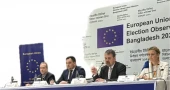
The EU deployed an Election Observation Mission, which presented its preliminary findings in a press conference where it noted that the elections were credible and competently managed, marking a pivotal step towards restoring democratic governance and rule of law.
The mission’s final report will be published later this year.
“We call on stakeholders to work together to deliver on the constitutional, judicial and other important reforms for which popular support has been expressed in the referendum and note the vital role of the new Parliament in this regard,” said the EU Spokesperson.
BNP Chairman Tarique Rahman congratulated the people of Bangladesh after his party’s landslide victory in the 13th national election, declaring that ‘we all are free from today’.
“This victory belongs to Bangladesh, to democracy and to the pro-democracy people,” Tarique said at his first press conference following the national election, held at a city hotel.
7 days ago
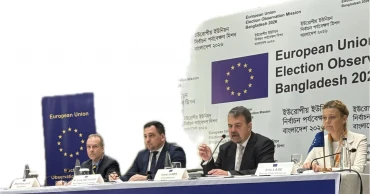
Bangladesh election credible, genuinely competitive: EU Chief Observer
Chief Observer of the European Union Election Observation Mission (EU EOM) to Bangladesh Ivars Ijabs on Saturday described the national election as ‘credible, hugely and genuinely competitive and pluralistic’ but observed that there was lack of proper women's representation.
“Parliamentary elections were credible and competently managed, marking a pivotal step towards restoring democratic governance and rule of law,” he told reporters at a city hotel.
Ijabs noted that for the first time since 2008, elections were genuinely competitive, conducted under a renewed legal framework that largely accords with international standards and with fundamental freedom broadly respected.
He, however, said sporadic, localised political violence and persistent fear of mob attacks, often triggered by manipulated online narratives, harmed the democratic process.
Regarding the voter turnout, Ijabs said this is historically higher and lower and noted that it is shrinking everywhere and it is something concerning for all democracies.
He said the limited political space afforded to women undermined their equal participation but the EC worked independently and transparently, maintaining the confidence of stakeholders and upholding the integrity of the polls.
“Women candidates were, regrettably, almost absent from these elections,” Ijabs said, noting that only four percent of the contestants were women, with BNP fielding 10 and NCP two candidates, while Jamaat and 30 other parties did not have any, evidencing a ‘clear lack of political will’ to advance women in national politics.
He also highlighted the vital role of citizen observers, fact-checkers, as well as youth and women activists in rebuilding public trust in elections, enhancing transparency, and helping voters to make informed choices.
The EU EOM observers noted that the election day was orderly, festive, and calm, while dedicated poll workers managed the opening, voting, and counting efficiently.
EU Chief Observer calls twin polls a big day for Bangladesh democracy
The presence of party agents at all stages of the process enhanced integrity, while regular updates on results tabulation at the local level by returning officers and by legacy media helped to maintain public confidence. Independent participation of persons with disabilities was not always ensured.
The absence of affirmative action measures still leaves indigenous communities and minorities underrepresented in the political arena.
"It is time to abandon the old practices that no longer reflect the growing maturity of Bangladesh's democracy and to chart a new course promoting independent institutions, human rights and accountability," said Ijabs.
Head of the European Parliament Delegation Tomas Zdechovsky said the country is now entering a new crucial phase. “We urge the new parliament and government, backed by all other state institutions, to implement the approved reforms.”
The EU EOM has been present in Bangladesh since the end of 2025 and on election day with 223 international observers, drawn from all EU Member States, as well as Canada, Norway and Switzerland, deployed across all 64 administrative districts.
The mission will continue to observe the post-election environment and will publish a final report, including recommendations for improving future elections, in the coming months.
7 days ago
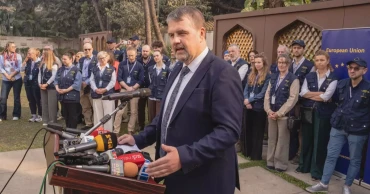
Hopeful mood, positive electoral climate in Bangladesh: EU chief observer
Highlighting the importance of a participatory nature of election, Chief Observer of the European Union Election Observation Mission (EU EOM) to Bangladesh Ivars Ijabs on Tuesday said the general atmosphere and expectations are very hopeful with a positive electoral environment in place.
"We have emphasised the participatory nature of the electoral process which is very much desirable," he told reporters, stressing the importance of inclusion of all communities, minorities and also participation of women in the electoral process.
He said most of their interlocutors have emphasised that there should be a new page in the history of Bangladesh and its democracy. "I would say the electoral environment is very positive. The general atmosphere is very hopeful," Ijabs said.
He, however, said there are many issues that they have discussed and reiterated that they remain neutral without getting involved in any political process. "We are here not to comment on Bangladesh’s politics. We are here to check and observe the process."
In terms of the security situation, the chief observer said their overall perception is that the situation is still under control of the authorities.
They deployed 90 short-term observers (STOs) to observe the election day proceedings in all 64 administrative districts of the country.
The short-term observers will observe opening of polling centres, voting, closing, as well as counting of the ballots and the tabulation of results.
“The short-term observers will be present in cities, towns and villages in almost every constituency. Their observations and reports throughout the day will be a critical element of our impartial and fact-based assessment of these historic elections,” Ijabs told reporters.
With a total of 200 observers deployed across the country, he said they are contributing to the transparency of these historic elections.
"This large and dedicated mission attests to the European Union’s unwavering commitment to the democratic governance of Bangladesh,” said the chief observer.
The deployment of short-term observers builds on the work of 56 long-term observers, who have been in Bangladesh since mid-January, observing the pre-election environment, including preparations by the election administration, campaign activities, voter education efforts, and who have engaged with electoral stakeholders across the political and civil society spectrum.
A delegation of Members of the European Parliament is further reinforcing the mission, and 35 locally recruited short-term observers from the diplomatic missions of the EU Member States, as well as Canada, Norway and Switzerland are also joining the mission.
At full strength, the EU EOM will comprise more than 200 observers, drawn from all 27 EU member states, as well as Canada, Norway and Switzerland.
The EU EOM will present its preliminary findings in a statement at a press conference, on February 14, in Dhaka.
Security, voter participation, level playing field: EU's 3 areas of focus in election
A final report, including recommendations for future electoral processes, will be presented to the authorities after the completion of the entire electoral process. Both documents will be public and will be made available on the Mission’s website.
The EU EOM is bound by a code of conduct, which requires strict neutrality and non-interference.
It undertakes its work in accordance with the Declaration of Principles for International Election Observation, endorsed under UN auspices in 2005.
11 days ago
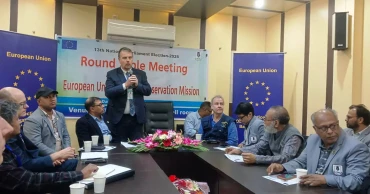
Security, voter participation, level playing field: EU's 3 areas of focus in election
The European Union (EU) said it will focus on three key areas while observing Bangladesh’s upcoming 13th parliamentary election.
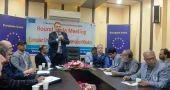
EU election observation mission chief and European Parliament member Ivars Ijabs told journalists at a roundtable meeting at Sylhet District Press Club on Friday that the mission will pay special attention to security, voter participation, and a level playing field for candidates.
He said the EU sees this election as an important step in Bangladesh’s history.
At the roundtable meeting, chaired by Sylhet District Press Club president Moin Uddin and moderated by general secretary Mohammad Nasir Uddin, Ivars Ijabs said, “We are here to strengthen our political, economic, social, and cultural ties with your beautiful country. In this context, our election observation mission is an important step, and we see this election as a significant milestone in Bangladesh’s history.”
He also said, “Our mission follows an internationally recognized method, where our role is only to observe and not to take part in the political process. Because the election is very close, I will not comment on any party’s rule violations or other issues.”
Ivars Ijabs added, “We will submit our preliminary report in Dhaka on February 14, immediately after the election, and the full report will be presented two months later.”
He said, “The mission officially began one month ago, and our long-term observation team (LTO) has already been monitoring election preparations in Dhaka and other areas.”
He added, “Our observers are engaging with local stakeholders, including the election commission, government authorities, candidates, domestic observers, and various NGOs as key partners.”
About additional observers from Europe, he said, “Our colleagues Bambi and Christian have been working here for a month, and tomorrow 90 more short-term observers from Europe will join. They will monitor campaigning and vote counting during the final days of the election. This is not only an EU mission; three important partner countries - Switzerland, Norway, and Canada - are also participating.”
He said the observers will be spread across different constituencies, cities, and villages in the country.
Highlighting the three main areas of focus, he said, “Our observation will focus on three key aspects: how safely and securely citizens can take part in the election, the inclusion of all citizens including women and minority groups, and ensuring equal opportunities for candidates.”
Ivars Ijabs also said, “Our core team in Dhaka includes experts such as legal specialists, election analysts, and media analysts. They are monitoring both traditional and social media.” He emphasized that they are not intervening in the process or giving advice to anyone.
He explained that organizing elections is primarily the responsibility of Bangladesh’s citizens, and there is no room for outside interference.
The EU parliament member added, “We want to maintain a long-term relationship with Bangladesh. In today’s changing world, one of the EU’s priorities is to find democratic and reliable partners globally.”
Speaking about trade, he said, “We want to expand trade relations with Bangladesh and invest in green energy and climate change initiatives. Democratic processes are very important in this partnership.”
14 days ago
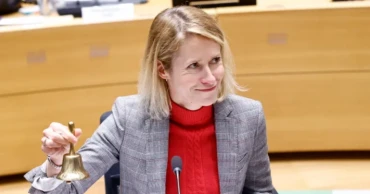
EU labels Iran’s IRGC terrorist as tensions with US and Tehran escalate
The European Union has officially designated Iran’s Islamic Revolutionary Guard Corps (IRGC) as a “terrorist organisation,” a move praised by EU officials and strongly condemned by Tehran amid rising US-Iran tensions.
EU foreign policy chief Kaja Kallas announced that the decision followed a meeting of European foreign ministers, calling the designation “necessary” to hold the regime accountable for its violent suppression of domestic protests. European Commission President Ursula von der Leyen described the action as “long overdue” and expressed solidarity with the Iranian people’s struggle for freedom.
Iran reacted sharply. Foreign Minister Abbas Araghchi termed the EU’s decision a “publicity stunt” and a “strategic mistake,” accusing Europe of selective outrage by ignoring Israeli actions in Gaza while targeting Iran. The Iranian armed forces warned that the move violates international law and could have serious consequences for European policymakers.
Tehran also announced planned live-fire naval exercises in the Strait of Hormuz next week, signaling readiness for “immediate and powerful” response to any potential attack. Meanwhile, Pakistan’s Prime Minister Shehbaz Sharif and Iranian President Masoud Pezeshkian stressed dialogue and diplomatic engagement to maintain regional peace during a recent phone call.
The IRGC, founded after the 1979 Iranian Revolution, operates alongside Iran’s regular military under Supreme Leader Ayatollah Ali Khamenei, overseeing ballistic missile and nuclear programs, and supporting regional proxy groups. The US first designated the IRGC a foreign terrorist organisation in 2019. Analysts say the EU move intensifies Iran’s already high-stakes geopolitical position, as the country faces growing Western pressure and regional instability.
With inputs from ALJAZEERA
22 days ago
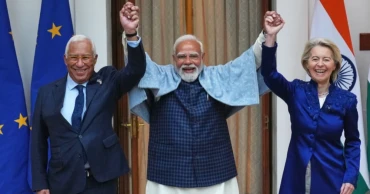
EU signs trade deals to boost global ties and reduce reliance on U.S.
The European Union is seeking new trade partnerships worldwide as it aims to reduce dependence on the United States and strengthen its global influence. The EU recently signed a free trade agreement with India, part of a series of deals with countries including Japan, Indonesia, Mexico, and South America’s Mercosur nations.
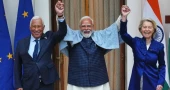
The agreement with India, signed by European Commission President Ursula von der Leyen in New Delhi, could impact up to 2 billion people. It will remove tariffs on nearly 97% of EU exports to India, such as cars and wine, and 99% of Indian exports to the EU, including textiles and medicines. Observers say the deal strengthens ties between Brussels and New Delhi amid rising concerns over China and uncertainty in trans-Atlantic relations.
“The international order we relied upon for decades is no longer certain,” said Cyprus President Nikos Christodoulides, highlighting the EU’s push for a more autonomous and globally open union.
The EU has also pursued trade deals with Indonesia, Japan, South Korea, Australia, and is negotiating with the United Arab Emirates. A deal with the Mercosur nations was finalized recently, creating a free trade market of over 700 million people despite some opposition in the European Parliament.
Beyond trade, the EU is investing in its defense industry and infrastructure, spurred by Russia’s invasion of Ukraine and past criticism from the Trump administration over low European defense spending. The bloc has allocated 150 billion euros for projects including missile defense, drones, artillery, cyber systems, and artificial intelligence. Experts note that Europe’s goal is to build strategic autonomy and reduce reliance on U.S. military support.
Energy independence is another priority. The EU has increased U.S. energy imports while seeking alternative suppliers in the eastern Mediterranean and Gulf. Officials stress the need to diversify sources to avoid replacing one dependency with another.
Analysts say these moves show the EU’s effort to strengthen its global position and manage relations with China, Russia, and the U.S., ensuring both economic and strategic resilience.
24 days ago
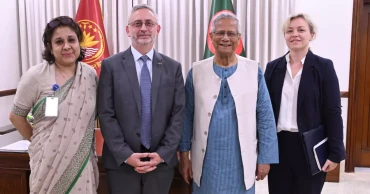
EU to send election observer team to Bangladesh: Miller tells Prof Yunus
The European Union plans to send a large team of election observers to Bangladesh for the upcoming general election, the first such mission since 2008, said EU Ambassador Michael Miller.
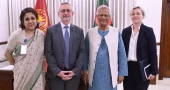
Ambassador Miller made the announcement during a meeting with Chief Adviser Prof Muhammad Yunus at the State Guest House Jamuna on Tuesday.
He said the EU observer mission is yet to be formally confirmed but could include between 150 and 200 members. Some observers are expected to arrive about six weeks before the election, while others may join a week prior to polling day.
“This would be the first time since 2008 that the EU is sending such a full-fledged election observer team to Bangladesh,” Ambassador Miller told the Chief Adviser, adding that the EU would also assist in deploying local election observers during the vote.
During the hour-long meeting, the two sides discussed a wide range of issues, including governance and constitutional reforms, election preparations, judicial and labour reforms, trade and investment relations between Bangladesh and the EU, and the broader political process in the country.
Ambassador Miller praised the July National Charter, describing it as a “very important" document aimed at ensuring a smooth democratic transition.
Govt welcomes only genuine foreign election observers: Touhid
He also commended the recently approved labour law reforms and initiatives to strengthen the independence of the judiciary, calling them ‘notable successes’.
“These are all important steps,” he said, emphasising the EU’s continued support for the Election Commission’s efforts to ensure free, fair and credible elections in February.
Miller described the upcoming polls as an ‘opportunity to reset the reputation of the country’.
The envoy also reaffirmed the EU’s commitment to supporting Bangladesh’s smooth graduation from a Least Developed Country (LDC) to a middle-income nation.
Both sides discussed ways to deepen trade and investment ties, including prospects for an economic partnership agreement and exploring new opportunities in aviation and shipping.
They also agreed to work more closely on tackling human trafficking and illegal migration.
The Chief Adviser said Bangladesh is expected to sign an agreement with global shipping giant A.P. Moller–Maersk for the development and management of the Laldia Terminal at Chattogram Port, according to the Chief Adviser’s press wing.
Commonwealth to send election observers to Bangladesh: Khosru
Ambassador Miller noted that the Danish company plans to invest around $800 million to develop Laldia into one of the top terminals in the region.
The two sides also discussed the election environment, candidate eligibility and ensuring due process to uphold human rights ahead of the vote.
3 months ago
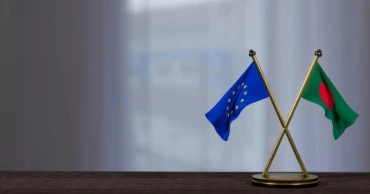
Bangladesh a key partner in Bay of Bengal, wider Indo-Pacific: EU
The European Union (EU) has said Bangladesh is a ‘key partner’ for the European Union in the Bay of Bengal and wider Indo-Pacific.
The Council of the European Union (EU) underlined that the EU and the Indo-Pacific face increasingly complex security challenges.
The Council of the EU considers that the EU should continue and further intensify its strategic focus, presence, visibility and actions in the Indo-Pacific with the aim of contributing to their joint stability, security, prosperity and sustainable development, underpinned by the promotion of democracy, the rule of law, human rights and international law.
The EU will reinforce its role as a reliable actor bringing added value to long-standing relations with all partners in the region.
This is especially relevant as the EU has a geographic presence in the Indo-Pacific through its outermost regions and overseas countries and territories.
The Council underlined its commitment to a closely coordinated political presence of the EU and Member States in the region.
Bangladesh delegation visits Algeria to strengthen cooperation
Building on three successful EU-Indo Pacific Ministerial Fora (Paris 2022, Stockholm 2023 and Brussels 2024), the Council said it looks forward to the Fourth EU-Indo Pacific Ministerial Forum, to be convened by the High Representative in Brussels on November 20-21 November, a senior official told UNB.
Those EU-Indo Pacific Ministerial Fora constitute a unique platform for strategically interacting with audiences in both regions.
They reflect the strong and shared interest of the EU and the Indo-Pacific partners in fostering concrete cooperation, including on a region-to-region basis, enhancing mutual security, prosperity and resilience and laying the foundations for an ever-more ambitious partnership.
The EU Embassy in Dhaka has shared their latest policy document – newly issued by 27 Member states at the EU Foreign Affairs Council – which underlines how the European Union and Indo-Pacific are inter-linked and working in partnership on green and digital transition, trade and economic security, and security and defence.
Bangladesh on track for ‘peaceful, inclusive’ polls: Prof Yunus tells IRI
On October 20, the Council of the EU approved conclusions on the implementation of the EU Strategy for Cooperation in the Indo-Pacific stressing that the EU should further intensify its strategic focus, presence, visibility and actions in the Indo-Pacific with the aim of contributing to our joint stability, security, prosperity and sustainable development, underpinned by the promotion of democracy, rule of law, human rights and international law.
The EU Strategy for Cooperation in the Indo-Pacific, which was launched in September 2021, continues to provide a sound framework for EU engagement in a region spanning from the east coast of Africa to the Pacific islands.
Important steps have been taken to implement the strategy in the seven key priority areas, both at the EU and member state level, with a particular focus on three core areas of engagement: security and defence challenges, the green and digital transition, and trade and economic security.
The Council also reiterated its serious concerns about the current situation in both Afghanistan and Myanmar, and its unwavering commitment to achieving a just, comprehensive and lasting peace in the Middle East on the basis of the two-State solution.
EU-Indo Pacific Ministerial Fora constitutes a unique platform for strategically interacting with audiences in both regions, according to the EU.
They reflect the strong and shared interest of the EU and the Indo-Pacific partners in fostering concrete cooperation, including on a region-to-region basis, enhancing mutual security, prosperity and resilience and laying the foundations for an ever more ambitious partnership.
3 months ago
EU to send observers for Bangladesh’s upcoming polls: Khosru
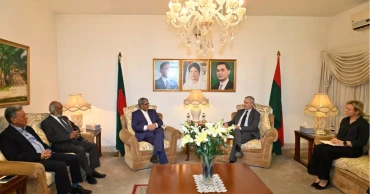
he European Union (EU) has decided to send election observers to Bangladesh for the upcoming national election, BNP Standing Committee member Amir Khosru Mahmud Chowdhury said on Sunday.
“The EU has decided to send observers following requests from the government and the Election Commission. They are eagerly waiting to see a fair, transparent and acceptable election in Bangladesh,” he said.
The BNP leader made the remarks while talking to reporters after a meeting between BNP Secretary General Mirza Fakhrul Islam Alamgir and EU Ambassador to Bangladesh Michael Miller at the BNP Chairperson’s Gulshan office.
Khosru said the discussion mainly focused on the upcoming national election, expected to be held in the first half of February, and the overall electoral process.
He said the EU has always played an important role in Bangladesh’s electoral process and will continue to do so this time as well.
Fakhrul issues fresh warning of election conspiracy
The BNP leader said the talks also covered several issues, including the economy, trade relations, institutional reforms, and the importance of strengthening democracy in Bangladesh.
Highlighting Bangladesh’s strong economic ties with the EU, Khosru said the country’s ready-made garments sector has grown significantly thanks to the EU’s duty-free market access. “They want to continue this support, and in the coming days, they want Bangladesh–EU trade relations to remain strong and uninterrupted.”
He said the EU also expressed its willingness to continue supporting efforts to make democracy in Bangladesh more institutional and sustainable.
The BNP leader said the EU wants to see democratic institutions — Parliament, government, judiciary, and the media — functioning independently.
Khosru said the EU is also keen to help create an environment where people can enjoy freedom of expression and democratic rights.
“We welcome this initiative. If we want democracy in Bangladesh to continue, we must make it institutional. The elements that make democracy work also need to be institutionalised, and the institutions themselves must function independently. We need to restore our democratic culture and revive the values that have been lost,” he said.
Sheltering an ‘autocrat’ is India’s choice: Tarique Rahman
The BNP leader said their discussion also touched on the need to make Parliament stronger and more effective. “A strong democracy cannot exist without a strong Parliament, and the EU wants to support efforts to strengthen parliamentary activities."
The EU ambassador arrived at the BNP Chairperson’s office around 11am and held the meeting with Fakhrul for one hour and ten minutes.
Apart from Khosru, BNP Standing Committee member Dr Abdul Moyeen Khan and Organising Secretary Shama Obaed were also present at the meeting.
4 months ago
February polls to be peaceful, festive despite attempts to delay: Prof Yunus
Chief Adviser Prof Muhammad Yunus on Wednesday reaffirmed his government’s commitment to holding a ‘free, fair, transparent and festive’ general election in the first half of February next year.
“The general election will be peaceful, fair, transparent and festive,” he said, adding that the interim government remains determined to hold it as scheduled, though ‘certain forces’ are still attempting to delay the polls.
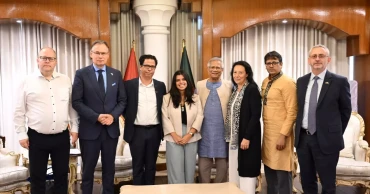
Prof Yunus made the remarks during a meeting with a delegation of Members of the European Parliament (MEPs) led by Mounir Satouri, held at the State Guest House Jamuna, said his Deputy Press Secretary Abul Kalam Azad Majumder.
“We have already announced the timeline for the election. It will be held in early February, just before Ramadan,” the Chief Adviser told the visiting delegation.
Prof Yunus noted growing enthusiasm among the public, particularly the youth, as student body elections have resumed in universities after years—some after more than three decades.
Prof Yunus to kick off packed 80th UNGA schedule on Sept 22
He expressed confidence that young voters would turn out in record numbers, as this will be the first time in over 15 years that many of them will be casting their ballots.
“Bangladesh will witness a new beginning through the February election. It will mark a new chapter in our history, a new journey for the nation,” he said.
During the hour-long discussion, the Chief Adviser and the MEPs exchanged views on the government’s reform initiatives, the European Union’s continued support for Bangladesh’s development and democratic transition, and the ongoing Rohingya humanitarian crisis.
5 months ago