nuclear talks
US, Iran to hold second round of nuclear talks in Geneva
The United States and Iran are set to convene a second round of negotiations over Tehran’s nuclear program on Tuesday in Geneva, amid heightened US military deployments in the Middle East and ongoing large-scale Iranian naval exercises.
US President Donald Trump has repeatedly warned that Washington could resort to military action if Iran refuses to curb its nuclear activities. Tehran has responded that it would retaliate against any such move. Trump has also criticized Iran over its deadly suppression of recent nationwide protests.
The initial round of discussions took place on Feb. 6 in Oman and were conducted indirectly. Vehicles bearing US flags entered the palace venue only after Iranian officials had apparently departed. Details about the format of Tuesday’s meeting have not been disclosed.
Trump’s envoys Steve Witkoff and Jared Kushner are traveling for the talks. US Secretary of State Marco Rubio, speaking during a visit to Budapest, said Washington remains hopeful about reaching an agreement despite challenges. “I’m not going to prejudge these talks,” Rubio said, adding that the president prefers diplomatic solutions.
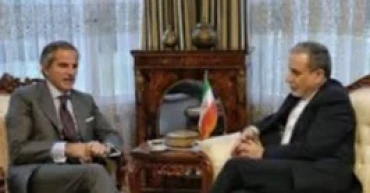
Iran’s Foreign Minister Abbas Araghchi, who is leading Tehran’s delegation, met Monday in Geneva with the head of the UN nuclear watchdog. Writing on X, Araghchi said he had arrived “with real ideas to achieve a fair and equitable deal,” while emphasizing that Iran would not yield to threats.
Speaking to reporters aboard Air Force One en route to Washington, Trump said he would be involved in the negotiations indirectly and described them as crucial. He characterized Iran as a tough negotiating partner and expressed hope that Tehran would take a more reasonable approach, adding that he believes Iran wants to avoid the consequences of failing to secure a deal.
Meanwhile, the US is also hosting discussions in Geneva between Russian and Ukrainian envoys ahead of the fourth anniversary of Russia’s full-scale invasion of Ukraine.
Protest crackdown anniversary
Iran is marking 40 days since one of the deadliest episodes in last month’s protest crackdown, in line with the traditional Muslim mourning period. Activists say at least 7,015 people were killed, many during a violent overnight operation between Jan. 8 and 9.
The US-based Human Rights Activists News Agency reported the latest figures, though The Associated Press has been unable to independently verify the toll due to internet and communication restrictions in Iran.
State media said authorities would hold a memorial ceremony at the Grand Mosalla mosque in Tehran and blamed the unrest on armed groups allegedly backed by foreign intelligence services.
Naval drills amid US buildup
Iran said its paramilitary Revolutionary Guard launched exercises early Monday in the Strait of Hormuz, the Persian Gulf and the Gulf of Oman — key global shipping routes through which about 20% of the world’s oil supply passes.
Security firm EOS Risk Group reported that mariners received warnings about a potential live-fire drill in Iranian waters of the Strait of Hormuz on Tuesday. Iranian state television did not confirm the live-fire element.
Last week, Trump announced that the USS Gerald R. Ford aircraft carrier would be redeployed to the Middle East, joining the USS Abraham Lincoln and accompanying destroyers already stationed there. US forces recently shot down an Iranian drone that approached the Lincoln, on the same day Iran attempted to halt a US-flagged vessel in the Strait of Hormuz.
Gulf Arab states have cautioned that any escalation could trigger a broader regional conflict, as tensions remain high following the Israel-Hamas war in Gaza.
Sanctions relief key for Tehran
The Trump administration is seeking to limit Iran’s nuclear activities and ensure it does not develop nuclear weapons. Tehran maintains its program is peaceful and has resisted calls to halt uranium enrichment or surrender its uranium stockpile.
Iran’s Deputy Foreign Minister Majid Takht-Ravanchi indicated Tehran may consider compromise but stressed that any agreement must include relief from US-led sanctions.
“The ball is in America’s court,” he told the BBC, saying progress would depend on Washington demonstrating sincerity.
Earlier negotiations were derailed in June after Israel launched a 12-day war against Iran. During the conflict, the US targeted Iranian nuclear facilities, likely damaging centrifuges enriching uranium to near weapons-grade levels, while Israeli strikes weakened Iran’s air defenses and missile capabilities.
Before the June conflict, Iran had enriched uranium to 60% purity, a level close to weapons-grade, though it continues to insist its nuclear program is solely for civilian purposes.
4 days ago
Iran, US to hold nuclear talks in Oman amid tensions; Trump issues warning to Khamenei
Iran and the United States have agreed to hold nuclear talks on Friday in Oman, Iran’s foreign minister said, as tensions remain high following Tehran’s deadly crackdown on nationwide protests.
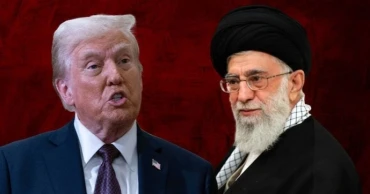
Iranian Foreign Minister Abbas Araghchi confirmed the talks on Wednesday after earlier uncertainty over their format and scope. U.S. President Donald Trump, meanwhile, issued a blunt warning to Iran’s Supreme Leader Ayatollah Ali Khamenei, saying he “should be very worried.”
Diplomatic efforts initially explored holding broader talks in Turkey, with regional countries involved and issues such as Iran’s missile program on the agenda. However, Iran later pushed for a narrower meeting focused only on its nuclear program, limited to direct involvement by Tehran and Washington.
Oman, which has long acted as a mediator between Iran and Western powers, previously hosted similar talks. Those negotiations collapsed last year after a brief war between Iran and Israel, during which the United States bombed Iranian nuclear facilities.
A White House official confirmed the talks will go ahead in Oman but said Washington remains skeptical about their success. Several regional leaders reportedly urged the U.S. not to abandon diplomacy despite ongoing tensions.
The talks come amid sharp strains in relations, including the recent shooting down of an Iranian drone by a U.S. Navy jet and an attempted interception of a U.S.-flagged ship by Iranian fast boats in the Strait of Hormuz.
Iranian President Masoud Pezeshkian has instructed his foreign minister to pursue “fair and equitable negotiations,” signaling rare openness to talks backed by Supreme Leader Khamenei.
U.S. officials said Washington hopes discussions will eventually expand beyond the nuclear issue to include Iran’s missile program, regional proxy networks and human rights concerns. Iran continues to insist its nuclear program is peaceful, though it has enriched uranium close to weapons-grade levels.
Turkey has urged both sides to resolve their differences through diplomacy, warning that foreign intervention in Iran could destabilize the region.
16 days ago

US denies Iran claims of prisoner deal; UK plays it down
The United States and Iran are in active talks over the release of prisoners, a person familiar with the discussions said Sunday as Washington denied a report by Iranian state-run television that deals had been struck.
Prisoner swaps between the U.S. and Iran are not uncommon and both countries in recent years have routinely sought the release of detainees. But any movement between the two countries is particularly sensitive as the Biden administration looks to restart nuclear talks. A 2015 atomic accord between the nations included prisoner exchanges.
Read Also: Progress noted at diplomats' talks on Iran nuclear deal
The issue burst into public view with a report in Iran of a deal for the Islamic Republic to release U.S. and British prisoners in exchange for Tehran receiving billions of dollars. U.S. officials immediately denied the report, though a person with knowledge of the discussions who was not authorized to discuss them publicly said talks are active, with messages passed between intermediaries.
It wasn’t immediately clear if the report represented a move by the hard-liners running the Iranian broadcaster to disrupt negotiations with the West amid talks in Vienna on Tehran’s tattered nuclear deal.
Even after an initial American denial, an anchorwoman on Iranian state TV still repeated the announcement.
“Some sources say four Iranian prisoners are to be released and $7 billion are to be received by Iran in exchange for releasing four American spies,” the anchorwoman said. She described the claimed deal as coming due to congressional pressure on President Joe Biden and “his urgent need to show progress made in the Iran case.”
But Iran’s ambassador to the United Nations, Majid Takht-e Ravanchi, later denied the report of the prisoner swap, saying that it’s “not confirmed,” according to the Telegram channel of state-run IRNA news agency.
“Iran has always emphasized the comprehensive exchange of prisoners between the two countries,” he said, without elaborating.
State TV did not identify the Iranians that Tehran sought to be freed.
State Department spokesman Ned Price immediately denied the Iranian state TV report.
“Reports that a prisoner swap deal has been reached are not true,” Price said. “As we have said, we always raise the cases of Americans detained or missing in Iran. We will not stop until we are able to reunite them with their families.”
Biden’s chief of staff Ron Klain told CBS’ “Face the Nation” that “unfortunately, that report is untrue. There is no agreement to release these four Americans.”
“We’re working very hard to get them released,” Klain said. “We raise this with Iran and our interlocutors all the time, but so far there’s no agreement.”
Tehran holds four known Americans now in prison: Baquer and Siamak Namazi, environmentalist Morad Tahbaz and Iranian-American businessman Emad Shargi. Iran long has been accused of holding those with Western ties prisoners to be later used as bargaining chips in negotiations.
Despite the American denials, there have been signs that a deal on prisoners may be in the works based on Iranian officials’ remarks in recent weeks.
Although no formal proposal for a swap has yet been presented to officials in Washington, let alone been signed off on by the White House, the specificity of the reports from Iran suggested that working-level consideration of a deal is at least underway.
Read Also: US NAVY fires warning shots in new tense encounter with Iran
State TV also quoted sources as saying a deal had been reached for the United Kingdom to pay 400 million pounds ($552 million) to see the release of British-Iranian woman Nazanin Zaghari-Ratcliffe.
British officials played down the report. The Foreign Office said the country continues “to explore options to resolve this 40-year-old case and we will not comment further as legal discussions are ongoing.”
Aside from Zaghari-Ratcliffe’s case, the U.K. and Iran also are negotiating a British debt to Tehran from before the 1979 Islamic Revolution.
Last week, Zaghari-Ratcliffe was sentenced to an additional year in prison, her lawyer said, on charges of spreading “propaganda against the system” for participating in a protest in front of the Iranian Embassy in London in 2009.
That came after she completed a five-year prison sentence in the Islamic Republic after being convicted of plotting the overthrow of Iran’s government, a charge that she, her supporters and rights groups deny.
While employed at the Thomson Reuters Foundation, the charitable arm of the news agency, she was taken into custody at the Tehran airport in April 2016 as she was returning home to Britain after visiting family.
Richard Ratcliffe, the husband of Zaghari-Ratcliffe, told The Associated Press he was not aware of any swap in the works.
“We haven’t heard anything,” he said. “Of course, we probably wouldn’t, but my instinct is to be skeptical at present.”
Earlier Sunday, U.K. Foreign Secretary Dominic Raab told the BBC that he believed Zaghari-Ratcliffe was being held “unlawfully” by Iran.
“I think she’s been treated in the most abusive, tortuous way,” Raab said. “I think it amounts to torture the way she’s been treated and there is a very clear, unequivocal obligation on the Iranians to release her and all of those who are being held as leverage immediately and without condition.”
The announcement by state TV comes amid a wider power struggle between hard-liners and the relatively moderate government of Iranian President Hassan Rouhani. That conflict only has grown sharper as Iran approaches its June 18 presidential election.
Iranian Foreign Minister Mohammad Javad Zarif, who pushed for the 2015 nuclear deal under Rouhani, has seen himself embroiled in a scandal over frank comments he made in a leaked recording. Zarif’s name has been floated as a possible candidate in the election, something that now seems unlikely as even Iran’s supreme leader has apparently criticized him.
Tehran is now negotiating with world powers over both it and the U.S. returning to the nuclear deal, which saw it limit its uranium enrichment in exchange for the lifting of economic sanctions. Iran has not held direct negotiations with the U.S. during the talks, however.
Read Also: Iran, US warships in first tense Mideast encounter in a year
As the negotiations continue, Iranian diplomats there have offered encouraging comments, while state TV quoted anonymous sources striking maximalist positions contradicting them. That even saw Abbas Araghchi, the Iranian deputy foreign minister leading the talks, offer a rebuke on Twitter last week to Iranian state television’s English-language arm, Press TV.
“I don’t know who the ‘informed source’ of Press TV in Vienna is, but s/he is certainly not ‘informed,’” Araghchi wrote.
4 years ago