China

Delhi, Beijing greet Foreign Minister; eye stronger ties with Dhaka
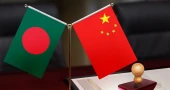
Indian External Affairs Minister Dr S. Jaishankar and China's Foreign Minister Wang Yi extended congratulations to newly appointed Bangladesh Foreign Minister Dr Khalilur Rahman on his appointment.
Wang Yi, who is also Member of the Political Bureau of the Communist Party of China, expressed his intent to work with Foreign Minister Rahman to jointly implement the important understandings reached by the leaders of the two countries and advance the Bangladesh-China Comprehensive Strategic Partnership to new heights.
Dr Jaishanker said he looks forward to working together with Foreign Minister Rahman to advance cooperation between Bangladesh and India for mutual progress and prosperity, said the Ministry of Foreign Affairs.
The Foreign Minister served as Chief Adviser's High Representative for the Rohingya Issue and Priority Affairs and National Security Adviser during the interim government’s period.
He joined BCS (Foreign Affairs) in 1979 after securing the first position in the first regular civil service examination after independence held in 1977.
Khalilur Rahman served in various capacities in the Ministry of Foreign Affairs and the Permanent Mission of Bangladesh to the United Nations in New York.
In 1991, he joined the United Nations secretariat as a Special Adviser and served in different senior UN positions during the next 25 years.
PM Tarique Rahman to address nation this evening
In November 2024, he was appointed as the High Representative with the status and privileges of an Adviser.
Khalilur Rahman stood first class first in MA examinations in Economics at Dhaka University in 1977. During 1980-83, he attended the Fletcher School of Law and Diplomacy, Tufts University and the Kennedy School of Government, Harvard University and earned the degrees of MA in Law and Diplomacy and PhD in Economics.
3 days ago
China opens visa-free entry to UK, Canada travellers
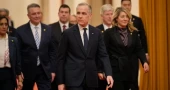
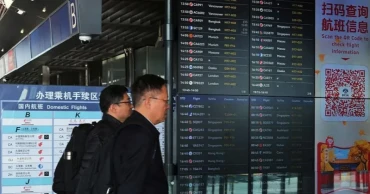
China has confirmed that nationals of the United Kingdom and Canada will be able to enter mainland China without a visa for stays of up to 30 days from February 17.
China’s foreign ministry said the visa-free entry will apply to travel for tourism, business and visits to family or friends, and the policy will initially remain in force until December 31 this year.
The announcement follows British Prime Minister Keir Starmer’s official visit to China last month, during which he and Chinese President Xi Jinping agreed to ease travel arrangements between the two countries.
In a statement issued on Sunday, China’s foreign ministry said the move would further facilitate people-to-people exchanges between China and other countries.
The decision brings the UK and Canada into line with around 50 other countries whose citizens are already eligible for visa-free entry to China, including France, Germany, Italy, Australia and Japan.
According to official figures from the UK, about 620,000 British nationals travelled to China in 2024, meaning hundreds of thousands of travellers could potentially benefit from the new arrangement.
During his January visit, Starmer said UK businesses were seeking greater opportunities to expand their presence in China. The two sides also agreed to deepen cooperation in areas such as services, healthcare, green technology and finance, though no comprehensive free trade agreement was announced.
The visit marked the first trip to China by a British prime minister since Theresa May in 2018.
With inputs from BBC
5 days ago
China-U.S. relations enjoy bright prospects: Chinese FM
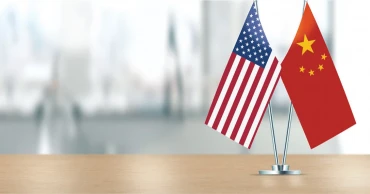
Chinese Foreign Minister Wang Yi said Saturday that history advances through twists and turns, and that China-U.S. relations enjoy bright prospects.
Wang, also a member of the Political Bureau of the Communist Party of China Central Committee, made the remarks in response to questions on China-U.S. relations after delivering a speech at the "China in the World" session of the Munich Security Conference.
Wang said that how China and the United States, as the world's two major powers, get along with each other bears on the fundamental direction of the international situation.
China has always viewed and handled its relations with the United States from the vantage point of history, and with a high sense of responsibility to the people and to the world, he said.
President Xi Jinping has summarized the experience and lessons of decades of China-U.S. interactions and solemnly proposed that China and the United States should respect each other, coexist peacefully, and pursue win-win cooperation, and through dialogue and consultation, jointly find the right way for two major powers to get along on this planet, Wang said.
China will continue to follow this general direction, Wang said, as it serves the interests of the peoples of both countries and the common interests of the international community. He, however, also stressed that whether it can be realized depends on the attitude of the United States.
Wang noted it is heartening that U.S. President Donald Trump holds great respect for President Xi Jinping and for the Chinese people. Trump has clearly stated that China and the United States can work together to address major global challenges, and that the two leaders can advance the development of China-U.S. relations.
However, Wang said, there are still some in the United States who do not share this perspective and who continue to make every effort to contain and suppress China, and to attack and slander the country by any means.
Wang noted China-U.S. relations faced two possible scenarios. One is that the United States develops an objective and rational understanding of China, pursues a proactive and pragmatic China policy, works with China in the same direction, and continues to expand common interests, with the two countries moving toward cooperation, which would benefit both countries and the world.
The other, he said, is to decouple and sever supply chains from China, counter and contain China, form various "small circles" and "exclusive blocs" targeting China, and even attempt to plot "Taiwan independence," split China and cross China's red lines. Such moves, he stressed, would lead the two countries into confrontation.
China hopes for the first prospects but is also prepared to deal with various risks, Wang said, adding that the vision and principles of mutual respect, peaceful coexistence and win-win cooperation will ultimately prevail, as they are the only right choice.
6 days ago
Any attempt to obstruct Dhaka-Beijing relations is doomed to fail: Spokesperson
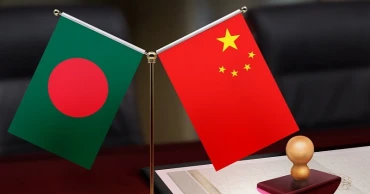
China on Wednesday said its relations with Bangladesh and other South Asian countries are not targeted at any third party, nor will they be swayed by any external force.
“Any attempt to interfere in or obstruct these relations is doomed to fail,” said a spokesperson of the Chinese Embassy in Bangladesh, refuting again China-related remarks by US Ambassador to Bangladesh Brent T. Christensen.
The Chinese Embassy in Dhaka shared its reaction through its verified Facebook page.
Bangladesh, China sign framework agreement for procurement of 4 vessels
The Chinese Embassy has made clear its solemn position on the relevant issue, said the spokesperson, noting that the US Ambassador to Bangladesh was singing the same old tune again, pointed fingers at Bangladesh-China relations and was mixing white and black. “Such remarks are made with ulterior motives.”
The spokesperson reiterated that China and Bangladesh respect and support each other and have set a fine example of friendly exchanges and mutually beneficial cooperation between countries.
“China is a trustworthy partner of South Asian countries, and its friendly cooperation with South Asian countries has safeguarded peace and stability in the region, promoted development and revitalisation, and has been supported and welcomed by the peoples in the region,” said the spokesperson.
1000-bed Bangladesh–China Friendship Hospital, 24 other projects get ECNEC nod
The US Ambassador recently said he is concerned about broader Chinese influence in South Asia, stressing that they have a host of options available to try to help their partner militaries meet their capability needs.
“You know, as I said in my hearing…I am concerned about broader Chinese influence in South Asia. I think the United States government has been very clear about that," he said while responding to a question during an interaction with a small group of journalists on January 21.
"And as I committed to my hearing, I will always engage with our friends in the government—be it the interim government or the newly elected government-- to clearly articulate the risks of involvement with the Chinese in certain areas should the Bangladesh government choose to go down that path," Ambassador Christensen said.
10 days ago
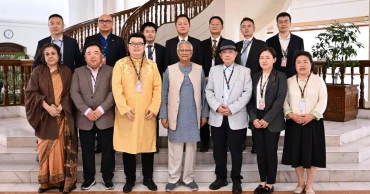
Dhaka, Beijing cooperation must continue with new govt: Prof Yunus
Chief Adviser Prof Muhammad Yunus has said the cooperation between Bangladesh and China must continue, although a new government will soon take office.
“In a few weeks, I will be out of this office and a new government will be formed, but the work between our two countries must go on,” he said during a meeting with a delegation from the China-Bangladesh Partnership Forum at the State Guest House Jamuna recently.
The delegation included senior Chinese academics, investors and industry leaders from the biomedical, infrastructure, digital, and legal sectors, said the Chief Adviser’s press wing on Friday.
Xin-yuan Fu, a leading Chinese biomedical scientist and Director of the West China School of Medicine at Sichuan University, commended Prof Yunus’ vision and said he was very much looking forward to working with Bangladeshi academics and contributing to improving people’s lives.
Bangladesh elected Vice Chair of UN Peacebuilding Commission for 2026
Andrew Zilong Wong, Senior Advisor to the Board of Directors of Walvax Biotechnology, and Yuqing Yao, Managing Director of Walvax Biotech (Singapore), shared their experiences and interest in working with Bangladesh. Walvax has exported its vaccines to at least 22 countries.
The company has established local subsidiaries in the United Kingdom and Indonesia and is exploring the localisation of PCV and HPV vaccines.
In Indonesia, it has signed an agreement with a business partner, indicating a move toward building local capacity.
The delegation also included Jinsong Wang, Vice President of the Robotics Society of Singapore; Yuan Feng, Chair of the Management Committee of Fordall Law Firm; Li Ran, Managing Director of Beijing Wutong Asset Management; Gao Zhipeng, Vice President for International Investment and Projects at China State Construction Engineering Corporation; Xu Tianzhao, Investment Director of China Hunan Construction Investment Group; Hua Jie, Vice President of China CCC Engineering Group; Chen Shujian, General Manager for Overseas Markets at PowerChina Overseas Investment Group; Professor Ma Xiaoyuan of Yunnan University; and Alex Wang Zekai, Secretary-General of the China-Bangladesh Partnership Forum.
They informed the Chief Adviser that they had engaged with several university students in Bangladesh on artificial intelligence and digitalisation and expressed admiration for the talent and potential of young Bangladeshi minds.
During the meeting, Prof Yunus recalled his long-standing relationship with China, which began through the microcredit movement.
“I had the opportunity to visit remote villages in China and see how people’s lives were being transformed. Later, the Chinese government launched its own programmes inspired by these principles,” the Chief Adviser said.
Recalling his visit to China in March, Prof Yunus said he had met President Xi Jinping during the visit.
“He told me that he had read my book and followed its principles. That was a very happy moment for me,” he said.
The delegation thanked Prof Yunus and discussed opportunities for collaboration in the health, infrastructure and digital sectors.
Highlighting the interim government’s priorities, the Chief Adviser said health remains the top concern.
“Our highest priority is healthcare—how to integrate digital technology so that doctors and patients can connect effectively, medical histories can be preserved digitally, and appointments can be accessed easily,” he said.
Dr Yunus also emphasised the need for social business models in the pharmaceutical sector.
“Medicines cost pennies to produce, yet are sold for dollars. We want to encourage the establishment of social business pharmaceutical companies that focus on helping people, not just profits,” he said.
About the COVID-19 pandemic, Prof Yunus recalled Bangladesh’s advocacy for patent-free vaccines.
“We raised our voices for patent-free vaccines and faced resistance. When the vote came, 10 countries abstained. They said rich countries would buy vaccines and donate them to poor nations. We said we don’t need gifts. People were dying while others were making money. This is a shame,” he said.
Rohingya crisis not receiving due attention, repatriation only solution: Prof Yunus
Prof Yunus also shared his vision of establishing a “health city” in the northern region of Bangladesh.
“During my visit to China, I proposed building a 1,000-bed international hospital in northern Bangladesh. It is a poor region but strategically located near India, Nepal, and Bhutan,” he said.
Dr Yunus explained that the proposed health city would include hospitals, medical colleges, research centres, vaccine production facilities, pharmaceutical industries, and medical equipment hubs.
“All health-related activities would be located in one city. People from India, Nepal, and Bhutan could also benefit by accessing quality healthcare facilities there,” he added.
Prof Yunus expressed his gratitude to the government of China for its continued support and cooperation.
Lamiya Morshed, SDGs Affairs Principal Coordinator and Senior Secretary to the government, was also present at the meeting.
22 days ago
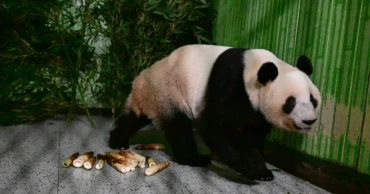
Japan's last pair of pandas have arrived back in China
Japan’s last pair of giant pandas have returned to China, ending the country’s 50-year tradition of hosting the beloved animals.
The twin pandas, Xiao Xiao and Lei Lei, are leaving amid strained diplomatic relations between Japan and China over the new Japanese Prime Minister’s stance on Taiwan, making it unlikely that replacement pandas will be sent to Japan.
Thousands of fans had gathered at Tokyo’s Ueno Zoo to bid farewell to the pandas, who were born there in 2021. China first sent pandas to Japan in 1972 to mark the normalization of diplomatic ties. Over the years, Beijing has used pandas as a diplomatic tool, symbolizing goodwill and soft power, which can be withdrawn when relations sour.
Pet dog guards owner’s body for 4 days amid freezing snowfall
State broadcaster CCTV showed the pandas arriving in crates in Sichuan province, southwestern China. They are now under quarantine at the China Conservation and Research Center for the Giant Panda, which confirmed their safe arrival early Wednesday morning.
Although pandas are often lent to other countries, China retains ownership of the animals, including any offspring.
24 days ago
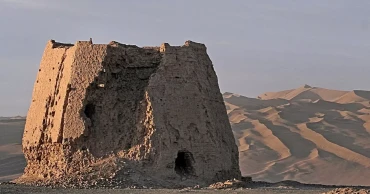
Archaeologists uncover well-planned Western Han settlement in China
Archaeologists in Xi’an, the capital of northwest China’s Shaanxi Province, have uncovered a well-planned suburban settlement dating back to the Western Han Dynasty, offering new insights into life on the outskirts of the ancient capital Chang’an.
The discovery was made during excavations at the Sanjiu relic site, according to the Shaanxi Provincial Institute of Archaeology. The settlement dates from the middle of the Western Han period to the Xin Dynasty, which ruled between 202 BC and 25 AD.
Also Read: Why a lone nihilist penguin from a 2007 documentary goes viral
The Sanjiu site is located in Xi’an’s Weiyang District, about 0.6 kilometres east of the eastern wall of ancient Chang’an City. Archaeological work carried out in 2025 also revealed remains from later periods, including a Northern Wei cemetery, tombs from the Song Dynasty, and pottery kilns dating to the Qing Dynasty.
Researchers found that the Western Han settlement was divided by a north to south ditch. On the eastern side, eight large courtyard-style residential complexes were arranged along a cross-shaped road system, forming what archaeologists believe was a central area for food processing activities.
On the western side of the ditch, excavators identified workshops for bone processing and metal smelting alongside residential areas. The team recovered about 78 kilograms of bone and shell materials, as well as iron tools and decorative items such as bone earrings and shell beads, suggesting the presence of a jewellery production workshop.
Also Read: Bird murals bring Hong Kong’s migratory stories to life in Lantau’s forgotten village
Project leader Zhang Yanglizheng said the findings reveal previously unknown details about how suburban areas near Chang’an City were organised, highlighting the site’s importance for understanding social and economic structures during the Western Han period.
24 days ago
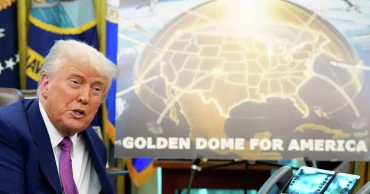
Greenland’s strategic role in nuclear defense comes into focus amid Trump’s ‘Golden Dome’ push
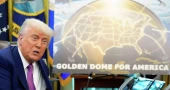
Greenland’s location in the Arctic places it at the heart of global nuclear defense planning, a reality highlighted anew by U.S. President Donald Trump’s renewed push for his proposed “Golden Dome” missile defense system.
In any hypothetical nuclear conflict involving the United States, Russia and China, intercontinental ballistic missiles would likely travel along the shortest routes, over the Arctic. That trajectory makes Greenland a critical point for early detection and potential interception.
Trump has argued that U.S. ownership of Greenland is essential for the success of the multibillion-dollar “Golden Dome,” a layered missile defense system he claims will be operational before 2029. He has said modern offensive and defensive weapons systems make control of the territory especially important, sparking alarm in Denmark and among Greenlanders.
A key element of Greenland’s importance is the Pituffik Space Base, formerly known as Thule Air Base. Located above the Arctic Circle, the base hosts a powerful early-warning radar capable of detecting and tracking ballistic missile launches from thousands of kilometers away, including missiles fired from Russia or China toward the United States.
Defense analysts note that the base gives Washington valuable extra minutes to assess and respond to potential attacks. The radar can monitor large swaths of the Arctic and detect objects as small as a car, according to the U.S. Air Force.
However, experts question Trump’s claim that U.S. ownership of Greenland is necessary. The United States has operated at Pituffik for decades under a 1951 defense agreement with Denmark, without sovereignty over the island. Analysts also point out that other allied locations, such as early-warning radar sites in the United Kingdom, play similar roles without any U.S. ownership claims.
Some experts argue that emerging space-based sensors planned under the “Golden Dome” could eventually reduce Greenland’s strategic importance. They also note that Denmark has historically been a highly cooperative U.S. ally, making expanded military access possible without drastic political steps.
As debates continue, Greenland remains a pivotal, and sensitive, crossroads in global nuclear defense calculations.
30 days ago
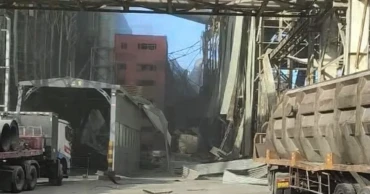
Inner Mongolia steel plant blast kills 2, injures dozens
Chinese police have detained those responsible for a steel factory in the Inner Mongolia region after an explosion killed two people and sent 84 others to hospital, with eight still missing.
City authorities in Baotou said a pressurised storage tank used to hold steam and high-temperature water exploded at a Baogang United Steel plant at around 3pm local time on Sunday.
The blast triggered tremors across nearby areas, officials said on Monday. Rescue teams are continuing their search for eight people who remain unaccounted for.
A representative of Baotou’s Information Office told a news conference that emergency crews were working around the clock at the site.
Baogang United Steel is a major state-owned enterprise, according to Chinese state media.
1 month ago
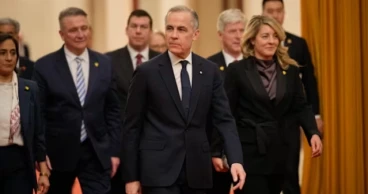
Canada to cut tariff on Chinese EVs in exchange for lower duties on farm exports
Canada has agreed to reduce its 100% tariff on Chinese electric vehicles in return for sharp cuts to Chinese duties on key Canadian farm products, Prime Minister Mark Carney said Friday.
Speaking after two days of talks with Chinese leaders, Carney said the deal will initially allow up to 49,000 Chinese-made EVs to enter the Canadian market. In exchange, China will lower its tariff on Canadian canola seeds from about 84 percent to around 15 percent.
The announcement came as Canada and China signaled a broader effort to reset relations after years of tension.
Carney said his visit, the first by a Canadian prime minister in eight years, marked “a historic and productive” step toward rebuilding ties and adapting cooperation to new global realities. He called for closer collaboration in agriculture, energy and finance.
Chinese President Xi Jinping said talks since an initial meeting last October had helped open a new chapter in bilateral relations and that Beijing was willing to continue working to improve ties.
Venezuela’s new leader signals oil sector reforms and warmer US ties
Relations between the two countries deteriorated in recent years after Canada followed the United States in imposing steep tariffs on Chinese electric vehicles, steel and aluminum under former prime minister Justin Trudeau. China retaliated with heavy duties on Canadian canola oil, meal and seeds, as well as pork and seafood, effectively shutting Canadian canola out of the Chinese market.
The renewed engagement comes as both countries face economic pressure from US President Donald Trump’s America-first trade policies, which have disrupted global commerce and hit both the Canadian and Chinese economies.
Carney said his government is seeking to build an economy less dependent on the United States and to diversify trade partnerships during a period of global trade disruption.
After leaving China on Saturday, Carney will visit Qatar before heading to Switzerland for the World Economic Forum, where he is expected to meet business leaders and investors to promote trade and investment.
1 month ago