Government

FICCI congratulates new government, pledges partnership for economic growth
The Foreign Investors’ Chamber of Commerce and Industry (FICCI) has congratulated the newly formed government of Bangladesh following the swearing-in of the Cabinet, led by Honorable Prime Minister Tarique Rahman.
In a statement issued on Wednesday, the Chamber expressed optimism that the new leadership's vision for national progress will catalyze "timely and effective actions" to bolster economic growth and stabilize the country’s investment climate.
Rupali Haque Chowdhury elected FICCI president for 2026-27
FICCI, the apex body for multinational companies in Bangladesh, emphasized the need for a transition toward more investor-friendly policies. The Chamber highlighted that sustainable development will require:
FDI-Friendly Policies: Prioritizing foreign direct investment to drive innovation and competition.
Regulatory Reforms: Implementing structural changes to increase transparency and bolster investor confidence.
Enhanced Ease of Doing Business: Reducing the cost of operations and clarifying policy frameworks for international businesses.
A "Defining Moment" for the Nation FICCI President Rupali Haque Chowdhury described the current political transition as a "defining moment" in Bangladesh's history.
FICCI, Competition Commission discuss Competition Act to foster fair market
"We wish the government every success in steering the country forward," she said, stressing that restoring confidence is vital for driving global competitiveness and job creation.
2 days ago
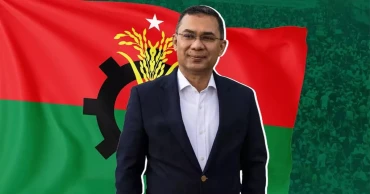
BNP returns to power after two decades with Tarique leading new govt
The BNP-led new government officially began its journey on Tuesday under the leadership of party Chairman Tarique Rahman, marking the BNP’s return to power after nearly two decades following a landslide victory in the 13th national election.
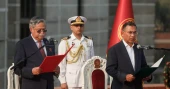
Among the 50-member cabinet, Tarique Rahman was sworn in as Prime Minister, followed by the ministers and state ministers, at a ceremony held at the South Plaza of the National Parliament complex in the afternoon.
President Mohammed Shahabuddin administered the oath.
Tarique Rahman: From London exile to Bangladesh’s Prime Minister
With this, Tarique became Bangladesh’s 11th Prime Minister in the country’s renewed democratic journey after the 2024 uprising, while the BNP assumed state power again after over 19 years.
Breaking with long-standing tradition, the oath-taking ceremony was held at the parliament complex instead of Bangabhaban. The programme began with the national anthem, followed by recitation from the Holy Quran.
In last Thursday’s national election, the BNP won 209 seats, while its alliance partners secured three more. Nearly 150 of the winning candidates were elected to parliament for the first time.
Leaders and representatives from several countries attended the ceremony, alongside outgoing interim government Chief Adviser Prof Muhammad Yunus, members of the advisory council, the Chief Justice, Election Commission officials, senior political leaders, chiefs of the three services, diplomats, journalists, and high-ranking civil and military officials.
Diplomatic sources said leaders from 13 countries, including China, India, Pakistan, Saudi Arabia, Turkey, the United Arab Emirates, Qatar, Malaysia, Brunei, Sri Lanka, Nepal, the Maldives, and Bhutan—were invited to attend the ceremony. Among the guests, India’s Lok Sabha Speaker Om Birla represented New Delhi.
Tarique Rahman arrived at the venue at 3:58 pm with his wife Dr Zubaida Rahman and daughter Barrister Zaima Rahman, receiving a standing ovation from the audience. President Mohammed Shahabuddin came to the venue a few minutes later, and the formal proceedings began.
The President first administered the oath and secrecy pledge to Tarique as the Prime Minister of the new government.
Tarique Rahman sworn in as Prime Minister
After congratulating the new Prime Minister, the names of cabinet members were announced. The President then administered the oath and secrecy pledge to the ministers, followed by the state ministers, concluding the ceremony.
Cabinet Composition
Apart from Tarique, the new government includes 25 ministers and 24 state ministers, with a strong presence of new faces.
Among the ministers, 16 are serving for the first time, including the Prime Minister himself, who had never previously been a minister, state minister, or MP. Nine ministers have prior cabinet experience from previous BNP governments led by Khaleda Zia.
In contrast, all 24 state ministers are first-time office holders. Overall, 41 members of the government have never served in ministerial roles before, reflecting Tarique Rahman’s plan to combine new leadership with experienced figures.
Several senior BNP leaders, including standing committee members Khandaker Mosharraf Hossain, Gayeshwar Chandra Roy, Dr Abdul Moyeen Khan, and Selima Rahman, were not included in the cabinet.
BPP elects Tarique as Leader of the House
However, Mirza Abbas, Nazrul Islam Khan, Ruhul Kabir Rizvi, Ismail Zabiullah, and Dr Rashed Al Mahmud Titumir have been appointed advisers to the Prime Minister with the status of ministers.
Besides them, Humayun Kabir, Brig Gen (retd) Shamsul Islam, Dr Zahedur Rahman, Dr Mahdi Amin, and Rehan Asif Asad have been appointed as advisers with the status of state ministers.
A major surprise in Tarique Rahman’s cabinet is Khalilur Rahman, who previously served as the interim government’s National Security Adviser and High Representative on the Rohingya issue. Though not an MP, he will serve as a technocrat Foreign Minister.
Another technocrat minister is Mohammad Aminur Rashid Yasin, former general secretary of Comilla BNP, who will also take office. Former footballer and BNP sports secretary Aminul Haque has been appointed technocrat State Minister for Sports. Both are first-time ministers, bringing expertise and fresh faces to the cabinet.
The formation of the new government follows the BNP’s decisive electoral victory and signals a major political shift after two decades.
Tarique Rahman appears to be prioritising generational change, administrative renewal, and broader political inclusion through a cabinet dominated by newcomers but supported by experienced politicians.
The 13th parliamentary election was held on February 12. Out of 300 seats in the 13th Jatiya Sangsad, the results of two seats have been suspended, while election in one seat was cancelled following the death of a candidate.
After winning the election, Tarique Rahman also met the chiefs of three opposition parties—including Jamaat-e-Islami, NCP, and Islami Andolon Bangladesh, sending out a message of positive politics.
During the meetings, he also sought cooperation from the opposition parties in governing the country.
3 days ago
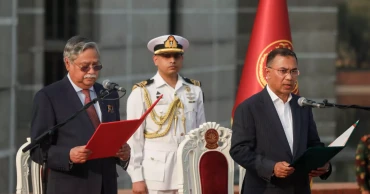
Tarique Rahman sworn in as Prime Minister
BNP Chairperson Tarique Rahman was sworn in as the 11th Prime Minister of Bangladesh on Tuesday.
President Mohammed Shahabuddin administered the oath at the South Plaza of the Jatiya Sangsad.
Earlier, the BNP Parliamentary Party (BPP) unanimously elected party Chairman Tarique Rahman as the Leader of the House.
BNP MPs-elect took oath as only members of the 13th parliament, not as members of the Constitution Reform Council on Tuesday morning.
Chief Election Commissioner AMM Nasir Uddin administered the oath at 10:43am in line with the Constitution as the posts of Speaker and Deputy Speaker of the 12th Parliament are currently vacant.
4 days ago
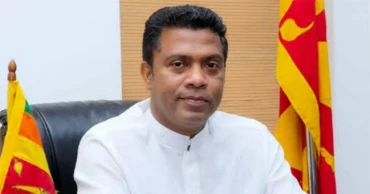
Sri Lankan Health Minister to attend Bangladesh cabinet swearing-in
Minister of Health and Mass Media of Sri Lanka Dr Nalinda Jayatissa will represent Sri Lanka at the oath-taking ceremony of the new cabinet of Bangladesh with Tarique Rahman as the Prime Minister on Tuesday.
Bangladesh High Commissioner to Sri Lanka Andalib Elias saw off the Sri Lankan Minister at the Colombo airport on Monday morning, a senior official told UNB.
Tarique Rahman will assume office as the Prime Minister of Bangladesh following the landslide victory of BNP under his leadership in the 13th parliamentary election.
‘Advisers proud citizens’; will attend oath-taking ceremony: Shafiqul Alam
The participation of the Sri Lankan Minister at this historic occasion underscores the strong and friendly bilateral relations between Bangladesh and Sri Lanka, the official said.
5 days ago
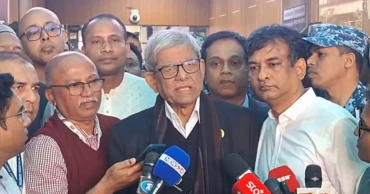
Fakhrul says next govt to face law-and-order, graft, economic challenges
BNP Secretary General Mirza Fakhrul Islam Alamgir on Friday said their party’s next government will face major challenges in keeping law and order, fighting corruption and boosting the economy.
“The biggest challenges for the next government will be to get the economy moving, maintain law and order, control corruption, and ensure justice. These are the challenges,” he said.
Fakhrul made the remarks while talking to reporters outside the international terminal of Hazrat Shahjalal International Airport after returning from his electoral area in Thakurgaon.
He said the BNP, having won a majority of seats in the 13th parliamentary election, will form the next government under the leadership of party Chairman Tarique Rahman.
According to unofficial results, BNP won 209 out of 299 seats.
‘Joy and sadness together’
Commenting on the election results, Fakhrul described the moment as both joyous and sad.
“One part is joy, another part is sadness. Our late chairperson and national leader, Begum Khaleda Zia, could not see this unprecedented victory, which is very sad,” he said.
8 days ago
Govt wants to cap falls in potato, egg prices to protect farmers: Sk Bashir
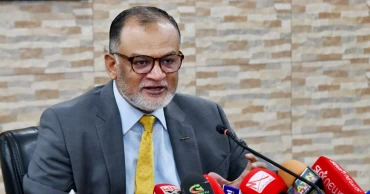
Commerce Adviser Sk Bashir Uddin on Tuesday said that the government is trying to resist further declines in potato and egg prices to avoid hurting farmers, underscoring a policy push to balance producer viability with consumer affordability.
Speaking at a press conference at the Ministry of Commerce in the afternoon, he said prices of potatoes and eggs in the local market are currently at a ‘normal’ level and the overall market situation remains stable ahead of Ramadan.
“The market is now more stable compared to other times. Compared to last Ramadan, prices of essential commodities are expected to be lower in the upcoming Ramadan,” he said.
Expedite trade facilitation roadmap implementation for LDC graduation: Sk Bashir
Claiming there is no shortage or disorder in the market, the adviser said discipline has returned to the market as a result of various initiatives taken by the Ministry of Commerce. “We have been saying repeatedly, and we are saying it again, that the upcoming Ramadan will be better than the previous one.”
Referring specifically to potato and egg prices, Bashir said he does not want prices to decline further. “Eggs are selling at Tk 120 per dozen and potatoes at Tk 30 per kg. If prices fall below this level, farmers will be affected.”
To protect small-scale poultry farmers, he stressed the need to fix egg prices in line with feed costs. “Prices must be determined after considering all relevant factors.”
Replying to a question on alleged syndicates in the meat market, the adviser said the government deliberately refrained from importing beef to reduce prices, as such a move would have harmed local cattle farmers.
“We could have imported meat from Brazil at half the current price if we wanted to. But the government chose not to do so, keeping farmers’ interests in mind,” he said, adding that while some corporate dominance exists in the egg market, no such control is evident in the meat sector.
He also noted that there has never been a supply shortage in the egg market. “When egg prices rose to Tk 180 per dozen, the Ministry of Commerce approved the import of 290 million eggs. However, only 1.1 million eggs were actually imported—an amount that can meet national demand for just 10 to 15 minutes, given a daily demand of around 50 million eggs.”
On his last working day, Bashir acknowledged that there were shortcomings but said there was no lack of effort in controlling the market.
“There is no visible crisis in the market. Overall, the prices of eggs, potatoes, rice, pulses, sugar and edible oil are at a tolerable level,” he said, adding that monitoring and investigations into edible oil prices are continuing regularly.
Second round of tariff talks with US ‘encouraging’: Sk Bashir
11 days ago
Govt plans Broadcast Commission; violators face jail, Tk 50 lakh fine
The government is set to establish a new Broadcast Commission to streamline the operations of various broadcasting entities, set standards and curb irregularities.
The Ministry of Information and Broadcasting has prepared the draft Broadcast Commission Ordinance-2026, which proposes strict penalties for violations, including up to three years’ imprisonment and fines of up to Tk 50 lakh.
The draft is currently open for consultation with all relevant stakeholders.
Under the draft ordinance, terrestrial, satellite and cable television, radio, IPTV, DTH (Direct-to-Home), FM and community radio, OTT, streaming and Video-on-Demand (VOD) platforms will fall under the Commission’s remit.
Commercial online infotainment portals, apps and video streaming activities are also included, while personal social media posts and amateur content remain outside its scope.
The draft stipulates severe punishments for operating broadcasting services without a licence or Commission approval, disobeying government directives, disseminating classified military or civilian information, airing unapproved or misleading advertisements, and using images of state-protected important sites in commercial content.
Violators operating without a licence, or without prior Commission recommendation, could face a maximum of three years’ imprisonment or fines ranging from Tk 10 lakh to Tk 50 lakh, or both. Non-compliance with government directives on national interest or public welfare may result in a fine of up to Tk 50,000.
Importing broadcasting equipment without official clearance may attract up to three years in jail or fines between Tk 5 lakh and Tk 20 lakh.
Broadcasting sensitive military or civilian information that could threaten national security, public safety, or public order carries up to two years’ imprisonment or fines ranging from Tk 1 lakh to Tk 10 lakh.
The draft also addresses the broadcasting of advertisements for unlicensed financial institutions, gambling, tobacco, alcohol, or misleading content, prescribing up to two years’ imprisonment or fines of Tk 5 lakh to Tk 30 lakh.
The use of imagery of state-protected sites such as the National Parliament, Prime Minister’s Office, President’s Office, secretariat, courts, military barracks, or KPI-affiliated establishments may result in up to six months in jail or fines up to Tk 2 lakh. All fines will be recoverable under the Public Demand Recovery Act-1913.
To adjudicate offences under the ordinance, one or more Broadcast Tribunals will be established. Each tribunal will comprise a district or sessions judge, with directives to resolve cases within 90 working days of filing.
The formation of the Broadcast Commission will be overseen by a selection committee. Based on its recommendations, the government will appoint a chairman and four commissioners.
At least one commissioner must be female. Commission members will be prohibited from holding profit-making positions or engaging in media-related businesses.
Interim government’s role more complex than ever: Planning Adviser
The draft ordinance assigns the Commission responsibilities including recommending broadcasting licences to the government, formulating codes of conduct and policies, overseeing broadcast operations, and resolving viewer and listener complaints.
It will coordinate with BTRC on technical matters and has the authority to impose fines, issue corrective directives, or revoke license, if necessary.
The Ministry of Information and Broadcasting has announced that comments on the draft ordinance will be accepted until 31 January 2026.
24 days ago
Govt declares 3-day holiday for election; gazette issued
The government has declared a three-day holiday, aiming to facilitate voter participation in 13th parliamentary election.
The Ministry of Public Administration issued a gazette in this regard on Sunday.
According to the gazette, the government has declared public holidays on February 11 and 12 (Wednesday and Thursday) on the occasion of the election and the referendum to facilitate the exercise of voting rights by officers and employees working in all government, semi-government, autonomous and private offices, institutions and organisations as well as teachers, officers and employees of government and private educational institutions and holding of the election.
It said a special holiday has been declared for workers and employees in industrial areas on February 10 (Tuesday).
The Council of Advisers on Thursday approved a proposal to declare February 11 a public holiday, in addition to the public holiday on the voting day on February 12, to help voters participate and ensure law and order management in an effective manner.
The approval was given at the Council’s weekly meeting held at the Chief Adviser’s Office, with Chief Adviser Prof Muhammad Yunus in the chair.
CA’s press secretary Shafikul Alam said February 10 will apply only to industrial zone workers as a holiday.
Govt clears Tk 2459 cr specialsed hospital for northern region
He said the reason behind the decision was to allow voters currently residing in Dhaka, industrial towns, and other major cities to travel to their respective hometowns to cast their votes, as February 11 falls on the day before the election.
The decision is also expected to help authorities manage law and order more effectively during the election period, Alam said.
26 days ago
Delay in regular promotion in public administration sparks discontent
A prolonged delay in regular promotions has triggered a deep crisis within the public administration, leaving hundreds of officials in three tiers frustrated.
According to insiders, nearly 800 qualified officers are still waiting for promotion, including around 350 eligible for the rank of additional secretary, about 345 for joint secretary and at least 84 for deputy secretary.
Many of them say the prolonged delay has created widespread frustration and resentment within the civil service.
Senior officials and administration experts said uncertainty over promotions has intensified since the announcement of the schedule for the 13th parliamentary election although the election process itself poses no legal barrier to routine career advancement.
“If regular promotions are blocked, the country will be left with a frustrated and demoralised administration. That will inevitably slow down decision-making and day-to-day governance,” said former secretary AKM Abdul Awal Mazumdar.
The number of deprived officials at the deputy secretary and joint secretary levels is also rising.
Recently, 79 officers of the 30th BCS batch were denied promotion from senior assistant secretary to deputy secretary. Almost all of them have applied to the Ministry of Public Administration for a review.
Former additional secretary Mohammad Firoz Mia said delays in promotion always create resentment within the administration.
“If qualified officers are not promoted on time, frustration and anger grow and administrative work suffers. The election schedule is not a barrier to regular promotions. If necessary, the government should take approval from the Election Commission and ensure promotions on time. There is still time. If the government wants, it can act,” he said.
Sources at the ministry said at least 183 officers of the 24th BCS batch were deprived of promotion to joint secretary under the regular batch system.
Govt abolishes Public Administration Committee
On March 20, 196 officials were promoted to joint secretary, but only 137 were selected from the 320 officers of the regular batch, leaving out 183, including five serving deputy commissioners.
In the case of promotion from joint secretary to additional secretary, the 20th BCS batch is being considered as the regular batch.
Around 300 officials, including 244 from the administration cadre and a significant number from other cadres are under consideration.
Ministry sources, however, said 43 officers of this batch who served as deputy commissioners and 40 who worked as personal secretaries to ministers during the tenure of the Sheikh Hasina government are not being considered this time.
The recruitment process of the 20th BCS batch was completed in 1999. Although they became eligible for promotion to joint secretary in 2019, they received promotion only in 2021.
Under service rules, they became eligible for promotion to additional secretary in 2023 after completing two years as joint secretary.
The Superior Selection Board (SSB) has already finalised the promotion list after analysing their service records but the government failed to issue the gazette at the last moment.
Apart from the administration cadre, more than 150 officers from other cadres are also eligible for promotion to joint secretary but have not been promoted. Most of them have applied for a review. The SSB has held several meetings in response.
The officials facing allegations of irregularities or corruption, those with ongoing cases by the Anti-Corruption Commission or departmental authorities, and those who served as ministers’ personal secretaries or deputy commissioners during the previous government are not being considered, ministry sources said.
Public Administration Secretary Ehsanul Haque told UNB that the government is fully aware of the issue. “We are collecting information regarding those who have not received regular promotions. A decision will definitely come on this,” he said.
Cabinet Secretary Dr Sheikh Abdur Rashid said several applications have already been received and multiple meetings have been held.
“We are working on the issue. Let us see how much we can do within this time,” he said.
On condition of anonymity several officials said many officers who were close personal secretaries to ministers during the Awami League government have already received promotions.
Administration experts warn that failure to ensure timely promotion will severely disrupt the functioning of government, weaken morale and ultimately harm public service delivery.
30 days ago
Gazette issued introducing pay grades, benefits for mosque staff
The government has issued a gazette on the Mosque Management Policy 2025 introducing a structured pay scale, service benefits, recruitment rules and welfare provisions for mosque employees in the country.
The Mosque Management Policy 2025 was published in a special issue of Bangladesh Gazette on Monday.
The policy was formulated by a committee of the Ministry of Religious Affairs which held several meetings with prominent Islamic scholars and representatives of organisations of imams and khatibs before finalisation.
Religious Affairs Adviser Dr AFM Khalid Hossain attended the meetings as the chief guest.
Under the new policy, a grade-based salary structure has been fixed for mosque employees excluding khatibs whose remuneration will be determined according to contract terms.
However, financially insolvent and mosques where 5-time prayers held have been advised to fix salaries and allowances according to their capacity.
As per the new policy, senior pesh imams will receive salaries in Grade 5, pesh imams in Grade 6 and imams in Grade 9.
The chief muezzin will be paid in Grade 10, muezzin in Grade 11, chief khadem in Grade 15 and khadem in Grade 16.
Mosque management committees have been asked to arrange family accommodation for staff according to their capacity and introduces a monthly savings scheme for their future welfare.
A one-time honourarium will also be provided at the end of service.
Mosque employees will be entitled to a maximum of four weekly holidays per month with committee approval, 20 days of casual leave per calendar year and one earned leave for every 12 days of service, it said.
For recruitment, a seven-member selection committee will be formed for each mosque and no direct appointment will be allowed without its recommendation.
Appointment letters must clearly mention salary, allowances, duties and other service conditions, it said .
The policy also creates new posts for security guards and cleaners and instructs committees to arrange separate prayer spaces for women in accordance with Shariah.
Govt launches e-bail bond system in 8 districts
The size of mosque management committees has been increased to 15 members with scope for adjustment based on mosque income, size and location.
For resolving service-related disputes, aggrieved employees may appeal within 30 days to the Upazila Nirbahi Officer or the relevant city corporation regional executive officer.
A three-member committee led by the deputy commissioner will address any complexities in implementing the policy.
1 month ago