Benjamin Netanyahu
Netanyahu to press Trump to widen Iran nuclear talks during White House meeting
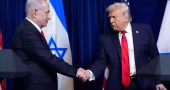
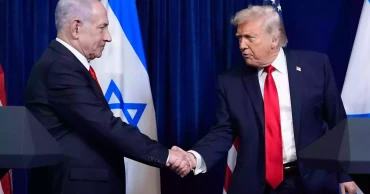
Israeli Prime Minister Benjamin Netanyahu is set to meet President Donald Trump at the White House on Wednesday, where he is expected to push for expanding ongoing talks with Iran beyond its nuclear program.
The meeting comes as Trump said he believes Tehran is willing to strike a deal. “We’ll see what happens. I think they want to make a deal,” Trump told Fox Business Network on Tuesday. “I think they’d be foolish if they didn’t. We took out their nuclear power last time, and we’ll have to see if we take out more this time.” He added, “It’s got to be a good deal. No nuclear weapons, no missiles.”
Netanyahu’s office said he wants any new agreement to also address Iran’s ballistic missile program and its backing of armed groups such as Hamas and Hezbollah.
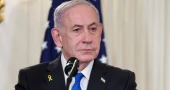
“I will present to the president our outlook regarding the principles of these negotiations the essential principles which, in my opinion, are important not only to Israel, but to everyone around the world who wants peace and security in the Middle East,” Netanyahu said before leaving Israel.
The two sides recently held indirect talks in Oman and signaled cautious optimism. However, deep mistrust remains.
Trump’s world order looms over Europe ahead of crucial Munich security summit
Tensions are still high after last June’s 12-day war between Israel and Iran. A series of airstrikes, including U.S. attacks on Iranian nuclear sites, killed nearly 1,000 people in Iran and around 40 in Israel. Trump claimed at the time that Iran’s nuclear capabilities were “obliterated,” though the full extent of the damage remains unclear. Recent satellite images have shown renewed activity at some sites.
Israel has long demanded that Iran stop enriching uranium, curb its missile program and cut ties with regional militant groups. Iran has rejected those demands, saying it would only accept limits on its nuclear activities in exchange for relief from sanctions.
The U.S. has strengthened its military presence in the region, deploying an aircraft carrier and other assets. Meanwhile, countries including Turkey and Qatar have urged restraint, warning that further escalation could destabilize the Middle East.
The Gaza conflict is also expected to be discussed during the talks, as Washington weighs its broader diplomatic efforts in the region.
10 days ago
Israeli PM Netanyahu apologises to Qatar over Doha strike
Israeli Prime Minister Benjamin Netanyahu has formally apologised to Qatar for the killing of a Qatari citizen during an unprecedented Israeli missile strike on Hamas leaders in Doha earlier this month, which drew international condemnation.
Qatari Prime Minister Sheikh Mohammed bin Abdulrahman bin Jassim Al Thani received the apology on Monday through a joint phone call with US President Donald Trump and Netanyahu from the White House.
A White House statement said, “As a first step, Prime Minister Netanyahu expressed his deep regret that Israel’s strike on Hamas targets in Qatar unintentionally killed a Qatari serviceman.”
He further regretted that targeting Hamas leadership during hostage negotiations violated Qatari sovereignty and affirmed that Israel will not conduct such an attack again, the statement included.
The September 9 attack killed at least five lower-ranking Hamas members and a Qatari security official. Senior Hamas leaders involved in US-backed ceasefire negotiations survived the strike.
Hamas to review Trump’s Gaza peace plan as global support builds
The attack marked the first Israeli strike on Qatar, which hosts the US military’s largest base in the Middle East at Al Udeid and plays a key role as a mediator in ceasefire efforts. Qatar’s Ministry of Foreign Affairs confirmed the call, noting that it was part of US efforts to address the repercussions of the strike, which targeted a residential neighbourhood housing the Hamas negotiating delegation and violated Qatari sovereignty.
During the call, Netanyahu apologised for the attack and the death of Qatari citizen Badr Al-Dosari, assuring that Israel would not target Qatari territory in the future. Netanyahu also acknowledged Israel’s grievances with Qatar, citing support for the Muslim Brotherhood, coverage on Al Jazeera, and anti-Israel sentiment on college campuses.
UN Secretary-General António Guterres condemned the strike as a “flagrant violation” of Qatar’s sovereignty. The attack had prompted nearly 60 Muslim countries to convene in Doha in solidarity days later.
Following Netanyahu’s apology, the White House said Qatar’s prime minister welcomed the assurances and reaffirmed Qatar’s readiness to continue contributing to regional security and stability. Netanyahu committed to the same.
Sultan Barakat, professor at Hamad Bin Khalifa University in Qatar, described the apology as “significant,” noting that Qatar had insisted on a public apology and a commitment from Netanyahu to avoid future attacks as a condition for continuing mediation efforts. He added that the step was crucial not only for Israel-Hamas mediation but for preserving the broader space for diplomatic mediation in regional conflicts.
Source: Agency
4 months ago

Netanyahu defends expanded Gaza offensive amid rising criticism
Israeli Prime Minister Benjamin Netanyahu on Sunday defended a new, broader military offensive in Gaza, saying Israel “has no choice but to finish the job and complete the defeat of Hamas.”
The expanded operation targets Hamas strongholds not only in Gaza City but also in the heavily populated “central camps” and Muwasi areas, officials said.
The camps, sheltering over half a million displaced people, were not included in the initial announcement last Friday. Netanyahu said the offensive would include “safe zones,” though similar areas have been bombed before.
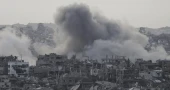
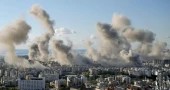
Heavy bombardment continued in Gaza City late Sunday. Al Jazeera correspondent Anas al-Sharif and three other journalists were killed in a strike near Shifa Hospital. Israel’s military accused al-Sharif of posing as a journalist and alleged ties to Hamas, which he denied.
Netanyahu spoke with U.S. President Donald Trump, thanking him for “steadfast support.” He rejected accusations of starving Gaza’s population and said Israel plans to increase aid distribution sites. He reaffirmed Israel’s goal to demilitarize Gaza, maintain security control, and establish a non-Israeli civilian administration.
Israel faces widening international criticism over Gaza military expansion
The United States defended Israel’s right to self-defense during a UN Security Council meeting, while China and Russia condemned collective punishment and warned against escalating violence.
Meanwhile, at least 31 Palestinians were killed while seeking aid in Gaza, with witnesses accusing Israeli forces of firing on crowds near food distribution points. The humanitarian crisis worsens, with two children dying from malnutrition Saturday, bringing the hunger death toll among children to 100 since the war began.
The Gaza Health Ministry reports a total of 61,400 Palestinians killed in the conflict, half of them women and children.
6 months ago

Hamas’ armed wing head Sinwar killed in Gaza strike: Netanyahu
Israeli Prime Minister Benjamin Netanyahu said Wednesday that Mohammed Sinwar, believed to be the head of Hamas' armed wing, has been killed, apparently confirming his death in a recent strike in the Gaza Strip.
There was no confirmation from Hamas.
Sinwar is the younger brother of Yahya Sinwar, the Hamas leader who helped mastermind the October 7, 2023, attack that started the Israel-Hamas war, and who was killed by Israeli forces in October 2024, according to news agency AP.
Israeli strikes have decimated Hamas’ leadership during the 19-month war, and Mohammed Sinwar was one of the last widely known leaders still alive in Gaza. But the militant group has maintained its rule over the parts of Gaza not seized by Israel. It still holds dozens of hostages and carries out sporadic attacks on Israeli forces.
As the head of Hamas’ armed wing, Sinwar would have had the final word on any agreement to release the hostages, and his death could further complicate U.S. and Arab efforts to broker a ceasefire. Israel has vowed to continue the war until all the hostages are returned and Hamas has been either defeated or disarmed and sent into exile.
Netanyahu mentioned the killing of Sinwar in a speech before parliament in which he listed the names of other top Hamas leaders killed during the war. “We have killed tens of thousands of terrorists. We killed (Mohammed) Deif, (Ismail) Haniyeh, Yahya Sinwar and Mohammed Sinwar,” he said.
Netanyahu did not elaborate. Israeli media had reported that the younger Sinwar was the target of a May 13 strike on what the military said was a Hamas command center beneath the European Hospital in the southern Gaza city of Khan Younis, the Sinwars' hometown. The military declined to comment on whether Sinwar had been targeted or killed.
Israeli forces raid West Bank foreign exchange shops; one killed, dozens injured
At least six people were killed in the strike and 40 wounded, Gaza's Health Ministry said at the time.
A Hamas veteran
Mohammed Sinwar was born in 1975 in the urban Khan Younis refugee camp. His family was among hundreds of thousands of Palestinians driven from what is now Israel during the 1948 war surrounding its creation. The refugees and their descendants today make up the majority of Gaza's population.
Like his older brother, Yahya, the younger Sinwar joined Hamas after it was founded in the late 1980s as the Palestinian branch of the Muslim Brotherhood. He became a member of the group’s military wing, known as the Qassam Brigades.
He rose through the ranks to become a member of its so-called joint chiefs of staff, bringing him close to its longtime commander, Deif, who was killed in a strike last year.
Mohammed Sinwar was one of the planners of a 2006 cross-border attack on an Israeli army post. In that attack, militants captured Israeli soldier Gilad Schalit, who was held for five years and later exchanged for more than 1,000 Palestinian prisoners, including Yahya Sinwar.
In an interview with Qatar’s Al Jazeera TV aired three years ago, Mohammed Sinwar said that when Hamas threatens Israel, “we know how to specify the location that hurts the occupation and how to press them.”
Hamas has said that Mohammed Sinwar was targeted by Israel on several occasions and was briefly believed to have been killed in 2014. He is said to have been one of a handful of top commanders who knew about the October 7 attack in advance.
In December 2023, the Israeli military released a video it said showed a bearded Mohammed Sinwar sitting next to a driver in a car as it moved inside a tunnel in the Gaza Strip.
Hamas never confirmed what would be one of the few public images of him.
8 months ago
Israel launches new major military operation in Gaza
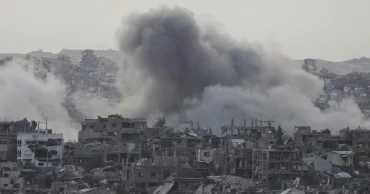
Israel has launched a major operation in the Gaza Strip to pressure Hamas to release remaining hostages, the defense minister said Saturday, following days of intensive strikes across the territory that killed hundreds of people.
Defense Minister Israel Katz said that Operation Gideon Chariots was being led with “great force” by Israel’s army.
Israel’s Prime Minister Benjamin Netanyahu vowed earlier in the week to escalate pressure on Hamas with the aim of destroying the militant group that has ruled Gaza for nearly two decades.
The operation comes as US President Donald Trump concluded his trip to the region without a visit to Israel. There had been widespread hope that Trump’s trip could increase the chances of a ceasefire deal or the resumption of humanitarian aid to Gaza, which Israel has prevented for more than two months.
Israeli strikes kill 93 people in Gaza as Trump wraps up Middle East visit
Negotiations between Israel and Hamas have yet to achieve progress in Qatar’s capital, Doha. Hamas, which released an Israeli-American hostage as a goodwill gesture ahead of Trump’s Mideast trip, insists on a deal that eventually ends the three-year war — something Israel said it won't agree to.
More than 150 people have been killed in Israeli strikes in the last 24 hours, according to Gaza’s Health Ministry. It said almost 3,000 have been killed since Israel broke a January ceasefire on March 18.
Of the hostages who remain in Gaza, Israel believes as many as 23 are still alive, although Israeli authorities have expressed concern for the status of three of those.
Israeli strikes kill at least 64 people in Gaza as Trump wraps up his Middle East visit
The war began on October 7, 2023, when Hamas-led militants attacked southern Israel, killing 1,200 people and abducting 251 others. Israel’s retaliatory offensive has killed more than 53,000 Palestinians, many of them women and children, according to Gaza’s Health Ministry, which doesn't differentiate between civilians and combatants.
9 months ago
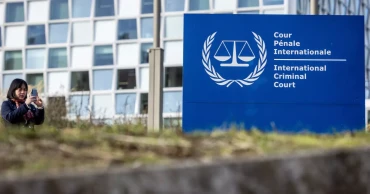
Hungary plans to withdraw from International Criminal Court as Netanyahu arrives despite warrant
Hungary said Thursday it will begin the procedure of withdrawing from the world’s only permanent global tribunal for war crimes and genocide.
“Hungary will withdraw from the International Criminal Court,” Gergely Gulyás, who is Prime Minister Viktor Orbán chief of staff wrote in a brief statement. “The government will initiate the withdrawal procedure on Thursday, in accordance with the constitutional and international legal framework.”
The announcement came as Israeli Prime Minister Benjamin Netanyahu arrived in the Hungarian capital, Budapest, despite an international arrest warrant against him over his conduct of the war in the Gaza Strip.
Israel’s parliament approves key part of Netanyahu’s judicial overhaul
Hungary’s government, led by right-wing populist Orbán, extended the invitation to Netanyahu in November after the ICC, based in the Hague, Netherlands, issued the warrant accusing him of crimes against humanity.
Orbán, a close Netanyahu ally, has called the arrest warrant “outrageously impudent” and “cynical.” Member countries of the ICC, such as Hungary, are required to detain suspects facing a warrant if they set foot on their soil, but the court has no way to enforce that and relies on states to comply with its rulings.
10 months ago

Netanyahu is set to take the witness stand for the first time in his corruption trial in Israel
Israeli Prime Minister Benjamin Netanyahu is set to testify on Tuesday in his corruption trial, marking a critical moment in a prolonged legal battle that has overshadowed his leadership. The trial, which began in 2020, accuses Netanyahu of fraud, breach of trust, and bribery across three cases. He denies all allegations, claiming the investigations were biased.
Netanyahu’s testimony coincides with his management of the ongoing Gaza war, fragile ceasefires with Hezbollah, and regional threats. This will be the first time an Israeli prime minister takes the stand as a criminal defendant. Due to security concerns, the proceedings have been relocated to an underground courtroom in Tel Aviv.
Trump starts pushing his agenda, negotiating with world leaders
The allegations involve claims that Netanyahu traded regulatory benefits for favorable media coverage and received extravagant gifts, including champagne and cigars, from influential figures like Hollywood producer Arnon Milchan. The trial has featured testimonies from around 140 witnesses, including Netanyahu's close associates and a former prime minister. Recently, a documentary, The Bibi Files, revealed footage of Netanyahu’s police interrogations, showing a mix of defiance and unease.
The prosecution concluded its case earlier this year, and Netanyahu will now present his defense, testifying three days a week for several weeks. The defense plans to argue that Netanyahu is the victim of flawed investigations. Critics claim that the judicial overhaul he proposed last year and his handling of the Gaza conflict are attempts to deflect from his legal challenges. A final verdict is not expected until 2026, with potential appeals prolonging the process.
1 year ago
Netanyahu supports ceasefire proposal with Hezbollah
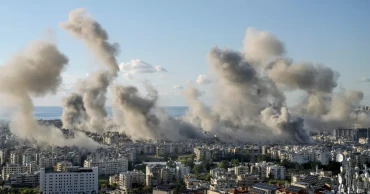
Israeli Prime Minister Benjamin Netanyahu announced on Tuesday his support for a U.S.-mediated ceasefire proposal with Lebanon’s Hezbollah as Israeli airstrikes across Lebanon intensified, claiming at least 23 lives.
The military issued widespread evacuation notices, signaling potential escalations before the agreement takes effect. For the first time during the conflict, Israeli troops reached the Litani River, a key element of the proposed deal.
Netanyahu stated he would present the ceasefire proposal to his cabinet, with a vote expected later in the day. The ceasefire terms, which remain undisclosed, would not impact Israel’s ongoing operations against Hamas in Gaza.
Read: Top EU diplomat says Israel has 'no excuses' to refuse a ceasefire with Hezbollah
The agreement proposes a two-month halt to hostilities, requiring Hezbollah to withdraw its forces from southern Lebanon while Israeli troops retreat to their borders. Lebanese troops and U.N. peacekeepers would oversee compliance under international monitoring.
The intensified strikes in Beirut targeted residential areas, killing civilians and prompting widespread evacuations. Hezbollah continued its rocket attacks, prompting sirens in northern Israel.
Israeli officials emphasized their right to respond if Hezbollah violates the deal, underscoring challenges in implementation. European Union diplomats urged all parties to adhere to the agreement, warning of potential collapse in Lebanon if fighting persists.
Source: agency
1 year ago

Netanyahu vows to unite Israel but opponents dismiss pledge
Israeli Prime Minister Benjamin Netanyahu on Thursday vowed to “mend the rift” in a nation deeply divided over his proposed overhaul of the country’s judiciary. But he offered no details on how he intends to do so and gave no indication that he would slow down the plan.
Netanyahu delivered his appeal in a nationally televised address after another day of mass protests across the country against the plan, and hours after his parliamentary coalition passed the first in a series of laws that make up the overhaul. His vague pledges were quickly rejected by the protest movement, which said it would continue to oppose “Netanyahu’s attempt to become a dictator.”
Protesters blocked traffic on main highways and scuffled with police in unrest that shows no sign of abating. Police used water cannons to disperse crowds, and dozens of people — including leaders of the protest movement — were arrested.
The government’s plan has plunged the nearly 75-year-old nation into one of its worst domestic crises.
Netanyahu and his allies want to weaken the powers of the judiciary, saying unelected Supreme Court justices and other judges wield too much power.
Critics say the changes, which would give Netanyahu and his conservative allies the final say in choosing the country’s judges, will destroy a delicate system of checks and balances. They also say Netanyahu has a conflict of interest while he is on trial for multiple corruption charges.
In his speech, Netanyahu said he understood the concerns of both sides. He accused the Supreme Court of intervening in political issues but also acknowledged concerns by his opponents that a narrow parliamentary majority could impose its will and harm the rights of LGBTQ people, Palestinian citizens and other minorities.
“We will ensure the basic rights of all Israeli citizens — Jews and non-Jews, secular and religious, women, the LGBTQ community, everyone without exception,” he said. “I will do everything to calm the waters and mend the rift in the nation, because we are family.”
As he spoke, thousands of people continued to march in cities across Israel, including a large crowd outside of his private residence in Jerusalem. Netanyahu pushed back his departure on an official trip to Britain until 4 a.m. on Friday to deal with the crisis.
His opponents quickly rejected the speech.
The grassroots protest movement said it would press ahead with the demonstrations, which have taken place weekly for the past three months.
“Tonight we saw a dictator-in-the-making who instead of stopping the legal coup, decided to continue with the hostile political takeover of the Supreme Court,” it said.
Opposition leader Yair Lapid said Netanyahu made clear he has “no intention of holding true dialogue.” He called on “responsible” members of Netanyahu’s Likud party to speak up against the plan.
Among Lapid’s targets is Defense Minister Yoav Gallant, a top Likud official who met with Netanyahu shortly before the speech.
According to Israeli media, Gallant voiced his concerns that objections by Israeli reservists and other security forces were hurting Israel’s international image and power of deterrence. However, Gallant abruptly canceled a planned statement in which he was expected to call on Netanyahu to freeze the plan.
The opposition is rooted in broad swaths of society — including business leaders and top legal officials. Even the country’s military, seen as a beacon of stability by Israel’s Jewish majority, is enmeshed in the political conflict, as some reservists are refusing to show up for duty over the changes. Israel’s international allies have also expressed concern.
In a first step of the overhaul, Netanyahu’s parliamentary coalition approved legislation that would protect the Israeli leader from being deemed unfit to rule because of his trial and claims of a conflict of interest. Critics say the law is tailor-made for Netanyahu and encourages corruption.
Read more: Israeli police beef up presence in Jerusalem, fearing unrest
The law to protect Netanyahu passed in a 61-47 vote in the 120-seat Knesset, or parliament, after a debate that ran through the night. It stipulates that a prime minister can only be deemed unfit to rule for health or mental reasons and that only he or his government can make that decision.
Civil society groups have called on the attorney general to declare him unfit to rule over his legal problems. The attorney general has already barred Netanyahu from direct involvement in the legal overhaul, saying he is at risk of a conflict of interest.
The Movement for Quality Government in Israel, a good governance organization, said it would challenge the new law in court.
On Thursday, protesters launched a fourth midweek day of demonstrations. They blocked major thoroughfares, set tires ablaze near an important seaport and draped a large Israeli flag and a banner with the country’s Declaration of Independence over the walls of Jerusalem’s Old City.
The protests have intensified in recent weeks, with a number of senior Cabinet ministers accosted and heckled by vocal crowds while making public appearances. Netanyahu called on opposition leaders to “stop the anarchy immediately.”
A protest took place Thursday night in Bnei Brak, a large ultra-Orthodox city near Tel Aviv. The overhaul crisis has magnified a longstanding rift between secular Jewish Israelis and religious ones over how much of a role religion should play in their day-to-day lives.
Ultra-Orthodox lawmakers in government are central drivers of the overhaul because they believe the courts are a threat to their traditional way of life. In contrast, secular opponents to the changes fear they will open the door to religious coercion. They also object to exemptions granted to ultra-Orthodox men from military duty, which is mandatory for most Jews.
Along with Thursday’s demonstrations, tens of thousands have been showing up for weekly protests each Saturday night.
Netanyahu’s government rejected a compromise proposal earlier this month meant to ease the crisis. It said that it would slow the pace of the changes, pushing most of them to after a monthlong parliamentary recess in April.
But the government is plowing forward on a key part of the overhaul, which would grant the government control over who becomes a judge. That measure is expected to pass next week.
Netanyahu is on trial for fraud, breach of trust and accepting bribes in a series of scandals involving wealthy associates and powerful media moguls. He denies wrongdoing and dismisses critics who say he could find an escape route from the charges through the legal overhaul his government is advancing.
Israel’s Palestinian minority has largely avoided participating in the demonstrations. Rights groups and Palestinians say Israel’s democratic ideals have long been tarnished by the country’s 55-year, open-ended occupation of lands the Palestinians seek for an independent state and the treatment of Palestinian Israeli citizens, who face discrimination in many spheres.
2 years ago
Netanyahu flies to Jordan for surprise meeting with king
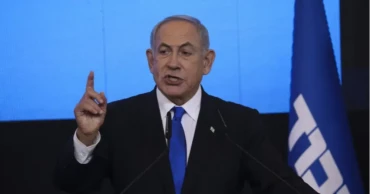
Israeli Prime Minister Benjamin Netanyahu made a surprise trip to Jordan on Tuesday to meet with King Abdullah II, his first visit since taking power at the helm of Israel's most right-wing and religiously conservative government in history.
The rare meeting between the leaders, who have long had a rocky relationship, comes as friction grows between the neighbors over Israel’s new ultranationalist government, which took office late last year. The talks centered around the status of a contested holy site in the Old City of Jerusalem sacred to both Jews and Muslims, Jordan's official statement suggested.
Jordan's royal court said the king urged Israel to respect the status quo at the sacred compound, which Muslims call the Noble Sanctuary and Jews call the Temple Mount.
Under an arrangement that has prevailed for decades under Jordan's custodianship, Jews and non-Muslims are permitted visits during certain hours but may not pray there. Religious nationalists, including members of Israel's new governing coalition, have increasingly visited the site and demanded equal prayer rights for Jews there, infuriating the Palestinians and Muslims around the world.
The compound — the third-holiest site in Islam — sits on a sprawling plateau also home to the iconic golden Dome of the Rock.
In Tuesday's meeting, King Abdullah II also pushed Israel to “stop its acts of violence” that are undermining hopes for an eventual peaceful settlement to the decadeslong Israeli-Palestinian conflict, the Jordanian government added, reaffirming support for a two-state solution. Israel's new coalition has vowed to expand Jewish settlements in the occupied West Bank and even annex the territory — which would make a future independent Palestinian state unviable.
Netanyahu’s office said he discussed “regional issues” and security and economic cooperation with Jordan, a key regional ally. Jordan’s 1994 treaty normalizing ties with Israel produced a chilly-at-best peace between the countries. Netanyahu has repeatedly offered assurances that there has been no change in the status quo at the site.
The Jordanian government has already summoned the Israeli ambassador to Amman twice in the last month since Israel's new government took office — both times after an incident at the Al-Aqsa Mosque compound.
Read more: Israeli Prime Minister Benjamin Netanyahu says military campaign is continuing full-force and will take time
Earlier this month, Israel’s new hard-line minister of national security, Itamar Ben-Gvir, made a provocative visit to the site, drawing condemnations from Jordan and across the Arab world. Jordan also protested to Israel after Israeli police briefly blocked the Jordanian ambassador from entering the Al-Aqsa Mosque, decrying the move as an unusual affront to Jordan's role as custodian.
The compound is administered by Jordanian religious authorities as part of an unofficial agreement after Israel captured east Jerusalem, along with the West Bank and Gaza, in the 1967 Mideast war. Israel is in charge of security at the site. Because of Jordan’s role and the site’s importance to Muslims around the world, whatever happens at the site has regional implications.
3 years ago