Economy
Economic policy to be inclusive and fair, says new finance minister
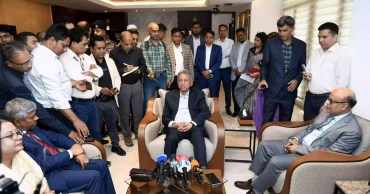
Finance Minister Amir Khosru Mahmud Chowdhury on Wednesday said Bangladesh’s economic policy must be people-centred and inclusive, stressing the need to create equal opportunities for citizens from all walks of life to participate in economic activities.
He made the remarks while speaking at a reception ceremony for newly appointed ministerial colleagues at the conference room of the ministry.
The finance minister said the country must build an economy where participation from every segment of society is ensured, as broader engagement would help bring meaningful changes to the overall economic landscape.
Finance Minister Amir Khosru unveils ambitious reform plan on day one
“A level playing field must exist in the economy so that every citizen has the opportunity to contribute and benefit from growth,” he said.
Referring to the changing public mindset after August 5, he said economic policies and activities must align with the evolving expectations of people.
As a first step, he emphasised the need to address the poor condition of state institutions.
“Our priority should be to recover institutions and strengthen them,” he said.
He said that professionalism, transparency and efficiency must be restored across public bodies to ensure effective governance and sustainable economic progress.
The minister also underscored the need to move away from a patronage-based economic model towards a more democratic and participatory one.
To achieve this, he called for deregulation and liberalisation, alongside efforts to diversify the economy beyond a narrow dependence on manufacturing.
Economy suffering from ‘overregulation’, says Amir Khosru
He said sectors such as sports, culture and other professions should be integrated into economic planning to create wider opportunities and generate new sources of income.
Giving an example, he referred to the traditional ‘shital pati’ (woven mat) produced in Barishal, which usually sells for Tk600 to Tk700.
If artisans are provided with training, access to credit and online marketing facilities, they could develop new designs and produce a variety of products, potentially creating a large market and boosting their incomes, he noted.
At the event, Khasru said the country’s economic framework should be developed in line with the 31-point programme of Prime Minister Tarique Rahman, calling for the establishment of a democratic economic system that ensures fairness and inclusivity.
The finance minister sought cooperation from officials at all levels to move the country’s economy forward and implement reforms effectively.
Among others present at the programme were Bangladesh Bank Governor Ahsan H Mansur and Finance Division Secretary Dr Khairuzzaman Mozumder, and secretaries and senior officials from various divisions of the Ministry of Finance.
3 days ago

Bangladesh’s incoming govt takes office with economy at crossroads
As Bangladesh prepares for the formation of a new government following the 13th national election, expectations are running high among depositors, investors and job seekers seeking relief from prolonged financial strain.
The BNP-led alliance is set to assume office amid mounting economic pressures, with questions swirling over who will take charge of the finance ministry and what policy direction the new administration will adopt to tackle banking fragility, stubborn inflation and sluggish job creation.
For Abdul Hamid, a retired government employee, said the stakes are deeply personal.
He has been unable to recover Tk 24 lakh that he placed as a fixed deposit in a private bank.
“I expected the new government that they will return my Tk 24 lakh, which was fixed and deposited in a private bank. But the bank fails to pay me the principal amount and benefits,” Hamid told UNB.
He said many depositors in several private sector banks face similar hardship, with institutions unable to repay funds, leaving families struggling due to a lack of liquidity.
Stock market investors are also looking for signs of a turnaround. Golam Azad, 45, invested around Tk 35 lakh in 2007 after being encouraged by a friend to seek higher returns.
He suffered losses during the stock market scams of 2010 and 2011 and has since waited for a sustained recovery.
Azad said he hopes the incoming democratic government will take meaningful steps to support market stability and protect investors.
Young graduates represent another anxious constituency.
Washim Habib, who completed his degree at a public university in 2021, has sat for the Bangladesh Civil Service (BCS) and other government recruitment examinations but remains unemployed.
Habib said he is seeking employment in either the public or private sector, noting that his elderly parents can no longer continue to support his expenses.
He expressed hope that the new democratic government will create opportunities to help him secure suitable work.
Finance Adviser Flags Structural Challenges
Against this backdrop, Dr. Salehuddin Ahmed, Finance Adviser to the interim administration, has issued a pointed warning about the scale of the economic challenges awaiting the next leadership.
New MPs, cabinet members to be sworn in Tuesday
Speaking to reporters at the Bangladesh Secretariat, he said the primary mission of the incoming government must be revitalising trade and industry while strengthening financial institutions to ensure long-term stability.
Job creation, he stressed, is central to restoring economic momentum.
“If business does not expand, employment will not be generated. And without employment, the purchasing power of the people will remain weak. This is one of the biggest challenges,” he said.
He urged policymakers to foster a vibrant private sector, arguing that the country’s industrial base remains relatively small and overly dependent on exports.
Inflation and Banking Sector Strains
Inflation, he said, remains a “multidimensional problem” that cannot be resolved through monetary policy alone.
While the interim administration has introduced several measures, broader and more comprehensive steps will be required to provide relief.
On banking sector reform, the adviser acknowledged that reorganisation efforts are under way but cautioned that “difficult decisions” lie ahead.
He praised recent initiatives by the central bank governor but noted that credit flow remains constrained and full public confidence in the banking system has yet to return, despite a recent uptick in deposits.
Capital Market and Energy Reform
To reduce overreliance on banks, Dr Salehuddin called for deeper capital market development.
“If we cannot develop the capital market, trade and commerce will not grow by relying solely on banks. Equity participation through the stock market and a strong bond market, especially for the private sector, are essential,” he said.
He said regulatory reform efforts are being slowed by legal complexities and ongoing court challenges.
The energy sector, he warned, poses a 'major long-term challenge'.
He called for intensified domestic exploration, including offshore drilling, and expressed disappointment at the slower-than-expected progress in solar energy development.
The insurance sector, he said, remains another 'sensitive area' where reform momentum has been limited despite various initiatives.
As the new administration prepares to take the oath of office, its first 100 days are likely to be defined by how effectively it can stabilise markets, restore investor confidence and translate high public expectations into tangible economic gains, economists said.
6 days ago

Logistics key to supply chain resilience, economic stability: AmCham President
Calling logistics a foundational pillar of modern economies, Syed Ershad Ahmed, President of AmCham Bangladesh, said efficient logistics systems are essential for sustaining supply chains, supporting economic growth, and ensuring the continuity of everyday life.
The global logistics landscape is being rapidly reshaped by forces such as AI and automation, decarbonization and fuel transitions, geopolitics, regionalization, and supply chain resilience, and stressed the need to bridge existing knowledge and capacity gaps to better support the country’s growing trade and investment needs, he said.
The AmCham President made the remarks at a focus group discussion titled “Framing the Logistics Sector Landscape: Challenges, Opportunities, and the Way Forward,” held at a city hotel on Tuesday.
Read More: AmCham honours Khaleda Zia as legacy of an exemplary leader
Drawing on over three decades of professional experience, he noted that while Bangladesh’s logistics sector has evolved, it continues to lag behind regional competitors and remains poorly understood domestically.
M. Masrur Reaz, Chairman, Policy Exchange Bangladesh, highlighted key challenges and opportunities in Bangladesh’s logistics sector, affirming its critical role in trade competitiveness through cost reduction, faster delivery, and efficiency gains.
Referring to the Chattogram port labor strike, he illustrated how logistics disruptions can severely impact the national economy, noting that logistics infrastructure and port capacity expansion will be crucial to supporting the projected GDP of USD 760 billion by 2030, while a 1% reduction in logistics costs could increase exports by around 7%, particularly as Bangladesh approaches LDC graduation.
He also identified major implementation gaps in the National Logistics Policy, including government monopolies in rail and air cargo, weak inter-ministerial coordination, and the absence of central logistics authority.
Read More: AmCham dialogue stresses urgent reforms to boost investment competitiveness
Seasoned entrepreneur Mahbubul Anam, Managing Director of CF Global, outlined key challenges in air logistics and express courier operations, emphasizing the need for stronger public–private coordination, supportive policy frameworks, stakeholder-informed infrastructure planning, and adequate equipment.
He stressed the importance of cost rationalization, capacity expansion, efficient courier services, and robust contingency arrangements to support time-sensitive shipments, particularly as e-commerce-driven demand for express logistics continues to grow.
He noted that logistics costs at Dhaka airport are 20–25% higher than those of road transport and underscored that stronger public–private cooperation is essential to address these constraints.
Nusrat Nahid Babi, Senior Transport Specialist, South Asia, The World Bank, said that Bangladesh’s logistics reform momentum since 2022 must be reaffirmed by the new government through clear priorities and high-level consensus.
She outlined a phased reform agenda structured around five thematic pillars: policy and procedural simplification; multimodal logistics infrastructure and connectivity; skills and institutional capacity development; supply-chain digitalization; and investment in logistics.
Other speakers and the overall discussion emphasized the need to move decisively from policy intent to implementation, including ratification of the National Logistics Policy 2025, supported by a clear execution roadmap.
Md. Moinul Huq, Citi Country Officer, Bangladesh Citibank, N.A., highlighted the urgent need for customs authorities to operationalise provisions of the Customs Act 2023 by clearly defining electronic document submission and payment modalities.
Participants expressed concern about the heavy dependence on RMG exports, slow progress in new infrastructure development, and poor implementation of electronic documentation despite the presence of enabling policies.
Read More: AmCham hosts session on Economic and Investment Outlook in Dhaka
17 days ago
Germany's troubled economy shows modest growth after two years of shrinkage
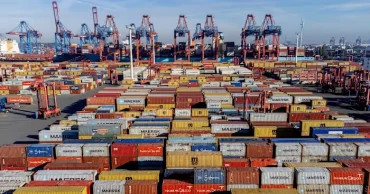
Germany’s economy returned to modest growth last year after two consecutive years of contraction, official data showed Thursday, raising expectations that government investment in infrastructure and defense could help break years of stagnation.
The country’s gross domestic product (GDP) grew by 0.2% in 2025, driven by stronger consumer and government spending, while exports remained subdued due to tougher U.S. trade policies under President Donald Trump, the German Federal Statistical Office reported. This followed GDP contractions of 0.5% in 2024 and 0.9% in 2023.
“Germany’s export sector faced significant headwinds from higher U.S. tariffs, a stronger euro, and growing competition from China,” said Ruth Brand, head of the statistics office, in a statement.
Looking ahead, analysts expect slightly stronger growth this year as Chancellor Friedrich Merz’s government ramps up infrastructure spending to address years of underinvestment. Defense expenditure is also rising amid heightened security concerns following Russia’s invasion of Ukraine.
Read more: Germany to increase its funding contribution to Saidabad WTP Phase III project
Germany has faced extended economic stagnation since the COVID-19 pandemic. Rising energy costs from the Ukraine war, growing competition from China in key sectors such as automobiles and industrial machinery, higher tariffs on EU goods imposed by the U.S., and a stronger euro have all weighed on the export-driven economy. Structural challenges, including bureaucratic hurdles and a shortage of skilled labor, have also constrained growth.
Preliminary data indicate that the German economy expanded by 0.2% in the final quarter of 2025. A group of leading economists has projected 0.9% growth for 2026, though they caution that slower-than-expected government spending could limit the recovery.
1 month ago
Left alliance leaders meet Tarique, discuss politics, economy, extremism
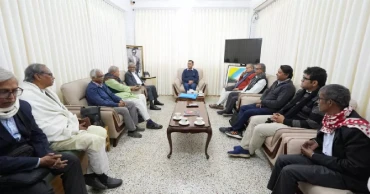
Leaders of the left-wing alliance Democratic United Front met BNP Acting Chairman Tarique Rahman on Monday and discussed the country’s overall political and law-and-order situation, as well as various issues related to the upcoming national election.
The left leaders also discussed the country’s economic situation and expressed concern over the rise of extremism at the meeting held at the BNP Chairperson’s office in Gulshan.
The Democratic United Front delegation included CPB Presidium member Mujahidul Islam Selim, its President Kazi Sajjad Jahir Chandan, General Secretary Abdullah Al Kafi Ratan, BASD General Secretary Bazlur Rashid Firoz, Assistant General Secretary Rajequzzaman Ratan, Bangladesh JASAD General Secretary Nazmul Haque Prodhan and its Standing Committee member Mostaq Hossain, Bangladesh Socialist Party Executive President Abdul Ali, Democratic Revolutionary Party General Secretary Mushrefa Mishu, Bangladesh Revolutionary Communist League General Secretary Iqbal Kabir Zahid, Presidium member Professor Abdus Sattar and BASD (Marxist) Coordinator Masud Rana.
Top business leaders meet Tarique Rahman, discuss economy, jobs
BNP Secretary General Mirza Fakhrul Islam Alamgir was also present at the meeting.
Earlier, on November 29, nine left-leaning progressive political parties formed the Democratic United Front with Bangladesh JASAD ahead of the 13th parliamentary election.
After the meeting, BASD General Secretary Bazlur Rashid Firoz told reporters that they primarily visited Tarique Rahman to convey their sympathy to him and his family over the death of his mother, former Prime Minister Begum Khaleda Zia.
“He had been staying abroad for a long time and returned to the country recently. After returning, he lost his mother. We expressed our sympathy and solidarity with the bereaved family and the party,” he said.
Apart from this, Firoz said they also discussed various political issues, including the overall political situation, law and order, the upcoming election, and the rise of fundamentalist and communal forces.
‘1971 is our foundation’
Bazlur Rashid said Tarique Rahman told them that the Liberation War of 1971 is the foundation of Bangladesh.
“He (Tarique) told us that after returning to the country on December 25, he made it clear in his speeches that the Liberation War of 1971 is our foundation. Without the Liberation War, Bangladesh would not exist. Therefore, we must move forward while upholding the aspirations of the mass uprisings of 1990 and 2024,” the BASD leader said.
Tarique Rahman voices concern over rising mob violence: Saiful Haque
He said the BNP Acting Chairman also told them that Bangladesh belongs to everyone, including believers, non-believers, and sceptics, and that the country must move forward through the united efforts of all.
“Tarique Rahman said they have a plan to build a liberal, democratic and welfare-oriented state and want to work in that direction, learning from the past. The people will remain at the centre of their politics, and the goal is not only to make plans but also to implement them so that people can benefit and enjoy the facilities,” Bazlur Rashid said.
He said Tarique also told them that opposition parties would exist and differences of opinion would remain. “He said there may be disagreements on many issues, but on national matters and issues affecting the people, there should be dialogue.”
The BASD leader also said Tarique will welcome advice from time to time and accept it where appropriate, emphasising the need to create a cordial and respectful political environment in the country.
He said the Democratic United Front stressed the importance of building a political culture based on tolerance, acceptance of different views, and philosophical tolerance, which are essential for democracy, along with free, fair, and democratic elections.
Bazlur Rashid said they focused on ensuring that forces opposed to the Liberation War of 1971 and anti-independence elements do not gain space in politics.
Regarding Jamaat-e-Islami’s recent statements on a national government, he said Tarique Rahman clarified that no such discussion took place with them.
“He said that on matters of national interest, independence, and sovereignty, unity is necessary, even if there are differences in views and political paths,” the BASD leader said.
‘Criticism will remain’
Bazlur Rashid said the Democratic United Front leaders told Tarique that if BNP comes to power in the future, they may be among the strongest critics of it.
“He (Tarique) said criticism is essential for democracy. Without criticism, democracy cannot function. There will be both criticism and dialogue, and such discussions should continue with everyone,” he said.
The BASD leader said the BNP Acting Chairman expressed his willingness to engage in discussions with the left alliance leaders in the future.
Earlier, leaders of the Democratic United Front signed the condolence book opened at the office, paying their tributes to the late Begum Khaleda Zia.
Later, a four-member delegation of Ganosamhati Andolan, led by its chief coordinator Zonayed Saki, also met Tarique Rahman and discussed various issues related to politics and the upcoming national election.
1 month ago
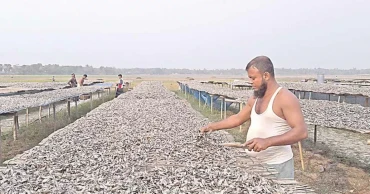
Dry fish trade keeps Narail economy moving in winter
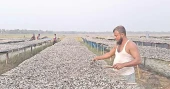
As winter settles over Narail, open fields in Shalua of Maijpara Union and Sholpur of Singasholpur Union transform into makeshift drying yards where the district’s famed dry fish season begins in earnest.
For the communities here, the annual cycle is more than a tradition — it is a vital source of income that supports hundreds of families.
Dry fish has long been considered a staple across the region, but in Narail it is an economic backbone. Fishermen, labourers, small traders, and transporters all rely on the trade, which has earned the district recognition as a notable hub for producing chemical-free dry fish.
On raised bamboo macha, fish sourced daily from canals, beels, and rivers are cleaned, salted and arranged under the open sky to dry.
The process is entirely natural, a fact that locals say has boosted demand in recent years.
Read more: Fish export to India halted thru Akhaura land port
Since this dry fish is prepared without any chemicals and in a safe environment, demand is increasing day by day, villagers said.
Among those who travel to Narail for seasonal work are Md Kabir Sheikh and Kamrul Sheikh from Muksudpur in Gopalganj. They spend the winter months drying varieties such as climbing perch (koi) and glassy perchlet (chanda), along with the widely popular chapa shutki.
No chemicals are used — only salt, they said, as rows of fish dried slowly under the sun.
While the work continues smoothly, selling remains a challenge.
Fisherman Md Mosa Mia said lower water levels during winter make it easier to catch different local species, allowing producers to buy raw fish at relatively low prices. The difficulty lies in accessing the market.
“We buy the fish and make dry fish. But without a broker, it has become difficult to sell,” he said, adding, “If we could sell directly to buyers, we would earn better profits.”
Another fisherman, Alok Biswas, described the realities of production: two to three maunds of raw fish reduce to one maund after drying.
Read more: PKSF holds policy dialogue on fisheries market
“Depending on the type, one maund of dry fish is sold for Tk 7,000 to Tk 8,000,” he said.
Official target and growing reputation
Narail District Fisheries Officer Mahbubur Rahman said a target of 80 metric tonnes of dry fish production has been set for the district this year.
“Since the dry fish here is chemical-free, it is in demand not only within the district but across the country,” he said.
The Fisheries Office has been providing training and technical support to help producers maintain quality and strengthen their position in the market.
For now, as winter sunlight glints across the bamboo platforms, families continue the work that has sustained them for generations.
The methods remain simple, the challenges persistent, but for Narail, dry fish remains a lifeline — one that keeps the district’s economy moving long after the drying season ends.
Read more: Hilsa prices soar further putting this beloved fish beyond reach
2 months ago

Remittance fighters deserve more than just appreciation: Singer Asif Akbar
Suwaidi Park in Riyadh overflowed with thousands of expatriate Bangladeshis as renowned artist Asif Akbar made his presence felt among the Bangladesh community and their friends from other participating countries, including the host - the Kingdom of Saudi Arabia.
The atmosphere was electric—yet deeply emotional—as their beloved singer connected heart-to-heart with the very people who keep Bangladesh’s economy moving from miles away.
Speaking with warmth and sincerity, Asif Akbar emphasised that the remittance fighters - the expatriate workers who sacrifice comfort, family time, and their personal dreams - deserve more than just appreciation. They deserve joy, he said.
Bangladesh’s colourful heritage takes centre‐stage at Riyadh’s Global Harmony festival
“Remittance fighters need entertainment to breathe, to stay human,” Asif said passionately. “Without moments of happiness with entertainment, people become hardened by the struggles they carry every day."
Asif who sang a huge number of hit songs like ‘O Priya Tumi Kothai’ shed light on the silent battles these workers face abroad - loneliness, isolation, tireless labor, and the emotional burden of constantly giving while rarely receiving.
Yet, despite the weight on their shoulders, they continue to send money home, build futures for their families, and strengthen the foundations of Bangladesh’s economy, he remembered.
Asif described expatriate Bangladeshis as “the most patriotic sons and daughters of our nation.”
He praised their unwavering dedication, calling them pillars of progress whose sacrifices often go unnoticed.
“They work in foreign lands, far from loved ones, just to keep joy alive back home. But in doing so, they often lose their own moments of happiness,” Asif mentioned in between the conversation with the audience from the large stage.
In Suwaidi Park, surrounded by the cheers and warmth of his compatriots, Asif reminded everyone that behind every remittance sent home lies a story of resilience, sacrifice and unspoken pain.
And through music and togetherness, even for a brief moment, those burdens felt a little lighter, said the singer who sang for nearly two hours.
With each song, expatriates Bangladeshis were seen singing together with their favourite singers.
The Saudi Ministry of Media launched the second edition of the Global Harmony in cooperation with the General Entertainment Authority highlighting cultures of 14 countries, including Bangladesh.
The ‘Bangladeshi Cultural’ segment began on November 11 and ended on Friday night (Riyadh time, November 14).
Asif highly appreciated the Saudi government, Saudi Ministry of Media and everyone involved for hosting such a mega event.
He also thanked the organisers for honoring the Bangladeshi expatriate community with an opportunity to enjoy a concert free of charge.
Read more: Global Harmony: Bangladesh’s rich cultural heritage to shine in Riyadh
The event, hosted by popular Bangladeshi actress Prarthana Fardin Dighi and Rabiul Haque Zaman, showcased the rich traditions, music, dance, and cuisine of Bangladesh as part of Saudi Arabia’s Global Harmony initiative.
Thousands of expatriate Bangladeshis, along with some of their families, gathered to enjoy live performances and sing together, transforming the park into a sea of sounds and lights.
For many, it was an emotional and pride-filled night, a moment to reconnect with their roots and share their culture with the wider Saudi community, celebrating unity, friendship, and the growing cultural ties between Bangladesh and the Kingdom.
“This is absolutely amazing. We remain busy, struggling every day here to keep our families smiling back home. This event is refreshing and a chance to share joy with friends,” Rumel, a Bangladeshi expatriate who attended with his friends, told UNB.
“I came here to host for the first time — a role I’ve never played before. It feels wonderful to be here, close to the Bangladeshi community. The audience is amazing. We are grateful to the Saudi authorities and the Ministry of Media,” Dighi told UNB.
Sarry Shaaban, spokesperson for the Global Harmony committee, expressed his excitement at hosting one of the largest expatriate communities in Saudi Arabia as part of the initiative.
“We are thrilled to have the Bangladeshi community join us. This event will help Saudi audiences learn more about Bangladesh and its culture,” he said.
Other nations and regions to be featured in the event include Egypt (Nov. 15–17); the Levant (Nov. 18–20); Yemen (Nov. 21–28); Pakistan (Nov. 29–Dec. 1); Indonesia (Dec. 2–4); the Philippines (Dec. 5–8); Uganda (Dec. 9–10); Ethiopia (Dec. 11–13); and Sudan (Dec. 14–20).
The Global Harmony initiative was first launched in October 2024 to celebrate the diversity of the Kingdom’s residents.
Last year’s event celebrated the cultures of Bangladesh, India, Pakistan, Malaysia, Indonesia, Yemen, Syria, Palestine, Sri Lanka, Egypt, Lebanon, Jordan, and the Philippines.
Last year’s event featured legendary Bangladeshi rock icon Nagar Baul James, DJ Sonica, and popular singers Habib Wahid, Porshi, and Beauty Khan — with James’s first-ever performance in Riyadh being a major highlight.
The Global Harmony initiative continues to host a series of cultural weeks representing 14 countries over a span of 49 days.
The programme is part of the Kingdom’s broader efforts to promote intercultural dialogue and mutual understanding, reinforcing Riyadh’s position as a global hub for cultural and civilizational diversity.
Read more: Saudi Arabia to allow 78,500 Bangladeshis for 2026 Hajj
3 months ago
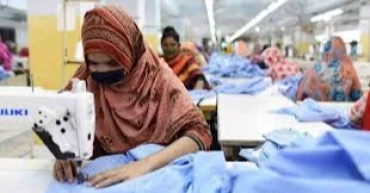
Bangladesh economy in ‘waiting vortex’; experts urge credible elections
Bangladesh’s economy is caught in a debilitating ‘waiting vortex’ of stagnant investment, high inflation and weak business confidence, with experts saying only a credible and participatory election can restore stability and drive recovery.
The prevailing consensus across the business and policy landscape is that the economy is currently ‘breathing, but unable to walk’ as it is paralysed by political uncertainty ahead of the general election expected next February.
Business owners and entrepreneurs unanimously assert that new initiatives and investments are impossible without political stability and certainty.
Professor Rashed Al Mahmud Titumir of Dhaka University, Liaquat Ali Bhuiyan, Senior Vice-President of the Real Estate and Housing Association of Bangladesh (REHAB), Inamul Haq Khan, Senior Vice-President of the Bangladesh Garment Manufacturers and Exporters Association (BGMEA), Anwar-ul-Alam Chowdhury (Parvez), President of the Bangladesh Chamber of Industries (BCI), and former Chief Economist of Bangladesh Bank Dr Mustofa K Mujeri talked to the UNB correspondent about the current economic situation in Bangladesh.
Read more: Bangladesh’s reserves still remain above $31 billion after ACU payment
The economy is sustained by political trust, and it is the government’s responsibility to restore that confidence, said economists, underscoring that without a stable political environment, the recovery process cannot begin.
This sentiment is echoed by the country’s development partners. The International Monetary Fund (IMF) has reportedly linked the disbursement of the next tranche of its $4.7 billion loan to the formation of an elected government. Similarly, both domestic and foreign investors are reluctant to take risks, preferring instead to adopt a cautious ‘wait-and-see’ stance.
Worrying Economic Indicators
Private Sector Credit Growth: Loan growth to the private sector has dropped to around 6.5 per cent — roughly half the normal rate — signalling a sharp contraction in new business activity and entrepreneurship.
Capital Machinery Imports: Imports of capital machinery, a key indicator of future industrial output, have declined by 25 per cent, casting a shadow over upcoming production and employment prospects.
Inflation and Savings: Inflation has been persistently high, hitting 8.36 per cent in September 2025, hitting hard the purchasing power of ordinary citizens, with the sales of national savings certificates falling by over Tk 6,000 crore, making it clear that many are being forced to liquidate their savings.
Foreign Investment: Foreign Direct Investment (FDI) fell by 22 per cent in the first quarter of the current fiscal year, as international investors remain cautious — with some existing firms even scaling back their operations.
Govt moves to make SMEs a driving force of economy: CA’s office
“Investment is now not just an economic question, but a question of social confidence,” one analyst observed, noting that political instability and deteriorating law and order are heavily discouraging entrepreneurs.
Social Costs and Unemployment
The economic stagnation is inflicting a deep social toll, with experts warning of rising poverty and worsening unemployment.
Professor Titumir cautioned that high inflation has “reduced the purchasing power of the common people, increased poverty, and may push another 30 lakh people below the extreme poverty line.”
The country now faces a mounting unemployment crisis, with around 13 lakh jobless youths — including one in every three university graduates.
Industry Leaders Demand Clarity
Business leaders across key sectors have emphasised the urgent need to restore political and policy clarity.
Liaquat Ali Bhuiyan said that new investment in manufacturing, real estate, banking, and services has “nearly stopped.”
Inamul Haq Khan noted that foreign buyers and partners, including the IMF, have little confidence in a temporary setup.
Dhaka’s economy driven by manufacturing sector with 56% share: DCCI
“IMF and foreign stakeholders are waiting for the new government. Only then will confidence and investment surge,” he added.
Path to Recovery
Economists argue that the top priority for the current interim administration must be to hold a swift, credible, and widely accepted national election, paving the way for an elected government to take charge.
Anwar-ul-Alam Chowdhury (Parvez) told UNB that clarity on the election timeline and assurance of a peaceful process are the most crucial prerequisites for restoring economic stability.
Dr Mustofa K Mujeri observed that the economic environment will remain fragile as long as high interest rates persist and political uncertainty continues to limit capital flow.
Ultimately, analysts suggest that the nation stands at a “historic juncture,” where it must either accept the current stagnation or move decisively towards a new economic model anchored in political stability and trust.
Read more: IMF to decide Bangladesh’s next loan installment after formation of political govt: Adviser
3 months ago
Bangladesh economy shows external stability despite internal challenges: Report
Bangladesh’s economic outlook for August 2025 shows signs of stabilisation on the external front but troubling weaknesses in domestic investment, revenue collection and development spending, according to a government report.
The latest monthly economic update by the General Economics Division (GED) under the Planning Ministry said inflation declined to 8.29 percent in August, the lowest since July 2022, after months of volatility that saw double-digit inflation from July to December 2024.
Non-food inflation dropped below 9 percent for the first time in 20 months, helping offset a marginal rise in food prices.
Food inflation stabilised at 7.6 percent for three consecutive months, a sharp improvement from the 14 percent peak in July 2024.
Rice remains the single largest driver of food inflation, contributing 48.37 percent in August. Government procurement of 1.7 million tons of Boro rice, imports of half a million tons duty-free and higher distribution under public food schemes are expected to ease prices in the coming months.
Still, GED noted that delays in real-time monitoring and policy response prevented earlier stabilisation.
The report highlighted a robust performance in the external sector. Export earnings consistently crossed the $4 billion mark, hitting $4.77 billion in July 2025.
The exchange rate remained stable at Tk 121–122 per USD, while foreign exchange reserves climbed from $24.86 billion in September 2024 to $31.17 billion in August 2025. This, according to GED, provided a solid cushion against trade shocks and debt obligations.
Despite positive external indicators, the domestic financial sector showed deep stress. Private sector credit growth plunged to 6.49 percent in June 2025 — the lowest on record and far short of Bangladesh Bank’s target.
Businesses remain reluctant to borrow amid high interest rates, political and economic uncertainty, and cautious bank lending.
Commerce Adviser stresses surplus economy for sustainable growth
By contrast, public sector credit rose sharply by 13.09 percent, driven by the government’s heavy reliance on bank borrowing to finance its fiscal deficit.
This trend, GED warned, is effectively “crowding out” the private sector and undermining future investment and job creation.
Revenue collection in August stood at Tk 27,162 crore, falling Tk 3,727 crore short of the target. While collections grew 17.6 percent year-on-year, the shortfall was mainly due to weaker import and income tax receipts.
Only VAT at the local level showed improvement. The report flagged persistent revenue gaps as a key challenge in meeting the ambitious annual target of Tk 4,99,000 crore.
Development spending remains another weak spot. ADP utilization dropped to 2.39 percent of allocation in the July–August period of FY26, down from 2.57 percent in the same period last year.
Although August utilisation improved slightly year-on-year (1.71 percent vs 1.52 percent), GED noted that such low early-year implementation reflects structural bottlenecks, bureaucratic delays, and poor fund release capacity, raising the risk of back-loaded spending and inefficiency.
While the decline in inflation and strengthening of reserves signal macroeconomic stability, GED cautioned that the domestic economy faces significant headwinds. Weak private investment, revenue shortfalls, and under-utilisation of development funds threaten to slow growth momentum.
“The economy is showing resilience externally but risks remain high domestically. Without urgent measures to stimulate private credit, enhance revenue collection, and accelerate ADP implementation, medium-term growth prospects may weaken,” the report said.
4 months ago
Bangladesh hopeful of ‘further progress’ as 2nd round tariff talks set to begin today
Bangladesh hopes to build on the progress made during the first round of fruitful negotiations with the United States, as the second round of talks on the tariff issue is set to begin in Washington DC today (Wednesday).
"Bangladesh hopes to build on the progress made during the first round of fruitful negotiations on 27th June and conclude the agreement expeditiously," said Chief Adviser’s Press Secretary Shafiqul Alam on Wednesday.
The Office of the U.S. Trade Representative (USTR) is responsible for developing and coordinating US international trade, commodity and direct investment policy and overseeing negotiations with other countries.
The head of USTR is the US Trade Representative, a Cabinet member who serves as the president’s principal trade advisor, negotiator and spokesperson on trade issues.
The USTR has invited Bangladesh to the second round of negotiations on the Agreement on Reciprocal Tariff during July 9-11, 2025.
"Bangladesh is among the first countries to restart negotiations following the issuance of President Trump's letter to leaders of 14 countries on July 7," Alam said.
Trump announces 35% tariff on Bangladeshi goods, to be effective Aug. 1
Commerce Adviser Sk Bashir Uddin, who is leading the Bangladesh delegation, will participate in person in Washington DC while National Security Adviser Dr Khalilur Rahman will join virtually from Dhaka, said the Press Secretary.
Senior officials, including the Commerce Secretary and an Additional Commerce Secretary, have arrived in Washington DC to join the talks.
US President Donald Trump in his letter to Chief Adviser Professor Muhammad Yunus said, "We look forward to working with you as your trading partner for many years to come. If you wish to open your heretofore closed trading markets to the United States, and eliminate your tariff, and non-tariff, policies and trade barriers, we will, perhaps, consider an adjustment to this letter."
Trump said these tariffs may be modified, upward or downward, depending on their relationship with Bangladesh. "You will never be disappointed with the United States of America," President Trump wrote to Prof Yunus.
Starting on August 1, 2025, the US President said they will charge Bangladesh a tariff of only 35% on any and all Bangladeshi products sent into the United States, separate from all sectoral tariffs.
"Please understand that the 35% number is far less than what is needed to eliminate the trade deficit disparity we have with your country. As you are aware, there will be no tariff if Bangladesh, or companies within your country, decide to build or manufacture products within the United States and, in fact, we will do everything possible to get approvals quickly, professionally, and routinely - In other words, in a matter of weeks," Trump said.
Trump to put 25% tariffs on Japan and South Korea, new import taxes on five other nations
The White House in its factsheets said President Trump is the best trade negotiator in history. “His strategy has focused on addressing systemic imbalances in our tariff rates that have tilted the playing field in favor of our trading partners for decades.”
The White House said countries that are not serious about addressing the tariff and non-tariff trade barriers that impede American exports and harm American workers, farmers and businesses are facing the consequences.
On July 7, President Trump signed an Executive Order determining that certain tariff rates, which were initially set to expire on July 9, will expire on August 1, 2025.
President Trump has sent tariff notification letters to multiple countries, informing them of new reciprocal tariff rates set to take effect on August 1.
The US President may send more letters in the coming days and weeks.
Asian shares mostly down as Trump’s tariff deadline nears
The countries he sent letters include: Bangladesh (35%), Japan (25%), Korea (25%), South Africa (30%), Kazakhstan (25%), Laos (40%), Malaysia (25%), Myanmar (40%), Tunisia (25%), Bosnia and Herzegovina (30%), Indonesia (32%), Serbia (35%), Cambodia (36%) and Thailand (36%).
7 months ago