Jhenaidah
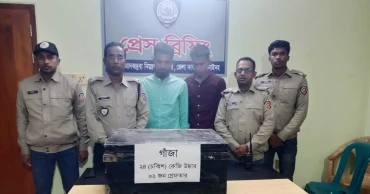
Two held with 24kg hemp in Jhenaidah
Members of the Department of Narcotics Control (DNC) seized 24 Kgs of hemp and arrested two alleged drug traders during a raid in Jhenaidah on Wednesday afternoon.
The raid was conducted at Kalalaxmipur area of Sadar upazila targeting a Purbaasha Paribahan vehicle.
The arrestees were Abul Kalam Azad, son of Lal Mia of Sundarpur village in Kaliganj upazila, and Hossain Monir, son of Shariful Biswas of Garabaria village in Maheshpur upazila.
Deputy Director of DNC Jhenaidah Sheikh Md Hasem Ali said tipped-off, a total of 44 packets containing 24kg hemp were recovered.
A case has been filed under the Narcotics Control Act with the police station concerned,
The arrestees were sent to court after initial interrogation while the seized drugs handed over to the police station, officials added.
2 days ago

Jamaat wins 3 Jhenaidah seats, BNP’s Asaduzzaman secures lone constituency
Jamaat-e-Islami has won three of the four parliamentary seats in Jhenaidah district, while BNP secured one seat, according to unofficial results announced early Friday.
Abdullah Al Masud, Returning Officer and Deputy Commissioner of Jhenaidah, announced the results around 1am after vote counting ended in a peaceful environment.
In Jhenaidah-1, former Attorney General and BNP candidate Advocate Md Asaduzzaman was unofficially elected with 173,381 votes. His nearest rival, Jamaat candidate Motiur Rahman, received 57,055 votes.
In Jhenaidah-2, Jamaat candidate Ali Azam Md Abu Bakar won the seat with 131,865 votes, defeating BNP candidate Abdul Majid, who secured 105,664 votes.
In Jhenaidah-3, Jamaat’s Motiar Rahman was unofficially elected with 175,857 votes. His closest rival, BNP candidate Mehedi Hasan Rony, got 149,857 votes.
In Jhenaidah-4, Jamaat candidate Abu Talib won with 105,999 votes. Expelled BNP leader Saiful Islam Firoz secured 77,104 votes, while BNP-nominated candidate Rashed Khan came third with 56,224 votes.
BNP’s Asaduzzaman unofficially wins Jhenaidah-1 by huge margin
District Election Officer Abul Hossain said polling in all four constituencies was held in a peaceful and festive atmosphere.
Supporters of the Jamaat-led alliance gathered at the Deputy Commissioner’s office and celebrated as results from different centres were announced.
8 days ago

Jhenaidah reels from 301 suicides in one year, women bear the brunt
Jhenaidah has been rocked by a disturbing surge in suicides, with 301 people taking their own lives in 2025, laying bare deep-rooted mental health challenges, intense social pressures and gaps in public safety.
Women account for a disproportionate share of the deaths, heightening concerns over their vulnerability, according to official data.
Of the total cases, 182 people hanged themselves, while 119 died after consuming poison.
Abdur Rahman, Chief Executive Officer of Rural Development Center (RDC), a human rights organisation based in Maheshpur, revealed the statistics.
In 2025, he said, 168 women and 133 men committed suicide in the district. In comparison, 319 people killed themselves in 2024—152 men and 167 women. In 2023, the total was 328, and in 2022, it was 323.
A statistical analysis shows that the number of suicides in 2025 has slightly decreased compared to the last four years.
Jhenaidah Sadar recorded the highest number with 79 cases, followed by Shailkupa, 67, Maheshpur, 46, Harinakunda and Kaliganj (43 each), and Kotchandpur, 23.
Of those who hanged themselves, 109 were women and 73 were men, while among those who consumed poison, 57 were women and 62 were men.
The statistics were compiled using multiple sources, including monthly reports from the Jhenaidah Civil Surgeon's Office and the Deputy Commissioner’s Office.
Over the past four years, a total of 1,271 people committed suicide in the district, with women making up a relatively higher proportion of the victims.
Maheshpur Upazila Health and Family Planning Officer Dr Helena Akter Nipa said women are more prone to suicide due to emotional vulnerability.
She cited social factors such as drug addiction, unemployment, mental health issues, family conflicts, failed relationships, extramarital affairs and poverty as contributing causes.
In this regard, Kazir Nazir Uddin, chairman of Sadhuhati Union under Jhenaidah Sadar Upazila, told UNB that suicide has become a serious problem in the district.
He said people are very emotionally sensitive and often take their own lives over minor issues.
Although the district administration is holding awareness meetings in the union, the number of suicides has not reduced significantly, Nazir said, adding that the situation is slightly better than last year.
“Suicidal incidents could be reduced to some extent if strong family bonds and religious values were developed in every household,” he added.
Deputy Commissioner (DC) of the district Abdullah Al Masud emphasised the media’s responsible role in suicide prevention.
Businessman takes own life with licensed gun in Jhenaidah
“Suicidal incidents must be reported carefully to avoid inciting others. Expanding counseling services is crucial, as timely psychological support can help individuals in crisis,” he said.
DC Masud pointed out that the district administration has continued field-level awareness activities to prevent suicide and urged people from all walks of life to participate in these efforts.
1 month ago
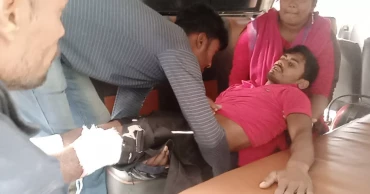
10 injured in BNP activists' fraternal clash in Jhenaidah
At least 10 individuals were injured in a clash between two BNP factions over establishing dominance in Shailkupa upazila of Jhenaidah on Monday morning (January 19, 2026).
The incident took place at Bishnudia village under Manoharpur union.
Read more: EU delegation meets Tarique Rahman
Police and local sources said supporters of district Jubo Dal joint general secretary Zahid Chowdhury and Shailkupa upazila Jubo Dal member secretary Abul Bashar Sadat had long been locked in a dispute over social dominance in the area.
Tension intensified two days ago when supporters of the two leaders got into an altercation over demarcating the boundary of mosque land in Bishnudia village.
Following the dispute, activists from both sides clashed with locally made weapons on Monday morning, leaving at least 10 people injured. One of the injured is in critical condition.
Officer-in-Charge of Shailkupa Police Station Humayun Kabir Molla said police rushed to the spot after being informed and brought the situation under control.
Read more: 10 Indian air guns recovered from Sylhet’s Jaintapur
Additional police have been deployed in the area as tension continues to prevail.
1 month ago
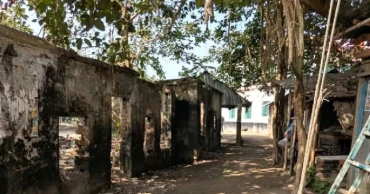
Routine clean-up drive triggers eviction fear among Kusumpur Bazar traders
A routine waste clean-up announcement has sparked deep anxiety among traders at Kusumpur Bazar in Maheshpur upazila, with many fearing that the initiative could be used as a pretext to evict long-standing businesses from the market.
Traders alleged that the newly appointed market lessee, backed by a section of local influencers, is attempting to exploit the clean-up drive to dismantle selected shops and gain control of valuable government-owned khas land.
According to local sources, Kusumpur Bazar has grown over the years on both private and government land.
Many traders have been operating for decades after constructing shops on khas land, while some private landowners have also expanded their establishments by encroaching on adjoining government land.
Read more: Master plan soon for waste management in divisional cities, municipalities : Rizwana
For years, waste has been dumped on a stretch of khas land on one side of the market.
Last Friday, the Kusumpur Land Office carried out a miking campaign, announcing that the accumulated waste would be removed.
Traders, however, claimed the announcement was made strategically, raising fears that it could pave the way for selective evictions rather than a neutral clean-up operation.
Several traders alleged that under the guise of waste removal, certain individuals were attempting to seize control of prime khas land in collusion with a section of the local administration.
Local sources further alleged that pharmacy trader Zulfiqar Ali Zulu was involved in efforts to take over government land within the market area.
They also claimed that a number of businessmen, including Shamsul Haque Bado, Jalal Uddin Biswas, Qutub Uddin Biswas, Mohiuddin Biswas, Siddiqur Rahman, Anarul Master, Masud Ali, Md Nayan, Salauddin Jewel, Md Rahman, Jahangir Ali, Montu Mandal, Momin Rahman, Farzan Ali and Rabiul Islam Robal, have constructed shops by occupying portions of khas land.
Read more: DNCC to develop modern waste management system beside existing Amin Bazar LFS
Traders argued that if these lands or establishments had been formally allocated, the government could have earned revenue worth crores of taka.
Speaking on condition of anonymity, several traders said that many people are currently benefiting from the occupation of khas land in the market.
They stressed that any eviction drive must be fair and uniform.
“Targeting only a few shops will create tension and may lead to clashes in the market,” one trader warned.
Responding to the allegations, Zulfiqar Ali Zulu said that the occupation of khas land has existed for years, while some parts of the land remain unused or controlled by only one or two individuals.
He argued that reclaiming unused land could allow for the construction of new shops and categorically denied all allegations against him.
Assistant Officer of the Kusumpur Land Office, Zulfiqar Ali, said the miking campaign was conducted solely to remove waste and dirt from the market area.
He said the district administration plans to carry out similar clean-up drives across all upazilas, including all markets in Maheshpur.
“There has been no announcement or instruction to evict any shops,” he said, adding that some shops built on khas land adjacent to the market would be surveyed to ensure compliance with existing regulations.
Read more: Jhenaidah’s heritage sites: Glory fading into dust
Assistant Commissioner (Land) of Maheshpur Upazila, Istiak Ahmed, also dismissed fears of land grabbing under the pretext of waste removal.
“There is no scope to occupy land in the name of cleaning. The matter will be communicated to the Kusumpur Land Office to ensure that no one illegally occupies government land," he said.
1 month ago
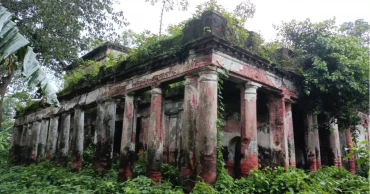
Jhenaidah’s heritage sites: Glory fading into dust
Jhenaidah’s 21 officially recognised heritage sites across six upazilas, with their rusting gates, crumbling walls, and silent courtyards, now teeter on the brink of ruin, victims of neglect, indifference and the passage of time.
Walking through the grounds of the 19th-century Nilkuthi building at Khalishpur in Maheshpur upazila, it is hard to imagine that this dilapidated structure was once a bustling centre of colonial activity. Its walls, gazette-listed in 2012, are now pockmarked with decay, and weeds creep through the cracked floors.
“After gazette listing, official supervision has effectively stopped. Some structures are even on private land, making preservation even more complicated,” says local resident Russell Ahmed.
Jhenaidah’s heritage is not limited to Nilkuthi. The Miyar Dalan, the historic Shahi Mosque in Shailkupa upazila, the Rajbari Temple in Naldanga upazila, and the ancient mosque in Borobazar all bear the scars of neglect.
Read more: UNESCO World Heritage Sites in Bangladesh
The ancestral homes of Ila Mitra, a prominent leader of the Tebhaga Movement, and Professor Kalipada Basu, a renowned mathematician, are quietly crumbling, their stories at risk of being erased from public memory.
According to the Department of Archaeology, these 21 structures are legally protected. Yet, field inspections reveal an uncomfortable truth: most lack effective security, maintenance, or even proper signage. Without intervention, their historic and cultural value may soon exist only in textbooks.
“Heritage is not just about old buildings; it is the soul of a community,” says Sujon Biplob, secretary of the Shailkupa Ila Mitra Memorial Preservation Council. “These sites could boost tourism, educate younger generations, and preserve our identity—but if we remain silent, they will vanish quietly.”
1 month ago
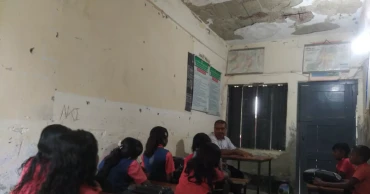
Clouds cast a shadow over learning at a primary school in Jhenaidah
At Taminagar Government Primary School in Shailkupa upazila, Jhenaidah district, the arrival of gathering clouds does not herald the promise of rain alone; it signals an abrupt end to lessons.
Here, classes are dismissed—not because of holidays or official announcements—but because the very roof above the students’ heads trembles with danger.
The school’s weary walls and fragile ceilings tell a grim tale of neglect and decay. Cracks trace their way across the single-story structure, exposing rusted iron rods and crumbling plaster that hangs perilously from beams.
Heavy rain turns Sylhet region risky for tourists; Sada Pathor site closed
Every overcast sky casts a shadow of fear over teachers and pupils alike, prompting them to scatter before the heavens open and the fragile building succumbs to collapse.
The roof, once a shelter of learning, has become a menace. Frequent incidents of falling plaster and weakening structural elements have turned classrooms into scenes of trepidation.
Students and teachers live with the constant dread that each passing storm might bring destruction, forcing hurried dismissals and disrupting education.
Local guardians, their faces etched with worry, recount a series of avoidable mishaps that have marred the school’s history.
Despite repeated pleas and warnings about the building’s unsafe condition, the authorities have remained silent, their inaction evident in every cracked beam and peeling ceiling.
Abdur Razzak Molla, Laily Khatun, Chhabiran Nesha, and Jharna Khatun—parents and community members—rushed to the school, voicing their deep concern for the children’s safety.
Their fears are not unfounded; several students have already suffered injuries from falling debris, some requiring stitches after plaster rained down upon them.
Ahad Ali, the dedicated headmaster, paints a sobering picture. “The school was founded in 1978 by the education enthusiast Siraj Uddin Molla on a 33-decimal plot of land. In 1994, the government built a three-room structure, but since then, it has steadily deteriorated.”
Today, the fragile building teeters on the edge of ruin. “A collapse could happen at any moment,” Ali warns, as some guardians linger near the teachers’ common room or within the school grounds during class hours, desperate to protect their children from harm.
Despite these daunting challenges, the school continues to shine in academics and sports, a testament to the resilience and spirit of its students and faculty.
Yet, this triumph is overshadowed by the routine emergency dismissals triggered by even the slightest change in weather. Parents now rush to fetch their children whenever dark clouds loom, turning a day of learning into a hurried scramble for safety.
Repeated verbal and written appeals to local and higher authorities have fallen on deaf ears. The pleas for renovation or a new building remain unanswered, leaving the school community trapped in a cycle of fear and uncertainty.
Adding to the adversity, the school’s only playground floods with even a light drizzle, rendering it unusable during the monsoon season. “If a new building isn’t constructed soon, classes may have to be permanently halted due to safety concerns,” warns the headmaster.
3 held in Jhenidah while entering Bangladesh from India
When approached for comment, Shailakupa Upazila Primary Education Officer Biswajit Saha assured, “The matter will be raised in the upcoming monthly coordination meeting, and necessary actions will be taken accordingly.”
For now, at Taminagar Government Primary School, every darkening sky is not just a weather forecast — it is a stark reminder of the urgent need for shelter, safety, and hope.
8 months ago
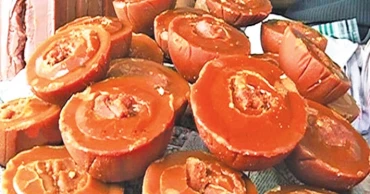
A Sweet Legacy: Traditional molasses-making flourishes in Jhenaidah village
In the tranquil village of Khandakbaria under Shailkupa upazila, a plume of sweet-scented steam curls into the air as a rustic factory hums with life, a symbol of heritage and resilience that has defied time for nearly six decades.
Here, amidst lush sugarcane fields and the gentle murmur of rural life, the art of traditional molasses-making continues to thrive, unfazed by the passage of generations or the march of modernity.
Tucked along the roadside like a well-kept secret, this humble facility has been producing pure, unadulterated sugarcane molasses—known locally as ‘gur’—through a time-honoured process that blends old-world charm with contemporary adaptations.
Operated by brothers Rezaul Islam and Mizanur Rahman, the factory stands as a testament to their late father's vision and devotion, his legacy preserved in every drop of the golden syrup they lovingly craft.
“We’re simply carrying on what our father began,” said Mizanur, his hands stained with cane juice, eyes glowing with pride.
“Long before the Mobarakganj Sugar Mill rose in Kaliganj in 1965, he was boiling molasses in clay pots right here, using cattle-driven crushers to extract the juice,” he said.
Today, though the bulls are gone, replaced by belt-powered shallow engines, much of the process remains deliciously traditional.
Target set to collect 3,000 mts molasses from date palm trees in Chuadanga
The sugarcane—harvested fresh from nearby fields—is fed into machines that crush the stalks, releasing a stream of green-gold nectar.
The juice is then filtered through coarse cloth and poured into enormous pots set over open, wood-fired stoves. Flames dance beneath six clay ovens, coaxing the liquid to a boil until it thickens and darkens into a deep reddish hue, redolent with caramelised sweetness.
The bubbling syrup is stirred with care, shifted between stoves to perfect its consistency, then ladled into tin vessels and cooled in clay pots—a ritual as rhythmic as the seasons.
The result: molasses of remarkable flavour, colour and purity, beloved in kitchens far and wide for sweet treats such as pitha, payesh, semai and suji.
Once a staple of rural households across Jhenaidah, such molasses-making units have become increasingly scarce, giving the brothers' factory a near-mythic status in the area.
With its tin-roofed shelter, soot-darkened walls, and the ever-present scent of burning wood and cane, it is more than a workplace—it is a living museum of rural craftsmanship.
Production typically spans the cool months from December to March, with around one kilogram of molasses extracted from every ten kilograms of sugarcane.
Togur: The Molasses Made from Watermelon Juice in Bangladesh
“In our heyday, we could make 400 kilograms a month. These days, the yield is lower, but we remain committed to quality over quantity,” he said.
Rezaul added, “This year, we hope to produce about 30 maunds—roughly 1,200 kilograms. We’re selling each kilo for Tk 200. Some farmers bring their own cane and use our facility to make molasses for home use. It gives them better value than selling raw cane at low prices.”
The molasses, once cooled and packed, travels beyond Jhenaidah, sweetening meals in distant districts while kindling a sense of nostalgia among those who know its roots.
Additional Agriculture Officer Abul Hasnat praised the factory's efforts, noting that local authorities are fully supporting such initiatives to ensure safe and high-quality production.
“This is a shining example of how traditional industries can survive and prosper with the right guidance,” he said.
Sarojganj Bazar in Chuadanga goes upscale with ‘quality’ molasses
Indeed, as long as the fires burn beneath the clay stoves of Khandakbaria and the cane fields yield their bounty, the brothers' syrupy legacy is set to endure—thick, golden and unforgettable.
9 months ago

3 gunned down in Jhenaidah
Three people were shot dead by unidentified assailants near an irrigation canal in Ramchandrapur area of Jhenaidah on Friday night.
Two of the victims have been identified as Hanif, son of the late Rahaj Uddin from Ahadnagar village in Harinakundu upazila, and his brother-in-law Liton from Srirampur village.
Shailkupa Police Station Officer-in-Charge (OC) Masum Khan said the victims sustained gunshots to the head and chest.
A brickfield worker and a child killed in road crashes in Magura
Police recovered a magazine, two motorcycles, and bullets from the scene.
Locals reported hearing multiple gunshots around 8:30 pm.
Police reached the spot around 10:30 pm and sent the bodies to Jhenaidah Sadar Hospital morgue for autopsy.
11 months ago
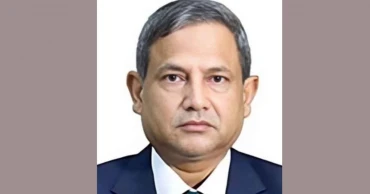
Former MP Sala Uddin held in Jashore
Joint forces detained former MP from Jhenaidah-3 constituency Major Gen (retd) Md Sala Uddin Miaji from Jashore Sadar upazila on Tuesday night.
Locals and students besieged Shyamolchhaya Park, owned by the former MP, in Rudrapur village of Chachra union under the upazila, on Tuesday evening after being tipped-off that Sala Uddin had been staying at the park.
The protesting people tried to enter the park but failed due to intervention of the joint forces.
Former MP and Food Minister advocate Qamrul Islam arrested in Dhaka
Later around 11pm, the joint forces detained Sala Uddin, former military secretary to former Prime Minister Sheikh Hasina, from the park and handed him over to Detective Branch (DB), said Manjurul Haque Bhuiyan, officer-in-charge of Jashore DB.
The detainee will also be handed over to Jhenaidah police today (Wednesday), he said.
Sala Uddin was elected MP from the Jhenaidah-3 seat in the 12th national election.
1 year ago