Europe
US boosts military presence as Iran fortifies key site
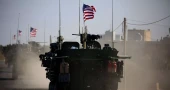
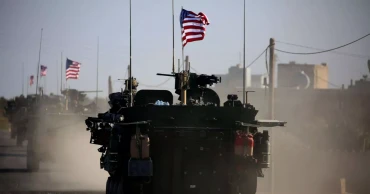
The United States has stepped up the movement of military aircraft and naval assets across Europe and towards the Middle East amid reports that President Donald Trump is weighing possible military action against Iran, while new satellite images indicate Tehran is reinforcing a sensitive military facility.
Flight-tracking data reviewed by BBC Verify show a surge in US military aircraft activity, including refuelling tankers, surveillance planes and transport aircraft operating from bases in Spain, Greece and Italy and heading towards the eastern Mediterranean and Gulf region. Analysts say the scale and pace of these movements are unusually high and suggest preparations for large-scale air operations.
Among the aircraft observed were KC-135 aerial refuelling tankers, E-3 surveillance jets and C-17 transport planes operated by the US Air Force. Data from Flightradar24 also indicated that HC-130J aircraft were flying from Europe to Al Udeid Air Base in Qatar, a key hub for US operations in the region.
At the same time, satellite imagery analysed by the Institute for Science and International Security shows Iran has added new layers of protection to a facility at the Parchin military site near Tehran. Images reveal that a concrete shell covering a newly built structure has been sealed with earth, with nearby soil piles suggesting the site could be further buried and transformed into a hardened bunker.
The Washington-based think tank assessed that the arched building may house a high-explosives test chamber and said the additional fortifications point to strategic importance. Parchin has previously been linked by Western analysts to explosives manufacturing and, historically, to nuclear-related testing.
Separately, Iranian state television broadcast footage of naval drills conducted jointly with Russia, including a simulated ship rescue operation. Satellite images showed a Russian navy warship docked at the Bandar Abbas military port. However, experts said the exercises were likely scheduled well in advance and were not necessarily connected to current tensions with Washington.
US military movements have also included the reported presence of the aircraft carrier USS Gerald R Ford near Morocco, reinforcing assessments that Washington is positioning forces across multiple theatres.
Defence analysts cautioned that the highly visible nature of the deployments means the US has lost the element of surprise, potentially requiring a broader or more sustained campaign if military action were to be launched.
Meanwhile, Trump has again criticised the United Kingdom’s plan to transfer the Chagos Islands to Mauritius while leasing back the Diego Garcia military base, marking his third change of position on the deal within a year.
US officials have not confirmed any imminent strike, but the combination of intensified military movements and Iran’s fortification work has heightened regional and international concern over a possible escalation.
With inputs from BBC
1 day ago

Europe says Russia killed opposition leader Alexei Navalny using dart frog toxin
Five European nations have concluded that Russian opposition leader Alexei Navalny was poisoned with a rare toxin derived from poison dart frogs, escalating accusations against the Kremlin over his death.
Foreign ministries of the United Kingdom, France, Germany, Sweden and the Netherlands said laboratory analysis of samples taken from Navalny’s body found the presence of epibatidine, a potent neurotoxin naturally secreted by dart frogs in South America but also capable of being manufactured synthetically.
In a joint statement, the countries said Russia had the “means, motive and opportunity” to administer the poison and announced plans to report Moscow to the Organisation for the Prohibition of Chemical Weapons for an alleged breach of the Chemical Weapons Convention.
Navalny, President Vladimir Putin’s most prominent critic, died on Feb 16, 2024, in an Arctic penal colony while serving a 19-year sentence he said was politically motivated. Russian authorities have maintained that he died of natural causes, denying any involvement.
His widow, Yulia Navalnaya, speaking at the Munich Security Conference, said she had been convinced from the outset that her husband was poisoned and that new findings now provided proof. She again accused Putin of being responsible and called for accountability.
At least 6,000 killed over 3 days during RSF attack on Sudan’s el-Fasher, UN says
European officials said epibatidine affects the nervous system in a manner similar to nerve agents, causing breathing difficulties, seizures, slowed heart rate and potentially death. They expressed high confidence in the findings but acknowledged the investigation was complex and time-consuming.
Navalny survived a previous poisoning in 2020 involving a nerve agent attack he blamed on the Kremlin. He later returned to Russia after treatment in Germany and was immediately arrested, spending the final years of his life in prison.
The Kremlin has repeatedly rejected accusations of using chemical or biological weapons against political opponents.
6 days ago
Trump’s world order looms over Europe ahead of crucial Munich security summit
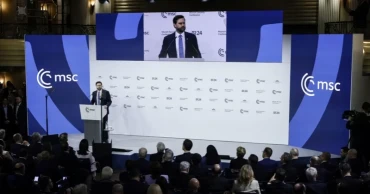
Europe’s security outlook is under renewed scrutiny as leaders prepare to gather for the Munich Security Conference this week, with the legacy and ongoing impact of US President Donald Trump’s foreign policy casting a long shadow over transatlantic relations.
It has been a year since US Vice President JD Vance delivered a controversial address at the same forum, sharply criticising Europe over migration and free speech and arguing that the continent’s greatest threats were internal. The remarks stunned delegates and signalled a deeper shift that has since reshaped US relations with both allies and rivals.
Over the past year, the Trump administration has imposed punitive tariffs on partners, taken an aggressive stance abroad and pursued diplomacy on Ukraine that many in Europe see as favouring Moscow. Trump has also made provocative statements, including suggesting that Canada should become the 51st US state.
As the conference opens later this week, more than 50 world leaders are expected to attend. The US delegation will be led by Secretary of State and National Security Adviser Marco Rubio, amid growing European concerns about Washington’s long-term commitment to the continent’s defence.
Those concerns were heightened by the latest US National Security Strategy, published late last year, which urged Europe to take primary responsibility for its own security. The document reinforced fears that the United States is increasingly reluctant to continue underwriting European defence.
Tensions were further strained by a recent crisis over Greenland, after Trump repeatedly said the United States needed to “own” the Arctic island for security reasons and at one point did not rule out the use of force. Greenland is a self-governing territory under Denmark, a Nato member, and Danish leaders warned that any hostile takeover would effectively end the alliance that has underpinned European security for decades.
Although the immediate Greenland dispute has subsided, it has left lingering doubts about the durability of the US-Europe security partnership.
Former UK intelligence chief Sir Alex Younger said the transatlantic alliance has changed but is not broken, noting that Europe still benefits greatly from its security and intelligence ties with the United States. He also argued that Trump was right to push Europe to shoulder more of the defence burden, pointing to long-standing imbalances in military spending.
However, divisions extend beyond defence budgets. The Trump administration has clashed with Europe over trade, migration and free speech, while many European governments have been alarmed by Trump’s approach to Russian President Vladimir Putin and his tendency to criticise Ukraine despite Russia’s invasion.
Ahead of the conference, organisers released a report warning of a fundamental break with long-standing US post-World War II strategy, which had prioritised multilateral institutions, economic integration and the promotion of democracy and human rights as strategic assets. The report said all three pillars have been weakened or openly questioned under the Trump administration.
US-based analysts at the Centre for Strategic and International Studies described the new National Security Strategy as a painful wake-up call for Europe and evidence of a deep divergence between European expectations and Washington’s current vision.
The strategy includes language supporting groups opposed to Europe’s current political direction and criticises European migration policies, while still acknowledging that Europe remains strategically important to the United States.
A central concern for many European officials is whether Nato’s Article 5, the collective defence clause, can still be relied upon. Although Nato leaders insist the commitment remains intact, Trump’s unpredictability and his administration’s scepticism towards Europe have raised doubts.
These questions are sharpened by the ongoing war in Ukraine and hypothetical scenarios involving Nato’s eastern flank, where any hesitation or miscalculation could have serious consequences.
As discussions begin in Munich, European leaders hope for clarity on the future of the transatlantic alliance, even as many fear the answers may confirm a more uncertain and fragmented security order.
With inputs from BBC
11 days ago
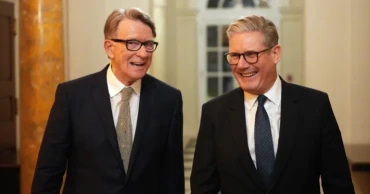
Epstein files shake Europe’s elite, US impact limited so far
Revelations from newly released Jeffrey Epstein documents have triggered political turmoil across Europe, toppling senior figures and prompting investigations, while the fallout in the United States has remained comparatively restrained.
The large cache of files released by the US Department of Justice has dominated headlines in Europe, ending careers of princes, diplomats and politicians who maintained ties with Epstein after his conviction as a sex offender. In contrast, few American figures have faced serious consequences so far.
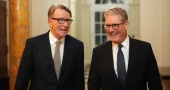
In Britain, former US ambassador Peter Mandelson was dismissed and is now under police investigation over whether he passed sensitive information to Epstein. Prime Minister Keir Starmer is facing mounting political pressure for appointing Mandelson despite earlier warnings about his links to the disgraced financier.
The documents also deepened scrutiny of Prince Andrew, brother of King Charles III, who had already lost his royal titles and public funding after settling a lawsuit with one of Epstein’s victims. His former wife Sarah Ferguson saw her charity shut down this week.
Although none of the European figures now under fire, apart from Andrew, are accused of sexual abuse, many have been forced out for continuing social or professional contact with Epstein long after his criminal conviction.
Legal experts say European media and political systems have reacted more forcefully. “If your name appears in these files, it becomes a major issue immediately,” said Rob Ford, a political scientist at the University of Manchester, pointing to stronger accountability pressures in parliamentary democracies.
Across Europe, resignations and suspensions have followed. Swedish UN official Joanna Rubinstein stepped down after disclosure of a visit to Epstein’s private island. Slovakia’s national security adviser Miroslav Lajcak quit over communications with Epstein. Latvia, Lithuania and Poland have launched official probes into the documents, with Poland also examining possible links to Russian intelligence.
Norway has been particularly shaken. Authorities opened a corruption investigation into former Prime Minister Thorbjørn Jagland, while ambassador Mona Juul was suspended after it emerged Epstein had left $10 million to her children in his will. Crown Princess Mette-Marit publicly apologized after emails showed her friendly exchanges with Epstein.
In the United States, the release of the files followed bipartisan pressure on President Donald Trump’s administration, but repercussions have been limited. Former Treasury Secretary Larry Summers took leave from academic posts, and a top US law firm chair resigned. Other high-profile figures, including political advisers, business leaders and former presidents, have faced questions but no major sanctions.
Analysts say the contrast highlights differences in political culture and accountability, with Europe showing lower tolerance for associations seen as unethical, even without criminal allegations.
The documents reveal Epstein’s extensive global network of royals, politicians, billionaires and academics, raising fresh questions about his influence and access. European investigators say further disclosures could yet widen the impact of the scandal.
14 days ago
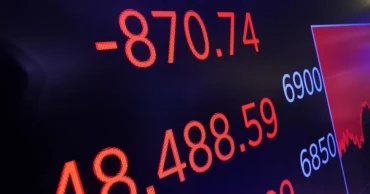
Wall Street tumbles as Trump threatens tariffs on eight European nations
Wall Street plunged sharply on Tuesday after US President Donald Trump threatened to impose new tariffs on eight European countries, intensifying tensions over his push to assert American influence over Greenland.
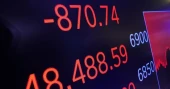
The sell-off affected nearly all sectors, extending losses from last week. The S&P 500 fell 143.15 points, or 2.1%, to 6,796.86, marking its steepest decline since October. The Dow Jones Industrial Average dropped 870.74 points, or 1.8%, to 48,488.59, while the Nasdaq composite slid 561.07 points, or 2.4%, to 22,954.32.
Technology stocks led the decline, with Nvidia down 4.4% and Apple falling 3.5%. Retailers, banks and industrial companies also lost ground, including Lowe’s (-3.3%), JPMorgan Chase (-3.1%) and Caterpillar (-2.5%).
Global markets reacted similarly, with European and Asian indices falling. Japanese long-term bond yields hit record levels amid concerns over fiscal policy. Gold and silver prices surged 3.7% and 6.9% respectively, while bitcoin retreated to around $89,700 from last week’s peak above $96,000.
Trump said on Saturday that he would levy a 10% import tax in February on goods from Denmark, Norway, Sweden, France, Germany, the UK, the Netherlands, and Finland. Combined imports from these European nations exceed those from the US’s two largest import partners, Mexico and China.
The threat has drawn sharp diplomatic reactions in Europe, with leaders considering countermeasures, including retaliatory tariffs. Analysts warned that such measures could push up inflation, complicating the Federal Reserve’s policy outlook.
Investors are also monitoring corporate earnings amid the tariff uncertainty. Industrial giant 3M fell 7% after reporting mixed quarterly results, while other major firms, including Johnson & Johnson, Halliburton and Intel, are expected to release earnings this week.
1 month ago
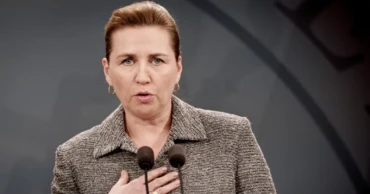
Europe rejects Trump tariff threat over Greenland
Danish Prime Minister Mette Frederiksen has said Europe will not bow to pressure from US President Donald Trump, as European leaders rallied behind Greenland in response to Washington’s threat of tariffs over the autonomous Danish territory.
Trump has warned he will impose new tariffs on eight US allies – Denmark, Finland, France, Germany, the Netherlands, Norway, Sweden and the UK – from February if they oppose his plan to take control of Greenland. He has described the island as vital for US security and has not ruled out using force, triggering strong criticism across Europe.
In a joint statement, the countries threatened with tariffs said Trump’s move could spark a “dangerous downward spiral” and undermine transatlantic relations.
“We stand in full solidarity with the Kingdom of Denmark and the people of Greenland,” the statement said, stressing that Arctic security is a shared Nato interest and that sovereignty and territorial integrity must be respected.
Writing on Facebook, Frederiksen said Europe wanted cooperation, not conflict, but would stand firm on its core values.
“Europe will not be blackmailed,” she wrote.
UK Prime Minister Sir Keir Starmer said he had spoken with Frederiksen, European Commission President Ursula von der Leyen and Nato Secretary-General Mark Rutte before holding talks with Trump. A Downing Street spokeswoman said Starmer made clear that Greenland’s security was a priority for all Nato members and that imposing tariffs on allies over collective security was wrong.
Trump has threatened a 10 percent tariff on goods from the eight countries from February 1, with the possibility of raising it to 25 percent until a deal is reached.
European leaders have warned the move would damage long-standing alliances, while public protests have already taken place in Denmark and Greenland against Trump’s takeover plan.
With inputs from BBC
1 month ago

Bangladesh's garment exports to Europe exceed €18 billion, growing over 7.5%
The European Union’s apparel import market witnessed a significant reshuffling in 2025, as Bangladesh’s exports to the bloc climbed to €18.06 billion despite a broader trend of falling unit prices and aggressive competition from China.
According to the latest Eurostat data for the period of January to November 2025, the EU's total apparel imports grew by 3.93 percent, reaching a total value of €82.94 billion. While the market saw a robust 11.60 percent increase in volume, the average unit price for garments fell by 6.88%, signaling a highly competitive, price-sensitive environment for global suppliers.
Bangladesh, the EU's second-largest apparel supplier, saw its export value rise from €16.78 billion in 2024 to €18.06 billion in the first eleven months of 2025—a growth of 7.65 percent. This value growth was largely volume-driven, with an 11.26 percent increase in the quantity of goods shipped, even as the country faced a 3.25 percent decrease in unit prices.
However, data from the end of the period suggests a cooling trend. A comparison between November 2024 and November 2025 reveals a sharp 10.87% drop in export value and a 12.27% decline in unit prices, highlighting the mounting pressure on Bangladeshi manufacturers to lower costs.
Garment accessories sector posts record $7.45bn export earnings in FY25: BGAPMEA
The report highlights a strategic pivot by China. Facing ongoing challenges in the United States market, China has intensified its focus on Europe. Chinese apparel exports to the EU reached €24.42 billion, marking a 6.55 percent growth in value. Most notably, China saw a massive 15.73 percent surge in export volume, supported by a 7.93 percent reduction in unit prices.
The sourcing landscape across Asia showed varying results.
Vietnam recorded a healthy 10.10 percent growth, reaching €4.02 billion. Unlike its neighbors, Vietnam saw a 4.19 percent increase in unit price, likely reflecting a shift toward higher-value garments.
Turkey struggled significantly, facing an 11.31 percent decline in exports to the EU, totaling €7.66 billion.
India, Pakistan, and Cambodia all showed substantial growth rates, contributing to the overall volume surge in the European market.
Global demand crunch pinches RMG, exports stagnant in first 5 months of fiscal at $16bn
"The data reflects a complex environment where volume is up, but margins are being squeezed," noted Mohiuddin Rubel, Managing Director of Bangladesh Apparel Exchange Ltd.
"While Bangladesh remains a key player, the aggressive pricing strategies from competitors like China and the recent dip in November figures suggest that staying competitive will require a careful balance of volume and value-addition," he said.
1 month ago
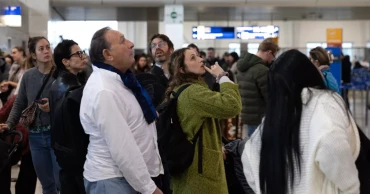
Greece airspace disruption not caused by cyberattack, officials say
Greece’s government on Monday said a major radio communications failure that temporarily shut down the country’s airspace a day earlier was unlikely to be the result of a cyberattack, although the exact cause is still being investigated.
Air traffic across Greece was halted, diverted or delayed for several hours on Sunday after interference was detected on multiple air traffic control communication channels, including backup systems.
Government spokesman Pavlos Marinakis said authorities have found no evidence pointing to a cyber incident. “There is not the slightest indication that we are dealing with a cyberattack,” he said, stressing that this assessment needed to be made clear.
The Greek Civil Aviation Authority said the widespread noise across communication channels prompted a precautionary shutdown of operations. Air traffic services were gradually restored after several hours.
The outage forced incoming flights to divert to neighboring countries, triggering widespread delays and leaving thousands of passengers stranded at airports.
Eurocontrol, the Brussels-based European air navigation safety body, assisted in rerouting aircraft during and after the disruption. It said around 120 flights were grounded on Sunday at Greece’s two busiest airports in Athens and Thessaloniki, adding that knock-on effects continued into early Monday.
Greece’s Air Traffic Controllers’ Association said the incident highlighted long-standing concerns over outdated infrastructure, renewing calls for urgent modernization of air traffic control equipment.
Israel hits multiple targets in Lebanon ahead of key Hezbollah disarmament talks
Authorities on Monday launched both a judicial inquiry and an internal investigation to determine the cause of the failure. Separately, Transport and Infrastructure Minister Christos Dimas announced the creation of a special investigative committee comprising representatives from civil aviation authorities, the Greek air force, Eurocontrol and a state-run cyberdefence agency.
Describing the incident as “very serious,” Dimas said passenger safety was never compromised.
1 month ago
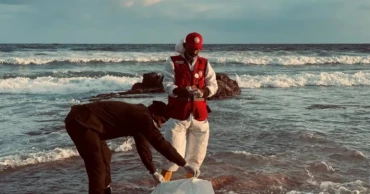
Four Bangladeshi migrants die as 2 boats capsize off Libyan coast
At least four Bangladeshi nationals were among those killed after two boats carrying a total of 95 irregular migrants capsized off the coastal city of Al Khums, the Libyan Red Crescent reported on Saturday (November 15).
According to a statement posted by the Red Crescent on Facebook, the first vessel was carrying 26 migrants from Bangladesh.
Four of them lost their lives when the boat overturned in rough waters.
A second boat, carrying 69 migrants—including two Egyptians and dozens of Sudanese nationals—also capsized.
Libya boat disaster: 50 Sudanese refugees killed at sea
The Red Crescent did not provide details on the condition or fate of those on board the second vessel.
Rescue teams continued operations along the Al Khums coastline as authorities worked to assess the full scale of the tragedy.
The incident adds to a rising number of perilous attempts by migrants to cross the Mediterranean in hopes of reaching Europe.
Read more: Boat carrying hundreds of Myanmar migrants capsizes near Malaysia
Source: Agencies
3 months ago
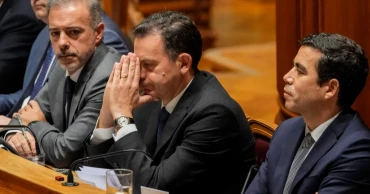
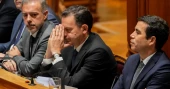
Portugal’s govt falls prompting early election after confidence vote
Portugal’s minority government suffered a defeat in a parliamentary confidence vote on Tuesday, leading to its resignation and setting the stage for the country's third general election in three years.
This marks the most severe period of political instability since Portugal embraced democracy over 50 years ago, following the 1974 Carnation Revolution that ended a four-decade dictatorship.
Ukraine says it is open to a 30-day ceasefire; US resumes military aid and intelligence sharing
Successive minority governments have struggled to form alliances that would allow them to complete a full four-year constitutional term, as opposition parties have repeatedly united to bring them down.
With the election likely to take place in May, the country of 10.6 million people faces months of political uncertainty while it moves forward with plans to invest over 22 billion euros ($24 billion) in EU development funds. Meanwhile, Europe continues to grapple with pressing security and economic challenges.
Voter frustration with repeated elections could benefit the radical-right populist party Chega (Enough), which has capitalised on dissatisfaction with mainstream parties. Portugal has followed the broader European trend of rising populism, with Chega securing third place in last year’s election.
The government had called for the confidence vote, arguing it was necessary to "dispel uncertainty" about its future amid a deepening political crisis centred on Social Democrat Prime Minister Luis Montenegro, which had diverted attention from government policy.
Following over three hours of heated debate, including dramatic last-minute proposals by the government to avoid its downfall, lawmakers took an hourlong recess for negotiations. The government claimed to have made a last-minute offer to the Socialists.
A hush fell over the chamber when the result was announced.
“Things are how they are. We gave our all,” Prime Minister Montenegro told reporters as he left the National Assembly.
Pedro Nuno Santos, leader of the Socialist Party and the largest opposition group, criticised the government’s actions as “shameful,” accusing it of resorting to “manoeuvres, games, tricks” to stay in power.
The political controversy revolves around possible conflicts of interest concerning Montenegro’s family law firm.
Montenegro, who intends to seek reelection, has denied any wrongdoing, stating that he transferred control of the firm to his wife and children upon becoming Social Democratic leader in 2022 and has had no involvement in its management since.
Recently, reports emerged that the firm has been receiving monthly payments from a company holding a significant government-granted gambling concession, among other revenue sources.
The exact vote tally was not immediately available, but parliamentary speaker José Pedro Aguiar-Branco confirmed the centre-right government had been defeated.
Moscow faces ‘massive’ drone attack ahead of US-Ukraine peace talks
The governing two-party coalition, led by the Social Democratic Party and in power for less than a year, controlled only 80 seats in the 230-seat legislature. A vast majority of opposition lawmakers had pledged to vote against it, with the centre-left Socialists and Chega—together holding 128 seats—leading the charge.
Opposition parties have demanded further clarification from Montenegro, while the Socialist Party is pushing for a parliamentary inquiry that could continue to trouble the government for months.
The Social Democrats hope that Portugal’s economic performance—an estimated 1.9% growth last year compared to the EU’s 0.8% average, and a 6.4% unemployment rate, close to the EU average—will help sustain their support.
The next general election had originally been scheduled for January 2028.
11 months ago