US President Donald Trump is questioning why Iran has not yet “capitulated” despite an expanding US military build-up in the Middle East, his special envoy Steve Witkoff has said.
Speaking to Fox News on Saturday, Witkoff said Trump was “curious” about Tehran’s stance after warning that Washington could carry out a limited military strike if no agreement is reached on Iran’s nuclear programme. The United States and its European allies suspect Iran of moving towards developing a nuclear weapon, a claim Tehran strongly denies.
Witkoff said the president was not frustrated but puzzled as to why Iran had not responded positively despite what he described as overwhelming US naval and military pressure in the region. He said Washington wanted Iran to clearly state it does not seek nuclear weapons and outline what steps it is prepared to take.
Iran’s Foreign Minister Abbas Araghchi said on Sunday there was still a chance to resolve the dispute diplomatically through what he called a “win-win” approach. He told CBS News that negotiators were working on the core elements of a possible deal and that Tehran was preparing a draft proposal to share with the US side.
US and Iranian officials held indirect talks in Geneva on February 17, reporting progress afterward. Oman, which mediated the discussions, said the next round of negotiations is scheduled to take place in Geneva later this week.
Despite diplomatic movement, Trump said recently that it would become clear within days whether a deal would be reached or whether the US would resort to military action.
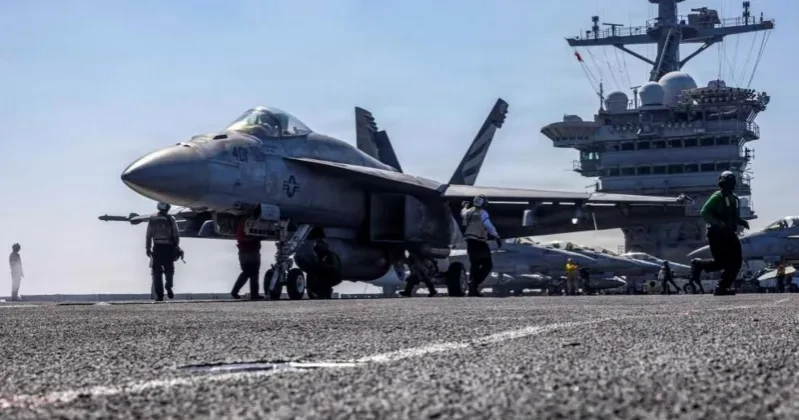
In recent weeks, Washington has significantly increased its military presence near Iran and across the wider Middle East, including deploying major naval assets such as the aircraft carriers USS Gerald R Ford and USS Abraham Lincoln, along with destroyers, combat ships and fighter jets.
Meanwhile, Iran has seen a renewed wave of anti-government protests at universities in Tehran and other cities, marking the largest student demonstrations since a deadly crackdown by authorities in January. Human rights groups say thousands were killed during that period, while Iranian officials have disputed those figures.
The renewed unrest comes as pressure mounts on Tehran both domestically and internationally, against the backdrop of heightened US military readiness and uncertain prospects for a nuclear agreement.
With inputs from BBC